 Vista

Asgard (Old Norse Ásgarðr) is the realm or enclosure associated with the Æsir gods in Norse mythology. It is connected with Odin, Thor, Frigg and other divine figures, and with halls such as Valhalla, Himinbjörg and Breiðablik in familiar medieval descriptions. The rainbow-like bridge Bifröst provides a route toward divine territory and is watched by Heimdall. One of Asgard’s most memorable stories concerns a builder whose bargain for a strong protective wall goes wrong after Loki and the stallion Svaðilfari become involved.
Readers searching for Asgard Norse mythology, Asgard gods list, Odin’s palace, Asgard vs Midgard, Nine Realms map, Asgard wall legend or Asgard images will find the principal stories here. The text distinguishes the medieval sources from modern games and movies that portray Asgard as a fully mapped golden space city.
What Is Asgard? The Realm of the Æsir
The name Ásgarðr is usually explained in relation to the Æsir and an enclosure or protected space. In the surviving stories Asgard is the dwelling and gathering place of prominent gods. It is not a named modern Scandinavian capital that can be visited on a sightseeing trip. The medieval accounts combine poetic images of halls, assemblies, travel and boundaries into a mythic landscape. An illustrator may choose high golden walls, waterfalls, mountains or a bright city beneath an aurora, but these additions should be treated as artistic choices. The story’s core idea is a distinctive divine space connected to gods such as Odin, Thor and Frigg. This also explains the frequent contrast between Asgard and Midgard, the human world. The distinction does not imply that every mythic place falls into one of exactly nine fixed spheres positioned at measured heights. Ancient material describes places through stories, not through a complete fantasy atlas.
Which Gods Live in Asgard?
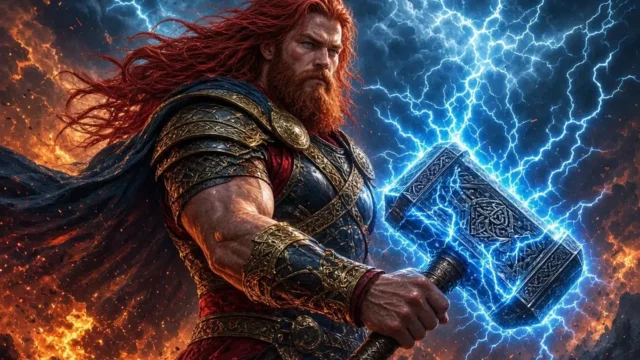
Odin is a leading figure among the Æsir and associated with wisdom, warfare and the slain. Thor, Odin’s son by Jörð, is a protector known for Mjölnir and his confrontations with giants. Frigg is Odin’s wife, while Baldr and Heimdall have memorable halls and roles. Týr appears in the Fenrir binding story, and Sif is connected with Thor’s household. These named figures are useful for introducing Asgard, but the roster is not a fixed modern superhero membership list. Some figures associated with the Vanir, including Freyja and Freyr, take part in the wider world of the gods. Loki moves among the gods even though his ancestry is linked with the jötnar; importantly, he is not Odin’s adopted son in the standard medieval genealogy. A useful group infographic labels family relations and divine groups carefully instead of copying the arrangements of a particular film franchise.
Odin’s Valhalla, Glaðsheimr and Other Divine Halls
Asgard is often confused with Valhalla, but they are not exactly the same thing. Valhalla is the legendary hall of certain slain warriors associated with Odin. Other named places appear in poetic catalogues and Snorri’s prose: Glaðsheimr is linked with seats or gathering among the gods; Valaskjálf and the seat Hliðskjálf with Odin; Breiðablik with Baldr; Himinbjörg with Heimdall; and Fensalir with Frigg. Some textual descriptions differ or overlap, and different modern maps arrange them according to artistic preference. That is why labeling a single golden palace ‘Asgard = Valhalla = Odin’s only home’ is misleading. A clear article explains the larger divine realm and its particular halls separately. Their distinctive stories make stronger illustrations than repeating the same imaginary palace for every god. No medieval poet provided a full certified building plan that resolves every hall’s placement within the cosmos.
Bifröst: The Bridge Guarded by Heimdall
Bifröst, commonly depicted as a rainbow-like bridge, is associated with the route between the human sphere and the gods. In Snorri’s account it has three colours and is guarded at the heavenly end by Heimdall, whose residence is Himinbjörg. Heimdall needs little sleep, hears remarkably subtle sounds and keeps watch for hostile visitors. His horn Gjallarhorn becomes crucial when Ragnarök approaches. This makes him the natural figure to depict at Asgard’s entrance, holding a horn and standing against a rainbow-lit sky. Modern entertainment often converts the bridge into a sophisticated transportation beam with computer-like controls. The medieval text uses the bridge as an extraordinary mythic passage, not as a physical engineering design. The bridge also has a tragic fate: its collapse is linked with the advancing forces of Múspell at the final battle. The same Asgard guide can therefore connect a beautiful visual to a larger story about the limits of divine defenses.
Asgard’s Walls: The Builder and the Dangerous Bargain
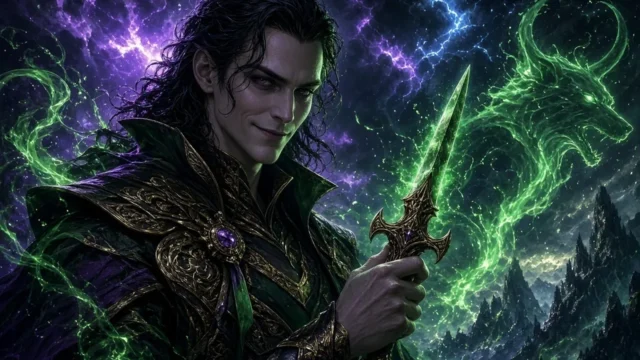
In Gylfaginning a builder offers to construct an extraordinarily secure defensive wall for the gods. He demands Freyja, the sun and the moon as his reward. The gods set a seemingly impossible deadline, allowing the builder to use his powerful stallion Svaðilfari. To their alarm the horse can haul huge stones and the work approaches completion. Loki, whose advice has helped produce the situation, is forced to find a way to prevent the promised reward from being claimed. He changes into a mare and draws Svaðilfari away from the work, so the builder misses his deadline. His anger reveals him as a giant, and Thor kills him in the familiar prose version. The story is not a simple celebration of fair contracting: it contains broken promises, deception and violence by several parties. Those moral complications make the wall more interesting than an image of a perfectly safe fortress. A poster should describe the bargain honestly.
Sleipnir: The Eight-Legged Horse Born from the Wall Story
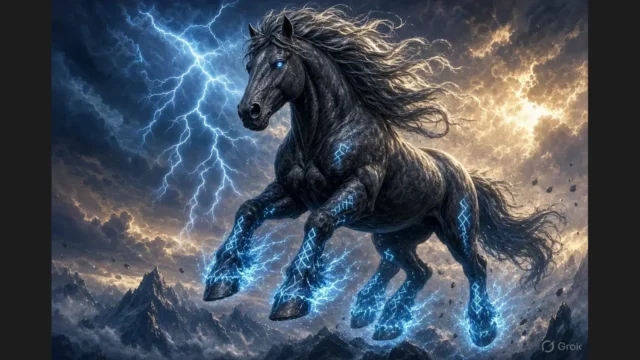
The Asgard builder episode has another consequence. After Loki assumes the form of a mare and distracts the stallion Svaðilfari, Loki later gives birth to Sleipnir, the grey eight-legged horse who becomes Odin’s extraordinary mount. The parentage is explicitly unusual: Loki is Sleipnir’s mother in this episode, and Svaðilfari is the father. Many simplified family charts mistakenly call Loki only Sleipnir’s father or describe the horse as a gift obtained from a mysterious stable. That loses the distinctive plot. It also shows why the myths interlock: an article about Asgard’s walls leads naturally to the story of Odin’s horse, and a Sleipnir article explains the consequences of the gods’ bargain. Some artwork depicts Sleipnir leaping above the completed walls, but the medieval source does not prescribe one exact scene with the horse in that position. The story supports the relationships and origin, while the picture supplies atmosphere.
Asgard and Midgard: How the Nine Realms Map Can Mislead
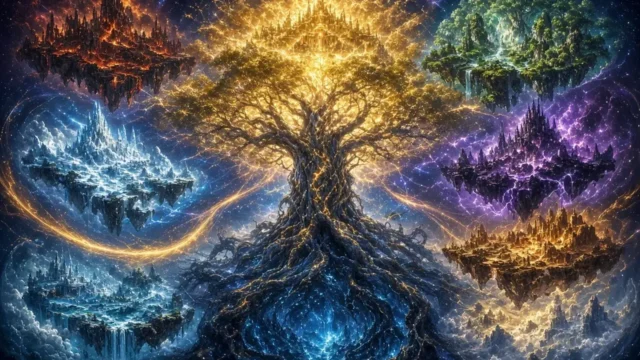
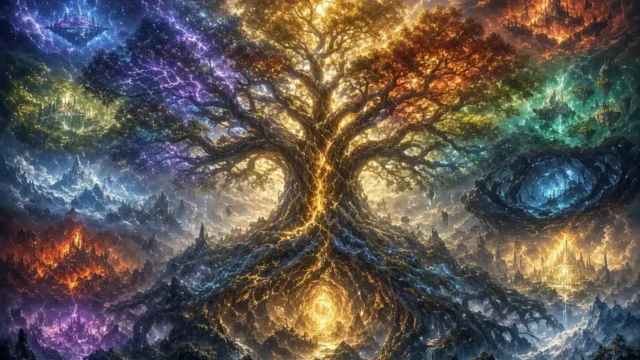
Popular Nine Realms diagrams place Asgard at the very top of Yggdrasil and Midgard on a central branch. That can be a useful memory aid, but medieval Norse sources do not preserve one definitive nine-realm chart with exact vertical coordinates. The poems refer to nine worlds and name numerous places; the later prose organizes parts of the cosmos in its own way. Asgard is clearly associated with the Æsir, and Midgard with human life, but an image of nine stacked worlds remains a modern reconstruction. The same caution applies to the location of Jotunheim, Vanaheim, Alfheim and Hel. Some world names overlap in discussions of the dead or of dwarfs and elves. A trustworthy Asgard page does not need to pretend these uncertainties do not exist. It can give a popular simplified view while labeling it honestly and referring readers to the older descriptions.
What Happens to Asgard at Ragnarok?
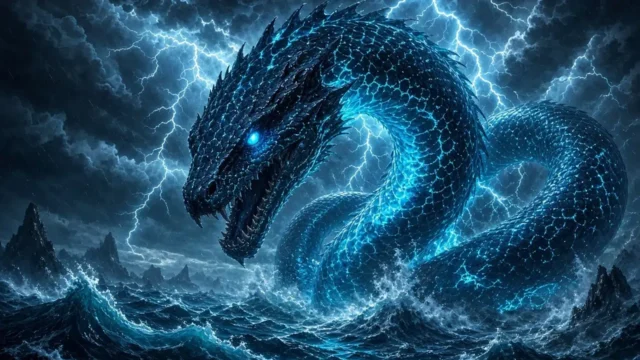
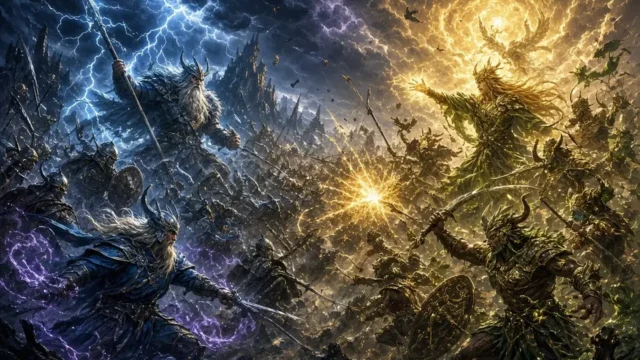
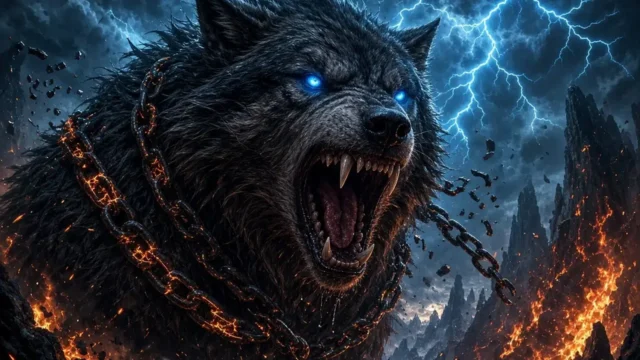
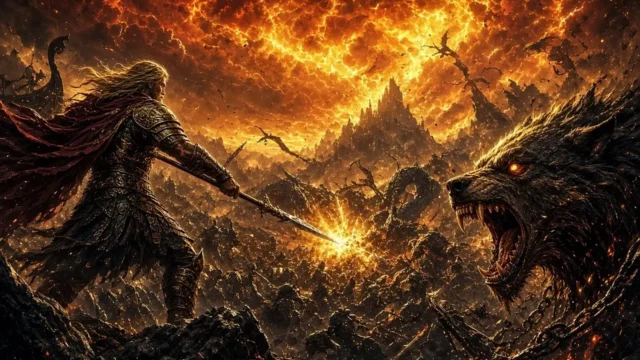
Ragnarök brings a crisis involving cosmic monsters, giants and destructive forces. Heimdall sounds Gjallarhorn, the enemies advance, and Bifröst breaks as the forces associated with Múspell cross. Odin confronts Fenrir and dies; Thor kills Jörmungandr but succumbs to its venom. The world is devastated, yet the sources also tell of renewal and surviving divine figures afterward. This is why describing Asgard as an eternally indestructible fantasy city goes against the emotional direction of the mythology. Defensive walls and an extraordinary bridge can delay danger but do not guarantee the gods will escape fate. Conversely, a video game that depicts one character singlehandedly destroying Asgard may be presenting its own narrative rather than the medieval sequence. A source-based illustration can show the collapse of divine defenses and the new world beyond, with a caption clarifying that the scene is an artist’s reconstruction of Ragnarök.
Asgard in Marvel, Games, Wallpapers and Norse Art
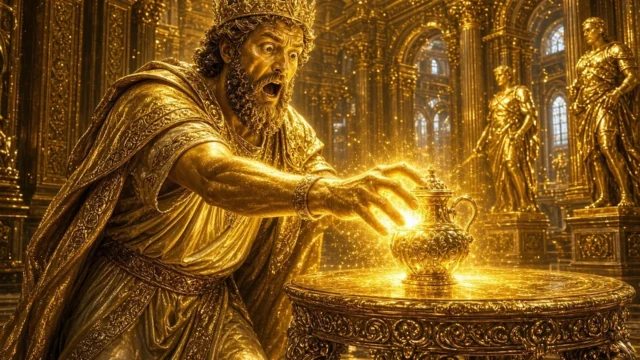
Film and game versions often present Asgard as a radiant palace complex with a particular royal family, technology and science-fantasy history. Traditional Norse myths are not a consistent architectural manual and do not make Loki Odin’s adopted son, even though that is a famous modern storyline. A visitor searching for ‘Asgard real location’ should understand that it is a mythological place, not an excavated city. Search terms such as ‘Asgard Norse mythology images’, ‘Odin Asgard palace’, ‘Bifrost bridge wallpaper’ and ‘Asgard Nine Realms map’ have related but different visual intentions. Featured art can show a gorgeous fortified divine city; the internal informative poster can name the gods, halls, wall-builder episode and bridge. Captions should state clearly where the art is imaginative, and avoid invented measurements or unverified Viking inscriptions. That balance offers a better reader experience than claiming to reveal the ‘actual photo of Asgard’.
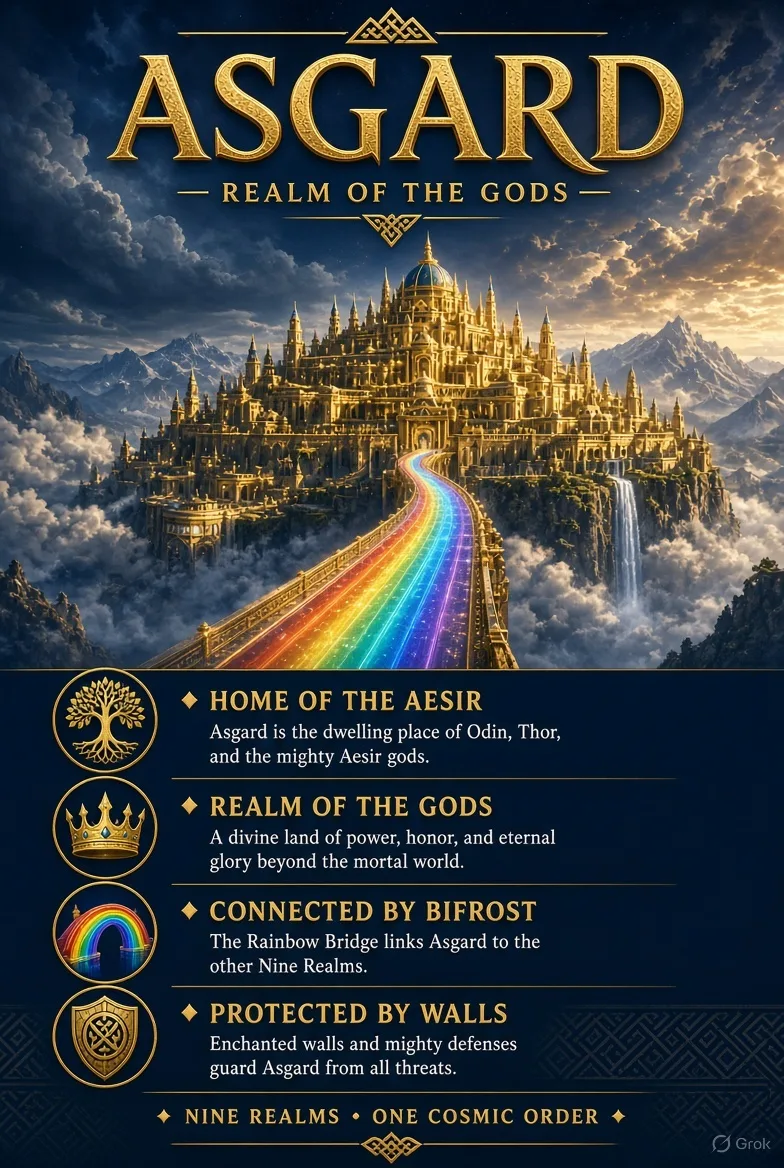
Artwork and source The artwork imagines Asgard’s defenses. The Prose Edda describes Bifrost linking earth and heaven, and the wall-builder tale describes why the gods needed a wall.
Frequently Asked Questions
What is Asgard in Norse mythology?
Asgard is the realm or protected dwelling associated with the Æsir gods.
Does Odin live in Asgard?
Odin is a leading Æsir figure connected with Asgard and halls such as Valhalla and Valaskjálf.
Are Asgard and Valhalla the same?
No. Valhalla is a particular hall of the slain associated with Odin; Asgard is the wider realm.
Who guards the bridge to Asgard?
Heimdall watches Bifröst from Himinbjörg in the Prose Edda tradition.
Who built Asgard’s wall?
An unnamed builder who is revealed as a giant offers to construct it using the stallion Svaðilfari.
Is Asgard a real city in Norway?
No verified physical city corresponds to the mythological Asgard described in the Eddas.
Conclusion
Asgard is the setting that brings many Norse stories together: the gods’ halls, the rainbow bridge, Loki’s dangerous bargain, the birth of Sleipnir and the coming crisis of Ragnarök. A beautiful fantasy city is a strong introduction, but the actual source-based details—and their uncertainties—make it an educational guide rather than a fictional map.
Sources and artwork note
Prose Edda Gylfaginning — Asgard, halls and walls; Gylfaginning: The master builder and Sleipnir; Norse Gods: Asgard realm and source descriptions.
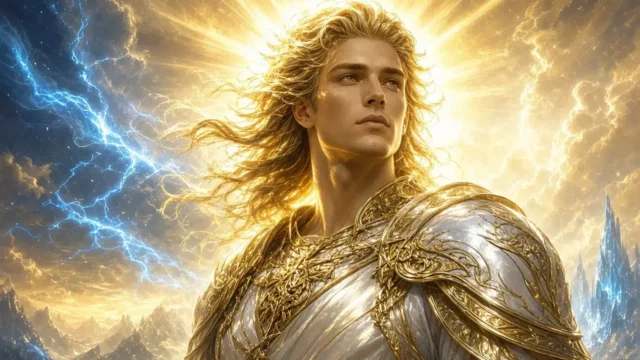
Reviewed 15 November 2026. Images are modern interpretations, not archaeological pictures.








Share Your Opinion
Comments are closed on this post.