 Vista
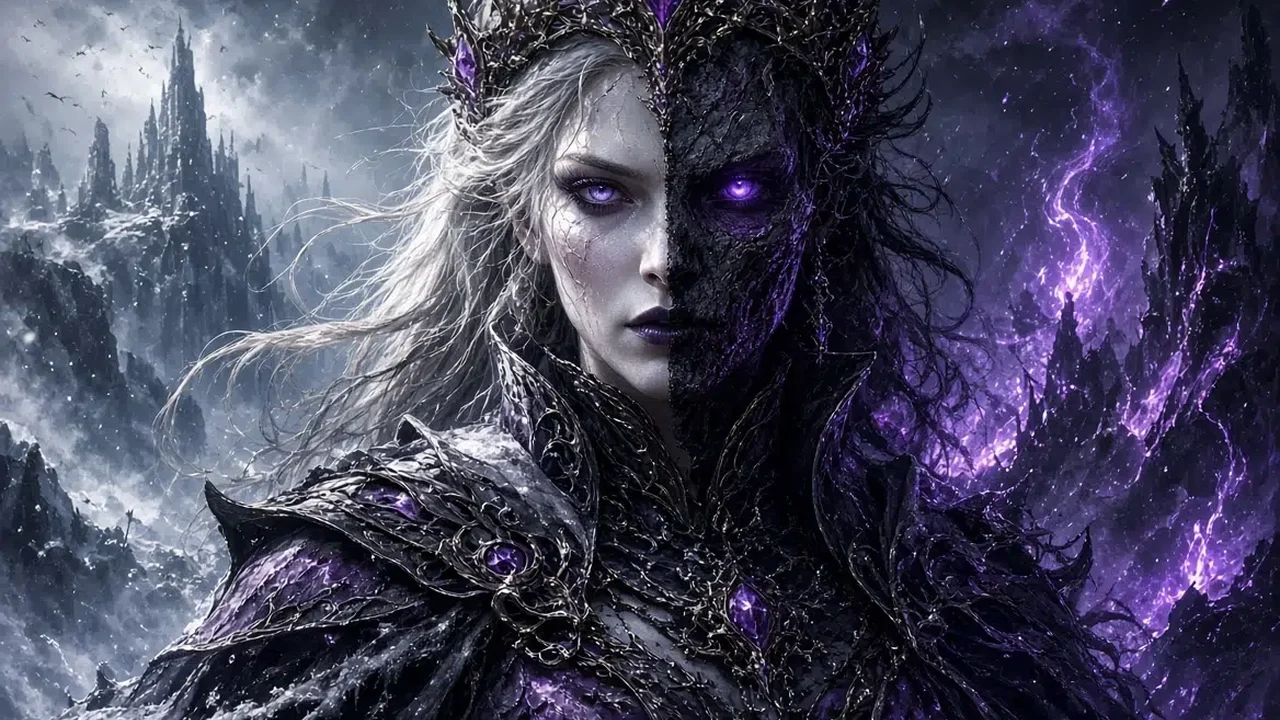
Hel is a figure in Norse mythology who rules over a realm associated with the dead. She is named as one of the three famous children of Loki and Angrboða, alongside Fenrir the wolf and Jörmungandr the world serpent. In Snorri’s Prose Edda, Odin sends Hel to Niflheim and gives her authority over the dead who come to her, including people who have died from illness or old age. The same account describes her appearance as partly blue-black and partly flesh-coloured. That is not identical to every modern picture showing a half-skeleton queen in a burning hell.
This guide answers Hel Norse mythology, who Hel’s parents are, whether Hel is a goddess or giantess, what Helheim means, how Baldr reaches her domain, and how the Norse afterlife differs from the simple ‘Valhalla versus hell’ story popular online. It also explains what can safely be said about Hel artwork and informative posters.
Who Is Hel? Loki and Angrboða’s Daughter
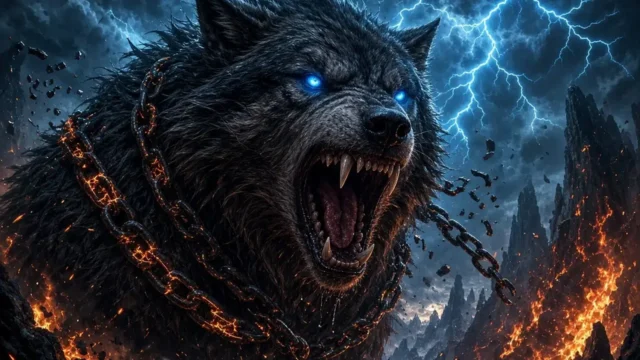
Snorri’s Gylfaginning groups Hel with Fenrir and Jörmungandr as children of Loki and the giantess Angrboða. The gods hear prophecies foretelling danger from the three children, so Odin takes action concerning each one. The serpent is placed in the sea, Fenrir is brought among the gods and watched, and Hel is assigned authority over a world of the dead. This family connection is one of the clearest ways to explain why Hel features in a Norse mythology visual hub. She is not Fenrir’s mother or a wife of Odin, despite charts that merge unrelated figures into one dramatic family. Her name is also shared with the abode of the dead, creating confusion in brief search results. A clear article distinguishes Hel the figure from Hel the location before adding fantasy details. The ancient source supplies the relationships; it does not supply a photographic portrait or a modern office title for her.
Is Hel a Goddess, a Giantess or a Monster?
Modern guides often call Hel ‘the Norse goddess of death’. That is useful shorthand but raises a classification issue. Her parents connect her with Loki and the jötnar, while she rules a domain of the dead in an account told among the gods. The surviving sources do not require one neat contemporary category that everyone agrees on. Calling her a mythological ruler of the dead is more precise than imagining her as a biological creature of a species called ‘half-human, half-skeleton’. The Prose Edda emphasizes an ominous appearance, authority and the condition of her abode. It does not give the same roles as a Greek underworld god or a Christian devil. Cross-cultural comparisons can highlight similarities, but Hel and Hades belong to different narrative systems, and neither should simply be identified with the other. A reliable poster can use ‘Loki’s daughter’ and ‘ruler of the dead’ rather than make unsupported claims about exact divine rank.
What Does Hel Look Like? Half Blue-Black, Half Flesh-Colour
One memorable description in Gylfaginning says Hel is half blue-black and half the colour of human flesh, with a severe or grim appearance. Artists frequently render this as half a living face and half a skull. That is an interpretation, not a literal quotation requiring skeletal anatomy. It is also unnecessary to invent a fixed uniform, wings, crown or exact eye colour. Medieval prose communicates her unsettling nature through contrast and mood. A fantasy illustration can make that contrast readable with cold light and dark robes while still being clear that the costume is designed today. This distinction matters particularly for image SEO: ALT text can say ‘Hel, ruler of the Norse underworld, shown with contrasting blue and flesh tones in modern art’ if that is what appears. It should not claim a photo of the ‘real goddess’ or a precise archaeological reconstruction of her body.
Hel and Helheim: Are They the Same Name?
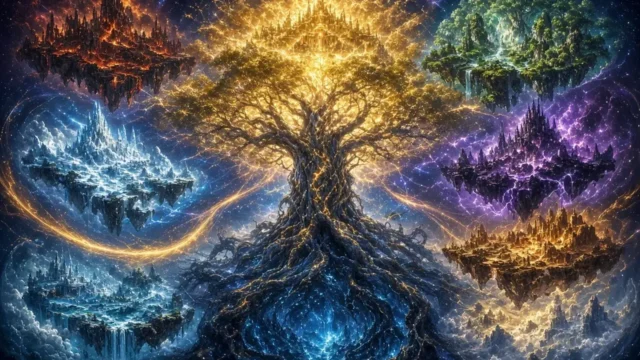
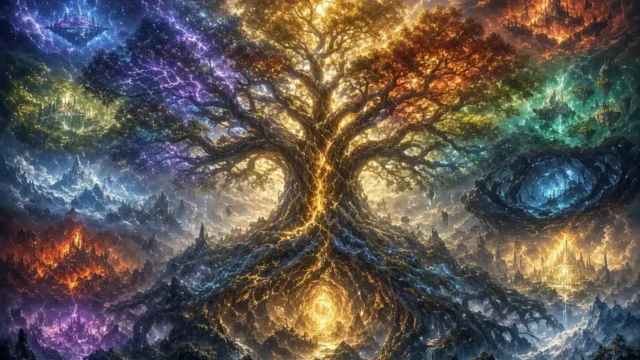
The term Hel is used for both the named being and the abode of the dead in Old Norse material. ‘Helheim’ is a common modern explanatory label, but it should not be treated as if every medieval source consistently uses the same modern world-map name. Snorri sends Hel to Niflheim, and the geographical relationship between Hel, Niflheim and other mythical spaces can vary among passages and later reconstructions. The familiar internet ‘Nine Realms’ diagram is a useful teaching image, not an ancient standardized map with all boundaries measured. A page that places Helheim in a coloured circle should say that the placement is an interpretive reconstruction. Most importantly, Hel is not automatically a fiery torture chamber identical to Christian Hell. The afterlife imagery and moral framework of Norse stories are different and sometimes remain uncertain in the surviving evidence.
Who Goes to Hel After Death?
In Snorri’s account, Hel receives people who die of sickness or old age, and her role is described in terms of assigning lodging to those sent there. This is a strong textual anchor, but it should not be expanded into a universal historical rule about what every Viking believed. Norse death traditions varied, and the literature names other destinations, including Odin’s Valhalla and Freyja’s Fólkvangr. Some popular charts divide all afterlife outcomes into a simple rule: heroic men go to Valhalla and everyone else is punished in Hel. The sources do not justify that rigid moral judgment. In particular, dying from illness does not make someone a bad person, and the medieval text does not say that Hel automatically inflicts Christian-style damnation on such individuals. Readers deserve this nuance when searching for ‘Norse afterlife explained’ or wondering whether Helheim was a place of evil.
What Is Hel’s Hall Called? The Strange Descriptions
The Prose Edda gives Hel a great residence with high walls and gates. It names her hall Éljúðnir, often translated as Sleet-Cold, and assigns ominous names to her dish, knife, bed and other household furnishings. Depending on the translation, the spellings and poetic English equivalents vary. The detail works like a catalogue of hardship rather than a construction specification. A modern infographic may depict a frozen hall with dark gates, but it should avoid claiming that every ancient story requires a single black castle of precise dimensions. Likewise, it would be misleading to invent the names of guards, rivers or weapons merely to fill empty spaces in a diagram. The original list is already vivid: cold, hunger and sickness form the atmosphere of the place. A well-written caption can point readers toward Gylfaginning instead of treating an artist’s choice of architecture as history.
Baldr’s Death and Hermóðr’s Journey to Hel
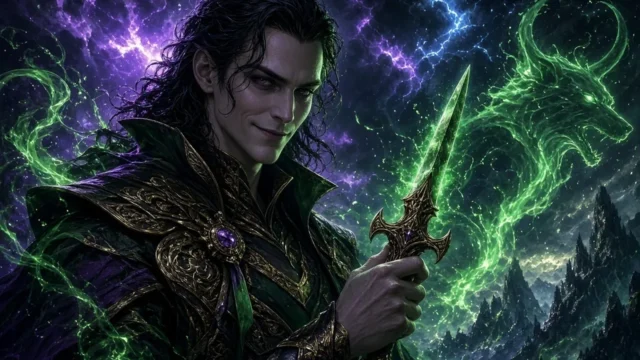
Hel is central to one of the most emotional Norse stories. After Baldr dies, Odin and Frigg are overcome with grief. Hermóðr rides Odin’s horse Sleipnir into the realm of the dead and seeks Baldr’s return. In Snorri’s narrative, Hel agrees that Baldr may return if all things in the world weep for him. Messengers seek tears from living creatures and objects alike, but the giantess Þökk refuses, and Baldr remains. Some retellings identify Þökk with Loki in disguise, following a belief reported by Snorri. Hel’s part should not be collapsed into a simple villain role: she offers a condition and the condition is not met. This episode also helps readers distinguish Hel the ruler from her realm and from Loki, who is her father in the family tradition. A scene showing Hermóðr at a dark hall is a modern artistic view of this literary encounter.
Is Hel Related to Ragnarok and Does She Fight the Gods?
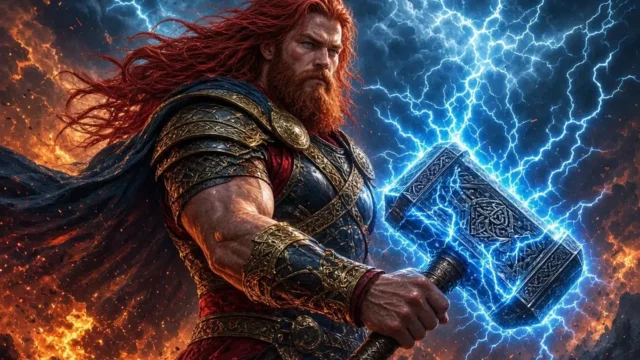
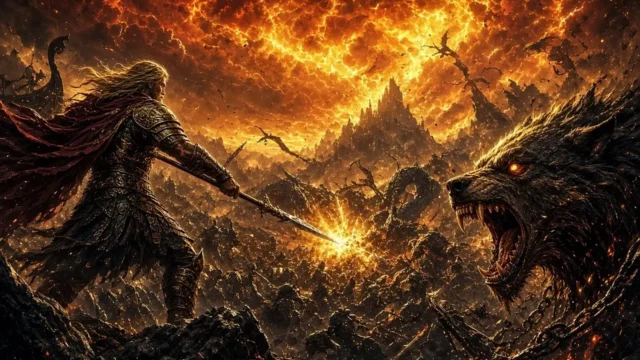
Because Hel belongs to Loki’s family, many modern fantasy stories give her a direct role in the final battle of Ragnarök. The older evidence is subtler. Fenrir and Jörmungandr have famous fated confrontations with Odin and Thor; the Prose Edda does not present Hel in the same way as a clearly described frontline warrior with a named Ragnarök opponent. She remains significant through the domain of the dead and the stories connected to it. If a game depicts her leading a huge army or challenging Thor in a duel, that may be an adaptation rather than a detail inherited directly from the Eddas. A factual article should resist the temptation to invent a winner or combat ranking for her. The important evidence-based connections are her parentage, association with Niflheim, role among the dead and interaction with Hermóðr over Baldr’s return.
Hel Images, Tattoos and the Difference Between Lore and Art
Searches for ‘Hel Norse mythology images’, ‘Hel goddess tattoo’ and ‘Helheim wallpaper’ produce striking half-coloured faces, bones, snakes, icy halls and ghostly landscapes. Some visual motifs draw directly from literary descriptions, but others belong to modern fantasy aesthetics or particular game designs. A tattoo wearer may choose those designs for personal reasons, without claiming a historically unchanged Viking practice. For an informative image poster, a few grounded facts work best: Hel’s parents, siblings, the blue-black and flesh-coloured description, her authority over the dead and her appearance in Baldr’s story. Avoid adding invented statistics such as ‘Hel controls 100% of dead souls’ or a fixed map claimed to be created by Vikings. A beautiful visual becomes more useful when a nearby paragraph explains which detail comes from a medieval text and which is the artist’s interpretation.
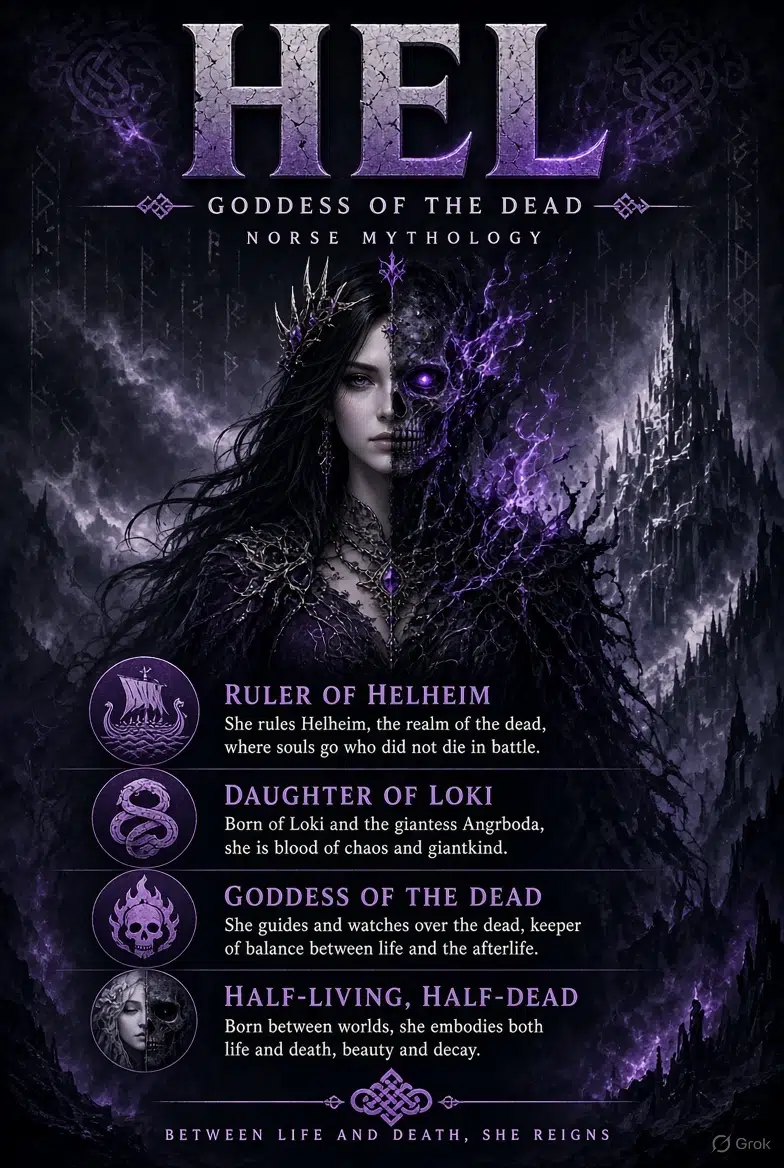
Artwork and source Snorri describes Hel as half dark and half flesh-colored. The poster’s ‘half-living, half-dead’ is an interpretation. Baldr also goes to Hel after being killed.
Frequently Asked Questions
Who are Hel’s parents?
Loki and Angrboða are her parents in the famous Prose Edda account.
Are Fenrir and Jörmungandr her siblings?
Yes, the three are named together as children of Loki and Angrboða.
Is Hel half skeleton?
Snorri describes her as half blue-black and half flesh-coloured; a half-skeletal portrayal is a modern artistic interpretation.
Is Helheim the same as Christian hell?
No. Norse afterlife accounts have a different background and are not equivalent to a universal fiery moral punishment.
Who goes to Hel in the Prose Edda?
Snorri particularly mentions those who die from sickness and old age.
Does Hel let Baldr return?
She offers to release him if all things weep; Þökk refuses and the condition fails.
Conclusion
Hel is not simply the villain of a Nordic horror poster. She is Loki and Angrboða’s daughter, a powerful ruler associated with the dead and a pivotal figure in Baldr’s story. Reading the medieval source before interpreting the image reveals why her myth is more complex than a generic underworld queen.
Sources: Snorri’s Prose Edda: Hel and the realm of the dead; Gylfaginning chapter on Loki’s children; University of Oslo: Old Norse text and translation.
Images represent mythology, not archaeological portraiture. 15 November 2026.





Share Your Opinion
Comments are closed on this post.