 Vista
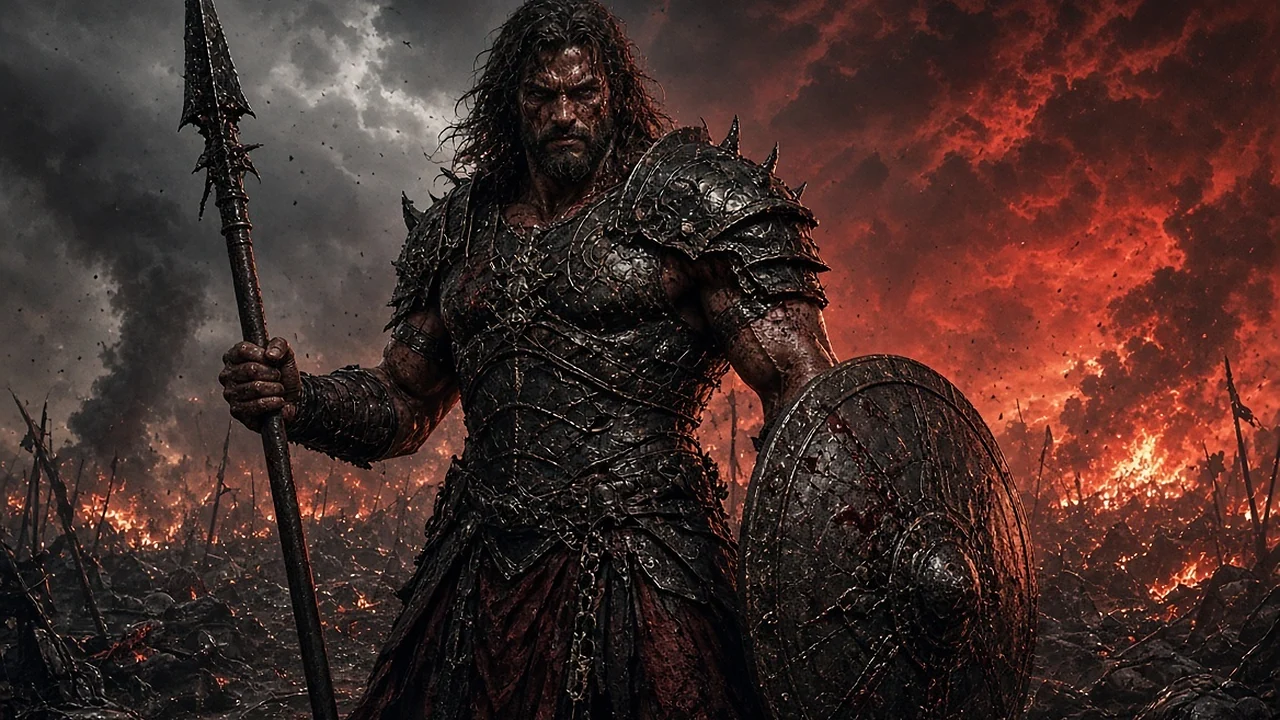
Ares in Greek mythology is the Olympian god of war, especially the violent, chaotic and frightening side of battle. He is the son of Zeus and Hera, brother to various Olympian figures and the Greek counterpart commonly identified with Roman Mars. But Ares is not the only deity associated with warfare: Athena represents strategic skill and disciplined planning in many Greek stories. In Homer’s Iliad, Ares can be formidable yet also wounded, humiliated and criticized by Zeus. His affair with Aphrodite leads to one of the most famous comic scenes in the Odyssey. Understanding Ares requires more than saying “strongest warrior god”; the primary poems show a powerful but complicated divine personality.
Who is Ares, the Greek god of war?
Ares belongs to the Olympian gods and embodies the fierce emotions and danger of combat. In Greek epic, battles involve not only clever plans and personal heroism but also bloodshed, panic and families grieving for the dead. Ares can personify these destructive dimensions of war. The ancient poets sometimes describe him in terms of his frightening energy rather than as a reassuring protector. That literary emphasis distinguishes him from the heroic image many video games give him.
However, the statement that the ancient Greeks never worshipped Ares would be wrong. Gods could have local cults and religious importance even if epic poets portrayed some of their actions unfavorably. The stories do not assign permanent moral labels to every divine figure, and Ares remains an immortal deity in the Olympian family. His reputation is a blend of mythic narrative, artwork, local worship and the contrast with other war-associated gods.
Who were Ares’s parents and siblings?
In the familiar Hesiodic genealogy, Zeus and Hera are the parents of Ares. Hera is queen of the gods and a major goddess of marriage, while Zeus is the ruler of Olympus. His siblings or half-siblings include deities whose domains seem very different, such as Athena, Apollo, Artemis, Hermes and Hephaestus in various genealogies. Family relationships matter because epic poems use disagreements among divine relatives to influence human wars.
Ares is not the same person as Heracles, the heroic son of Zeus known for his twelve labours, and he is not Zeus’s mortal son leading a specific historical army. His powers belong to divine war imagery. Family lists also depend on the author: not every birth story is identical across Greek texts. Naming Zeus and Hera is securely grounded for the standard Ares genealogy, but one should avoid inventing a modern biography with precise birth dates or childhood campaigns.
What powers and weapons did Ares have?
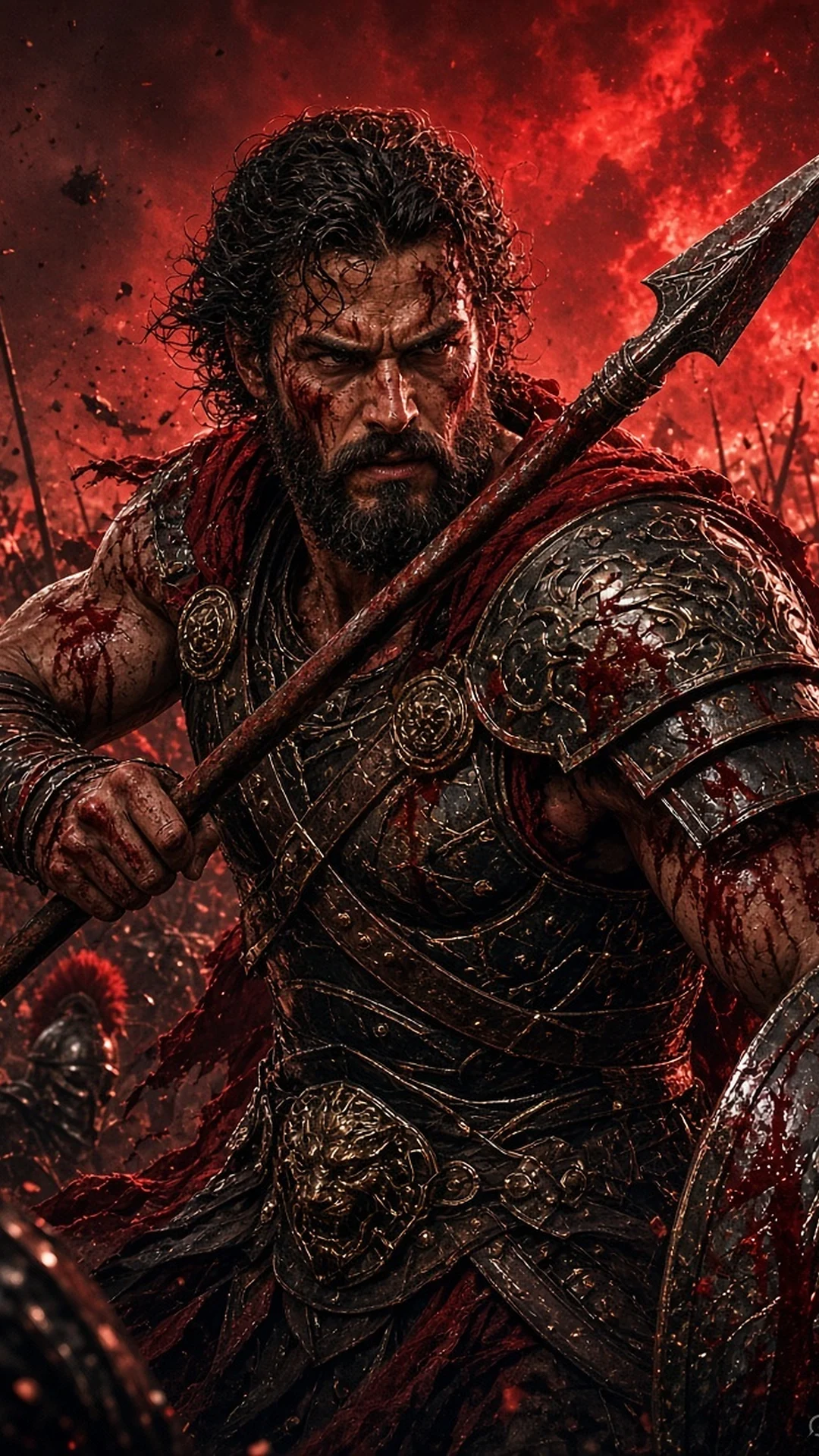
Ares appears as an armed warrior with spear, shield, helmet and armor. Those attributes show his battlefield identity but do not make each item a singular magical weapon with a universally fixed name. In literature he influences the violence and momentum of conflict and can accompany personifications of fear and terror. Phobos and Deimos, names associated with fear and dread, appear in Ares-related traditions, as does Enyo, a goddess connected with destructive war.
He can travel in a chariot and join combat in human wars, particularly the legendary Trojan War. He also interacts with other immortals, who may oppose or restrain him. The existence of supernatural conflict does not mean a Greek poem supplies exact numerical strength levels, battlefield statistics or a guaranteed ranking against every Olympian. Ares is dangerous but not invincible within every narrated encounter.
Ares versus Athena: which Greek war god is stronger?
Athena is associated with wisdom, strategy and the organized side of conflict, while Ares often symbolizes furious battle and its chaotic consequences. This is a useful contrast in readings of Homer, but it is a simplification rather than a statement that the two possess wholly separate powers in every ancient locality. Athena also fights, and Ares remains a significant divine force. Neither can be reduced to a fixed score in a fantasy tournament.
In Homer’s Iliad Book 5, the warrior Diomedes, supported by Athena, confronts Ares. Athena turns aside Ares’s spear and helps Diomedes wound the war god. Ares cries out and retreats to Olympus, where he complains to Zeus. Zeus sharply criticizes Ares’s love of conflict before a divine healer tends his wound. This episode shows the ability of strategy and divine support to check violent aggression; it does not establish that Ares loses every imaginable duel with any child of Athena.
Was Ares wounded or imprisoned in Greek myths?
Yes. The Iliad describes Ares being wounded by Diomedes through Athena’s assistance, and the scene makes clear that gods can suffer injuries without becoming ordinary mortals. In the same book, Dione recalls a different incident involving the Aloadae, Otus and Ephialtes, who confined Ares in a bronze vessel for thirteen months. Hermes eventually helps free him. This is an excellent correction to the claim that the Greek war god could never be captured or embarrassed.
The tales are supernatural; they are not records of real soldiers arresting a historical person named Ares. More importantly, being wounded and needing rescue do not erase his divine identity. Greek stories frequently place even powerful gods in situations where another deity’s intelligence or a surprising alliance changes the result. That dramatic vulnerability is one reason Ares is more interesting than an unstoppable computer-game opponent.
What happened between Ares, Aphrodite and Hephaestus?
In Homer’s Odyssey Book 8, the bard Demodocus tells a story of Ares’s secret relationship with Aphrodite, who is married to the craftsman god Hephaestus in that narrative. Helios reports the affair, and Hephaestus prepares a remarkably fine and strong net over the bed. When Ares and Aphrodite meet, the trap catches them so they cannot move. The other gods come to see the scene, creating embarrassment and laughter.
Hephaestus’s success depends on skilled workmanship rather than overpowering Ares in a direct battle. Poseidon eventually promises to ensure an appropriate settlement, and the couple is released. This memorable episode illustrates a frequent Greek-myth theme: craftsmanship and careful planning can overcome the apparent advantage of force or beauty. It should not be confused with a historically verified marital scandal, nor should every later child attributed to Ares and Aphrodite be inserted into Homer’s exact episode without evidence.

Which side did Ares support in the Trojan War?
During the Trojan War of the Iliad, Ares is involved in a world where divine allegiances can shift and the gods often disagree. He supports the Trojan side in significant episodes, despite having indicated support for the Greeks at another point. Athena and Hera often favor the Achaeans, while Aphrodite and Apollo often assist Trojans in particular scenes. These are literary interventions in a legendary war, not a reconstruction of an actual historical chain of command.
Ares’s participation helps Homer convey battle as a force that overruns individual plans. Human soldiers become excited, terrified or wounded as the combat surges. It is therefore too simple to make Ares the commanding general who personally starts and wins the Trojan War. The famous quarrel between Achilles and Agamemnon, the actions of Hector and the decisions of Zeus all shape the poem’s events. Ares represents one powerful element within that larger epic conflict.
Are Ares and Mars exactly the same god?
Mars is the conventional Roman counterpart to Greek Ares. Romans adopted and reinterpreted Greek stories, but the Roman god developed a significant identity connected with the protection of the community, military order and Rome’s legendary ancestry. In Roman tradition Romulus and Remus are associated with Mars as their father, making him prominent in the city’s founding mythology. Agriculture and the protection of fields appear in discussions of older Roman Mars worship.
The difference matters because someone searching for “Ares versus Mars” may see the same armored figure but encounter different cultural meanings. Ares is often criticized in Homer for his love of violence, while Mars has a central civic and ancestral role in Roman state religion. Neither tradition is perfectly uniform, and Roman poets sometimes borrow Greek details deliberately. The best comparison highlights what overlaps and what changes rather than declaring the two religious histories identical.
Was Ares the strongest or most feared Olympian?
His battlefield associations certainly make him feared, but the ancient poems do not issue an official ranking of the “top ten most powerful Greek gods.” Zeus is king of the Olympian order, Poseidon rules the sea and Hades the underworld, while Athena can influence warfare through planning. Ares’s humiliating encounters with Athena and Hephaestus demonstrate why being a war deity does not automatically make him stronger than every other god in any situation.
A practical comparison asks what sort of power is being considered. In a direct expression of battle frenzy, Ares is an important figure. In long-term strategy, Athena is a natural comparison. In the ability to produce unbreakable artifacts, Hephaestus has a different advantage. Those roles appear in named stories, while numerical “power levels” are modern entertainment inventions. Readers can appreciate Ares’s ferocity without turning mythology into fake quantified data.
Ares mythology quick facts
| Question | Answer | Source note |
|---|---|---|
| Parents | Zeus and Hera | Hesiodic genealogy |
| Main domain | Violent warfare and battle | Homeric epic |
| Attributes | Helmet, spear, shield | Greek art and literature |
| Rival comparison | Athena: strategic warfare | Iliad Book 5 |
| Famous romance | Aphrodite | Odyssey Book 8 |
| Roman name | Mars | Roman religious tradition |
Five FAQs about Ares
Who is Ares in Greek mythology?
Ares is the Olympian god of war, particularly associated with battle violence, and a son of Zeus and Hera.
What is the difference between Ares and Athena?
Ares often represents furious combat; Athena is strongly linked with strategic intelligence and organized warfare.
Did Athena ever defeat Ares?
In Iliad Book 5 Athena helps Diomedes wound Ares, demonstrating that he is not unstoppable.
Was Aphrodite married to Ares?
In Odyssey Book 8 she is married to Hephaestus but has a relationship with Ares; the two are trapped by Hephaestus.
What is Ares’s Roman name?
Mars is the usual Roman counterpart, although Roman Mars has distinctive civic and agricultural associations.
Sources and conclusion
For Ares’s injury and conflict with Athena see Homer, Iliad Book 5. For Ares and Aphrodite see Homer, Odyssey Book 8. For family and divine generations compare Hesiod, Theogony and Theoi’s Ares source collection. Conclusion: Ares is a formidable war god whose myths also show vulnerability, desire and conflict with more strategic gods. Updated 14 November 2026. Visuals are conceptual artwork.























Share Your Opinion
Comments are closed on this post.