 Vista
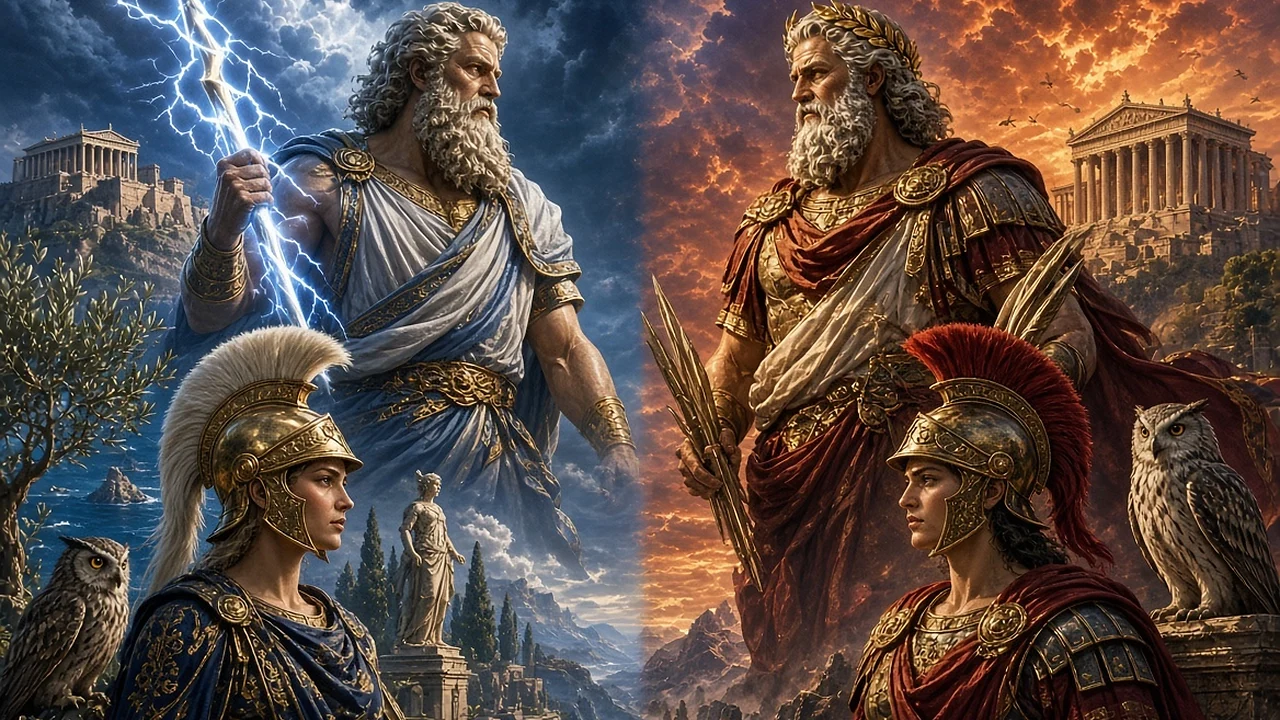
Greek vs Roman mythology is often explained with a simple rule: Zeus becomes Jupiter, Hera becomes Juno and Aphrodite becomes Venus. Those name pairs are useful, but the full comparison is more interesting. Romans encountered Greek religious traditions, identified many of their own deities with Greek figures and adapted famous stories in Latin literature. They also retained distinct Roman rituals, state festivals, sacred responsibilities and local histories. In Greek epic Ares can appear as an unruly god of violent war; Roman Mars also held a major civic and ancestral role. Heracles is the familiar Greek hero, whereas Hercules is the Latin form widely used in English. This guide compares the principal names, stories and religious meanings without pretending the two cultures were identical.
What is the main difference between Greek and Roman mythology?
Greek mythology comprises stories about the gods, heroic ancestors, creation and the afterlife told in many Greek communities over centuries. Roman mythology and religion developed within a different society, whose civic and family cults had independent significance. As Rome encountered the Greek-speaking world, the Romans increasingly identified gods through what scholars call interpretatio: interpreting another culture’s divine figures through familiar names. Latin poets then retold and reshaped Greek-connected narratives for Roman audiences.
This is why both extremes are misleading. It is wrong to say Roman authors invented every famous Greek god from scratch. It is also wrong to say the Romans had no religion until someone simply translated a Greek family tree. Rome had important rites and institutions, and the resulting system is best understood as cultural adaptation and overlap. Even where an ancient story uses nearly the same characters, its political message or religious importance can change according to author and historical setting.
Greek gods and Roman gods: complete names comparison
The following table gives common equivalents. It is a practical guide to recognizing characters in books and art, not a claim that every pair had exactly the same worship or mythology. The names of some Roman figures have more than one customary counterpart, and a number of Greek divine titles were already changing before the Roman empire.
| Greek name | Common Roman name | Main area or identity |
|---|---|---|
| Zeus | Jupiter / Jove | Sky, thunder, kingship |
| Hera | Juno | Marriage, queenship |
| Poseidon | Neptune | Sea and waters |
| Hades / Plouton | Pluto / Dis Pater | Underworld, wealth associations |
| Athena | Minerva | Wisdom, crafts and strategy |
| Aphrodite | Venus | Love, beauty, attraction |
| Ares | Mars | War |
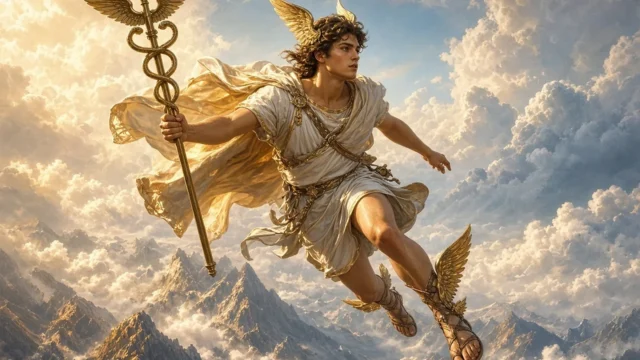
| Hermes | Mercury | Messages, travel and commerce |
| Artemis | Diana | Hunt and wild nature |
| Apollo | Apollo | Prophecy, music, healing |
| Demeter | Ceres | Grain and agriculture |
| Dionysus | Bacchus / Liber | Wine and ecstatic rites |
| Hephaestus | Vulcan | Forge, fire and craftsmanship |
| Hestia | Vesta | Hearth and household fire |
| Persephone | Proserpina | Underworld queen |
| Eros | Cupid / Amor | Desire and love |
| Cronus | Saturn | Older divine generation |
| Moirai | Parcae | Fate and allotted lifespan |
| Heracles (hero) | Hercules (hero) | Strength and heroic labours |
Important: Apollo is normally called Apollo in both languages; not every character receives a new Roman name. Heracles/Hercules is a legendary hero who becomes divine in important traditions, rather than another one of the children assigned one fixed Olympian ministry. Hades, Plouton, Pluto and Dis Pater involve overlapping names and titles whose religious histories are not identical. That qualification is more useful than forcing a perfect bilingual dictionary.
Which mythology came first: Greek or Roman?
The earliest surviving extended Greek epic and genealogical poetry, such as Homer’s Iliad and Odyssey and Hesiod’s Theogony, precede the familiar surviving imperial Roman retellings. Greek narratives were already circulating before poets such as Virgil and Ovid wrote in Latin around the late first century BCE and early first century CE. The second-century CE novelist Apuleius then gave us the extended Cupid-and-Psyche romance in his Golden Ass.
But that simple literary timeline does not mean every Roman religious practice was imported late or had no older local foundation. Rome’s rituals developed across centuries; people worshipped state, household and agricultural deities before the surviving Latin literary masterpieces were written. Comparing what has survived in manuscripts is different from determining the first historical moment any group believed in a divine power. A careful chronology separates source date, mythic event and history of ritual practice.
Zeus versus Jupiter: were they exactly the same?
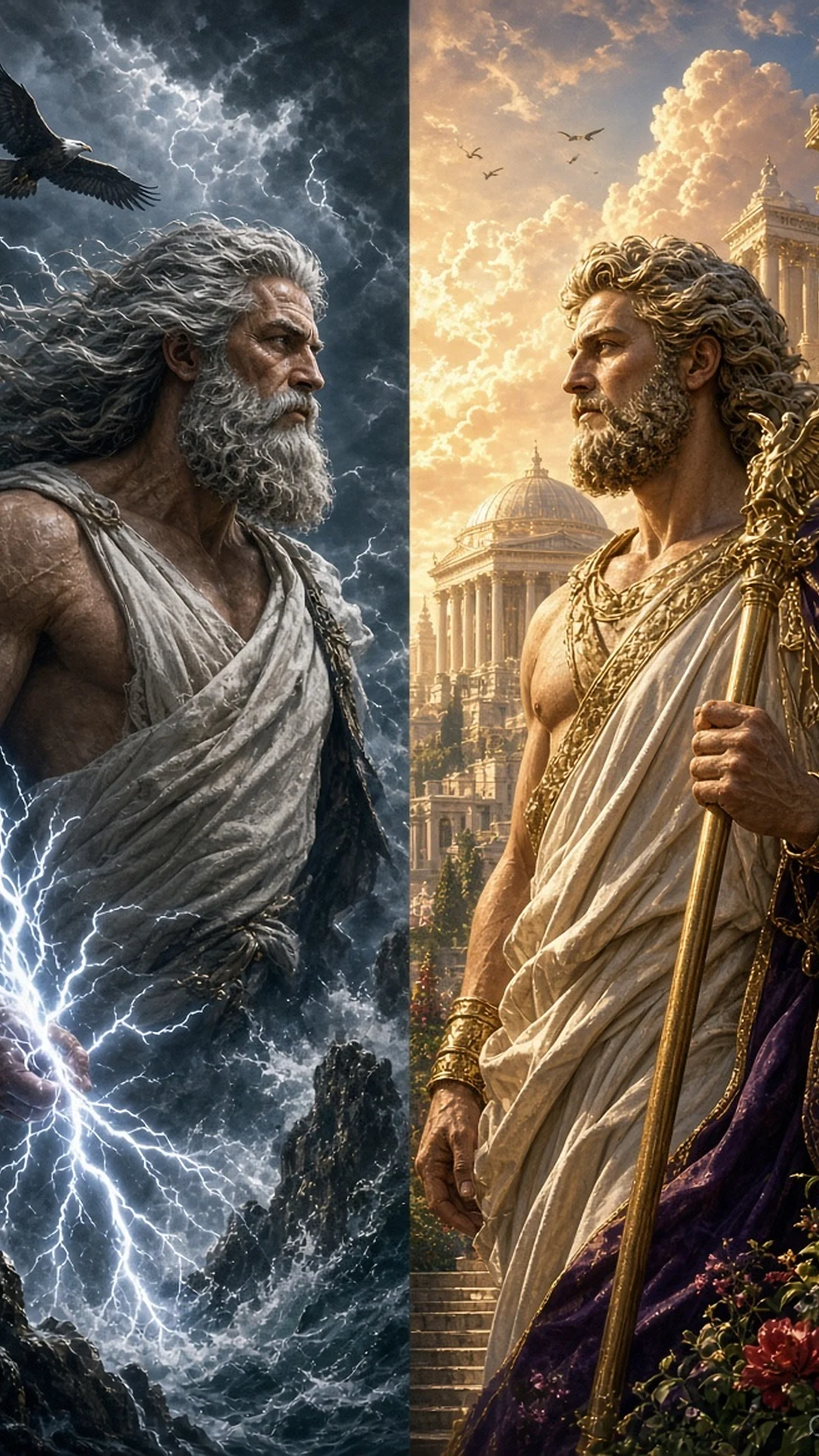
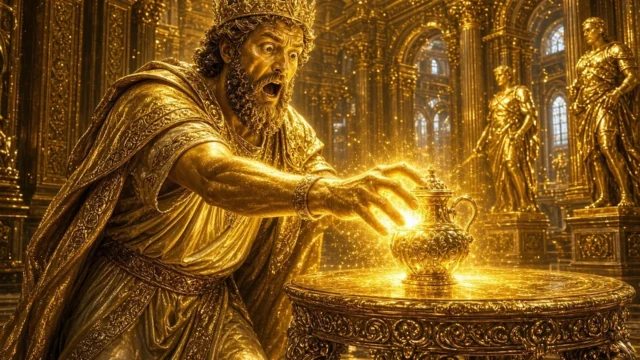
Zeus is the chief god of the Olympians in Greek poetic tradition, associated with thunder, the sky, oaths, order and divine rule. Jupiter, often called Jove, is a supreme Roman sky deity with a central role in the state. His worship and the political meaning of temples and vows had distinctive Roman dimensions. Over time, Greeks and Romans identified Zeus and Jupiter closely, and Latin retellings frequently use Jupiter where a Greek source uses Zeus.
That does not guarantee a one-to-one correspondence in every sacred title or regional practice. Greek Zeus had numerous local epithets; Roman Jupiter had his own, such as Jupiter Optimus Maximus, strongly associated with Rome’s public religion. A Hollywood film may move freely between names, but a source-based article should retain the text’s identity. When discussing Homer, use Zeus; when explaining Virgil’s Aeneid, Jupiter is normally the natural Latin name.
Ares versus Mars: why does the Roman war god feel different?
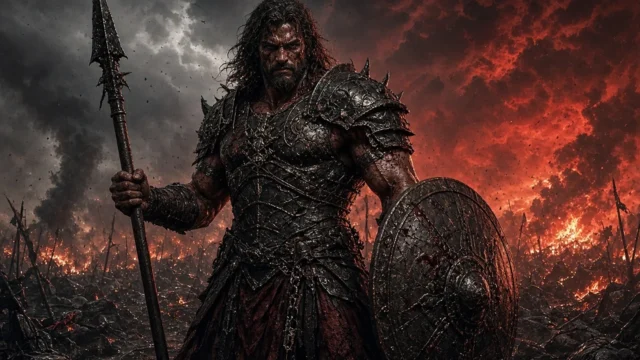
Ares often personifies fierce combat and uncontrolled violence in Greek epic. In the Iliad, he can be wounded with help from Athena and rebuked by Zeus for the destruction he loves. Mars is usually identified as his Roman equivalent, but he is also a major guardian of Rome’s community and its military traditions. In Roman founding stories, Mars is the father of Romulus and Remus, placing him near the heart of the city’s legendary origins.
Roman Mars also has connections with older agricultural and protective aspects that should not be erased. This does not mean every Roman author portrayed Mars as peaceful, nor that every Greek cult considered Ares a villain. The difference is one of emphasis, civic status and literary portrayal. When people search “Ares vs Mars,” the most useful answer is not a fantasy fight between two different warriors; it is how two cultures understood an overlapping god within their different religious worlds.
Aphrodite versus Venus: love goddess and Roman ancestry
Aphrodite is the famous Greek goddess of desire and beauty. In Hesiod she has a remarkable sea-foam origin; in Homer she is daughter of Zeus and Dione. The Roman Venus becomes strongly associated with the Trojan hero Aeneas, her son in an influential tradition. Virgil’s Aeneid uses Aeneas’s journey to connect legendary Troy with the beginnings of the people who would ultimately give rise to Rome.
Thus a similar divine character can carry different cultural priorities. Greek art and cult connected Aphrodite with places such as Cyprus, while Roman Venus also gained a role in Rome’s ancestry and public ideology. Their stories overlap, but a reference to Venus as the mother of Aeneas in Latin epic should not be silently attributed to the exact same passage of Hesiod’s Theogony. Ancient authors develop the stories in different directions.
Athena versus Minerva, Artemis versus Diana
Athena is central to Greek accounts of strategy, wisdom, crafts and the protection of cities, especially Athens. Minerva, her familiar Roman equivalent, is important in Roman civic religion, including the Capitoline Triad with Jupiter and Juno. Both can be represented as armed goddesses, but the contexts of their temples and civic functions are not identical. It helps to distinguish the literary role in a Greek myth from public worship in a Roman city.
Artemis is associated with the hunt, wild nature and the protection of vulnerable life stages. Diana is her Roman counterpart, with important local traditions of her own. Lunar symbolism becomes closely associated with both in various later writings, but Selene is a distinct moon goddess in early Greek genealogy. Simplified charts that rename Artemis “the original moon” and claim Diana has no separate Roman history obscure how divine identities change over time.
Hestia versus Vesta: an important religious difference
Hestia is the Greek goddess of the hearth, whose identity is tied to the central fire of home and community. The Roman Vesta is also associated with sacred fire, but Roman state religion developed a particularly prominent institution of Vestal Virgins who guarded Vesta’s sacred flame and undertook special duties. This is a good example of why translating the name alone misses a great deal about actual Roman institutions.
The Roman priestesses were real participants in historical religious practice, not supernatural characters invented solely to explain a story about the Olympian family. Their institution is studied through historical texts, inscriptions and archaeology. Greek households likewise had genuine religious practices around the hearth, but the civic organization was not simply a copy of Rome’s system. The comparison illustrates the difference between mythic equivalent and identical ritual institution.
Hades versus Pluto and the underworld names
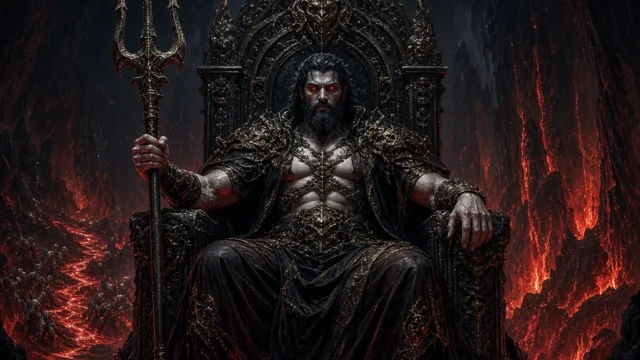
Greek Hades can name both the ruler and the realm of the dead. Another Greek title, Plouton, highlights associations with wealth drawn from beneath the earth. Roman language and religion include Pluto and Dis Pater among the names connected with underworld deities. One can pair Hades with Pluto for a beginner’s table while still noting that ancient writers had multiple names and religious emphases.
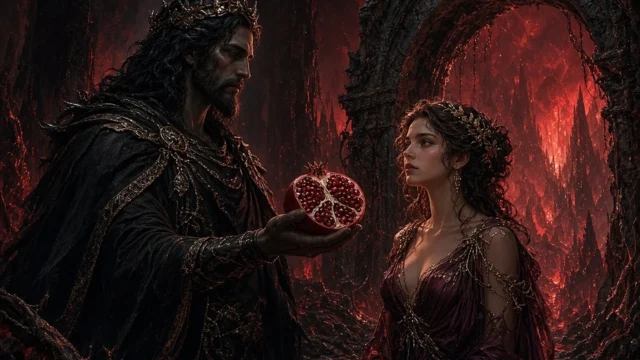
Likewise Persephone is commonly associated with Roman Proserpina. Her abduction and her mother Demeter/Ceres are central to seasonal and agricultural storytelling. But the Homeric Hymn to Demeter, a Greek source, does not share every narrative detail or time division with later Roman retellings. Source distinctions remain important when a familiar story is told across cultures.
Why did Roman authors retell Greek myths?
Latin authors could adapt familiar Greek stories to explore themes important to their own audiences. Ovid’s Metamorphoses gathers transformations, including Narcissus, Echo, Daphne and many others. Virgil’s Aeneid uses Trojan-connected heroic traditions in a narrative about destiny and Roman origins. Apuleius’s The Golden Ass places Cupid and Psyche inside a novel with its own complex storytelling frame. These works are valuable primary sources for Roman-era literary adaptations, not disposable copies of earlier poems.
This explains why so many internet articles include Latin names inside “Greek mythology” pages. The tradition is interconnected, but readers deserve to know whether a story comes from Homer, Hesiod, Ovid, Virgil or Apuleius. Their works differ in language, date, genre and purpose. A claim that “Homer wrote Cupid’s four trials” or “Ovid wrote the Iliad” is not a minor naming issue; it reverses the literary history. Good multilingual articles explain both the Greek roots and the Roman source.
Greek versus Roman creation, heroes and public religion
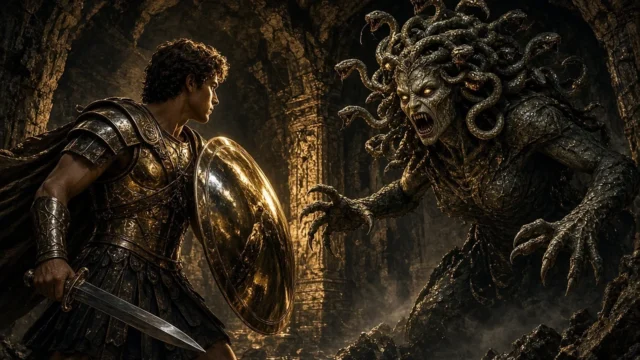
Greek cosmogony in Hesiod moves through Chaos, Gaia, Ouranos, Cronus and Zeus. Roman literature includes myths with shared figures, but Rome also emphasized narratives of Aeneas, Romulus and Remus, sacred foundations, public virtues and divine protection of the city. Greek heroic cycles concerning Perseus, Theseus and Heracles could be retold in Latin under adapted names. Yet Roman origin traditions cannot be reduced to a simple renaming of a Greek creation poem.
There is also no reason to treat either body of myth as a single uniform religion practised the same way in every town and century. Ancient religion had regional sanctuaries, family rites and changing interpretations. Archaeological remains can tell us about worship and temples but do not verify the supernatural events narrated in the poems. The appropriate method is to distinguish historical communities, literary versions and artistic depictions.
Greek vs Roman mythology: myths versus facts
Myth: Every Greek god received a completely new Roman name. Fact: Apollo is usually Apollo in both. Myth: Roman mythology is only Greek mythology translated into Latin. Fact: Romans adapted Greek material while maintaining distinct ritual traditions. Myth: The Roman versions are always older. Fact: many major surviving Greek epic sources predate Latin retellings. Myth: similarity proves two historical religions are identical. Fact: equivalents are interpretive and their roles can differ.
The comparison should remain within its own search intent. A separate article on Greek versus Hindu mythology examines a different question and should not imply that Hindu deities automatically match these Greek-Roman equivalents. The best reader experience uses accurate names, time periods and examples rather than sensational “all gods are the same” shortcuts.
Five FAQs about Greek and Roman mythology
Are Greek and Roman mythology the same?
No. They share many gods and stories, but Roman religion, literature, civic rites and meanings also developed separately.
Is Zeus called Jupiter in Roman mythology?
Yes, Jupiter or Jove is the commonly identified Roman equivalent of Zeus.
What is the difference between Ares and Mars?
Ares often embodies violent battle in Greek epic, while Mars has particularly important civic and ancestral roles in Roman religion.
Is Hercules Greek or Roman?
Heracles is the Greek name; Hercules is its familiar Latin/Roman form for the heroic figure.
What is the Roman name of Apollo?
Apollo is usually called Apollo in Latin as well, showing that not every divine name was changed.
Ancient sources and conclusion
For the earlier Greek divine family see Hesiod, Theogony; for Olympian war gods see Homer, Iliad Book 5; for Latin reinterpretation compare Ovid’s Metamorphoses, University of Virginia translation and Apuleius’s Golden Ass Cupid–Psyche excerpt. Conclusion: Greek and Roman mythological worlds overlap profoundly, but the best comparison explains both the familiar equivalents and their differing cultures, cults and surviving literary sources. Updated 14 November 2026. Poster is an educational artistic comparison.

















Share Your Opinion
Comments are closed on this post.