 Vista
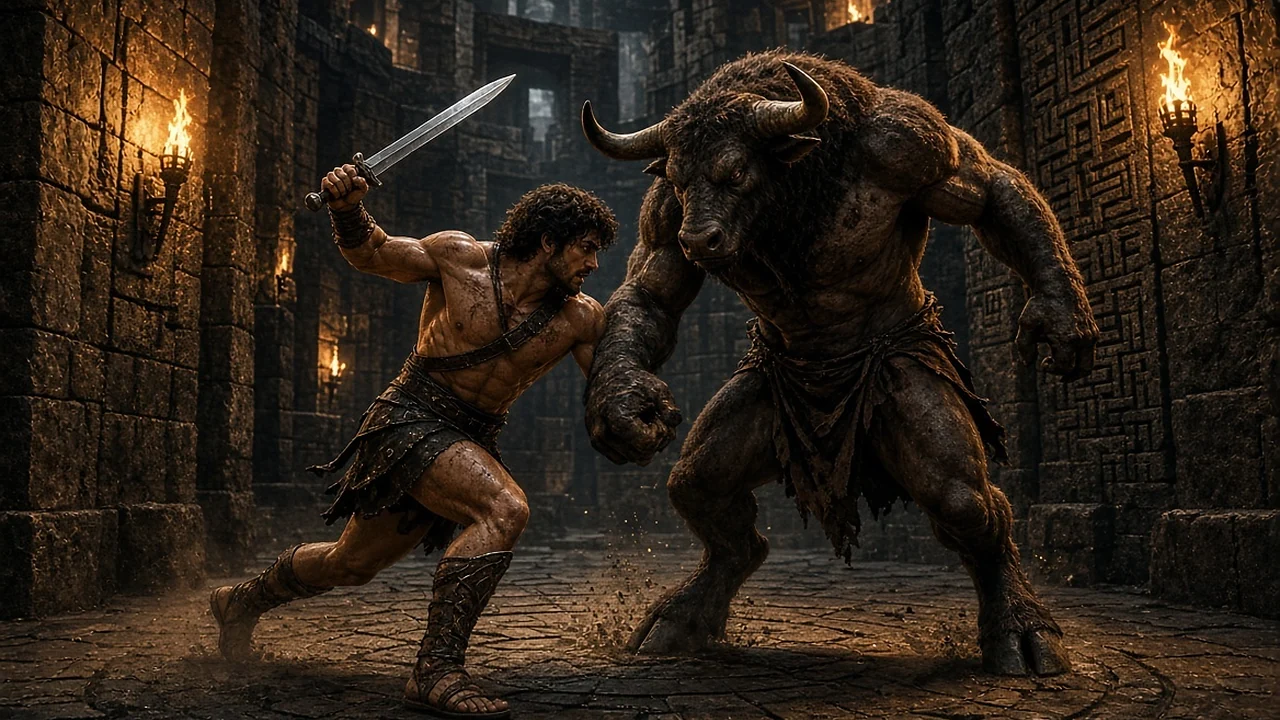
Theseus and the Minotaur is the Greek myth of an Athenian hero who travels to Crete, enters a maze-like Labyrinth, defeats a bull-headed monster and escapes with help from Ariadne’s thread. The monster is born from Pasiphaë and a remarkable bull and is kept inside a structure designed by the craftsman Daedalus for King Minos. Theseus volunteers or is selected among young Athenians sent as tribute. He promises to return safely, but the story ends with another tragedy: he fails to change his ship’s black sail to white, leading his father Aegeus to think his son has died. The connected narrative is recorded in the Epitome of Apollodorus, with differing details in later Greek and Roman sources.
Who was Theseus, the Greek hero of Athens?
Theseus belongs to the legendary heroic world of Athens. His father in a familiar royal genealogy is Aegeus, king of Athens, and his mother is Aethra; some traditions also associate Poseidon with his paternity. That variation is a normal feature of Greek myth, not a medical family record. Theseus is known for dangerous journeys, fights against violent opponents and later rule over Athens. The Minotaur episode is his best-known Cretan adventure, but not the whole of his life.
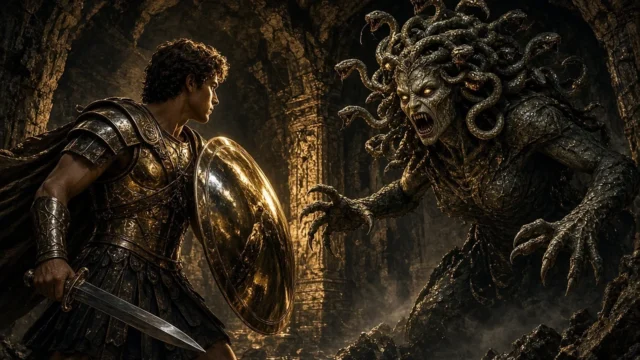
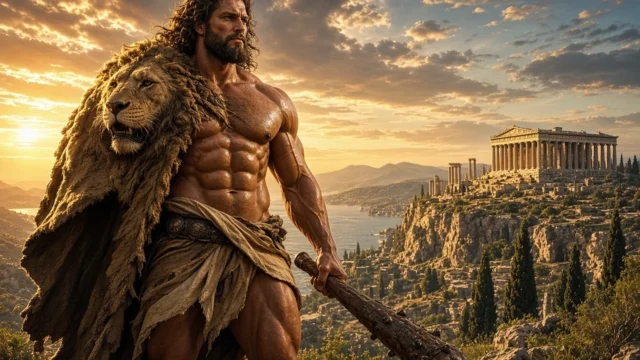
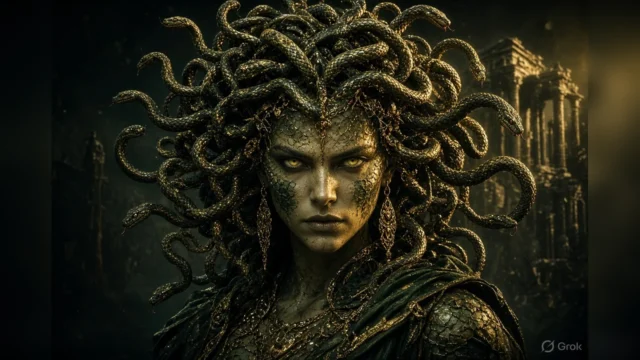
Readers should distinguish Theseus from Perseus, who defeats Medusa, and from Heracles, famous for twelve labours. The heroes sometimes face similarly spectacular creatures, but their goals, helpers and journeys differ. Theseus is especially associated with Athenian traditions and the relationship between Athens and Crete. His story is therefore part of the cultural imagination of two important regions in Greek storytelling rather than a report of an archaeological expedition into a proven monster lair.
Why did Athens send young people to King Minos?
In the mythic backstory, conflict follows the death of Androgeus, a son of the Cretan king Minos. Accounts of exactly how he dies and why Minos demands punishment vary. A familiar arrangement requires Athens to send a group of young men and women to Crete at intervals, commonly described as seven of each. There they face the danger of the Minotaur. Different sources disagree over whether tribute occurs every year or after a longer period and how Theseus comes to join a particular voyage.
The important narrative point is that young Athenians are sent into a dangerous situation in which the ruling power appears to have the advantage. Theseus joins the mission with the goal of ending the threat. In Apollodorus he may be drawn as part of the tribute, while another tradition says he goes willingly. A careful summary should preserve that difference instead of announcing that a universal annual lottery was administered exactly the same way in every ancient version.
Who was the Minotaur and why was it in the Labyrinth?
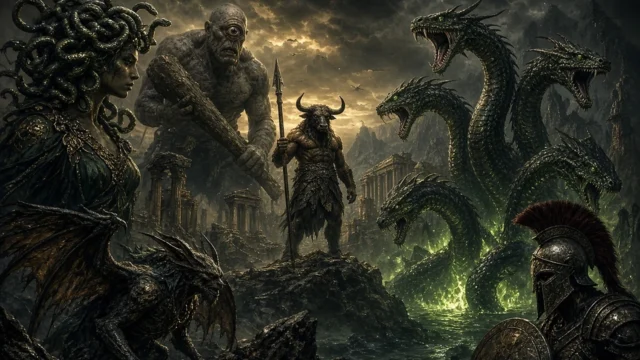
The Minotaur is a hybrid with a bull’s head and a largely human body in a prominent ancient description. Apollodorus gives the name Asterius for the creature and connects its birth to Pasiphaë, Minos’s wife, and an extraordinary bull. The story is a mythical expression of divine punishment and royal disorder. It is not scientific evidence that such a hybrid species ever existed.
Minos places the creature inside the Labyrinth, an elaborate structure built by Daedalus, whose winding passages make it difficult to find a way out. A maze is more than scenery: without a method for remembering the path, even a victor might become trapped. Modern art often depicts huge stone walls and dramatic torches, but details of their shape come from interpretation rather than a surviving ancient architect’s verified blueprint. The distinction between the mythic Labyrinth and real Minoan palace remains should not be erased.
How did Theseus meet Ariadne, the daughter of Minos?
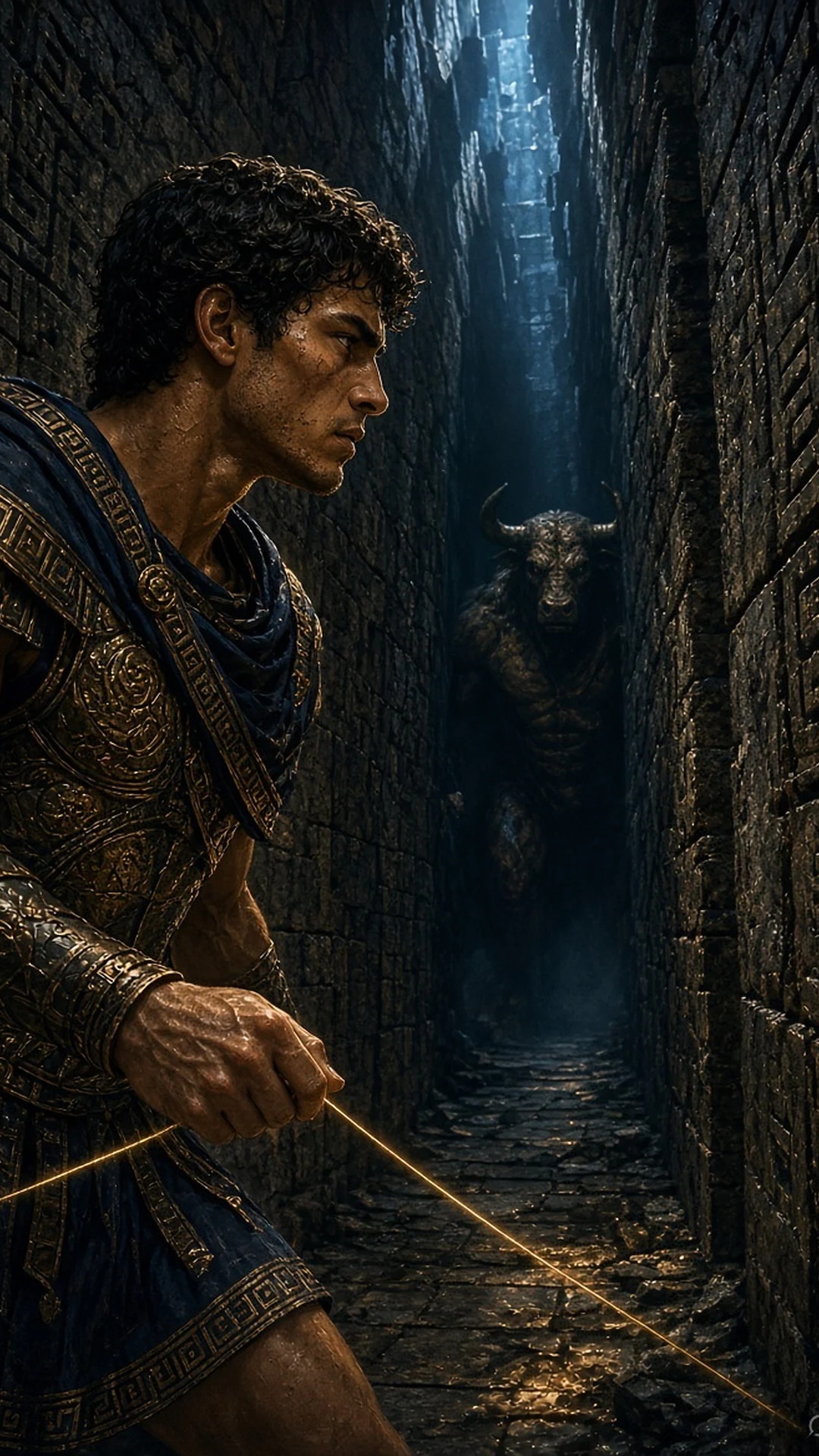
Ariadne, daughter of King Minos and Pasiphaë, takes an interest in Theseus when he arrives on Crete. In Apollodorus, Epitome 1.8–9, she offers to help him if he promises to take her away and make her his wife. Theseus agrees. Ariadne consults Daedalus, the maker of the maze, to discover how to find the exit. The plan she gives the hero is remarkably simple compared with the monstrous challenge: carry a thread so that the route into the Labyrinth can be retraced.
This scene matters because the victory depends not only on the hero’s physical courage but also on Ariadne’s initiative and Daedalus’s knowledge. A retelling that says Theseus figured out every part of the maze alone leaves out the crucial female helper. Some other traditions vary the specific guidance or gifts, and readers should keep those versions separate when comparing illustrations. In the familiar thread narrative, the escape solution is made before the fight even begins.
How did Ariadne’s thread lead Theseus out?
According to the Epitome, Theseus fastens the thread at the entrance and unrolls it as he moves through the passages. Think of it as a physical route marker: each turn extends the line behind him. Once he reaches the creature and the struggle is over, he can follow the thread backward to the same entrance. This is different from memorizing a complicated map, finding a magic portal or breaking through the maze’s walls with superhuman strength.
Ariadne’s thread has become an enduring metaphor for the clue that allows a person to navigate a confusing problem. In practical terms, an investigative question or carefully recorded sequence of steps can play a similar role. That modern comparison is an interpretation, not evidence that Theseus invented a specific mathematical maze algorithm. The ancient narrative uses an ordinary object to solve a supernatural problem, which is one reason the scene remains memorable.
How did Theseus kill the Minotaur?
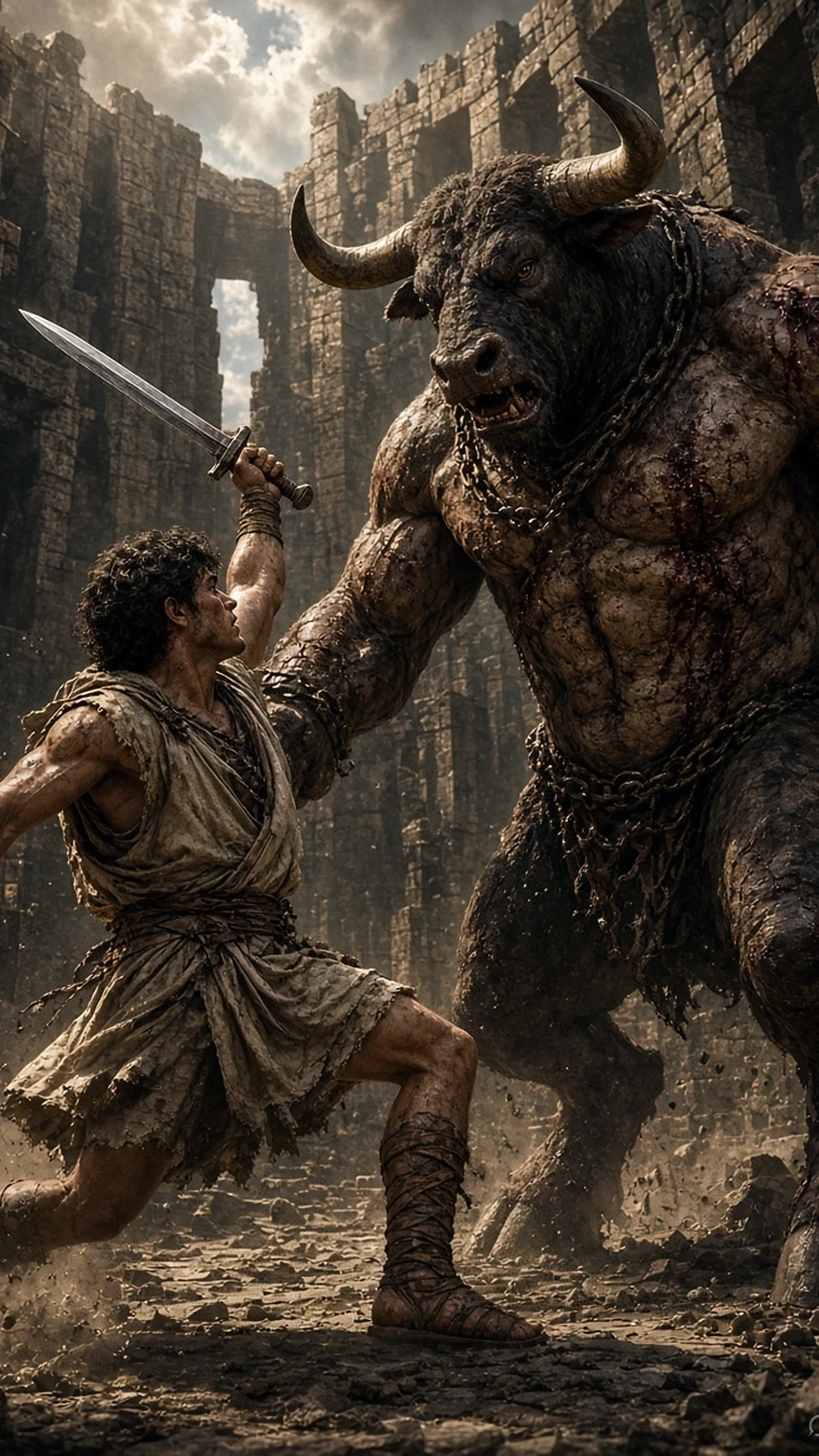
The hero eventually finds the Minotaur in the inner part of the Labyrinth. Apollodorus, Epitome 1.9, says that Theseus kills it by striking with his fists. Other ancient versions and much later artworks portray the struggle differently, including depictions with weapons. The source distinction matters: a dramatic modern movie in which Theseus uses a magical sword cannot be attributed directly to Apollodorus’s wording without evidence.
Once the creature is defeated, Theseus follows Ariadne’s thread out of the maze. His success means that the group of Athenians can escape rather than remain trapped inside. The tale is often summarized as the strong hero slaying a monster, but it really has two intertwined problems: defeat the danger and still find a way out. The second depends on a plan created through cooperation. Without that detail the plot would not explain why the Labyrinth was a serious challenge in the first place.
What happened to Ariadne on Naxos?
After escaping Crete, Theseus travels with Ariadne and the Athenian youths. During the return journey they reach the island of Naxos. Here the sources diverge over Ariadne’s fate. In the Epitome of Apollodorus, Dionysus falls in love with Ariadne and takes her away. Other accounts emphasize that Theseus abandons her; some later traditions offer divine intervention or competing explanations for why they separate.
It is therefore misleading to say the entire ancient Greek world agreed on a single scene in which Theseus intentionally leaves Ariadne asleep simply because he is cruel. That version is famous, but it is one among several. Ariadne’s fate matters because she helped save Theseus and was promised marriage in the Apollodoran narrative. The separation raises questions about promises and gratitude, yet the exact blame depends on the specific text being retold.
Why did Aegeus die when Theseus returned to Athens?
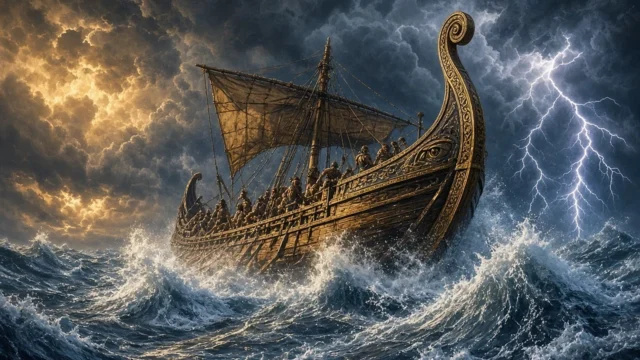
Before the journey, Theseus’s father Aegeus asks him to change the ship’s black sail to a white sail if he returns alive. The color acts as a simple distant signal, allowing the king to recognize the outcome from shore. Theseus survives and the Minotaur is defeated, but he forgets to change the sail. Some versions connect his distraction with grief over Ariadne, while others emphasize forgetfulness or divine influence.
When Aegeus sees the returning vessel with its black sail, he believes his son is dead. In the familiar account he throws himself from a height and dies. The Aegean Sea is sometimes linked to his name through the legend. Theseus arrives home having saved his companions but unintentionally bringing tragedy to his own family. The ending turns a triumphant monster adventure into a warning about communication, memory and unintended consequences.
What happened to Daedalus and Icarus afterward?
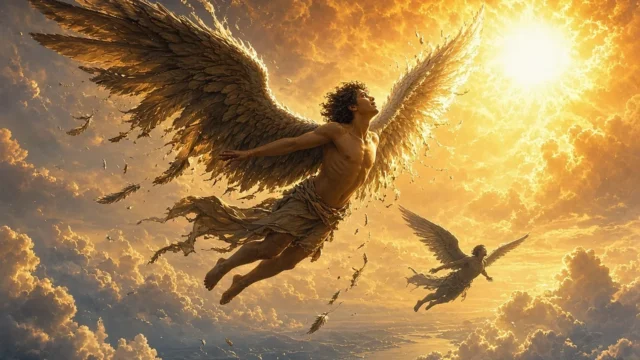
The Cretan myth cycle continues with the craftsman Daedalus and his son Icarus. In the Apollodoran Epitome 1.12, Minos punishes Daedalus in connection with Theseus’s escape, and Daedalus later makes wings to flee with his son. Icarus ignores his father’s caution about flying too high and too low, falls into the sea and dies in the best-known version. The detailed waxing-feathers episode is also famous from Ovid’s Metamorphoses Book 8.
These stories share a setting but ask different questions. Theseus needs a route through an enclosed maze; Daedalus later tries to escape from Crete by flying through open air. Both plans depend on craft and advice, and both contain painful consequences when something goes wrong. Nevertheless, a Theseus article should not replace its central battle with an entire Icarus retelling. Their connection is useful context, while the two episodes deserve distinct attention.
Theseus and the Minotaur story timeline
| Stage | Main event | Key figures |
|---|---|---|
| Tribute | Athenians travel to Crete | Minos, Theseus |
| Labyrinth | Monster kept in Daedalus’s maze | Minotaur, Daedalus |
| Plan | Ariadne gives thread | Ariadne, Theseus |
| Fight | Theseus defeats Minotaur | Theseus |
| Escape | Thread leads out | Ariadne’s help |
| Naxos | Ariadne and Theseus separate | Dionysus in some sources |
| Homecoming | Black sail brings tragedy | Theseus, Aegeus |
Five FAQs about Theseus and the Minotaur
Who killed the Minotaur in Greek mythology?
Theseus, an Athenian hero, in the Cretan Labyrinth.
How did Theseus find his way out of the maze?
He fixed a thread at the entrance, carried it inward and retraced it after defeating the monster.
Who gave Theseus the thread?
Ariadne, daughter of King Minos, after asking Daedalus how to escape the Labyrinth.
Did Theseus abandon Ariadne?
Some retellings say so; Apollodorus’s Epitome describes Dionysus taking Ariadne at Naxos.
Why did Aegeus die after the hero’s victory?
Theseus forgot to change the black sail to white, causing his father to think he had died.
Ancient sources and conclusion
The continuous quest and sail tragedy appear in Apollodorus, Epitome 1.7–12. The Minotaur’s birth and Daedalus’s Labyrinth are in Apollodorus, Library 3.1. The connected Icarus episode is elaborated in Ovid, Metamorphoses Book 8. Conclusion: Theseus succeeds through courage and Ariadne’s clever thread, yet a forgotten signal and the uncertain fate of Ariadne complicate the heroic ending. Updated 14 November 2026. Illustrations depict myth, not history.




Share Your Opinion
Comments are closed on this post.