 Vista
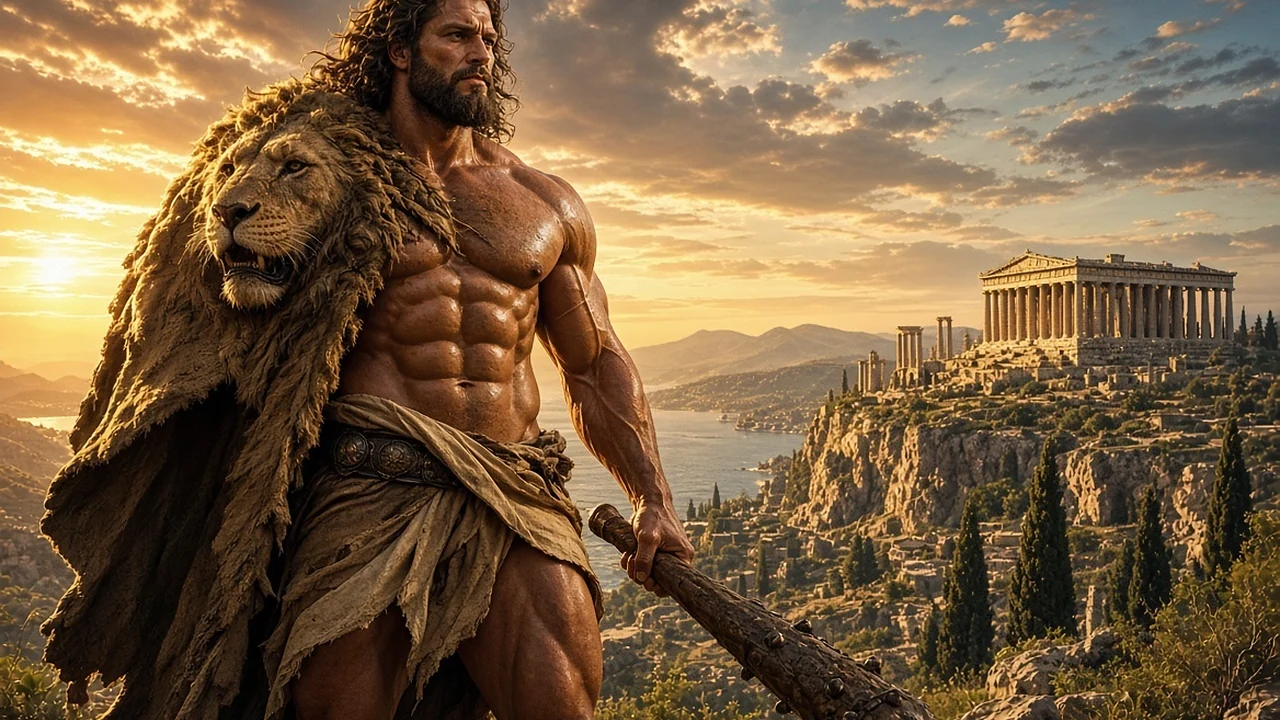
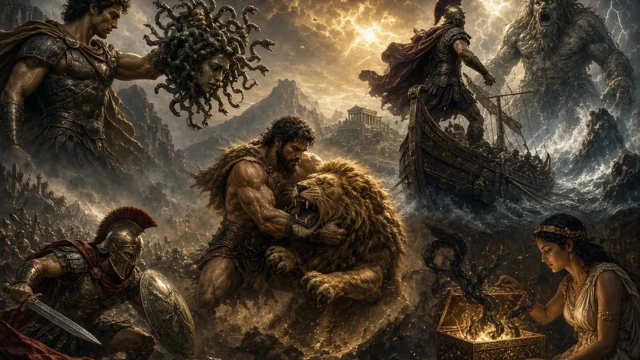
Hercules in Greek mythology is better known in the ancient Greek sources as Heracles, the extraordinarily strong son of Zeus and the mortal Alcmene. His most famous adventures are the twelve labours: tasks that send him against the Nemean Lion, Lernaean Hydra, dangerous animals, distant guardians and finally Cerberus in the underworld. But the story is not simply a series of monster battles. Heracles’ suffering, divine hostility, human mistakes, resourcefulness and eventual transformation are important to understanding why the Greeks remembered him. The fullest connected version of the labours survives in the Library traditionally attributed to Apollodorus, Book 2, section 5, though ancient authors and visual artists did not always list them in an identical order.
Who was Hercules, and why is his Greek name Heracles?
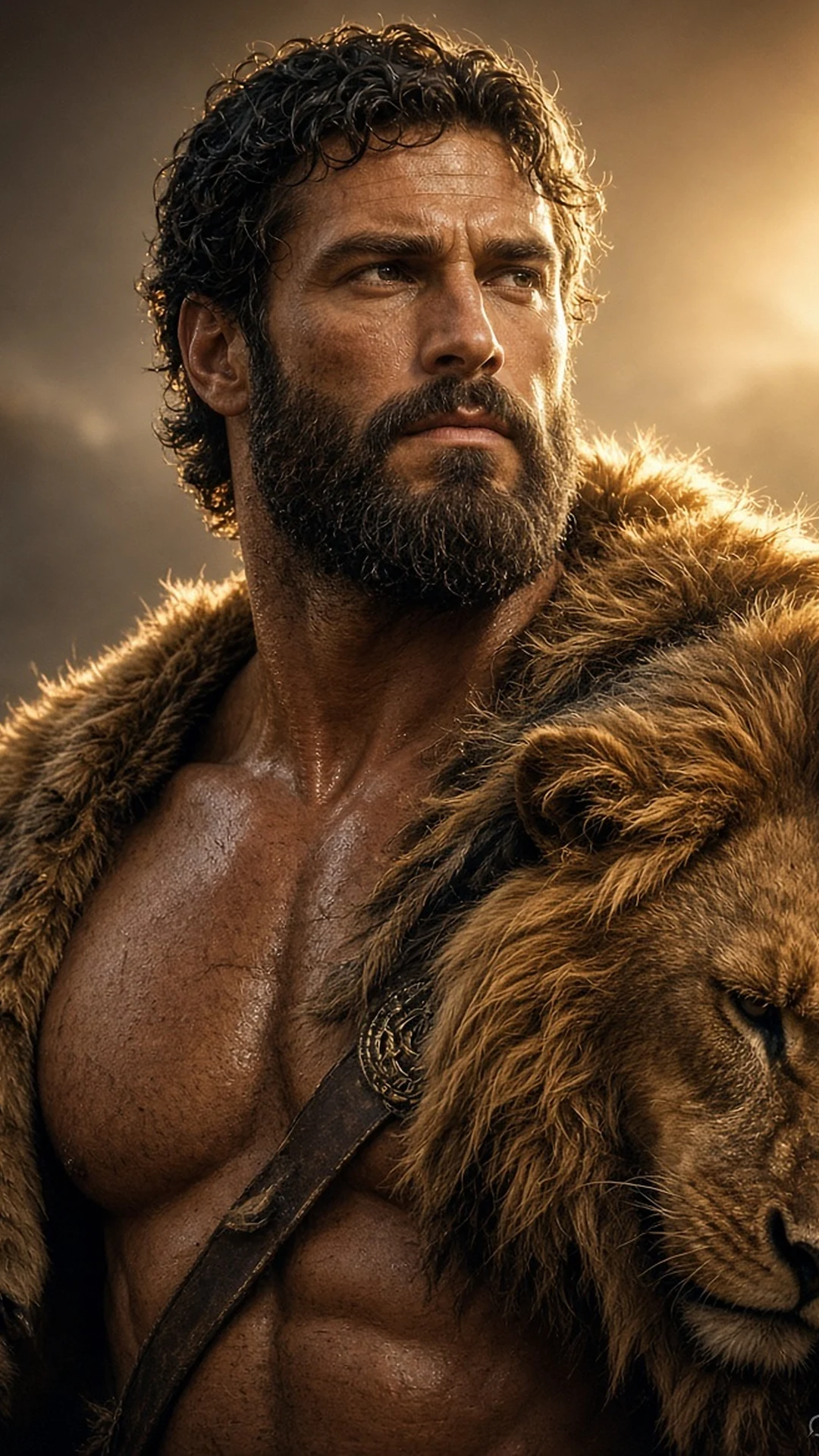
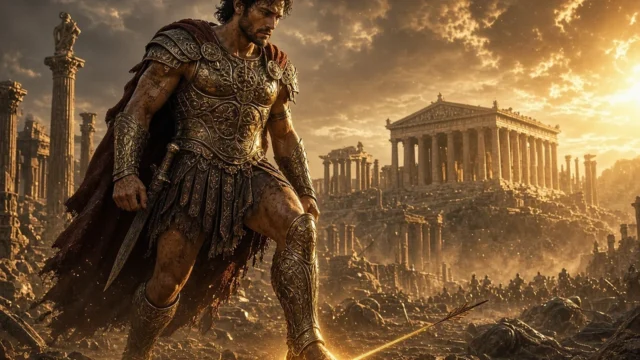
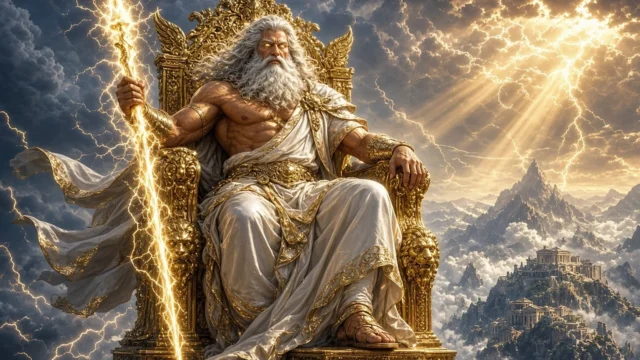
In Greek, the hero’s name is Heracles (Herakles); Hercules is the Latin or Roman form that became especially familiar in English. He is a son of Zeus and Alcmene, who belongs to a mortal royal family. Hera, Zeus’s wife, is associated in many stories with hostility toward the hero. Heracles eventually becomes an example of extraordinary strength combined with profound suffering. He is usually represented wearing the skin of a lion and carrying a heavy club, symbols drawn from his achievements rather than generic warrior costume.
The name distinction matters in research. A modern movie titled “Hercules” may use Roman naming for a mainly Greek plot, but that does not prove it has reproduced the older story. Greek poets, mythographers, Roman authors and local artistic traditions all shaped how audiences knew him. When writing about the labours, cite the ancient text used for the specific list and identify disputed details as variants.
Why did Heracles have to perform the twelve labours?
The hero’s life includes a devastating episode in which madness brings harm to his own family. In Apollodorus’s account, Hera causes madness and Heracles kills his children and others close to him. After purification and consultation at Delphi, he is told to serve Eurystheus and complete difficult assignments. The episode includes tragedy, not the straightforward origin of a perfect superhero on a cheerful quest. Parents and teachers choosing an adaptation for younger readers should know that some primary versions contain intense violence.
In that account, Eurystheus first gives Heracles ten tasks. Two are later rejected as improperly completed: the Hydra labour, because his nephew Iolaus helped him, and the cleaning of the Augean stables, because payment was involved. Two new demands bring the familiar total to twelve. Other texts and artworks do not always use the same order or explanation. The popular phrase “the twelve labours” is therefore helpful, but source-based writing should explain why a character initially asked for ten tasks appears in a list of twelve.
Labours 1–4: lion, Hydra, hind and boar
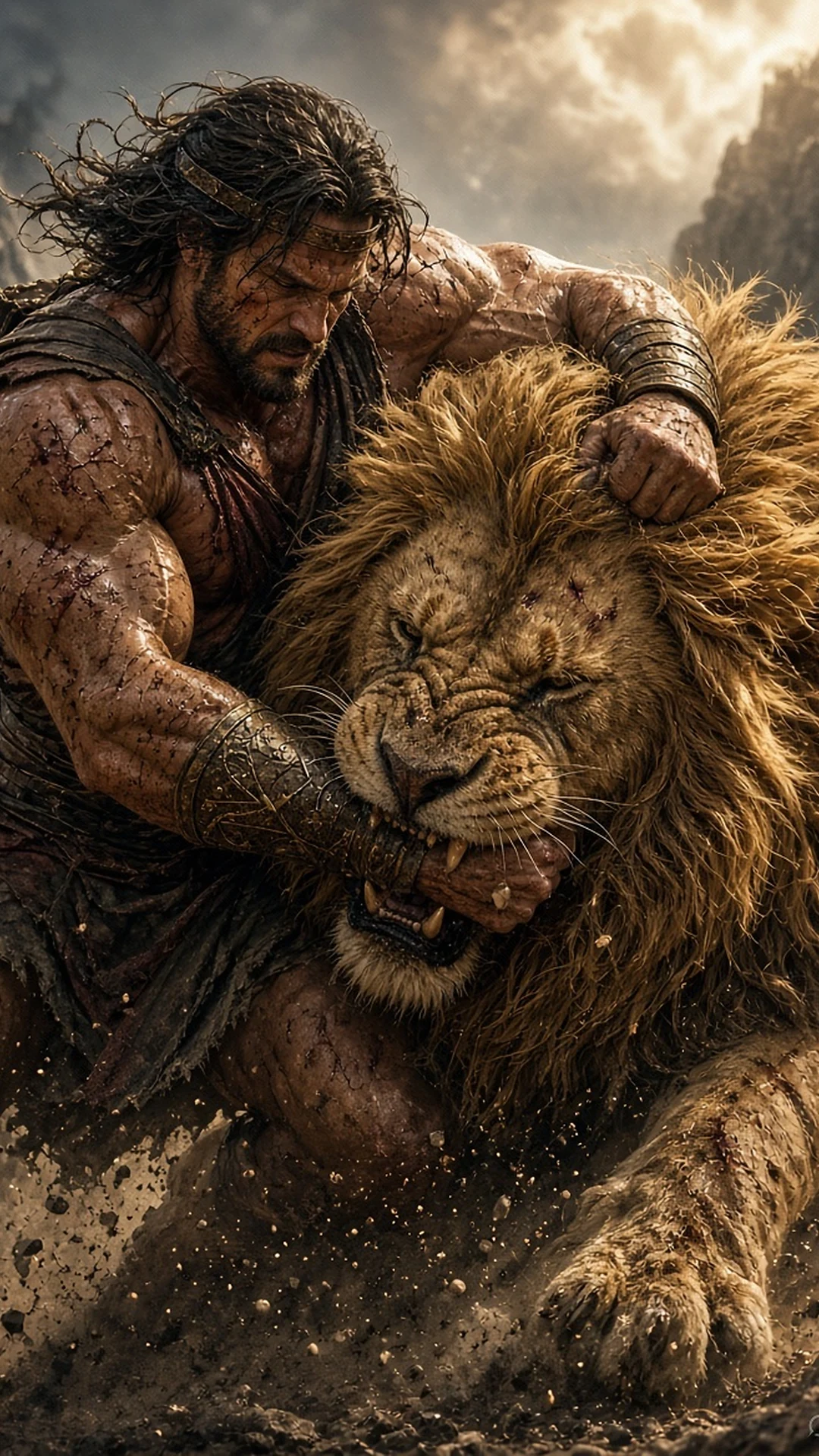
1. The Nemean Lion
Eurystheus first demands the skin of the Nemean Lion, an extraordinary beast whose hide resists normal weapons. Heracles cannot simply kill it with arrows. In Apollodorus, he blocks one entrance to the animal’s cave, confronts it in close quarters and strangles it. He then obtains the skin, which becomes his recognizable cloak. This first labour shows his strength while also introducing a pattern: a seemingly impossible task requires observation and a change of method rather than repeating a failed attack.
2. The Lernaean Hydra
The Hydra is a many-headed monster dwelling near Lerna. Severed heads can regrow, so smashing or cutting them makes the problem worse. Heracles works with Iolaus, who uses burning wood to stop the necks from producing new heads. The immortal head is secured, and the monster is overcome. Eurystheus later refuses to count the achievement because Heracles accepted help. The exact number of heads varies in retellings; the key source-based feature is the multiplying danger and the solution through cooperation.
3. The Ceryneian Hind
Heracles must capture a swift hind sacred to Artemis. Unlike the lion and Hydra tasks, success is not primarily about killing a dangerous creature. The challenge is to catch the animal without treating its sacred status as irrelevant. Ancient narratives differ about the pursuit and capture. The episode reminds readers that the labours test persistence, speed and restraint as well as strength. A list of twelve monsters to kill would misrepresent this task.
4. The Erymanthian Boar
The fourth task sends Heracles after a formidable wild boar on Mount Erymanthus. In the familiar account he drives it into deep snow, captures it alive and carries it back to Eurystheus. The terrified king is sometimes shown hiding from the captured beast. Capturing rather than killing the boar matters: it turns the feat into a problem of control and endurance. The story also forms part of a wider network of Heracles’ adventures, including encounters during the journey.
Labours 5–8: stables, birds, bull and man-eating horses
5. The Augean Stables
Eurystheus orders Heracles to clean the enormous cattle stables of King Augeas. Instead of attempting an impossible amount of work with ordinary tools, Heracles redirects water through the area in the familiar version. The labour becomes an example of solving a problem through ingenuity. Yet Eurystheus does not accept it as valid because Heracles arranged payment. That twist explains why this apparently completed task does not reduce the total number later demanded of the hero.
6. The Stymphalian Birds
Near Lake Stymphalus, birds described as dangerous threaten the surrounding land. Heracles must drive them out or kill them. In a traditional account Athena helps by providing a means to frighten the birds into the air, allowing him to use his bow. The precise depiction differs across sources and art. The important challenge is not a single giant opponent but a flock that cannot be handled by the same method used against the lion.
7. The Cretan Bull
The next task takes Heracles to Crete, where he must capture an extraordinary bull associated with the kingdom of Minos. The animal is not simply a duplicate of the Minotaur: the bull and the later half-human creature belong to related but different stories. Heracles brings the bull under control and transports it back. The distinction is useful for readers who encounter the Cretan Bull in the Heracles cycle and the Minotaur in the separate legend of Theseus.
8. The Mares of Diomedes
Heracles is sent to obtain the dangerous mares of Diomedes, often portrayed as feeding on human flesh. The journey involves a violent confrontation with their owner and difficult handling of the horses. Later retellings vary over how they are subdued and who is harmed on the expedition. The assignment should not be turned into a simple moral fable about training ordinary animals; it is a grim episode in heroic mythology with danger extending beyond the creatures themselves.
Labours 9–12: Hippolyta, Geryon, golden apples and Cerberus
9. The Girdle of Hippolyta
Heracles travels to obtain the belt or girdle of Hippolyta, queen of the Amazons. In Apollodorus, the encounter might have ended peacefully, but Hera’s interference provokes suspicion and conflict. Other traditions vary in the characters’ motives and the violence of the scene. It is misleading to say every telling is an identical battle in which Hippolyta was necessarily eager to attack. The episode connects the hero with a well-known mythic society of warrior women.
10. The Cattle of Geryon
The hero journeys far west to seize cattle kept by Geryon, a formidable multi-bodied figure. The story includes distant geography, dangerous guardians and a difficult return. Here Heracles becomes a traveler across the mythic edges of the world, not just a champion fighting in one Greek valley. The cattle are eventually brought to Eurystheus. Accounts differ over the obstacles on the way, but the feat completes the group of ten initial labours before the disputed tasks change the counting.
11. The Golden Apples of the Hesperides
The golden apples are guarded in a remote garden associated with the Hesperides and a fearsome serpent. In one famous version, Heracles temporarily supports the sky while Atlas obtains the apples, then uses a clever request to persuade Atlas to take up the burden again. Another tradition has Heracles obtain the apples himself after defeating the guardian. This is a perfect example of why precise source notes matter: the broader goal is stable, but the method changes. The story also links with Prometheus in the mythographic record.
12. Cerberus from the Underworld
For the final labour Heracles must bring Cerberus, the multi-headed hound guarding the world of the dead, into the living world. He descends to the underworld, encounters important figures from other myths and obtains permission or faces restrictions according to the version. Apollodorus tells of bringing the monster out and showing it to Eurystheus before returning it. The feat is not a claim that Hades is the Christian devil or that a real dog was captured in an archaeological expedition. It is a boundary-crossing heroic adventure.
What happened to Heracles after the twelve labours?
The labours do not cover the entirety of Heracles’ mythological life. He has further journeys, relationships, conflicts and a final dramatic end. In widely known accounts involving Deianeira and the centaur Nessus, a poisoned garment causes terrible suffering. Traditions then describe a funeral pyre and the hero’s apotheosis—his elevation to divine status. These events are complex and differ by author; they should not be reduced to “he completed twelve tasks and lived happily ever after.”
His mixed divine and mortal background makes him an unusual figure between two worlds. His extraordinary victories inspire admiration, while the painful scenes involving family and violence demand responsible context. For Indian audiences, some aspects of heroic labor may invite comparison with figures such as Bhima or Hanuman, but similar feats do not make the characters historically identical. Our Greek vs Hindu mythology comparison explains the limits of such parallels.
Five Hercules Greek mythology FAQs
Is the Greek name Hercules or Heracles?
Heracles is the Greek form. Hercules is the Latin or Roman form that became widespread in English.
Who were Hercules’ parents?
Zeus and the mortal Alcmene in the familiar mythological tradition.
Why were there twelve labours instead of ten?
In Apollodorus’s version, Eurystheus rejects the Hydra and Augean stables tasks, requiring two additional labours.
What was Hercules’ last labour?
Bringing Cerberus, the guardian hound of the underworld, to Eurystheus and then returning it.
Did Heracles become a god?
In important later traditions he undergoes apotheosis after a painful death, reflecting his unusual status as a hero with divine ancestry.
Sources and conclusion
The key continuous source is Apollodorus, Library Book 2, especially sections 2.4–2.5; compare Hesiod, Theogony for divine ancestry and individual monsters and the University of Victoria’s text of Apollodorus Book 2. Conclusion: the twelve labours are a sequence of trials testing strength, ingenuity and endurance, but Heracles’ life is also marked by tragedy and differing versions. Updated 14 November 2026. Illustrations are mythological art, not historical records.






Share Your Opinion
Comments are closed on this post.