 Vista
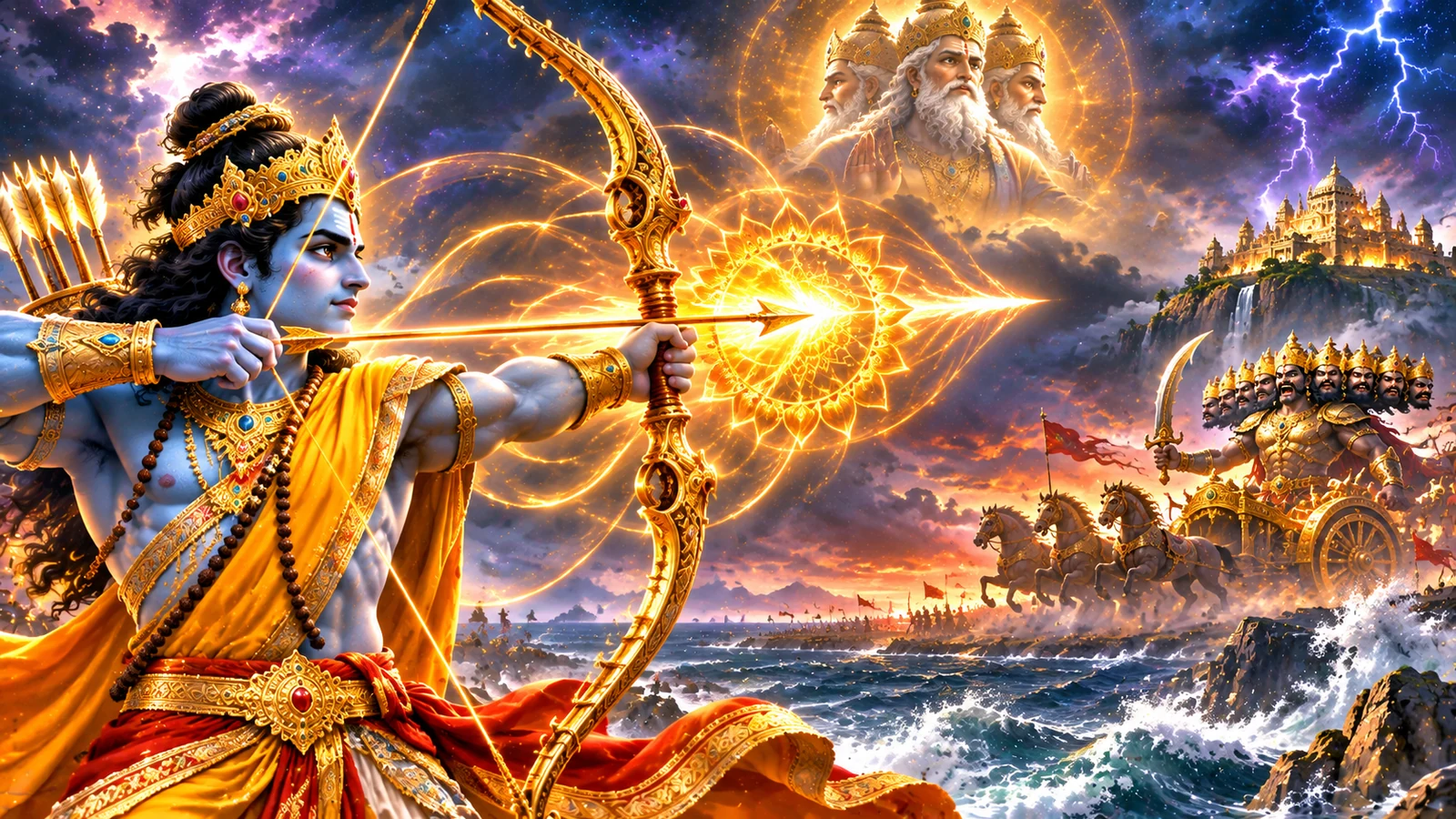
Quick answer: The Brahmastra is a formidable divine weapon, or astra, associated with Brahma in Hindu epic literature. The Valmiki Ramayana describes Rama using a Brahma-linked missile to defeat Ravana. The Mahabharata describes a frightening confrontation involving the closely related Brahmashira weapon after the Kurukshetra war. These stories explore immense power, disciplined knowledge, restraint and responsibility. They are religious and literary accounts, not evidence that an ancient nuclear bomb has been discovered. Importantly, Brahmastra and Brahmashira should not be treated as interchangeable names in every source.
What Is the Brahmastra in Hindu Mythology?
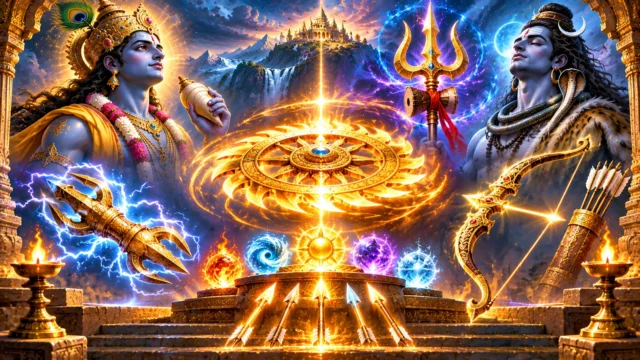
An astra in Sanskrit epic narratives is a weapon connected with a divine power or a special invocation; a shastra usually refers more broadly to a physical weapon such as a sword or spear in the relevant martial context. The distinction is useful but not perfectly rigid across every period and text. The Brahmastra is traditionally associated with Brahma, who is connected with creation and sacred knowledge in many Hindu narratives. Its power is portrayed through the language of extraordinary light, heat, force and overwhelming consequences.
Online explanations sometimes describe Brahmastra as a single universally defined device with a fixed range, launch procedure and explosion radius. That is a modern simplification. Ancient epics are not engineering manuals. Their scenes vary in wording, context and theological emphasis, and later retellings add other dramatic details. A reader seeking an accurate answer should first ask: Which epic? Which episode? Which Sanskrit expression? Which translation? Those questions lead to much more reliable knowledge than a speculative power-ranking chart.
A second distinction matters: not every arrow fired by an epic hero is a Brahmastra. The Ramayana’s climactic missile, for example, is described as a radiant arrow associated with Brahma in a specific passage. The powerful weapon invoked in the Mahabharata’s postwar scene is repeatedly called Brahmashira in an influential English translation. Keeping the terms visible protects readers from confusing separate episodes.
Origin of Brahmastra: Why Is It Linked to Brahma?
The name points toward Brahma, but the question “Who invented the Brahmastra?” does not have a modern historical answer. Within the epic imagination, divine weaponry is bestowed, transmitted or mastered through sages, teachers and disciplined learning. It represents knowledge that carries obligations. Rama is connected with a weapon presented as Brahma’s gift in the final battle with Ravana. In the Mahabharata, the teacher Drona transmits knowledge of an exceptionally dangerous weapon to Arjuna and, with serious warnings, to his son Ashwatthama.
This is not evidence of a factory, a physical blueprint or an independently verified archaeological artifact. Nor does a common image of Brahma with four faces mean that every Sanskrit account describes a visible four-faced deity appearing each time a Brahmastra is fired. The name and its divine association do important narrative work: the warrior is receiving a power far greater than ordinary battlefield equipment. The moral question is whether the bearer has the judgment to refrain from using it.
Even within Hindu traditions, Brahman and Brahma should not be confused. Brahma is a deity in many stories, whereas Brahman is a philosophical term for ultimate reality in several schools. Brahmastra is named in a mythological martial context; it should not be confused with the metaphysical idea of Brahman.
Brahmastra in the Ramayana: How Rama Defeated Ravana
A particularly clear textual example occurs in the Yuddha Kanda of the Valmiki Ramayana. In an online Sanskrit-and-translation edition maintained by IIT Kanpur’s Heritage project, the episode appears as Book 6, Sarga 111. Some other editions number the corresponding episode Sarga 108. That variation is an edition and chapter-numbering issue, not proof that there are two entirely different final battles.
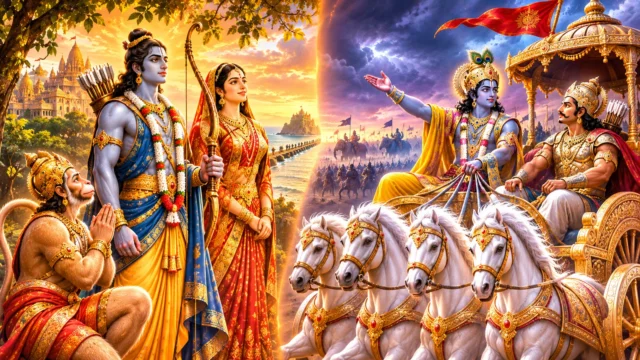
The charioteer Matali reminds Rama that the proper moment has arrived to use the weapon associated with Brahma. Rama then takes up a brilliant arrow that earlier tradition connects with the sage Agastya and the divine origin of the missile. The text describes the projectile with vivid images of energy, speed and irresistible force. It strikes Ravana, ending the contest in which the king of Lanka is defeated.
The essential point is not a mechanical claim that ancient metallurgy produced a weapon with a precisely measurable modern yield. In the poetic story, the decisive arrow expresses the end of Ravana’s destructive rule and the restoration of a threatened moral order. The narrative combines martial heroism with divine sanction; it does not give readers a tested chemical composition or engineering diagram.
Readers often ask whether Rama and Ravana both carried Brahmastras, or why Rama did not use his strongest weapon immediately. Such questions are best addressed by the particular sequence of the Yuddha Kanda rather than clips from television adaptations. Different screen versions rearrange battles, dialogue and visual effects. For a source-led answer, start with the passage describing Matali’s reminder and Rama’s final arrow.
Brahmastra in Mahabharata: Why Arjuna and Ashwatthama Matter
The Mahabharata’s most famous devastating-weapon confrontation occurs after the principal eighteen days of the Kurukshetra war. Ashwatthama, son of Drona, has committed a terrible night assault on the sleeping camp. The surviving Pandavas seek him, and he responds to danger by invoking an extraordinary weapon. The relevant sequence is narrated in the Sauptika Parva, Book 10, especially sections XII–XVI in the public-domain English translation commonly associated with K. M. Ganguli.
An essential point often lost in online summaries is that the weapon in this passage is explicitly called Brahmashira. Drona had taught it with a warning against irresponsible use, especially against human beings. The same account describes Arjuna as capable of using the weapon but also as qualified to withdraw it. The weapon is not presented as a convenient battlefield trick or a device that automatically chooses a morally justified target.
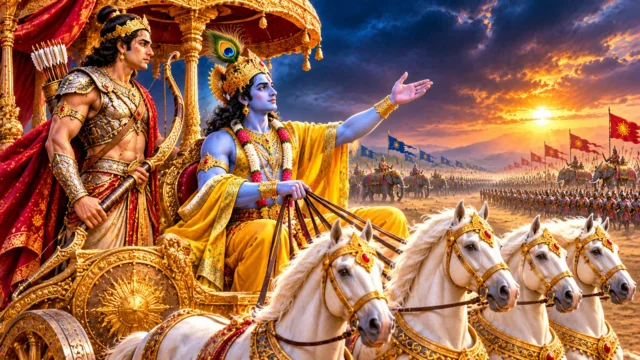
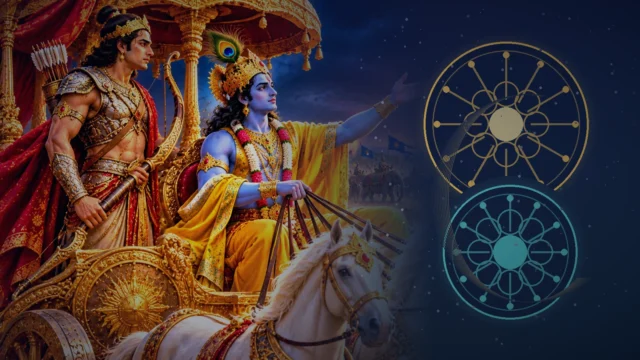
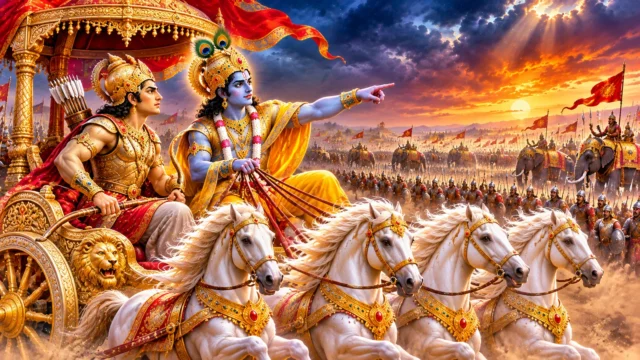
When Ashwatthama releases his terrible power, Krishna instructs Arjuna to respond with the weapon he has learned from Drona. The meeting of the two invoked powers is described through fire, frightening sounds and the trembling of the world. Sages Vyasa and Narada intervene, emphasizing that even expert warriors had not unleashed such a power against ordinary people. The dramatic focus moves away from the spectacle of destruction and toward the urgent need to prevent wider harm.
Because both Brahmastra and Brahmashira appear in English retellings of the wider tradition, modern sites sometimes collapse them into a single category. That obscures an important feature of the actual Mahabharata narration. The safest wording is: the Brahmashira episode is related to Brahma-linked divine weapon traditions, but the term in the passage should be named accurately.
Could Arjuna Withdraw the Weapon? The Central Lesson
In Sauptika Parva, Section XV, Arjuna withdraws his weapon after the sages intervene. This is not described as easy. His discipline, restraint and suitability to bear such knowledge are praised as reasons he can reverse the threat. Ashwatthama, by contrast, says that he cannot withdraw what he has unleashed. The narrative links uncontrolled anger with a catastrophic loss of moral judgment.
Ashwatthama then directs his destructive intent toward the unborn descendants of the Pandavas. This brings the conflict to a new and disturbing point: harm is no longer confined to opposing warriors. Later narration connects the survival of the child Parikshit with Krishna’s protection. Different texts and devotional retellings elaborate the protection and consequences in distinct ways, so a responsible article should identify which account it is summarizing.
This distinction between knowing how to wield power and knowing when to stop is arguably the most important part of the episode. Modern videos often emphasize fiery skies and terrifying effects. Yet the text gives its most consequential attention to warnings, intervention, self-restraint and the cost of refusing to withdraw a weapon. One does not need to believe the story is verified physical history to appreciate its ethical seriousness.
Brahmastra vs Brahmashirastra: Are They the Same Weapon?
Not necessarily. The names are closely related, and popular retellings sometimes use them loosely. But the Mahabharata passage identifies Brahmashira by name, while the Ramayana describes Rama’s Brahma-associated missile in its own narrative context. Some translations use the broader word Brahmastra when paraphrasing the aftermath of the Mahabharata encounter. That does not justify stating that every Sanskrit passage refers to precisely the same weapon.
| Feature | Brahmastra | Brahmashira / Brahmashirastra |
|---|---|---|
| Name in common explanations | Divine astra associated with Brahma | Particularly fearsome weapon named Brahmashira |
| Key literary context | Rama’s final battle with Ravana and other Brahma-linked weapon traditions | Arjuna–Ashwatthama postwar confrontation in Sauptika Parva |
| Best way to describe power | Extraordinary, text-dependent divine weapon | Destructive and morally dangerous in the Mahabharata scene |
| Important caution | Do not infer a nuclear mechanism | Do not erase its distinct name in the original episode |
The spelling may appear as Brahmashira, Brahma-shiras, Brahmashirastra or related forms depending on transliteration. Neither spelling variation nor spectacular artwork gives a reliable basis for a numerical “times stronger” claim. When an article says the Brahmashira has exactly four times the force of Brahmastra, it should provide an identifiable textual foundation and translation. Without that, it is better to describe the literary distinction rather than make up a multiplier.
What Powers Are Described—and What Are Their Limits?
Epic descriptions often rely on comparisons with cosmic fire, the brightness of the sun, unnatural disturbances and fear among living beings. Such language conveys the scale of the danger within the narrative. It should not be translated automatically into joules, megatons, radiation doses or contemporary military categories. Exact technical specifications do not follow from the poetry.
The weapon’s limits are equally important to the story. It is not an ordinary arrow that anyone can pick up and use at will. Knowledge of the weapon is framed as requiring guidance and discipline. Some passages emphasize vows and purity; others focus on a teacher’s warnings. In the Ashwatthama episode, the inability to withdraw it becomes a moral and narrative catastrophe. In the Rama–Ravana episode, the decisive use appears at a climactic moment.
For a curious reader, the strongest comparison is therefore not “Which divine missile has the biggest blast?” It is “How does each text link extraordinary power to duty?” In one epic a hero is required to act decisively; in another, a hero’s capacity to pull back is celebrated. Both sides belong to the larger world of dharma, in which choosing rightly matters more than possessing a formidable object.
Was the Brahmastra an Ancient Nuclear Weapon?
No credible archaeological or scientific evidence establishes that the Brahmastra was an actual nuclear weapon. Nuclear fission weapons have identifiable physical processes, materials, designs and historical development. An epic’s imagery of blazing fire, heat or destroyed landscapes cannot by itself demonstrate those processes. Similar poetic comparisons occur across ancient literatures without implying knowledge of modern nuclear engineering.
A frequently repeated internet claim points to ancient skeletons, mysterious radiation or melted cities as “proof” that the Mahabharata recorded an atomic explosion. Such claims require independently dated archaeological material, transparent measurements and peer-reviewed analysis connecting evidence to the event being asserted. Sensational images, unattributed quotations or comparisons with modern mushroom clouds do not meet that standard. They also risk reducing the literary achievements of the Sanskrit epics to shaky pseudo-science.
It is perfectly reasonable to study Brahmastra as a religious symbol, cultural story or example of the human fear of uncontrollable force. The distinction is between what a text describes and what scientists have independently verified. Readers are better served by that separation than by a false binary that asks them either to accept every miracle as a laboratory result or to dismiss the entire epic tradition as meaningless.
Why Do These Stories Still Matter? Power, Judgment and Dharma
The Brahmastra narratives are memorable because they ask a deeply practical question: what happens when someone obtains power greater than their capacity to use it responsibly? Drona’s warning to Ashwatthama is not a decorative detail. Arjuna’s withdrawal is not a disappointing anticlimax. Together, those moments suggest that true mastery includes the ability to prevent harm—even when anger makes retaliation tempting.
The Rama episode offers a different moral image. Rama does not win merely because he owns a spectacular weapon; the story places decisive action within a larger struggle over wrongdoing and duty. Readers can disagree about how to interpret individual actions while still recognizing a recurring literary concern with responsibility.
This makes Brahmastra a useful subject for comparing epic storytelling with contemporary debates about technology, leadership and restraint. The comparison should remain an analogy: modern weapons policy or artificial intelligence regulation cannot be derived directly from a mythological passage. Yet the stories can prompt good questions about training, accountability, unintended consequences and the danger of treating impressive ability as automatic permission to act.
Frequently Asked Questions About Brahmastra
Who created the Brahmastra?
The Brahmastra is associated with the deity Brahma in Hindu epic literature. The texts present divine origins and transmission of knowledge, not a historically verified human inventor or manufacturing process.
Who used Brahmastra against Ravana?
Rama uses a Brahma-linked final arrow in the Yuddha Kanda of the Valmiki Ramayana. Its chapter is numbered 6.111 in one prominent edition and 6.108 in another.
Did Ashwatthama use Brahmastra or Brahmashira?
The Sauptika Parva of the Mahabharata specifically uses Brahmashira in the famous confrontation. Some later summaries describe the event under the broader label Brahmastra; precise wording matters.
Could Arjuna stop or withdraw this divine weapon?
In the Mahabharata’s postwar confrontation, Arjuna withdraws his weapon after sages intervene. Ashwatthama is unable to withdraw his own.
Is Brahmastra stronger than Pashupatastra or Narayanastra?
There is no single universally accepted ranking with measured power figures. The texts emphasize different divine associations, purposes and limits. Avoid unsupported numbers or simplified superhero comparisons.
Did Brahmastra destroy the entire world?
Epic accounts describe extraordinary destructive potential and cosmic danger, but the Ramayana and Mahabharata scenes do not amount to a verified event in which the physical world was destroyed.
Was Brahmastra an atomic or nuclear bomb?
No verified archaeological or scientific evidence shows that it was a nuclear device. Its described power belongs to mythological and poetic narrative.
What is the main lesson of the Brahmastra story?
Extraordinary capability creates extraordinary responsibility. The Mahabharata especially emphasizes disciplined learning, restraint and the devastating results of uncontrolled anger.
Conclusion
The Brahmastra is more than a glowing arrow in a dramatic illustration. It is a divine weapon of Hindu epic tradition whose stories turn on both power and moral restraint. Rama’s decisive arrow against Ravana and the Mahabharata’s grave Brahmashira confrontation should be read in their own textual settings. If you remember one thing, remember this: a faithful explanation distinguishes the Sanskrit sources, respects religious narrative and refuses to invent modern weapons science where there is none.
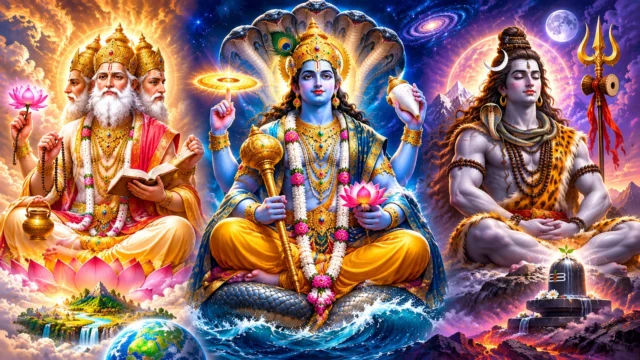
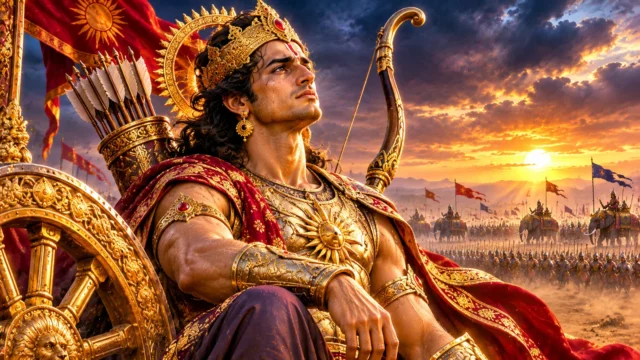
Sources and editorial note: Valmiki Ramayana, Yuddha Kanda 6.111, IIT Kanpur Heritage; Valmiki Ramayana Yuddha Kanda, alternative Sarga 108 numbering; Mahabharata, Sauptika Parva Section XII, Section XIV and Section XV. Variations among manuscripts, translations and later devotional retellings are acknowledged. Illustrations are interpretive art rather than historical photographs. Reviewed 13 November 2026.

Share Your Opinion
Comments are closed on this post.