 Vista
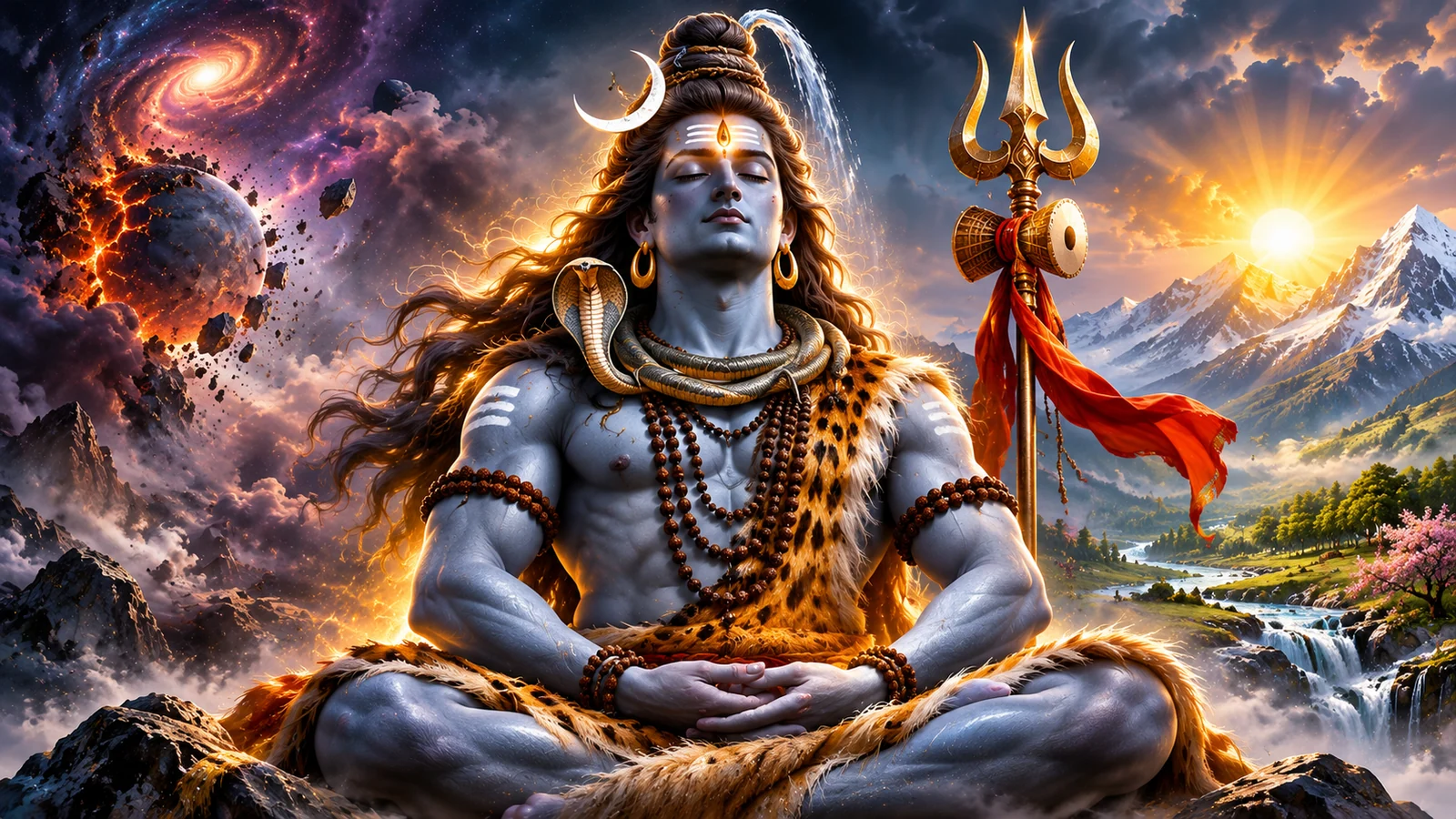
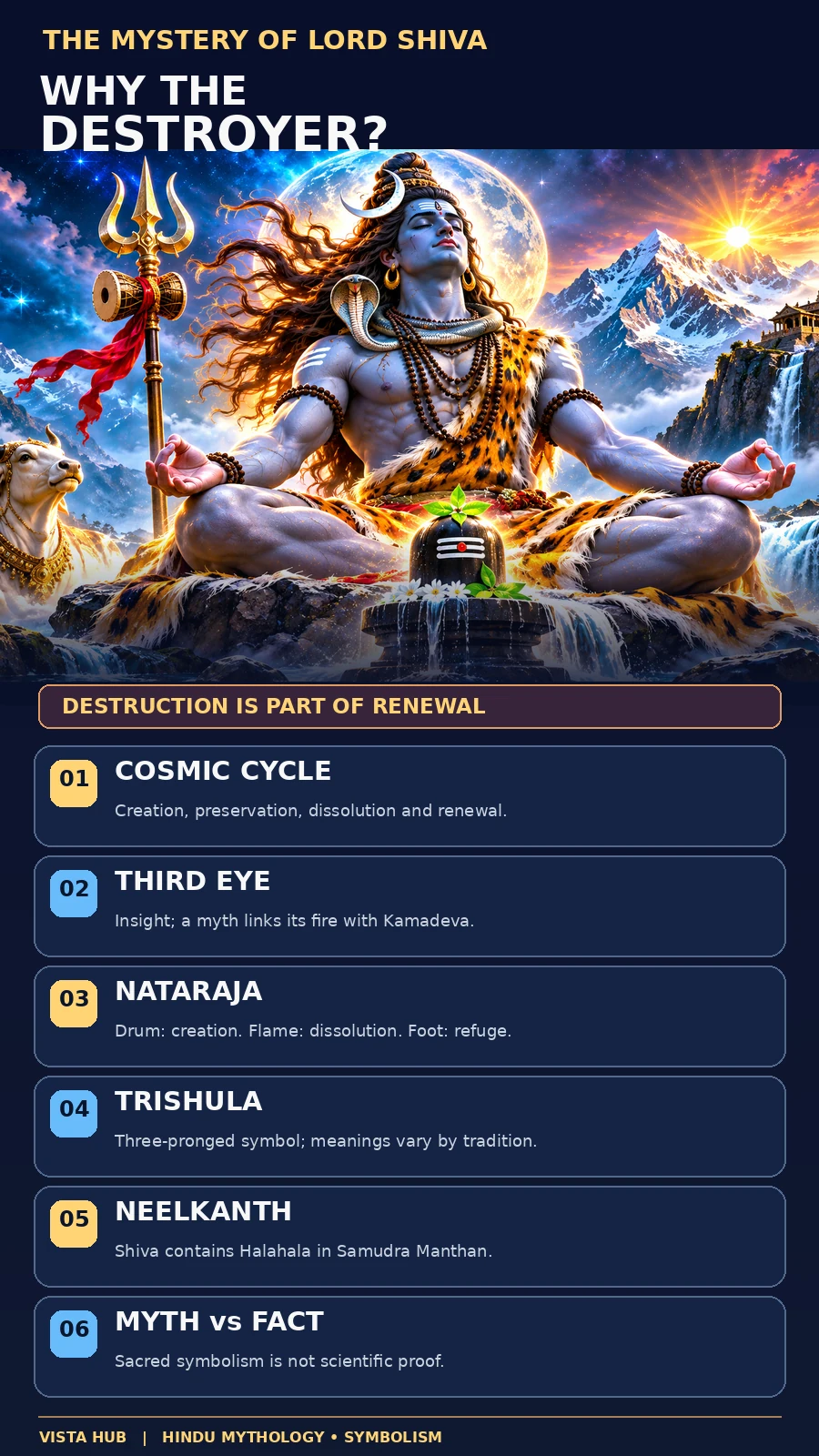
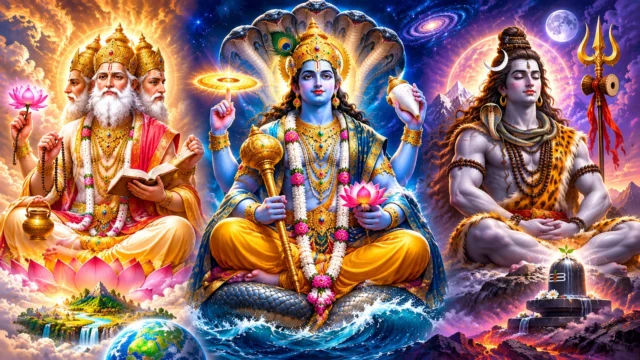
Quick answer: Lord Shiva is called the Destroyer because dissolution is part of the cosmic cycle described in many Hindu traditions. In the popular Trimurti explanation, Brahma represents creation, Vishnu preservation, and Shiva dissolution and transformation. That does not mean Shiva is evil or exists only to end life. Shaiva traditions honor him as a compassionate, liberating deity whose powers include creation, protection, concealment, and grace. His third eye, trident, and cosmic dance communicate this larger idea: an ending may also make renewal possible.
The question becomes much more interesting when we distinguish three things: what a particular sacred story says, what artists show, and how devotees and philosophers interpret those images. They overlap, but they are not interchangeable. This guide explains the symbolism without pretending every Hindu school teaches exactly the same doctrine or that mythological scenes are verified scientific events.
1. What Does “Destroyer” Actually Mean in Hindu Mythology?
In everyday English, destroyer sounds like a villain who ruins things for pleasure. In Hindu cosmic imagery, dissolution is often necessary for a universe governed by recurring cycles. A world that is created and sustained eventually reaches a point of transition. Shiva is associated with that transition, which traditional discussions may call samhara or laya. Neither term is adequately explained by an action-movie explosion.
A familiar introductory formula is Brahma creates, Vishnu preserves, Shiva dissolves. It helps beginners remember three interconnected functions, but it is only a starting point. Hindu literature includes Vedic hymns, Upanishadic philosophy, the two epics, Puranas, Agamas, regional poetry, and living devotional teachings. Some traditions emphasize these three roles; others describe the divine very differently. In several Shaiva schools, Shiva performs all cosmic activities rather than only the third.
There is also a distinction between destroying a physical form and eliminating avidya, commonly translated as ignorance or mistaken understanding. Devotional interpretations sometimes connect Shiva with both. A fierce image can therefore stand beside a calm, meditating Shiva without contradiction. The imagery asks: what must end for something wiser to begin? It does not require the reader to celebrate suffering or to mistake metaphor for astronomy.
2. Shiva Is More Than a Member of the Trimurti
The Trimurti is useful because it appears frequently in introductory explanations of Hinduism. But a reader who stops there might misunderstand major Shaiva traditions. Devotees may regard Shiva as Mahadeva, the Great God, or as ultimate reality itself. In that theology, his significance cannot be reduced to being one specialized deity beside two others. Vaishnava traditions can instead identify Vishnu or Krishna as supreme, while Shakta traditions emphasize the Goddess and several nondual traditions approach the question in still other ways.
This diversity also explains why internet rankings of the “strongest Hindu god” are usually poor guides. A battle scene taken from a single text is not a neutral competition that settles every philosophical school. Sources praise particular deities in the contexts of their communities and devotional goals. A fair explanation names the tradition before reporting a claim about supremacy.
Shiva also appears in apparently contrasting roles. He is a yogi associated with meditation and withdrawal, yet he is the husband of Parvati and father in family narratives. He is connected with cremation grounds and impermanence, yet also with the auspicious and protective aspects suggested by names such as Shankara. He can appear terrifying in one story and accessible to devotees in another. These contrasts are part of his religious richness, not evidence that the stories are about unrelated characters.
3. Why Does Shiva Have a Third Eye?
In many paintings and sculptures, Shiva has a vertical third eye on his forehead. The ordinary two eyes perceive the visible world; the third is often explained as a sign of penetrating insight, spiritual awareness, and the ability to see beyond appearances. That interpretation is devotional and symbolic. It is not medical evidence for a hidden human eye or a device that can produce supernatural radiation.
One prominent narrative connects the eye with fiery power. Kamadeva, the deity associated with desire, attempts to disturb Shiva’s deep meditation. Shiva’s third eye opens and Kama is burned or loses his physical form. Versions of the story differ in the circumstances, the role of the gods, the response of Rati, and the later fate of Kama. It is worth reading a named telling rather than relying on a one-line claim that “Shiva destroyed love.”
The tale is more complicated than a rejection of affection. Shiva and Parvati’s relationship remains central to many Hindu traditions. The story has been interpreted in terms of discipline, desire, self-knowledge, and the difficulty of balancing renunciation with responsibility. A careful reader can acknowledge those interpretations without claiming there is one universally binding moral. In iconography, the third eye can make Shiva look fierce; in philosophy, it often points toward clarity rather than indiscriminate harm.
Was Shiva’s Third Eye a Real Physical Weapon?
Sacred stories describe extraordinary power within a mythological universe. They do not establish that human anatomy contains a fire-producing third eye. Statements that the eye was a laser, a nuclear device, or an ancient piece of scientific equipment are speculative modern comparisons, not demonstrated historical discoveries. A respectful article can appreciate the symbolism while being precise about the difference between belief, storytelling, and independently tested evidence.
4. The Kamadeva Story: What Was Really Destroyed?
A common retelling begins with a situation in which divine beings hope Shiva will turn from solitary meditation toward the world. Kama is sent to awaken desire. The disturbance provokes a response from Shiva, and his third eye consumes Kama’s visible form. Rati’s grief, the possibility of restoration, and the continuation of desire in a bodiless state appear in differing versions. This is why the episode cannot be understood adequately from a single viral picture.
Some readers interpret the fire as the destruction of uncontrolled craving; others emphasize the moral cost of interfering with another’s spiritual practice. Yet neither meaning exhausts the narrative. The presence of Rati and Parvati prevents it from becoming a simple slogan that all relationships are obstacles. When teachers discuss this story, it helps to separate the action in the narrative from the lesson a particular commentator draws.
There is a useful practical distinction here too. Learning discipline does not mean becoming emotionless. A person can question an impulse without treating love, work, or human responsibility as inherently wrong. That is a contemporary reflection inspired by the story, not a claim about what every Sanskrit text explicitly says. The third eye remains memorable because it brings a large philosophical conflict into a single striking image.
5. Nataraja: The Dance That Combines Creation and Destruction
Perhaps the clearest answer to “why is Shiva called the Destroyer?” is found in the image of Nataraja, Shiva as Lord of the Dance. Celebrated South Indian bronze sculptures show Shiva dancing within a ring of flames. One hand holds a small damaru drum, associated with the sound of creation; another holds agni, the fire connected with dissolution. A gesture offers reassurance, and the raised foot is interpreted as a sign of refuge and liberation. Under the other foot, a small figure commonly identified as Apasmara embodies ignorance or illusion.
The significance is not limited to a spectacular dance that destroys everything. In many explanations, Shiva’s cosmic activity includes five functions: creation (srishti), preservation (sthiti), dissolution (samhara), concealment (tirobhava), and grace (anugraha). The union of vigorous movement and a serene face is intentional: the image presents balance in the middle of change.
The Metropolitan Museum of Art, the Cleveland Museum of Art, and the Government of India’s Museums of India collection describe comparable symbolism in historical Nataraja objects. Those museum records are especially valuable because they connect interpretation to actual sculptures, not just modern devotional wallpapers. For instance, the Met’s Chola-period Nataraja descriptions relate the drum to creation, the flame to dissolution, and the raised foot to refuge. This is an art-historical account of religious imagery, not a scientific measurement of cosmic processes.
Why Does Shiva Stand on a Small Figure?
In familiar Nataraja iconography, the figure beneath the foot represents ignorance or the illusions that keep beings from understanding reality. It should not be described carelessly as an ordinary human opponent whom Shiva is crushing for sport. The pose creates a visual lesson: awareness and liberation prevail over confusion. Acknowledging the image’s historical and theological context makes it far more meaningful than labeling it simply “the most powerful attack.”
6. Trishula, Damaru, Crescent Moon and Ganga: The Symbols Explained
Trishula (trident): Its three prongs are interpreted in several ways, sometimes as aspects of time, the three gunas, or connected cosmic functions. No single meaning can be imposed on every temple and teaching. The trident is also an attribute through which viewers recognize Shiva in art.
Damaru (small drum): Especially in Nataraja imagery, the drum is associated with rhythm, sound, and creation. It is an artistic and philosophical symbol, not evidence that a known frequency generated the physical universe.
Crescent moon: The moon in Shiva’s matted hair is commonly read in connection with time, cycles, and the ability to remain calm as conditions change. Stories about the moon and Shiva vary among traditions.
Ganga in the hair: In well-known sacred narratives, Shiva receives the descent of the heavenly Ganga so its overwhelming force does not devastate the earth. Artists represent the river as flowing from his hair. This story communicates divine protection; it is not a substitute for geology or the measured history of a river.
Serpent and sacred ash: The serpent is often interpreted through themes of fear, mortality, power, or transcendence. Ash can suggest impermanence and the fate of material forms. Again, these are contextual readings rather than a single dictionary of compulsory meanings.
Is There One Official Meaning for Every Symbol?
No. Meanings shift across scriptures, teachers, art periods, and local worship. It is responsible to say “one common interpretation is…” and to identify a named source when making a more specific claim. This caution matters especially for attractive online graphics that turn many possible associations into confident “ancient facts.”
7. Shiva as Neelkanth: The Poison Story Is Also About Protection
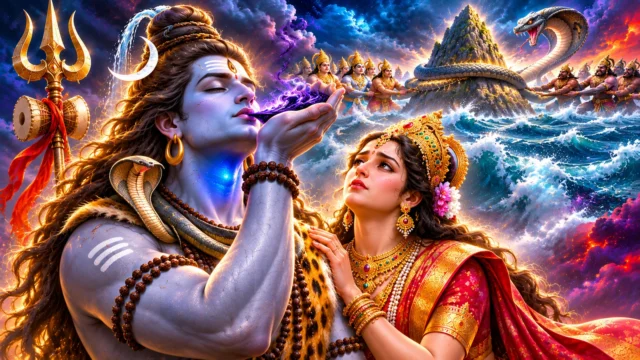
The episode of Samudra Manthan, the churning of the cosmic ocean, shows the protective side of Shiva. In popular accounts, devas and asuras churn the ocean in pursuit of amrita, the nectar associated with immortality. Before the desired prize appears, a deadly substance called Halahala emerges. The danger threatens creation. Shiva contains or swallows the poison and is known as Neelkanth, “blue-throated,” because the poison is said to remain in his throat.
Details—including descriptions of Parvati’s involvement—vary across texts and retellings. The central point is not that a human should imitate drinking poison. Poisoning is a real emergency, and mythological stories are never instructions for handling toxins. In religious interpretation, the episode emphasizes responsibility, compassion, and containing harm. It is a useful counterexample to the assumption that a “destroyer” deity cannot protect life.
8. Does Shiva Literally Destroy the Universe at the End of Kali Yuga?
Internet posts often merge distinct ideas into a dramatic deadline: the end of Kali Yuga, cosmic dissolution, Shiva’s third eye, and a supposed date of Earth’s destruction. That combination is not a carefully sourced summary of one universally agreed Hindu text. Yuga cycles, kalpas, and different levels of cosmic dissolution are described in varying traditional frameworks. Some explanations distinguish periodic changes within a cosmic cycle from a more comprehensive dissolution.
A meaningful introduction should avoid presenting one countdown as independently verified astronomy. Religious cosmology can be studied as sacred literature and philosophical imagination. Claims that modern scientists have proved an exact ancient date for Shiva to destroy Earth require independent evidence they generally do not provide. The word destroyer should therefore be understood first in its theological setting, not as a warning that a particular calendar page predicts disaster.
9. Shiva vs Vishnu: Is Destruction Opposite to Preservation?
In the popular Trimurti scheme, Vishnu sustains the order of the world and Shiva is associated with dissolution. But the two roles are not enemies. Vishnu’s avatars may confront injustice and bring an old situation to an end, while Shiva can safeguard devotees, receive Ganga, and contain Halahala. Both participate in stories concerned with dharma and balance. Hindu schools also interpret the divine relationship differently, so a simple competition about who “wins” misses the point.
When comparing the deities, ask three questions. Which tradition is telling the story? What cosmic or ethical problem does it address? And what symbolism does the storyteller want an audience to notice? These questions give readers more reliable answers than isolated quotations or AI-generated battle pictures. An illustration of fire or a weapon can be a powerful visual metaphor without representing a dated physical event.
10. What Can Modern Readers Learn From Shiva’s Destruction Symbolism?
The most constructive lesson is not “destroy everything that bothers you.” Rather, the symbolism invites reflection on impermanence and on the difference between harmful destruction and necessary change. Ending an unhealthy habit, revising a mistaken belief, or retiring an obsolete practice can open space for growth. The third eye offers a metaphor for asking whether appearances tell the whole story. Nataraja’s image suggests that motion and balance can coexist. Neelkanth’s story raises the question of how a community responds when its ambitions create unexpected danger.
These are modern applications, not instructions issued by every ancient commentator. They also have limits: no one should use a mythology-based metaphor to justify violence, self-neglect, or remaining in an abusive situation. Reading traditions responsibly means taking inspiration while applying sound judgment. The goal is curiosity and understanding, not sensational claims about hidden powers.
Myth vs Fact: Five Common Misunderstandings
| Popular claim | More accurate explanation |
|---|---|
| Shiva is evil because he destroys. | Dissolution is connected with transformation; Shiva is also revered as compassionate and protective. |
| The third eye has been scientifically proved to shoot fire. | That is a mythological image and a modern unsupported scientific claim. |
| Nataraja only represents destruction. | The dance also communicates creation, preservation, refuge, and liberation. |
| Every Hindu community ranks Shiva the same way. | Shaiva, Vaishnava, Shakta, and other traditions understand divinity differently. |
| A viral picture proves a literal cosmic event. | Illustrations depict sacred narratives; they are not historical photographs or measurements. |
Frequently Asked Questions
Why is Lord Shiva called the destroyer of the universe?
Because Shiva is associated with cosmic dissolution in the popular Trimurti framework. The larger religious symbolism links endings with change and renewal; some Shaiva traditions see Shiva as responsible for more than dissolution alone.
What does Shiva’s third eye represent?
Many interpretations connect it with spiritual insight and the power to see past appearances. The Kamadeva story associates its opening with fierce transformative fire.
What happens when Shiva opens his third eye?
Sacred narratives describe extraordinary destructive energy in particular mythological settings. They do not provide verified scientific evidence for a physical third eye producing flames.
Is Lord Shiva an evil or angry god?
No. Fierce forms are only part of his portrayal. Shiva is also widely worshipped as a compassionate protector, yogi, and source of spiritual liberation.
Why does Nataraja dance inside a ring of fire?
The ring and accompanying gestures express the dynamism of the cosmos. The drum, flame, fear-dispelling gesture, and raised foot convey creation, dissolution, protection, and liberation.
Why does Shiva carry a trident?
The trishula is a familiar identifying symbol. Different teachings associate its three prongs with different triads, including aspects of time or cosmic qualities.
Is Shiva more powerful than Vishnu or Brahma?
There is no ranking accepted by all Hindu traditions. Particular schools express different theological understandings of ultimate reality and their chosen deity.
Conclusion
Shiva is called the Destroyer because the end of a form or phase has a crucial place in many Hindu accounts of a changing cosmos. His third eye communicates insight and transformative power; Nataraja combines destruction with creation, protection, and liberation; and Neelkanth reveals the compassionate protector behind a fearsome title. None of these symbols requires pretending that sacred art is experimental science. Reading named sources, recognizing variation, and understanding the devotional context makes Indian mythology deeper—not less mysterious.
References and reading
- The Metropolitan Museum of Art — Shiva as Lord of Dance (Nataraja)
- Cleveland Museum of Art — Nataraja, Shiva as the Lord of Dance
- Museums of India — Siva Nataraja sculpture description
Editorial note (12 November 2026): This article explains Hindu narratives, devotional symbolism, and documented works of art. It does not present mythological events or supernatural powers as established physical science.
Related reading
- Brahma, Vishnu and Shiva in the Trimurti
- Samudra Manthan and the story of Neelkanth
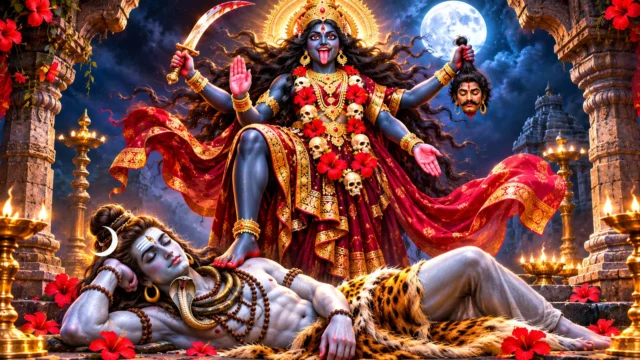
- Why Kali stands on Shiva
















Share Your Opinion
Comments are closed on this post.