 Vista

How to draw Mahatma Gandhi for a school project? Begin with an oval face, then add his round spectacles, ears, nose, small moustache and simple draped clothing. Practise with pencil before colouring. This gallery contains 9 Mahatma Gandhi drawing ideas: portraits, charkha sketches, a walking-stick image, cartoons and a march-themed drawing, all suitable for different school classes.
These are illustrations for drawing practice, not historical photographs. A smiling cartoon or an imagined march scene should never be described as documentary evidence of an actual meeting or event. Children can copy a composition while explaining Gandhi’s life using verified facts.
Who was Mahatma Gandhi? Essential school facts
Mohandas Karamchand Gandhi was born on 2 October 1869 in Porbandar, Gujarat and died on 30 January 1948. He was a major leader of India’s independence movement, closely associated with satyagraha and nonviolent civil disobedience. Children often know him as Bapu. Gandhi Jayanti is observed on 2 October. The dates are documented in the Government of India’s Gandhi Smriti chronology.
His work in South Africa, India’s freedom movement, the encouragement of khadi and the 1930 Salt March are important themes for school history projects. A drawing usually highlights memorable visual features such as spectacles, white clothing, a walking stick or the spinning wheel, but those artistic symbols should not be confused with a particular verified historical scene.
Materials for a pencil Gandhi drawing
An A4 drawing sheet, HB pencil, eraser, sharpener and grey or brown coloured pencils are enough. Young children may use crayons for a cartoon. Older pupils can practise softer shading around the forehead, cheeks and folds of the fabric. Drawing the glasses first on scrap paper helps with their round shape and spacing. Leave most of the clothing white and create folds using light grey strokes.
9 easy Gandhi drawing images with instructions
Open an illustration for a larger view. Copy the main shape lightly and make your own adjustments to the portrait or composition. If a drawing shows children or a march, treat the scene as creative artwork rather than a factual reconstruction.
1. Simple Portrait

Start with an oval head, ears and a faint line for the eyes. Add round glasses, nose, short moustache and folds of white clothing. This is a friendly beginner portrait.
Practice: Look at the overall proportions before making dark outlines. A creative drawing does not need to match every detail of the reference.
2. Pencil Portrait Sketch

Draw the face lightly, then add careful pencil shading to the cheeks, forehead and garment. Check the spacing of the glasses before darkening outlines.
Practice: Look at the overall proportions before making dark outlines. A creative drawing does not need to match every detail of the reference.
3. Portrait With Walking Stick

Sketch an upright figure holding a stick and wearing draped white clothing. Show the recognisable facial features but do not present the drawing as a dated historical photograph.
Practice: Look at the overall proportions before making dark outlines. A creative drawing does not need to match every detail of the reference.
4. Easy Gandhi Cartoon With Charkha
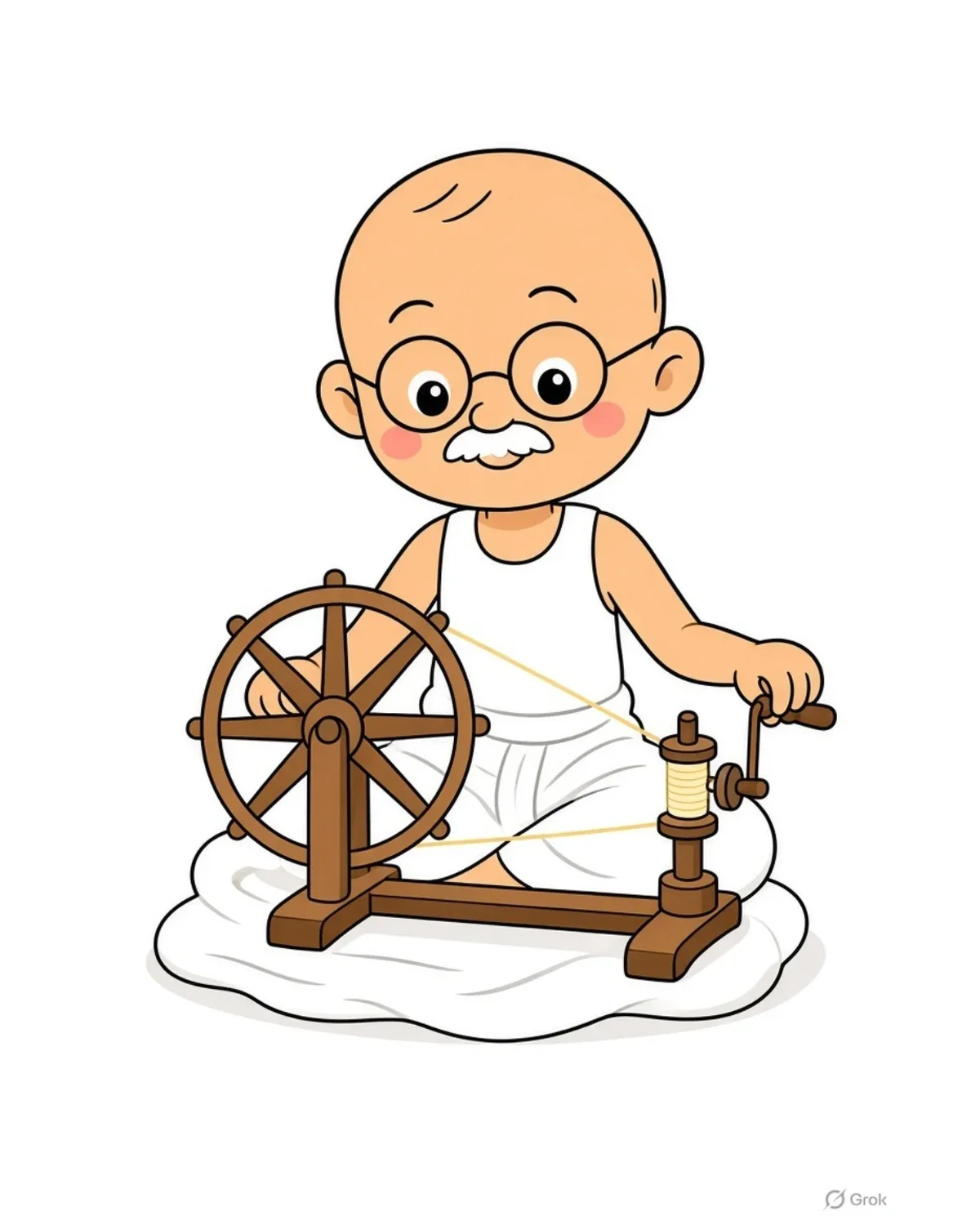
Make a large circular head, oversized round spectacles and a simple moustache. Add the spinning wheel using a large circle, several spokes and a low base. Best for younger children.
Practice: Look at the overall proportions before making dark outlines. A creative drawing does not need to match every detail of the reference.
5. Sepia Gandhi and Spinning Wheel

Draw a seated figure beside a spinning wheel. Use soft brown shades to suggest fabric and wood. The theme connects the artwork with Gandhi’s advocacy of khadi and swadeshi.
Practice: Look at the overall proportions before making dark outlines. A creative drawing does not need to match every detail of the reference.
6. Black and White Charkha Sketch
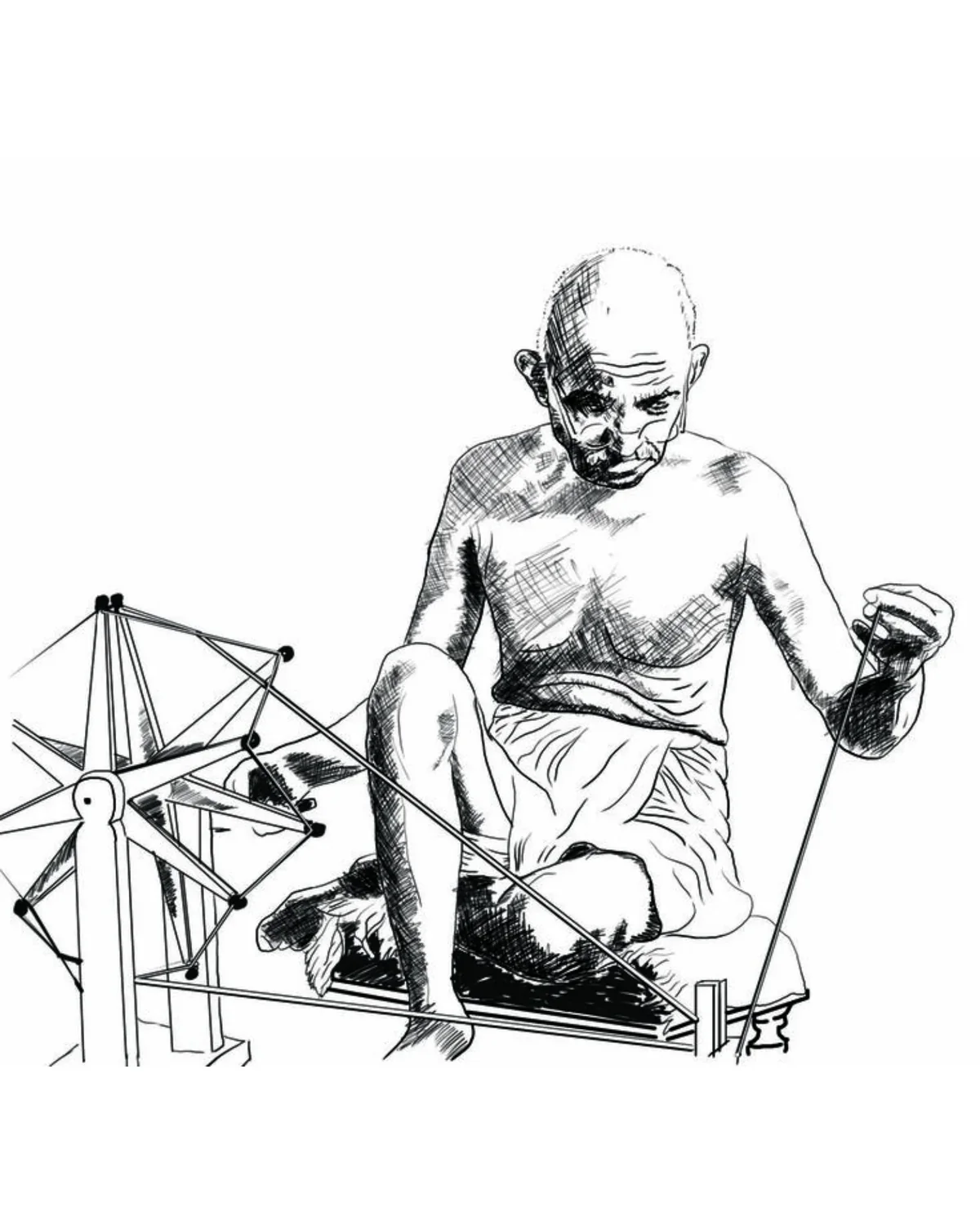
Use light pencil lines first for the person, spinning wheel and support frame. Add black strokes and crosshatching last; leave enough white space around the face.
Practice: Look at the overall proportions before making dark outlines. A creative drawing does not need to match every detail of the reference.
7. Spinning Wheel Pencil Drawing

Start with the large wheel and its spokes. Make the lower frame and a seated figure behind it. Practise the wheel separately on scrap paper before adding detailed shading.
Practice: Look at the overall proportions before making dark outlines. A creative drawing does not need to match every detail of the reference.
8. Walking March Illustration
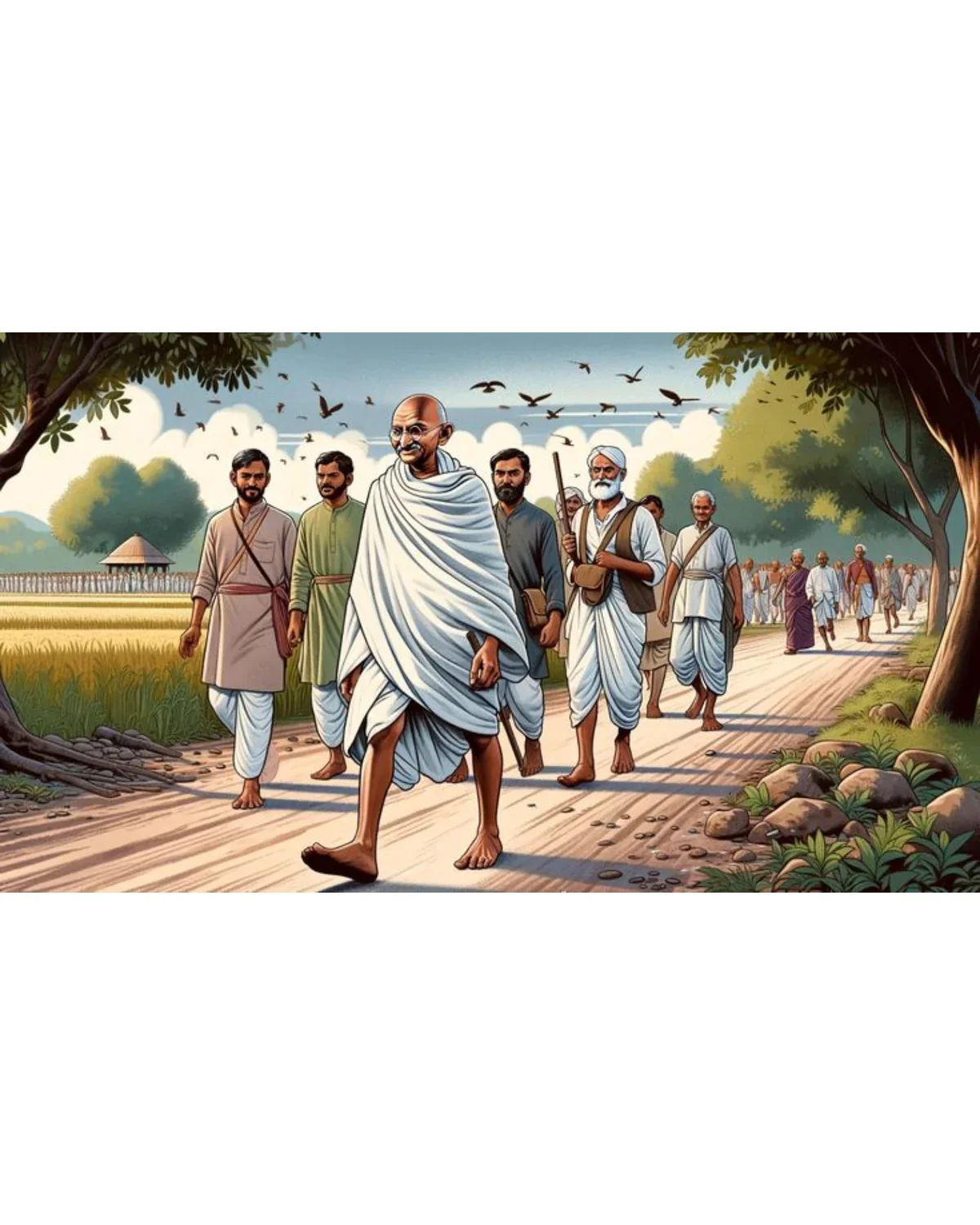
Put a larger walking figure in the foreground, smaller figures behind, and a simple landscape. Label it as an artistic depiction of a march, not an archival Salt March photograph.
Practice: Look at the overall proportions before making dark outlines. A creative drawing does not need to match every detail of the reference.
9. Gandhi and Children Cartoon
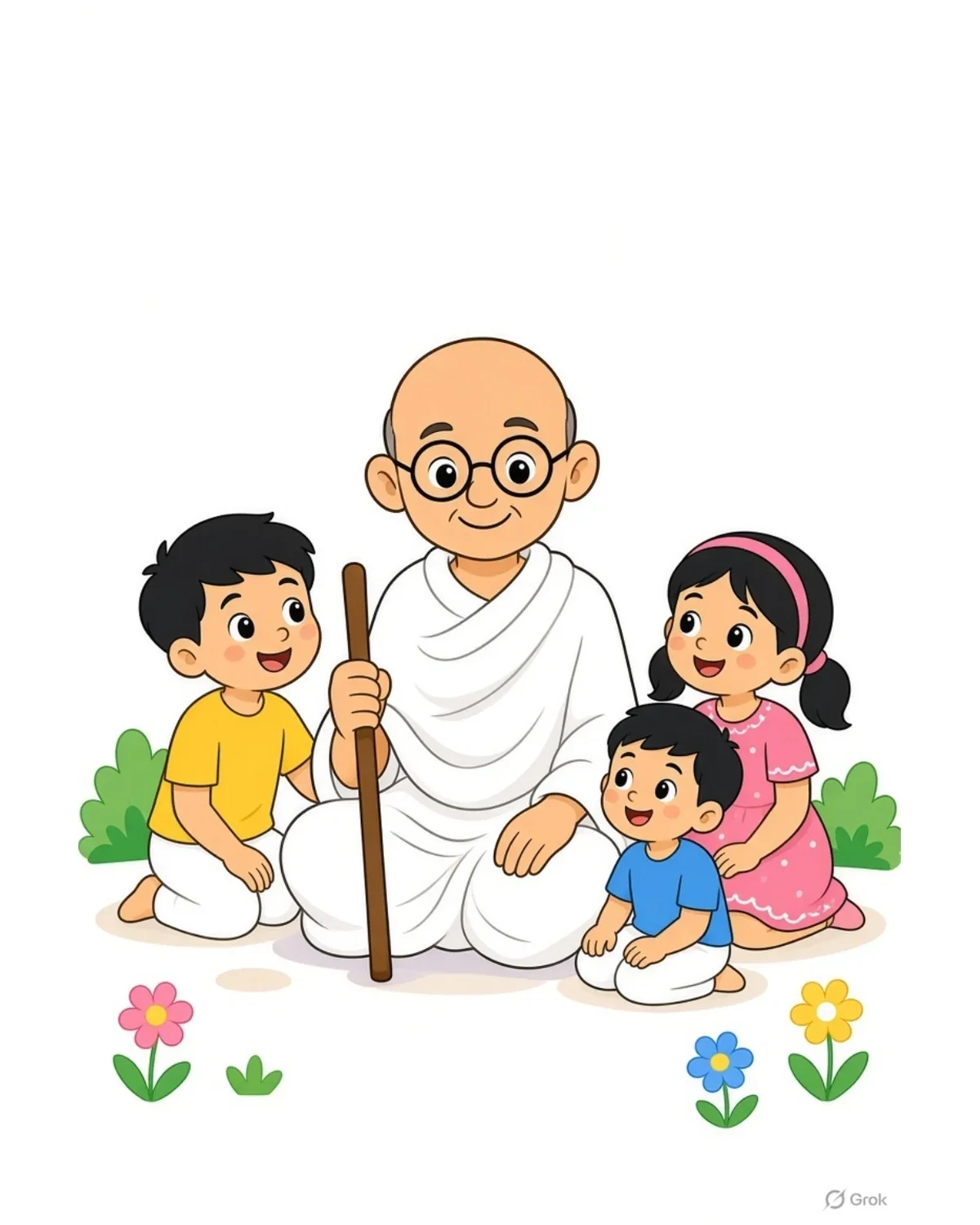
Draw a friendly central cartoon figure and small children beside him. Add flowers at the bottom. This is an imagined educational scene rather than a recorded meeting.
Practice: Look at the overall proportions before making dark outlines. A creative drawing does not need to match every detail of the reference.
How to draw Gandhi’s face in eight easy steps
- Sketch a light oval for the head.
- Draw an ear on each side.
- Mark the eye level and place two small eyes.
- Add two similar circular spectacle frames and their bridge.
- Draw the nose with gentle curves.
- Add a thin moustache and a small mouth.
- Sketch broad curves for white draped clothing at the shoulders.
- Shade lightly, erase guidelines and check the likeness.
Beginners should work slowly and keep construction lines light. The eyes, glasses and moustache are more important for recognition than heavy detail in the background. A small circular lid may help with the spectacle shapes.
Why does Gandhi appear with a charkha?
The charkha is a spinning wheel used to spin yarn. Gandhi’s support for hand-spun cloth and khadi made it an important symbol of swadeshi and self-reliance. In a school picture, its circular wheel, spokes and wooden frame are enough to communicate the idea. The charkha is not the same as the Ashoka Chakra on India’s national flag. Do not attach an unverified internet quotation to a Gandhi drawing merely because it sounds inspirational.
Gandhi drawing mistakes to avoid
Common problems include glasses placed too low, a moustache covering the mouth, very dark shading on white clothing and a background that distracts from the portrait. In a march illustration, avoid claiming that invented figures and clothing show what a precise historic moment looked like. Check the title and historical date before submitting a drawing for a history assignment.
Which Mahatma Gandhi drawing works for each class?
Classes 1–3: Begin with the easy cartoon showing a round head, large spectacles and a small moustache. Let children colour the main shapes without requiring detailed shading. Classes 4–6: Try a simple portrait, a walking-stick illustration or the charkha cartoon. These introduce body posture, drawing circles and the meaning of objects used in the composition. Classes 7–10: Detailed pencil portraits, black-and-white hatching and a Salt March poster can combine art with a short historical explanation.
When a teacher asks specifically for Gandhi Jayanti, use a clear heading and the correct date, 2 October. If the subject is history, include a short factual caption and cite a reliable source. If the task is an art competition, pupils may choose colours and framing more freely, but should still avoid captions that imply an invented image is an authentic photograph.
A large beautiful picture cannot replace the required project information. Leave space for the student’s name, class and topic if those are needed. If the teacher gives a drawing size or insists on a monochrome pencil sketch, prioritise that instruction over a more elaborate reference image.
How to caption a Salt March drawing accurately
The Salt March began from Sabarmati on 12 March 1930 and the salt law was broken at Dandi on 6 April 1930. Both dates appear in the official Rajghat chronology. This event is also called the Dandi March and forms part of the civil disobedience movement against British colonial rule.
A school drawing of Gandhi walking with other people can illustrate the idea of a peaceful protest. However, an AI-generated or hand-drawn scene should be captioned “Artistic depiction inspired by the Salt March” rather than “Original photo taken at Dandi in 1930.” A good two-line caption could include the event name and dates, and briefly explain that participants protested the colonial salt law.
This distinction helps students understand the difference between historical evidence and a modern educational illustration. A real archive photo may have a photographer, date and collection description; a classroom drawing is a creative interpretation. Both may have value when they are labelled correctly.
How to make a Gandhi Jayanti school poster
Start with one recognisable portrait in the centre. At the top, write GANDHI JAYANTI — 2 OCTOBER. Add a small spinning-wheel drawing to one corner if it suits the design, and leave a clean margin around the whole page. Choose one short factual theme such as truth, nonviolence, khadi or the independence movement instead of filling the page with several long slogans.
For younger children, crayons and bold lettering are easier to use. For older students, light pencil shading and an understated border often look more formal. The poster should be readable from a short distance, so avoid making the text tiny. Before submitting it, check Gandhi’s name and date against a trustworthy biography, such as the Mani Bhavan Gandhi Museum.
Frequently asked questions
What is the easiest Gandhi drawing for Class 2?
A cartoon face with round spectacles, a thin moustache and simple white clothing is a practical beginner exercise.
How do I make a Gandhi pencil sketch?
Begin with the head, place the eyes and glasses carefully, draw the nose and moustache, and add light shading to the cheeks and clothing.
When was Mahatma Gandhi born?
He was born on 2 October 1869 in Porbandar, Gujarat.
Why is a spinning wheel included in Gandhi art?
The charkha is associated with khadi, swadeshi and Gandhi’s advocacy of self-reliance.
Are the nine images original historical photographs?
No. They are educational illustrations in different artistic styles and should not be treated as documentary evidence.
What should I write for Gandhi Jayanti?
Use the heading Gandhi Jayanti, the date 2 October and a short accurate message about his life and ideas.
Conclusion and reliable references
An easy Mahatma Gandhi drawing for a school project starts with simple recognisable features and improves through repeated pencil practice. The nine gallery images offer different options for beginner portraits, charkha-themed sketches, school cartoons and a march-inspired illustration. Use creative freedom for the drawing, but rely on verified sources for historical names, dates and event descriptions.
References: Gandhi Smriti — Chronology, Rajghat — Life Events and Mani Bhavan Gandhi Museum — Chronology. More practice: Easy Drawing Ideas for School Projects. The illustrations are educational artworks; no unverified quotation has been used as a direct attributed statement.







Share Your Opinion
Comments are closed on this post.