 Vista
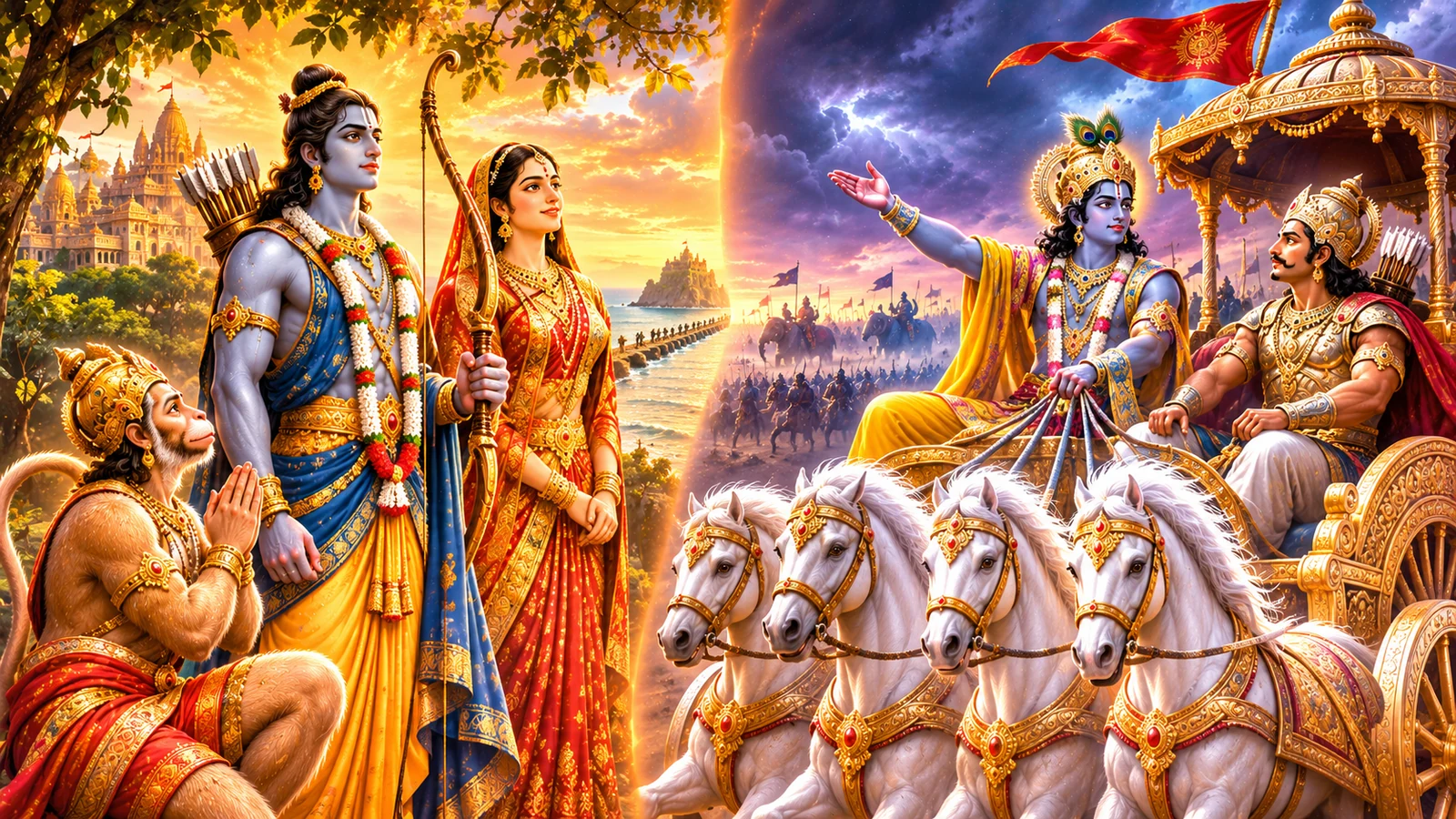
Quick answer: The Ramayana centers on Rama, Sita, exile, the struggle against Ravana and the demands of righteous conduct. The Mahabharata follows the rival Pandava and Kaurava branches of the Kuru family, culminating in the devastating Kurukshetra war and the philosophical dialogue of the Bhagavad Gita. The Sanskrit Ramayana is traditionally attributed to Valmiki, and the Mahabharata to Vyasa. Their familiar structures are seven kandas and 18 parvas, respectively. Both explore dharma, but they ask different questions about duty, loyalty, justice and the cost of difficult choices. Neither epic is simply a children’s story in which every hero is right and every antagonist is wrong.
For a global reader, the most useful comparison is not “Which epic is better?” It is how two vast traditions examine human conduct from different angles. The Ramayana places a memorable royal family and its relationships at the center of an epic journey. The Mahabharata surrounds a family conflict with political negotiation, competing moral claims and long debates about the consequences of action. Both developed through centuries of performance, transmission and interpretation. This guide distinguishes traditional accounts from modern historical claims and explains why versions may differ.
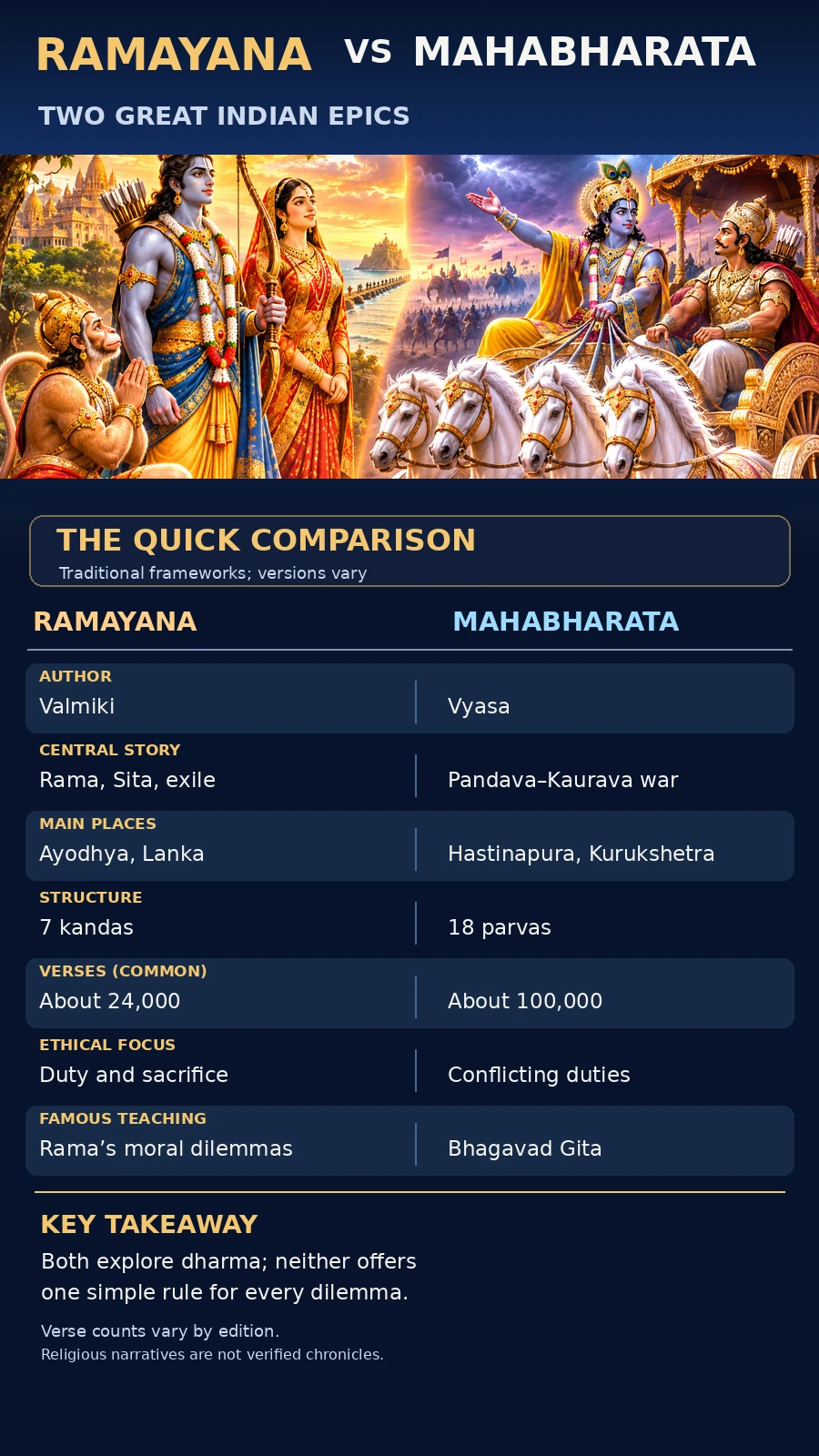
Ramayana vs Mahabharata at a Glance
| Question | Ramayana | Mahabharata |
|---|---|---|
| Traditional author | Sage Valmiki | Sage Vyasa (Vedavyasa) |
| Central narrative | Rama’s exile, Sita’s abduction and rescue, return | Pandava–Kaurava rivalry and Kurukshetra war |
| Major characters | Rama, Sita, Lakshmana, Hanuman, Ravana | Krishna, Arjuna, Draupadi, Yudhishthira, Bhishma, Karna, Duryodhana |
| Major settings | Ayodhya, forests, Kishkindha, Lanka | Hastinapura, Indraprastha, forests, Kurukshetra |
| Familiar Sanskrit structure | Seven kandas, with textual layers | Eighteen parvas, with textual layers |
| Commonly quoted length | About 24,000 verses in traditional accounts | About 100,000 verses in traditional accounts; critical editions differ |
| Moral questions | Promises, family, kingship, fidelity, exile, sacrifice | Justice, kinship, power, duty in conflict, consequences of war |
| Famous spiritual teaching | Rama’s example and many devotional interpretations | Bhagavad Gita within the Bhishma Parva |
| Common traditional yuga association | Treta Yuga | Dvapara Yuga |
The numbers and era labels above describe traditional frameworks; manuscript traditions and modern critical editions vary. An epic’s literary development is not the same question as the date of events described in it.
Who Wrote the Original Ramayana and Mahabharata?
Valmiki and the Ramayana
The Sanskrit Ramayana is traditionally credited to Valmiki, celebrated in many accounts as the adikavi, or first poet. His poem narrates Rama’s life and the consequences of a royal exile that affects an entire kingdom. The surviving Valmiki Ramayana is conventionally divided into seven books. The opening and concluding books have complex textual histories; scholars have discussed whether some material reached its present form later than the narrative’s central core. None of that means that there is one newly discovered, universally agreed “original manuscript” containing every modern popular scene.
Just as importantly, Valmiki Ramayana and Ramcharitmanas are different works. Tulsidas composed the Ramcharitmanas in Awadhi centuries later. Kamban’s Tamil retelling and other regional Ramayanas also have their own literary and devotional emphases. Calling those versions “fake” because they tell an episode differently misses how Indian epic traditions have lived through poetry, singing, drama and worship.
Vyasa and the Mahabharata
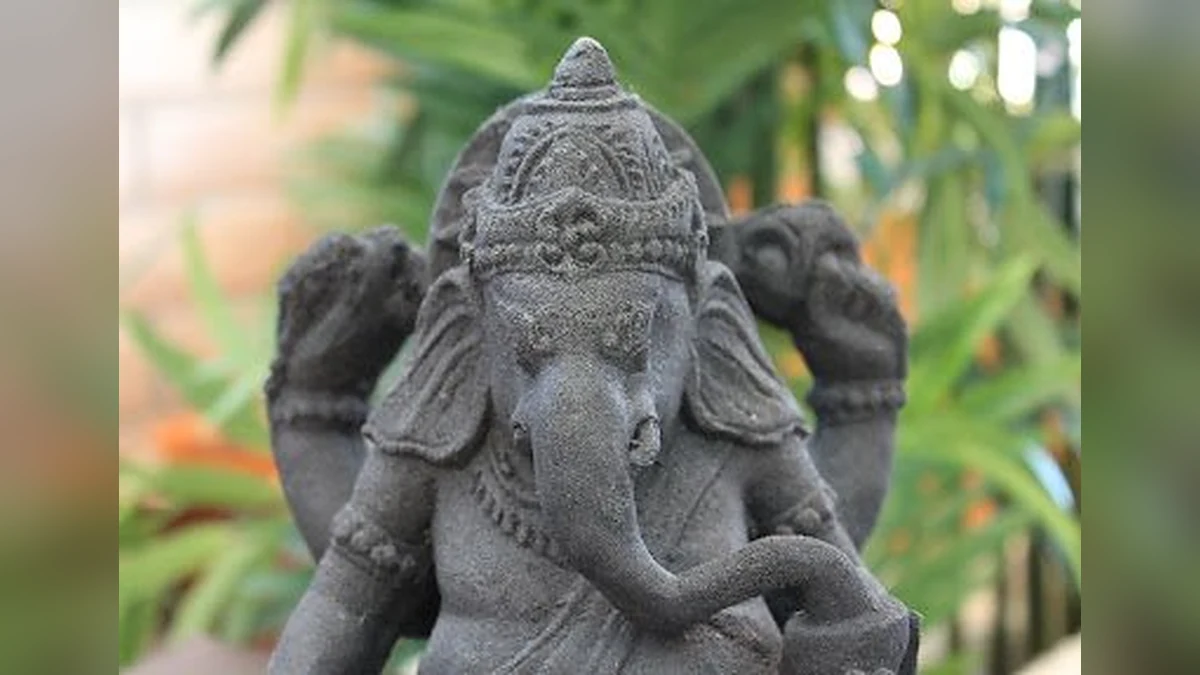
The Mahabharata is traditionally attributed to Vyasa, often called Krishna Dvaipayana Vyasa or Vedavyasa. Within the epic’s narrative world, Vyasa is more than an authorial name: he is part of the Kuru family history. A popular story depicts Ganesha acting as Vyasa’s scribe. That should be introduced as a traditional narrative, not as a unanimously attested record of a historical writing session.
From the perspective of textual scholarship, the Mahabharata grew into an enormous composition through long processes of recitation, arrangement and expansion. Its manuscript traditions differ; a modern Critical Edition attempts to reconstruct a text by comparing manuscripts rather than merely reprinting a single regional version. So “Vyasa wrote the Mahabharata” is an accurate statement of traditional attribution, while “every surviving verse was demonstrably written by one historical individual at one time” is not an established scholarly conclusion.
What Is the Main Story of the Ramayana?
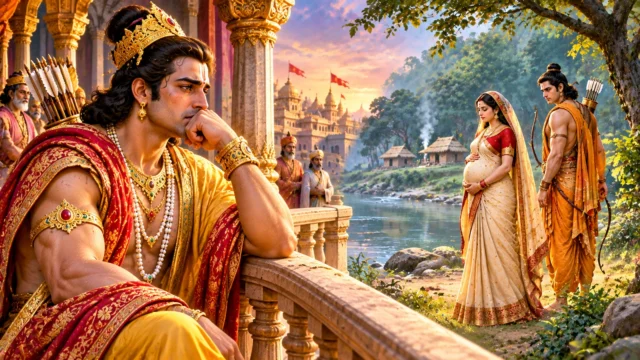
The Ramayana begins in a royal world centered on Ayodhya. Rama, a prince of King Dasharatha’s family, is expected to inherit a position of responsibility. Circumstances shaped by palace promises lead to his exile. Sita accompanies him, as does his devoted brother Lakshmana. Their move from royal life to the forest tests family obligations and promises: Rama must weigh his own interests against a commitment connected with his father’s word.
The story changes dramatically when Ravana, ruler of Lanka, abducts Sita. Rama’s search leads to alliances with Sugriva and the vanara figures, including Hanuman. Hanuman’s journey, his meeting with Sita and the mobilization of an army make the rescue effort possible. The narrative moves toward Lanka, a conflict with Ravana and Rama’s eventual return. Different tellings handle later episodes, Sita’s ordeals and the characters’ emotional responses in notably different ways.
A simple summary sometimes says the Ramayana is only about good defeating evil. It is also a story of difficult ethical obligations. What does honoring a promise cost? Can a ruler’s duty conflict with care for loved ones? How should people interpret Sita’s courage and agency, rather than allowing her to become a passive object in a rescue plot? Those questions make the text more powerful than a list of battles. Its characters have inspired worship and devotion, but literary comparison still benefits from acknowledging sorrow, disagreement and complexity.
What Is the Main Story of the Mahabharata?
The Mahabharata follows a dispute within the Kuru dynasty. Two related groups, the Pandavas and Kauravas, struggle over inheritance, government, honor and power. The Pandavas include Yudhishthira, Bhima, Arjuna, Nakula and Sahadeva. Duryodhana is a leading Kaurava figure. The story draws in Bhishma, Drona, Karna, Krishna, Kunti, Gandhari and many others whose loyalties do not fit neatly into a single moral label.
The dice game becomes a turning point. Yudhishthira loses his position, and Draupadi is humiliated in the royal assembly. The Pandavas experience exile and return to a struggle over political settlement. Krishna attempts diplomacy in famous portions of the narrative, but negotiations fail. The battle at Kurukshetra takes place over 18 days within the epic’s account. The number describes the story’s war, not an archaeologically verified timetable.
The Mahabharata does not end simply because one side wins. It dwells on grief, obligations to survivors, the meaning of kingship and the heavy consequences of violence. The long Shanti and Anushasana sections include teachings and debates that extend far beyond the battlefield. That reflective aftermath is essential: the epic does not treat victory as proof that every decision by the winners was morally uncomplicated.
Main Characters: Rama and Krishna Are Not the Whole Story
A comparison often puts Rama opposite Krishna, but their narrative positions are not identical. Rama is the central protagonist of the Ramayana and is honored as an avatar of Vishnu in major devotional traditions. Krishna is a decisive figure in the Mahabharata—an adviser, relative, strategist and divine teacher—while Arjuna and the Pandava family carry much of its central political and military narrative. Krishna does not simply replace Rama as the hero of another version of the same plot.
The supporting characters show why each epic matters. Sita is not just a symbol of patience; her responses, decisions and trials raise enduring questions about dignity, public judgment and marriage. Hanuman represents devotion expressed through courage and intelligent service. Lakshmana embodies familial loyalty but also participates in tense moral choices. In the Mahabharata, Draupadi challenges the conduct of an assembly that claims to uphold law; Karna carries a painful conflict between social standing, gratitude, family identity and allegiance. Bhishma is revered for vows but is also associated with the disastrous costs of rigid loyalty.
A reader seeking character lessons should therefore avoid translating every individual into a single trait such as “good,” “bad,” “loyal” or “strong.” Both texts become more meaningful when we ask what a character could know at a particular moment and what consequences followed their decisions.
Dharma in Both Epics: Different Problems, Shared Questions
Dharma is often loosely translated as duty, righteousness or sustaining order, yet none of those English words captures every context. In the Ramayana, readers regularly encounter dharma through relationships and promises. Rama’s acceptance of exile, Bharata’s response to the throne, Sita’s endurance and Hanuman’s service reveal obligations that are felt in daily family and civic life. Their choices invite admiration and sometimes difficult debate.
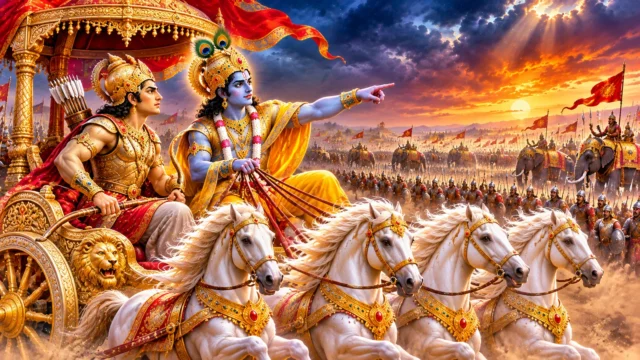
In the Mahabharata, dharma repeatedly becomes a question without an easy answer. A person may owe loyalty to relatives while also recognizing that relatives behave unjustly. A vow may preserve personal honor while helping sustain a harmful political order. Protecting a kingdom might require actions that bring devastating loss. The very people debating dharma can disagree about its meaning. The Bhagavad Gita arises from such a crisis: Arjuna does not want to kill respected teachers and family members, and Krishna responds through an extended philosophical teaching.
It is tempting to say “Ramayana teaches perfect rules, Mahabharata teaches broken rules.” That is too neat. Both contain uncomfortable dilemmas, contested episodes and multiple interpretations. A balanced comparison says the Ramayana often frames questions through a distinctive journey and royal family, while the Mahabharata makes the collision of duties across a vast social network especially prominent. Neither reduces ethics to a quick slogan.
War, Politics and the Cost of Victory
The Ramayana’s military conflict develops out of Sita’s abduction and the search for her. Its best-known war is associated with Lanka. The relationships between Rama, Sugriva, Vibhishana and Hanuman emphasize forming alliances and deciding whom to trust. Ravana is a powerful antagonist, yet traditions also discuss his learning, status and the choices that bring about his fall. There are battle rules, divine weapons and episodes of deception or strategic maneuvering in different recensions, so describing the entire conflict as entirely uncomplicated would mislead readers.
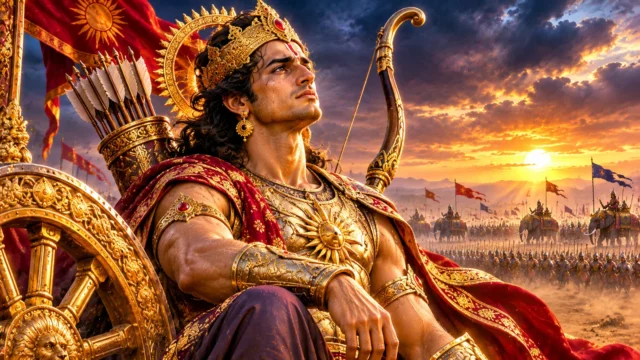
The Mahabharata’s Kurukshetra war is a conflict within an extended family and its allies. Friends and teachers may fight on opposing sides. It is preceded by failed diplomacy and complicated by vows, tactical decisions and controversial deaths. Arjuna’s hesitation before combat creates the setting for the Gita; Yudhishthira’s later anguish complicates claims that winning the war equals moral success. The literature pays unusually sustained attention to collateral loss and mourning.
One epic does not prove that “peace is always easy,” and the other does not establish that “anything is permitted in war.” Both invite readers to examine the demands of justice and the price paid by ordinary people when rulers and warriors cannot find a better outcome.
Sita and Draupadi: Women, Dignity and Interpretation
Sita and Draupadi are among the most discussed women in South Asian literary history. Their stories are not interchangeable. Sita confronts abduction, separation, public scrutiny and the duties of a royal household. How her later life is narrated depends on the particular Ramayana tradition being read. Some retellings highlight her independence, arguments and agency more strongly than a quick children’s summary might suggest.
Draupadi, born from a sacrificial fire in a prominent Mahabharata narrative, is central to the political and ethical crisis produced by the dice game. Her questioning of the assembly challenges those who pretend that technical rules excuse humiliation. She is more than a symbol of vengeance; different episodes explore friendship, dignity, loss and the vulnerability of women under elite political power.
Modern readers should be careful not to convert difficult episodes into simple approval of practices they would reject today. These narratives have been interpreted, questioned and rewritten by generations of authors. In literature classes and family discussions, it is legitimate to ask not only “What did this character do?” but “Who gets to speak, and who pays the cost?”
Seven Kandas vs Eighteen Parvas: How the Epics Are Organized
The commonly used Valmiki Ramayana has seven sections called kandas: Bala, Ayodhya, Aranya, Kishkindha, Sundara, Yuddha and Uttara. Together they follow Rama’s beginnings, exile, forest life, alliances, the search for Sita, conflict in Lanka and later developments. Scholars examine the historical layering of portions of this structure, so an article that calls all sections equally old or identical in every manuscript overstates certainty.
The Mahabharata is organized into 18 parvas. Among the most relevant for beginners are Adi (family beginnings), Sabha (royal assembly and dice), Vana (exile), Virata (life in disguise), Udyoga (efforts toward settlement), Bhishma, Drona, Karna and Shalya (war-related books), followed by books addressing night violence, mourning, instructions, later rituals and the final journey. The exact chapter counts and some names differ between editions. The Bhagavad Gita belongs to the Bhishma Parva, not to a separate event that happened outside the Mahabharata.
The structure explains a practical difference in reading experience. The Ramayana’s central movement is comparatively easy to follow as a journey from departure to return, while the Mahabharata often interrupts the immediate political plot with genealogy, tales within tales, philosophy and reflection.
Which Epic Is Longer and Which Is Older?
The Mahabharata is much longer. Traditional presentations often describe the Ramayana as containing roughly 24,000 verses and the Mahabharata as containing around 100,000. These are familiar rounded numbers rather than uniform counts for every manuscript. Scholarly critical editions differ in their inclusion of passages and often have smaller totals. Comparing figures from two different types of editions without saying so creates false precision.
As for which was written first, many introductions identify the Ramayana as the earlier epic in its literary core, while scholars emphasize that both stories underwent long and overlapping processes of development. Their exact years of composition cannot be pinned down as if each were a modern book delivered to a publisher on one day. Both include layers from different periods. Likewise, religious associations of Rama with Treta Yuga and the Mahabharata with Dvapara Yuga belong to traditional cosmology; they are not equivalent to modern archaeological dates.
Neither epic should be presented as a fully verified contemporary war report. Historical geography, social memory and literary tradition are important topics for research, but a description of gods or weapons in a story is not on its own proof that every event happened exactly as narrated.
The Bhagavad Gita: Why It Matters to the Comparison
The Bhagavad Gita is a renowned philosophical dialogue within the Mahabharata. Arjuna is overwhelmed by the prospect of a battle involving relatives, teachers and friends. Krishna discusses selfhood, action, knowledge, disciplined practice and devotion. Different commentarial schools interpret the teaching in distinct ways. Its location inside a broader narrative of conflict matters: the Gita responds to an immediate moral crisis rather than arriving as a free-floating list of motivational quotes.
The Ramayana also contains spiritual reflection, devotional expression and ethical instruction. However, it does not include the Bhagavad Gita as one of its own chapters. If a website claims a Gita verse comes from the Ramayana, verify the passage and book before repeating the claim. Similarly, a line heard in a television series is not necessarily a direct translation of the oldest available Sanskrit text. Identifying the actual source makes quotations more reliable and the literary comparison more useful.
Regional Versions: Why There Is No Single Film-Sized “Original”
The Ramayana has circulated through numerous retellings, including the Sanskrit work associated with Valmiki, Kamban’s Tamil epic, Tulsidas’s Awadhi Ramcharitmanas, Bengali traditions associated with Krittibas and celebrated versions across Southeast Asia. These works are not simply word-for-word copies. Poets, performers and communities highlight different relationships and values. The Ramakien in Thailand is one famous example of the story’s reach beyond India.
The Mahabharata likewise exists in manuscript families, translations, performances and modern adaptations that differ in wording and emphasis. Its tremendous size creates opportunities for writers to select the perspective of Karna, Draupadi, Bhishma or another figure. A modern novel may retell an episode imaginatively; a television serial may add dialogue to clarify motivation. Neither should be cited as a primary Sanskrit verse unless the connection has been independently checked.
For responsible comparison, name the edition or tradition. “According to the Valmiki Ramayana” means something more precise than “According to every Ramayana.” “In this Mahabharata translation” is more transparent than promising that a disputed episode appears in every version of the text.
Which Should You Read First? A Practical Reading Plan
If you prefer a clearer central journey, start with an accessible, well-annotated Ramayana translation. Learn the characters, note the sequence of exile and rescue, and compare a regional retelling after you know the main story. If you enjoy politics, family drama and philosophical debate, consider a carefully abridged Mahabharata first, then move to a fuller translation. Reading only the Bhagavad Gita before the epic can be valuable, but learning Arjuna’s circumstances helps avoid taking its lines out of context.
Whatever your choice, check the translator’s introduction. Does the book use the Valmiki text, a critical edition, a regional version or a modern retelling? Does it explain departures from the source? Keep a simple list of characters, and do not assume a cinematic adaptation settles a disputed detail. A good entry point offers clarity without pretending the traditions have no complexity.
Myth vs Fact: Five Common Misunderstandings
- “They have the same author.” Traditionally, no: Valmiki is associated with the Ramayana and Vyasa with the Mahabharata. The later transmission of both is complex.
- “Both are equally long.” No: the Mahabharata is considerably longer in the familiar Sanskrit tradition.
- “The Bhagavad Gita is part of the Ramayana.” No: it appears within the Mahabharata’s Bhishma Parva.
- “Every regional Ramayana tells every episode identically.” No: retellings vary in language, emphasis and narrative details.
- “Traditional yuga dates prove exact historical dates.” No: religious chronology and modern historical verification are different methods of understanding the past.
Frequently Asked Questions
What is the main difference between Ramayana and Mahabharata?
The Ramayana centers on Rama, Sita, exile and the battle connected with Lanka. The Mahabharata follows the Pandava–Kaurava conflict, the Kurukshetra war and extensive debates on duty, power and loss. Both explore dharma in different narrative settings.
Who wrote the original Ramayana and Mahabharata?
Hindu tradition credits the Sanskrit Ramayana to Valmiki and the Mahabharata to Vyasa. Modern scholars study the long textual histories and multiple recensions of both works.
Which is longer, Ramayana or Mahabharata?
The Mahabharata is far longer. Approximate traditional figures are 100,000 verses for the Mahabharata versus about 24,000 for the Ramayana, but exact counts depend on the edition.
Which epic happened first according to Hindu tradition?
Rama’s story is associated with Treta Yuga and the Mahabharata with Dvapara Yuga in widely known traditional chronology. Those associations should not be confused with historically verified calendar dates.
Is the Bhagavad Gita in the Ramayana or Mahabharata?
It is within the Mahabharata, in the Bhishma Parva, where Krishna teaches Arjuna before the battle.
Are Rama and Krishna both avatars of Vishnu?
They are widely revered as manifestations of Vishnu in major Hindu devotional traditions. Schools differ in how they explain Krishna’s ultimate status and theological relationships.
Can children read both epics?
Yes, age-appropriate retellings can introduce the characters and values. Adults should remember that condensed children’s versions simplify morally difficult scenes and may combine material from several traditions.
Conclusion: Two Epics, Not One Simple Moral Competition
The Ramayana vs Mahabharata comparison becomes meaningful when we stop asking which story has the “stronger” hero and begin asking what each says about responsibility. The Ramayana gives a powerful account of duty amid exile, separation and family promises. The Mahabharata explores what happens when obligations collide and political victory comes at an enormous cost. Both have inspired centuries of devotion, art, debate and reinterpretation. Read them with curiosity, identify the version being used and give space to difficult questions rather than replacing them with sensational certainty.
Sources and Editorial Notes
- Oxford Bibliographies: Rāmāyaṇa in the Hindu Tradition — literary history and multiple versions.
- Oxford Bibliographies: Mahābhārata in Hindu Tradition — textual breadth and narrative tradition.
- IIT Kanpur Heritage: Valmiki Ramayana — seven kandas and Sanskrit text resources.
- Oxford History of Hinduism: Religious Practices in the Sanskrit Epics — historical and interpretive cautions.
- Indira Gandhi National Open University: The Mahabharata’s 18 Parvas — structure and the Gita’s placement.
Editorial note (12 November 2026): This educational comparison describes sacred narratives and traditional authorship. Scholarly discussion of text formation is not presented as proof or disproof of devotional belief. Exact verse totals, episode locations and later adaptations vary across editions.












Share Your Opinion
Comments are closed on this post.