 Vista
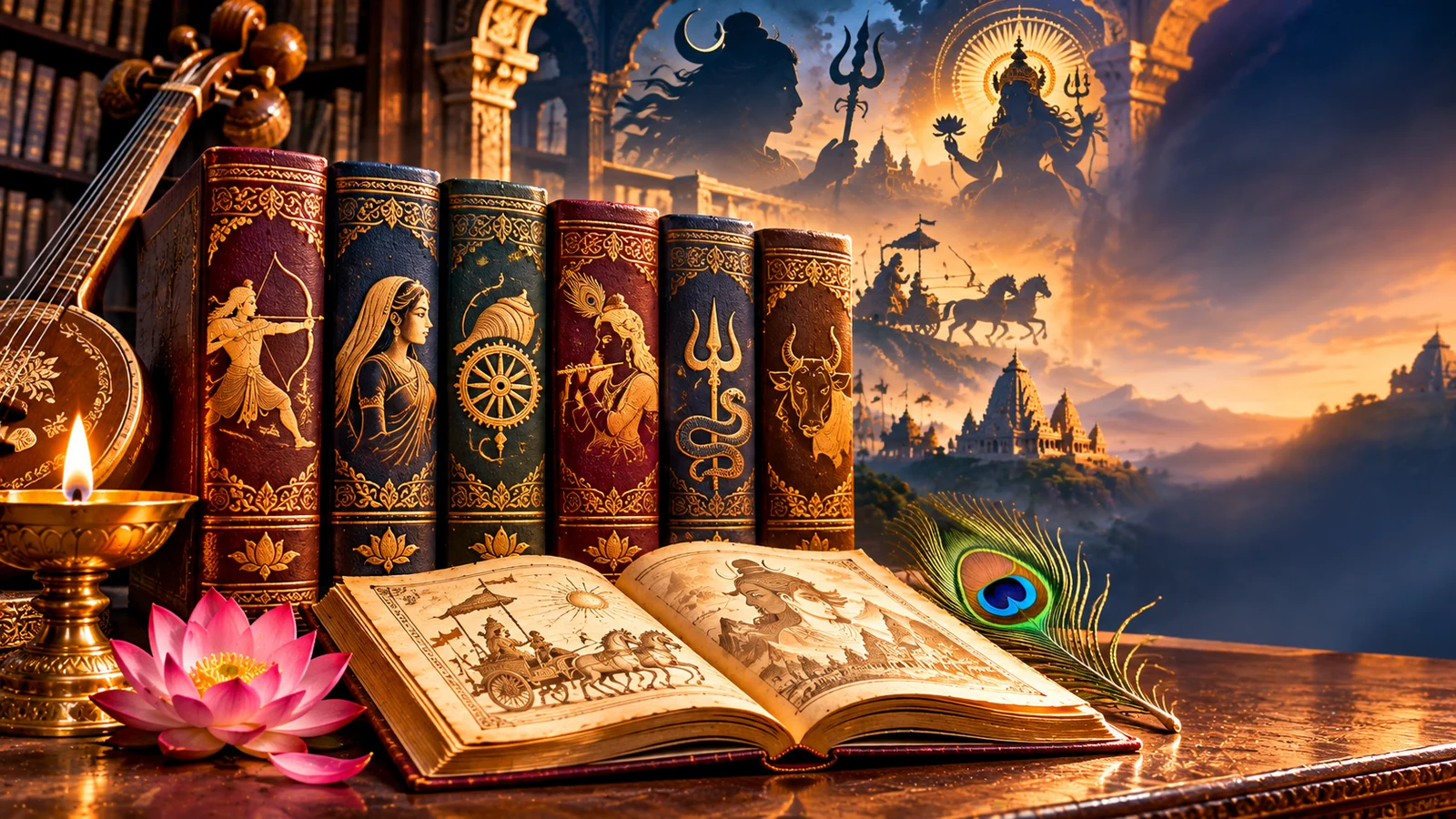
Which Devdutt Pattanaik book should you read first? For most newcomers to Hindu mythology, Myth = Mithya is a practical entry into symbols and big ideas. Choose Jaya if you want the Mahabharata, Sita for the Ramayana, My Gita for philosophical questions, and Pashu or The Girl Who Chose if you are picking a family-friendly introduction. There is no official ranking that works for every reader: the right choice depends on whether you prefer a story, an illustrated guide, literary fiction or a more analytical book.
Devdutt Pattanaik is an Indian author, illustrator and commentator on mythology. His catalogue includes epic retellings, interpretive essays, children’s books, novels and books on world traditions. That breadth is why an unqualified “all Devdutt Pattanaik books” search can be confusing. This carefully selected guide explains sixteen verified titles, identifies their intended reader, compares several ways to begin and includes a newer 2026 release. It is a curated reading guide, not a claim to list his complete bibliography or to provide a sales ranking.
How to Choose a Devdutt Pattanaik Book
Start with the outcome you want. If you are repeatedly puzzled by a god’s unusual symbol or the difference between myth and history, a broad explanatory title is more useful than an action-heavy novel. If you enjoy characters and plot, select one of the illustrated epic retellings. If you want a discussion about action and detachment, choose a philosophical interpretation; if you want to give a book to a child, check the publisher’s format, age range and the child’s reading confidence.
Also distinguish a retelling from a translation. An author retelling an epic may combine narrative strands, shorten scenes and explain symbols in a personal voice. A translation attempts to render a particular text into another language, though translation itself also involves interpretation. Neither is automatically “better”; they serve different purposes. Many readers do best with one accessible retelling followed by a careful translation or a study of specific passages.
The publisher and author catalogues verify that these book titles exist. They do not establish which volume has the highest sales or which will suit your taste. Format and prices may change, and some titles have different English, Hindi or regional editions. Check the exact cover, subtitle and ISBN before ordering, especially when a retailer lists several similarly named products.
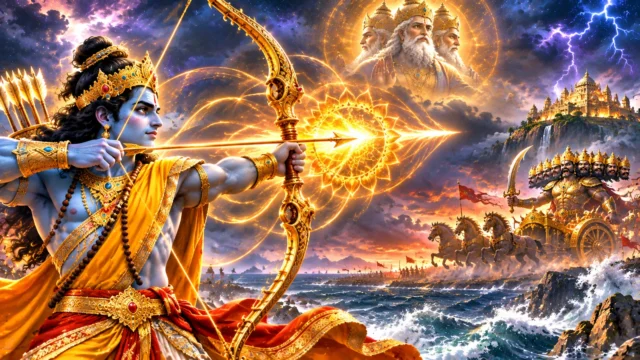
Six Starter Picks: Visual Book Guide
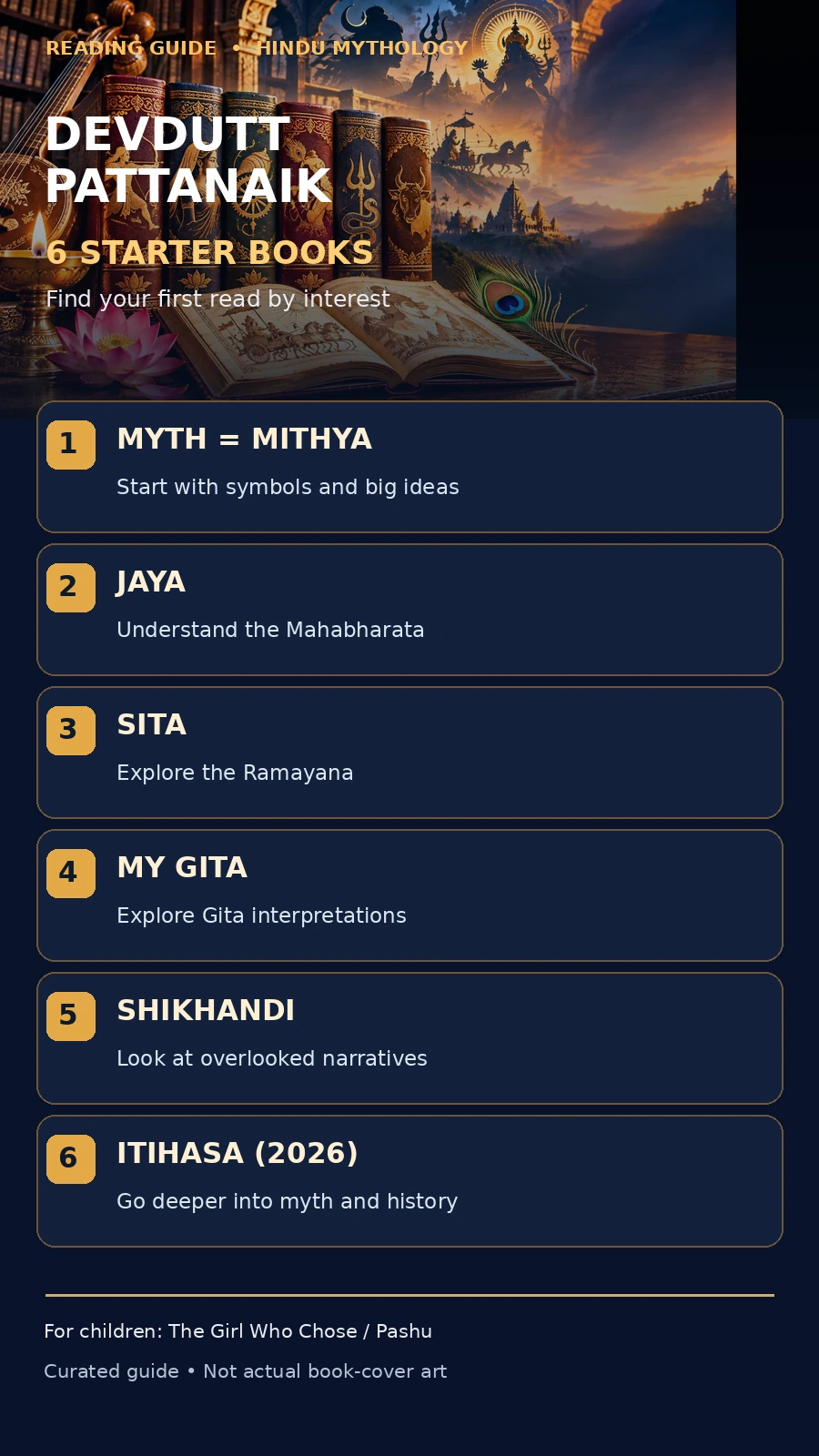
16 Devdutt Pattanaik Books: What to Read and Who Each Is For
1. Myth = Mithya: Decoding Hindu Mythology
Best for: Beginner overview.
Start here if your question is not “what happens next?” but “why do these stories exist?” Pattanaik examines recurring images, divine relationships, symbols and the multiple ways Hindus tell stories. Rather than offering a single continuous novel, the book invites readers to interpret familiar episodes and compare the different perspectives that can coexist within a tradition. Its short explanatory style works well for people meeting Hindu mythology through films, temples or family festivals. A reader seeking only a fast action plot may find it more reflective than expected. It is also a book of one author’s interpretation, not a substitute for the Vedas, Puranas or their specialist translations. Use it to build a vocabulary and then follow a particular story into a primary source.
2. Jaya: An Illustrated Retelling of the Mahabharata
Best for: Mahabharata stories.
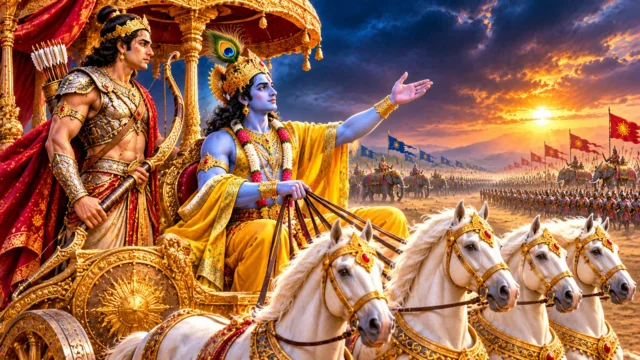
Choose Jaya for a guided journey through the Mahabharata without beginning with a very large scholarly translation. The illustrated retelling connects the better-known Kurukshetra events with people, relationships, regional stories and questions about dharma. Its strength for a first-time reader is orientation: who is related to whom, why choices matter, and what the epic asks beyond “who won the war?” Yet a retelling necessarily selects, rearranges and interprets material. Treat its scenes as a route into a complicated literary tradition, not proof that every detail is identical in every Mahabharata manuscript. Readers who finish it can compare an accessible translation of the epic’s selected parvas and explore how different regions tell the Pandavas’ story.
3. Sita: An Illustrated Retelling of the Ramayana
Best for: Ramayana perspectives.
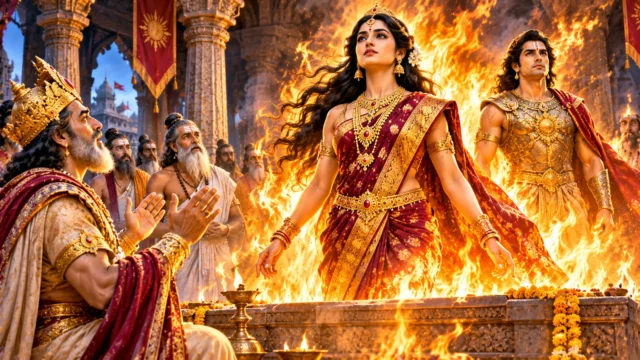
Sita is a strong next choice for readers already familiar with Rama’s exile and the search for Sita but curious about the many versions of the Ramayana. The book follows the epic through an illustrated retelling and invites attention to Sita’s presence, decisions and the emotional force of its relationships. It is especially useful when you want to move beyond a compressed “good versus evil” plot. At the same time, there is no single modern English retelling that automatically represents every regional Ramayana. If a detail surprises you, ask which tradition or narrative strand it comes from. Readers researching Valmiki’s text should read it alongside a named translation rather than replacing one with the other.
4. Shyam: An Illustrated Retelling of the Bhagavata
Best for: Krishna narratives.
Shyam suits the reader whose main interest is Krishna: the child of pastoral stories, the beloved in devotional traditions and the figure connected with wider Puranic cosmology. As an illustrated retelling of Bhagavata-linked narratives, it offers an approachable framework for encountering stories that devotees cherish deeply. Readers should distinguish that devotional narrative world from a modern biography with independently established dates. It is particularly good after a general introduction because it allows one figure’s stories to expand into an entire set of symbols and values. Be mindful that the Bhagavata Purana is only one important source for Krishna-related traditions, and different Vaishnava communities may interpret key episodes differently.
5. My Gita
Best for: Bhagavad Gita concepts.
My Gita is for the reader asking what karma, duty, detachment, action and self-knowledge can mean in daily life. The title itself signals a personal reading: this is Pattanaik’s interpretive engagement with the Bhagavad Gita, not the Sanskrit text alone. It may help newcomers who find conventional verse-by-verse commentaries intimidating, especially when they prefer conceptual explanations over literal translation. The best reading practice is to keep a reputable Gita translation nearby and check which idea arises from the verse and which is the modern interpreter’s emphasis. This matters because Hindu philosophical traditions disagree about the exact relationship between knowledge, devotion, action and liberation.
6. 7 Secrets of Shiva
Best for: Shiva symbols.
This is a thematic entry for readers fascinated by Shiva’s third eye, ascetic life, paradoxes and cosmic symbolism. Instead of reading the familiar destroyer label as the entire story, the “secrets” approach asks why Shiva is pictured in seemingly opposite roles: detached yogi, family member, source of terror and giver of grace. Its framework can help distinguish symbolic art from a literal report about physical events. Readers looking for a chronology of every Shaiva scripture will need more specialized books. Enjoy it as a lens that prompts questions, remembering that Shaiva schools and regional traditions interpret symbols in more than one way. It pairs naturally with an introductory article on the Trimurti or Shiva’s iconography.
7. 7 Secrets of Vishnu
Best for: Vishnu, avatars, dharma.
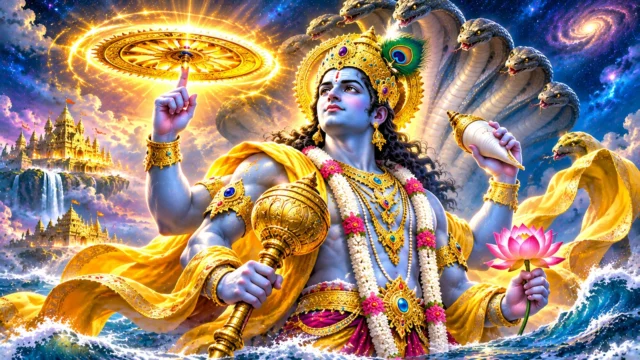
Choose the Vishnu volume when you want to understand preservation, divine descent and why different avatars intervene in different crises. It works well for people who already know the Dashavatara names but want to move toward symbolism rather than collecting “power rankings” of deities. The reader will benefit from seeing Vishnu and his narratives through one interpretive arrangement. Yet not all Vaishnava communities agree on every enumeration of the avatars, and some place Krishna at the center of their theology. Use the book to ask better questions about restoration of dharma, responsibility and devotion. It is not a single authorized definition of Vishnu for everyone who practices Hinduism.
8. Shikhandi: And Other Queer Tales They Don’t Tell You
Best for: Gender and overlooked tales.
Shikhandi focuses attention on stories involving gender variance, identity and characters frequently left out of simplified mythological introductions. The material is especially engaging for readers interested in how cultures understand bodies, relationships and social roles through storytelling. It does not mean that modern English identity labels map perfectly onto every ancient text; context and translation matter. Some stories may raise difficult adult questions, so it is not necessarily a first purchase for young children. As a companion to epic retellings, it reminds readers that Indian mythological traditions have always contained complicated personalities and disagreements. A careful reader can appreciate the book while still checking the relevant textual versions instead of treating all stories as interchangeable historical statements.
9. Pashu: Animal Tales from Hindu Mythology
Best for: Animals in mythology.
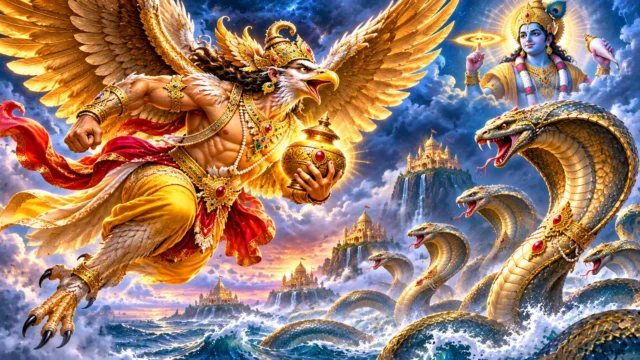
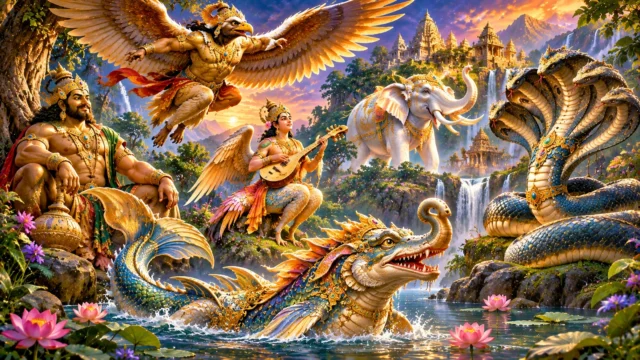
Pashu turns attention from royal courts and battles to animals and animal-like beings in Hindu storytelling. Its publisher describes a richly illustrated collection of more than seventy-five anecdotes. That makes it attractive to family readers and to anyone curious about the symbolism of cows, serpents, birds, elephants and unusual beings. Animal stories can discuss human values without turning wildlife into proof of supernatural zoology. The illustrations make it easy to browse in short sessions; readers may wish to check the publisher’s recommended age and format for a particular edition before gifting it to a child. It also creates a natural bridge between books and museum art, where Garuda, Makara and Nagas appear as visual symbols in sculpture and architecture.
10. Devlok with Devdutt Pattanaik
Best for: Short questions and stories.
Devlok is approachable when you prefer one curious question at a time rather than a lengthy single epic. Stories about deities, creation, ritual and cyclical time become invitations to ask what different symbols mean. The title is connected to Pattanaik’s explanations for a wider audience, including a television programme, so check the specific volume rather than assuming all editions are identical. It can be an effective stepping stone before reading denser books on philosophy. A caution is useful: easy introductions simplify by design. When you need exact Sanskrit wording, historical dating or a sect-specific theological position, move from the introductory explanation to a named text or scholarly translation.
11. The Pregnant King
Best for: Mythology-inspired literary fiction.
Unlike a general guidebook, The Pregnant King is a work of literary fiction drawing on the myth of King Yuvanashva. It explores power, parenthood, gender and social expectation through a novelistic telling. That is exactly why it belongs on a book list but should not be grouped with primary sacred texts or sold as a literal translation of the epic. Choose it when you enjoy psychological character stories and questions without neat answers. Because the themes can be mature, it may not suit an early-reader gift. A person seeking a strictly historical explanation of gender in ancient India should consult research literature as well; imaginative fiction can open discussion but cannot by itself establish what every historical community believed.
12. The Girl Who Chose: A New Way of Narrating the Ramayana
Best for: Children’s Ramayana entry.
For a younger reader, The Girl Who Chose provides a fresh, accessible way to enter Ramayana stories. Its focus on choice invites children to think about agency and consequences rather than memorize a battle sequence. As with all retellings for young audiences, details are selected and language is simplified for an intended reading level. Parents can use it to start discussions about Sita, responsibility and how different people might respond to a difficult situation. The publisher’s edition details should guide age suitability, since “for children” covers different reading abilities. It is an introduction to a literary tradition; it should not be made into the only Ramayana that a family ever consults.
13. The Boys Who Fought: The Mahabharata for Children
Best for: Children’s Mahabharata entry.
The Boys Who Fought offers younger readers an entry into the Mahabharata and its conflicts without demanding that they tackle a massive adult edition first. It is useful for storytelling sessions focused on rivalry, loyalty, choices and the difference between a rule and a wise decision. As a child-oriented retelling, it is not the place to verify every verse or settle disagreements between versions. Adults reading alongside children can ask why each character made a choice and whether the consequences were fair. It also pairs well with The Girl Who Chose for a first comparison of India’s two major epics, while leaving the more difficult questions for later reading.
14. Itihasa: A History of Hindu Mythology (2026)
Best for: Myth, culture and history.
For readers who already know the major stories and want to examine how Hindu mythology interacts with history, Itihasa is the newer, more demanding option. Penguin lists it as an October 2026 release. The book discusses the changing relationship between beliefs, objects, practices and historical arguments. This makes it different from a straightforward children’s retelling or a character-by-character guide. Its claims and interpretations should be read critically and, where historical evidence matters, compared with independent academic research. The publisher lists a 464-page paperback edition, so it may be better as a second or third book than a newcomer’s first. Readers interested in cultural history will appreciate why stories may survive even as meanings and communities change.
15. Astra Shastra: Weapons of the Hindu Gods (2026)
Best for: Illustrated children’s weapons guide.
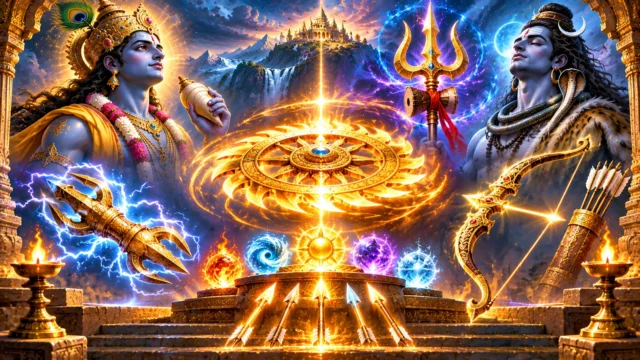
Astra Shastra is a 2026 addition to Pattanaik’s children-focused list. The author’s own catalogue describes it as an illustrated, easy-to-read introduction to the weapons associated with Hindu deities. Children who enjoy identifying Shiva’s trident, Vishnu’s discus or divine bows in paintings may find it particularly inviting. The key is to frame these as mythological and iconographic objects, not as blueprints for historical technology. Before choosing it as a gift, check the specific board-book or printed edition, size and suggested age. For an adult studying literary references to Brahmastra or Pashupatastra, this introductory book should supplement—not replace—full translations of the relevant epic passages.
16. 99 Thoughts on Ganesha
Best for: Ganesha symbolism.
Readers drawn to Ganesha’s unusual appearance, ritual role and stories can consider 99 Thoughts on Ganesha. Jaico’s author catalogue confirms the title and also lists translations into several Indian languages, including Hindi and Marathi. The “thoughts” format suggests dipping into short conceptual pieces rather than following a single epic plot. It pairs well with basic introductions to Hindu iconography because a familiar figure becomes a starting point for understanding symbols, devotion and diverse storytelling. Translation availability is not the same thing as stock availability; verify the current language edition with the seller. Readers who want the oldest attested form of a particular legend should check the cited source separately.
Quick Comparison: Which Book Fits Your Interest?
| Book | Best for | Reading format |
|---|---|---|
| Myth = Mithya | Beginner overview | Explanatory guide |
| Jaya | Mahabharata stories | Illustrated epic |
| Sita | Ramayana perspectives | Illustrated epic |
| My Gita | Bhagavad Gita concepts | Philosophical interpretation |
| Shikhandi | Gender and overlooked tales | Thematic stories |
| Pashu | Animals in mythology | Illustrated stories |
| The Pregnant King | Mythology-inspired literary fiction | Literary fiction |
| The Girl Who Chose | Children’s Ramayana entry | Young readers |
| Itihasa (2026) | Myth, culture and history | Cultural-history study |
| Astra Shastra (2026) | Illustrated children’s weapons guide | Illustrated children’s guide |
Best Reading Order for Complete Beginners
A simple five-step route prevents the common mistake of buying several books that explain the same thing. Begin with Myth = Mithya to understand the vocabulary of symbols and ritual. Move to either Jaya or Sita, depending on which epic you know less well. Add 7 Secrets of Shiva or 7 Secrets of Vishnu for a focused study of one divine tradition. Then try My Gita if you want to think about dharma and action; it is easier to appreciate the Gita when you know the Mahabharata’s context. Finally explore Shikhandi, The Pregnant King or Itihasa once you are comfortable with alternative viewpoints and interpretive debates.
If you already know the Ramayana, skip straight to Sita. If you prefer Krishna stories over a general introduction, start with Shyam. If books feel intimidating, try Devlok or an illustrated title in short sessions. There is no need to buy the entire catalogue to become a thoughtful reader. Two well-chosen books read attentively usually teach more than ten titles skimmed for collectible covers.
Retellings, Explanations and Fiction Are Different
Search results often use the phrase “Hindu mythology book” as though every title offers the same kind of authority. That is misleading. A retelling such as Jaya guides readers through a literary epic. An interpretive title like Myth = Mithya discusses symbols and social meanings. The Pregnant King is imaginative fiction informed by mythology. Itihasa engages more directly with ideas about history and cultural change. A children’s illustrated guide simplifies the material for its audience.
No book in this list can establish that mythological events happened exactly as depicted in modern cover art. Nor should one writer’s synthesis erase the diversity of Vaishnava, Shaiva, Shakta, regional and philosophical traditions. When an assertion is important to you, look for its named source: a specific epic passage, Purana, iconographic tradition or historical study. Reading with curiosity and checking origins are compatible habits.
What Is New in 2026?
Itihasa: A History of Hindu Mythology is listed by Penguin as published in October 2026. Rather than being just another Ramayana retelling, it examines the relationship between belief, cultural symbols and history. The author’s official catalogue also lists Astra Shastra: Weapons of the Hindu Gods, described as an illustrated introduction for young readers, and Flower of India: Ways of Seeing the Lotus, which explores a particular cultural symbol. The latter is a specialized exploration rather than the most obvious first purchase for someone who wants a Mahabharata plot.
Publication information should be kept current: an earlier website preview can say “coming soon” even after the publisher starts listing a title. Prefer the publisher’s live publication record for release details. Do not confuse the year of a newly listed edition with the year an older work was first written. The recommendations below avoid inventing sales numbers, reader ratings or guaranteed store availability.
How to Check the Edition Before You Buy
Open the book’s publisher entry and compare the exact subtitle, language, binding, ISBN and edition information with the retail listing. Remember that a box set can contain multiple separate works: Penguin’s Indian Mythology boxed collection, for example, includes Myth = Mithya, Shikhandi and The Pregnant King. Buying the set and those individual books together could duplicate content. If you are looking for Hindi translations, search the original title with “Hindi” and verify the translator or imprint where shown. A Kindle or audio edition may also differ in illustration access from a printed copy.
Readers outside India should verify local availability, shipping and regional licensing rather than assuming that every title sold in an Indian store is easily obtainable worldwide. Libraries are useful for discovering a book’s style before buying it. If you are seeking primary Hindu scriptures rather than interpretation, select an independently identified translation of the Ramayana, Mahabharata, Bhagavad Gita or a Purana. Pattanaik’s work can sit beside these sources as an accessible conversation partner rather than replace them.
Frequently Asked Questions
Which is the best Devdutt Pattanaik book for a beginner?
Myth = Mithya is a useful first stop for symbols and broad ideas. Start with Jaya or Sita instead if you mainly want an epic story.
Which Devdutt Pattanaik book covers the Mahabharata?
Jaya is his illustrated retelling of the Mahabharata. The Boys Who Fought is aimed at younger readers.
Which book should I read to understand the Ramayana?
Sita is an illustrated retelling; The Girl Who Chose introduces younger readers to Ramayana-related choices and stories.
Is My Gita a translation of the Bhagavad Gita?
It is Pattanaik’s interpretive exploration, not merely a word-for-word Sanskrit translation. Compare it with a named translation if accuracy of specific verses matters.
Are all his books fiction?
No. His catalogue includes interpretive nonfiction, epic retellings, children’s books and mythology-inspired literary fiction.
What is Devdutt Pattanaik’s newer mythology book in 2026?
Penguin lists Itihasa: A History of Hindu Mythology as an October 2026 publication. The author’s catalogue also lists Astra Shastra for young readers.
Does he have books for children?
Yes. The Girl Who Chose, The Boys Who Fought, Pashu and Astra Shastra are examples; verify the edition and suggested age before buying.
Where can I find the complete updated list of his books?
Use the book index on devdutt.com and the author catalogue on Penguin Random House India. This article selects sixteen titles rather than claiming to cover every publication.
Related Reading on Vista Hub
Start with the Ramayana vs Mahabharata comparison or the four Vedas explainer to understand the broader tradition.
Sources and Editorial Method
- Author book index
- Penguin Random House India – author catalogue
- Penguin – Itihasa (October 2026)
- Penguin – Indian Mythology boxed collection
- Penguin – Pashu
- Devdutt – Devlok introduction
- Jaico – author catalogue
Updated 13 November 2026. Books and descriptions were checked against the author and publisher catalogues; recommendations are editorial judgments, not sales or bestseller rankings. Fiction and interpretations are distinguished from original scriptures. Retail editions and availability can change.






Share Your Opinion
Comments are closed on this post.