 Vista
Fact review: 14 November 2026
The main gods and goddesses of Norse mythology include Odin, Thor, Frigg, Freyja, Freyr, Njörðr, Týr, Heimdall, Baldr, Sif and Iðunn. The stories often distinguish two divine groupings—the Æsir and the Vanir—while also featuring jötnar, elves, dwarfs, the dead and figures who do not fit neatly into one category. There is no single surviving, universally agreed ‘complete list’ with exactly twelve, twenty or thirty Norse gods.
Looking for Norse gods images with names, Norse goddesses list, who is the strongest Norse god, Odin and Thor powers, or a beginner’s family tree? This illustrated guide gives readable character summaries, important symbols, confusing relationships and source notes. It avoids turning modern movie costumes, social-media rankings and reconstructed charts into unquestioned Viking Age facts.
Who Were the Æsir and the Vanir?
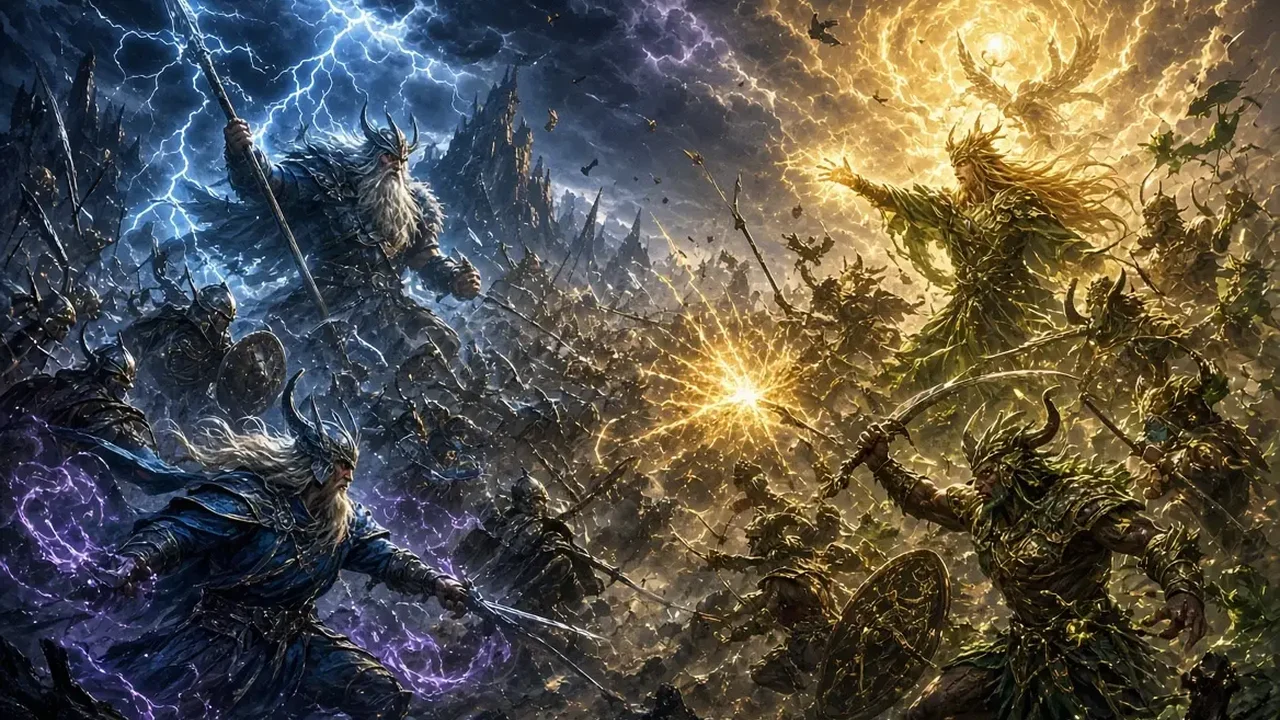
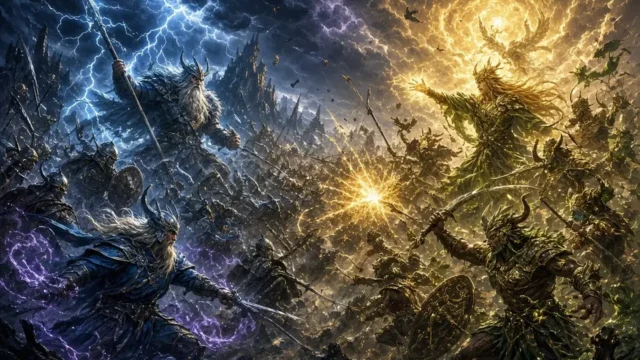
The Æsir are often associated with gods such as Odin, Thor, Frigg and Týr, while the Vanir are prominently represented by Njörðr, Freyr and Freyja. Mythic accounts describe conflict between these divine groupings and an eventual settlement involving the exchange or sharing of important figures. It is tempting to describe the Æsir as gods of war and the Vanir as gods of farming, but the distinction is not that mechanical. Their stories and functions overlap, and some deities connect with both communities through kinship and hospitality.
These labels are useful because they tell us that the Norse pantheon was not imagined as an identical group of characters with interchangeable powers. Yet not every figure in a modern ‘Norse gods family tree’ belongs unambiguously to one fixed class. Old poems are often allusive, and the later Prose Edda organizes names differently. A careful guide shows uncertainty rather than inventing a universal classification.
Odin: Allfather, Wisdom, Ravens and War
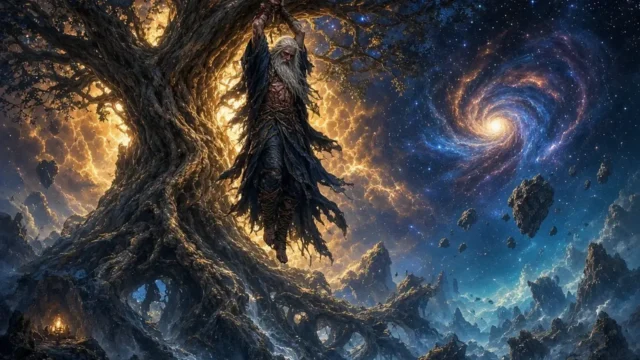
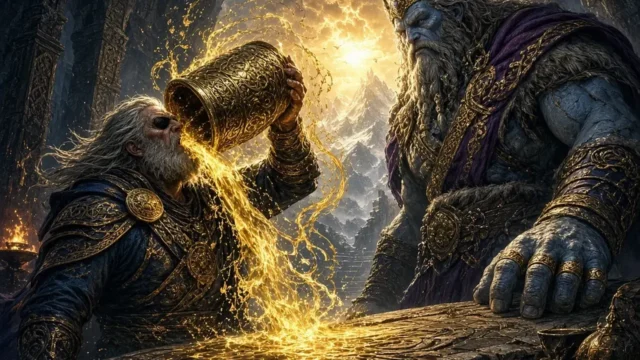
Odin is a leading figure among the Æsir, connected with kingship, battle, poetry, knowledge and the dead. His one-eyed appearance is linked to the story that he gives an eye at Mímir’s well for wisdom. Two ravens, Huginn and Muninn, return with information; his spear is Gungnir, and he rides the extraordinary eight-legged horse Sleipnir. Each symbol can help a reader recognize an Odin image, but a portrait with a random rune does not prove that rune had a single ancient ‘Odin power.’
Odin is not simply a muscular combat specialist. He tests others, travels in disguise, pursues hidden lore and faces a prophesied death when Fenrir swallows him at Ragnarök. The breadth of his roles is why he can be a central figure without holding an official numerical place as the ‘strongest god.’ Rank, wisdom and physical strength are different ideas in the tradition.
Thor: Thunder, Mjolnir and Protection
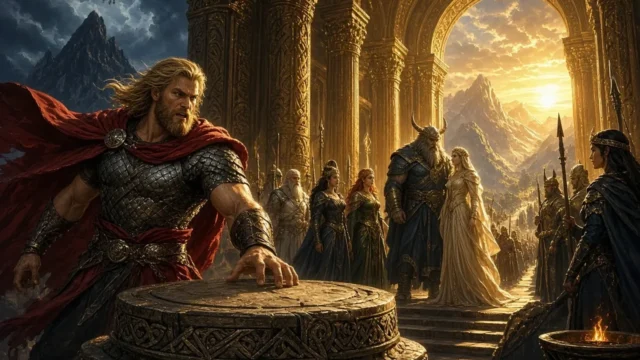
Thor, son of Odin and Jörð, is associated with thunder, physical might and defense against threatening giants. The hammer Mjölnir is his most recognizable weapon, both a force in battle and an object used for hallowing in various narratives. Thor is married to Sif; his family also includes the children Magni, Móði and Þrúðr in the surviving sources. He travels with goats drawing his chariot and has iron gloves and a strength belt in Snorri’s account.
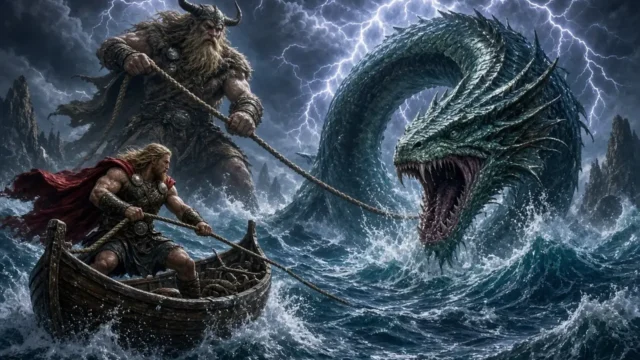
Comics often make Thor Odin’s son and Loki’s adopted brother. The first relationship is supported by the old mythology; the second is a modern entertainment construction. Thor’s most famous final encounter is against Jörmungandr at Ragnarök: he kills the serpent but dies of its venom. For an image gallery, a hammer-and-storm portrait works as an introduction, while a separate ‘Thor vs Jörmungandr’ scene deserves its own precise caption.
Frigg, Freyja and Freyr: Different Roles, Different Stories
Frigg is associated with Odin and appears as his wife in familiar accounts. Freyja belongs to the Vanir grouping, with connections to desire, wealth, magic and the dead; her hall Fólkvangr is named in the poetry. The similarity between their names and some overlapping traits has prompted scholarly discussion, but an SEO article should not simply declare them the same individual. The texts preserve distinct named figures and episodes that readers need to recognize.
Freyr, Freyja’s brother and Njörðr’s son, is linked with well-being, prosperity and other themes. His unusual sword and later confrontation with Surtr matter in the Ragnarök tradition. Freyja’s necklace Brísingamen also appears in the stories. Artists may use a necklace, cats or rich fabric to make her distinctive, but the picture should be labeled an artistic interpretation and not sold as the only authentic ancient Norse portrait.
Tyr, Heimdall and Baldr: Oaths, Vigilance and Tragedy
Týr is best known for the story in which he loses a hand to Fenrir while the wolf is being bound with Gleipnir. It is a myth about a dangerous pledge, not merely a ranking of combat statistics. Heimdall is linked with vigilance, Bifröst and the horn Gjallarhorn that announces Ragnarök in familiar accounts. In Snorri’s description, he and Loki fight to mutual destruction at the end. These particular narratives give a beginner much better clues than a generic ‘powers list.’
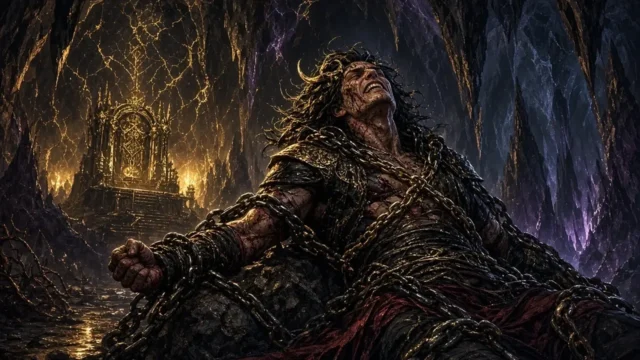
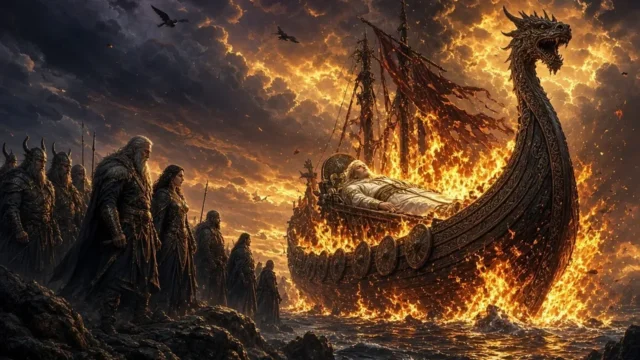
Baldr is associated with a famous tragedy. In the well-known version, Loki exploits a mistletoe-related vulnerability and the blind Höðr becomes involved in the fatal act. The gods’ mourning and the journey toward Hel create one of the most important emotional stories of the corpus. Baldr’s return in accounts of a renewed world also connects his death to the larger themes of fate and continuity.
Sif, Idunn, Skadi, Hel and the Limits of Categories
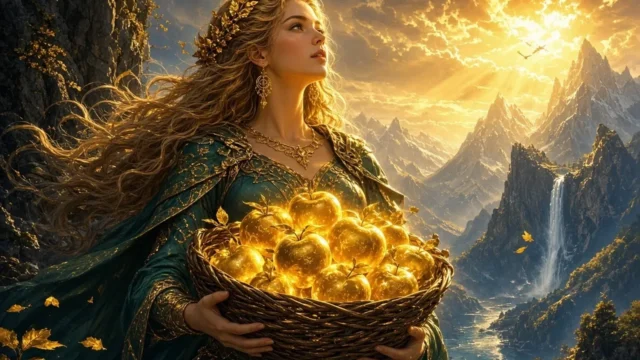
Sif is Thor’s wife, prominent in the story of Loki cutting her golden hair and the subsequent creation of divine treasures. Iðunn is associated with apples that sustain the gods’ youth; a story about her abduction and return reveals their dependence on her. Skaði is a figure of jötunn origin who joins the divine social world and is associated in later tradition with mountains and winter. These relationships challenge any simple assumption that ‘giants’ always belong to a completely separate enemy species.
Hel, one of Loki and Angrboða’s children, is linked with the abode of the dead. Whether one labels her a goddess in a beginner chart depends on the definition being used. Norns who shape destiny and Valkyries who choose certain slain warriors are likewise fundamental figures, but they should not all be placed in an unqualified list of Æsir gods. A helpful article distinguishes divine groups, kinship and narrative roles.
Njord, Bragi, Forseti, Hodr and Other Names to Know
Njörðr is a Vanir figure associated with seafaring, winds, wealth and prosperity, and is father to Freyr and Freyja in familiar accounts. Bragi appears as a figure connected with poetry; Forseti is associated with judgment or settlement; Höðr plays a pivotal role in Baldr’s death. Other names encountered in the Eddas include Víðarr, Váli, Ullr, Hermóðr, Nanna and Gefjon. The sources provide unequal detail for different characters, and some appear mainly through brief references.
This uneven record explains why no responsible article can guarantee a precise total count of Norse gods without defining its criteria. Some lists count only principal Æsir, others add the Vanir and Ásynjur, while still others include jötnar and personified powers. If a post promises ‘exactly twelve gods’ and then quietly includes Loki, Hel and Ymir, the list has mixed categories without explanation.
Who Is the Strongest Norse God?
A reader asking ‘Who is the strongest Norse god?’ usually means strength in a fight. Thor is repeatedly depicted as a formidable physical champion, especially against jötnar. Odin, by contrast, is often highest in prestige and associated with extraordinary wisdom and command. Freyr, Týr and Heimdall have other roles that cannot be sensibly compared using a fictional game power meter. There is no universal official source assigning every deity a numeric level.
A well-made comparison chart can still be useful. It can show a prominent weapon or symbol, family relations, mythological group and key story. What it should not do is invent a percentage of power, a completely fictional weakness or a final ‘Thor beats Zeus’ winner as though two different mythologies share a scoreboard. Such claims may earn curiosity clicks but reduce trust once a visitor reads further.
Norse Gods Images, Family Trees and Reliable Sources
A good image collection groups gods by name and attaches a short, accurate description: Odin with Gungnir and ravens; Thor with Mjölnir; Freyja with her associations; Heimdall with the horn; and Týr with the lost-hand episode. Family trees should distinguish parent, child and partner relationships. Most importantly, Loki is not Odin’s adopted son in the medieval texts, even though that is a recognizable element of modern superhero storytelling.
The foundational sources are the Poetic Edda, Snorri’s Prose Edda, related poems and comparative scholarship. These were written down in medieval Iceland and do not preserve all pre-Christian beliefs without gaps or contradictions. Pictures are artistic reconstructions, not ancient photographs. A user landing from Google Images deserves artwork that explains an actual character and text that identifies which parts of the scene are interpretations.
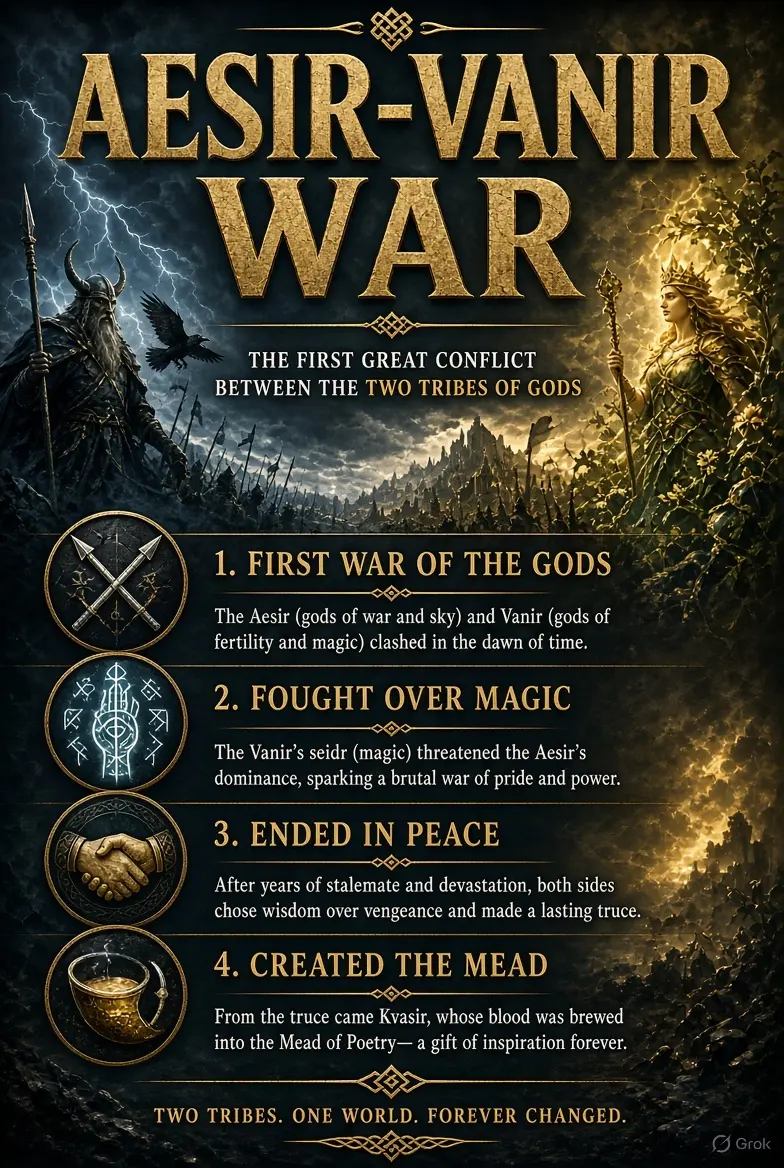
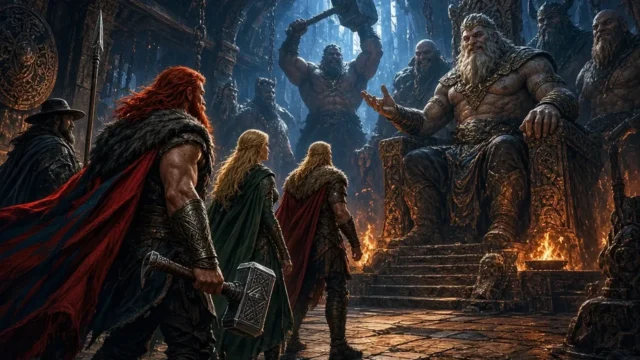
Artwork and source The poster depicts the Æsir–Vanir conflict. The gods’ roles overlap, and the sources do not settle what precisely started the war.
Frequently Asked Questions
How many Norse gods are there?
No fixed complete number survives; counts vary depending on whether Æsir, Vanir and other beings are included.
Who are the most famous Norse gods?
Odin, Thor, Loki, Freyja, Frigg, Freyr, Týr, Heimdall and Baldr are among the best-known figures, although Loki’s classification is complex.
What is the difference between Æsir and Vanir?
They are different divine groupings with a history of conflict and accommodation in Norse stories.
Is Freyja Odin’s wife?
No. Frigg is Odin’s wife in familiar accounts; Freyja is a different named figure.
Is Loki Thor’s biological brother?
No. The familiar brotherhood belongs to modern comic and film adaptations.
Conclusion
Conclusion: The Norse pantheon is a network of gods, goddesses and other powerful beings rather than a perfectly standardized superhero team. Names, symbols and relationships are the best starting points for images and beginner guides; noting uncertainties makes the list more accurate and more useful.
Sources and illustration notice
Norse deity and group overview; Norse gods research and original sources; The Edda: Nordic mythology background.
Images are artistic interpretations, not photos of gods or a verified archaeological family tree.






Share Your Opinion
Comments are closed on this post.