 Vista
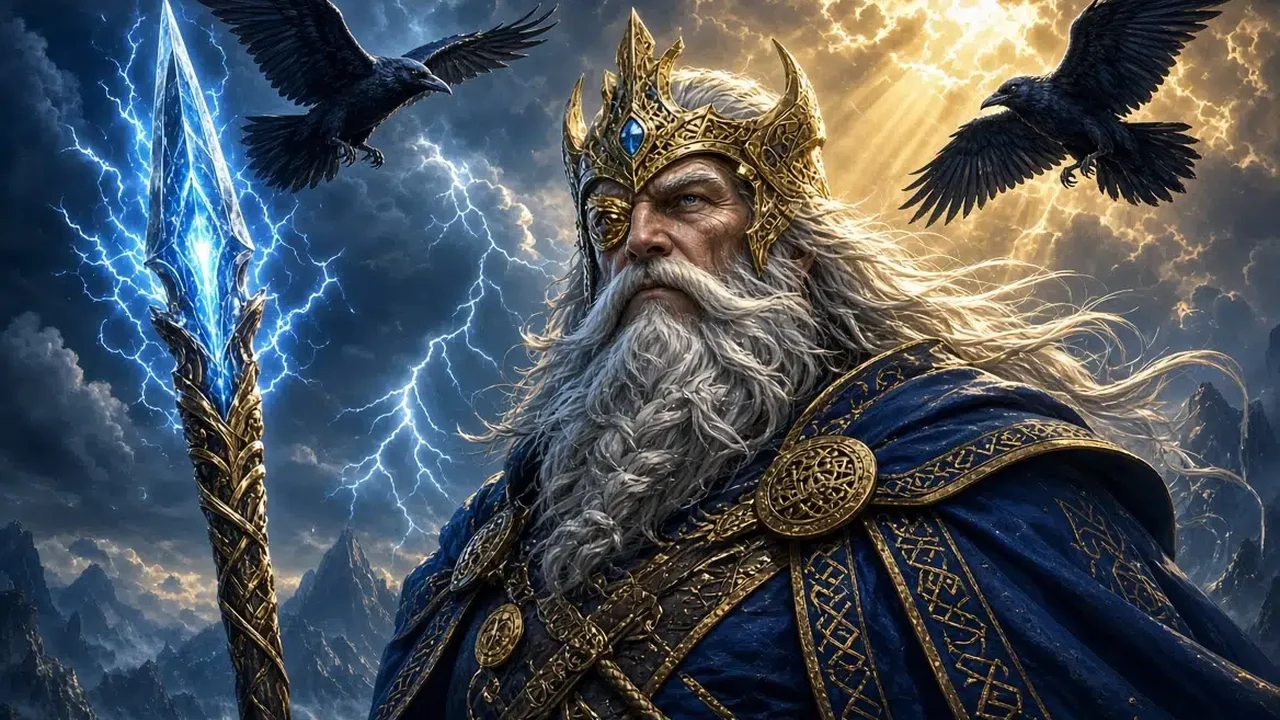
Odin in Norse mythology is the one-eyed Allfather, a god connected with wisdom, poetry, war, the dead and the relentless search for hidden knowledge. His most recognizable stories involve the eye he gives up at Mímir’s well, the nine nights he spends hanging from a mysterious tree to acquire runic knowledge, and the ravens Huginn and Muninn who gather news for him. These are stories in medieval Icelandic sources, not evidence that their supernatural events literally happened.
Looking for Odin pictures, a Norse gods family tree, Odin’s spear Gungnir or the difference between Odin and Marvel’s version of Asgard? This illustrated guide separates the main mythological sources from popular modern inventions. It also explains why Odin is not simply a stronger version of Thor: the gods play markedly different roles in the surviving traditions.
Who Is Odin? The Allfather and His Many Names
Odin, whose Old Norse name is Óðinn, appears as a leading figure among the Æsir. ‘Allfather’ is a familiar title, but it should not be taken to mean that every Norse deity is literally his biological child. The stories assign him fatherhood, kingship and authority while also portraying him as a wanderer seeking counsel. The same character can be a ruler at a divine hall, an old traveler in a disguise and a dangerous figure associated with battle and the fate of the dead.
Those contradictions are part of the attraction. Odin values knowledge so highly that he is willing to bargain and suffer for it. He protects certain people, tests others and sometimes uses deception. Medieval poems use numerous names and titles for him, reflecting different situations rather than a single fixed costume. A white beard, hood, spear and missing eye make a useful modern artistic depiction, but not every feature is required in each ancient account.
Why Did Odin Sacrifice One Eye?
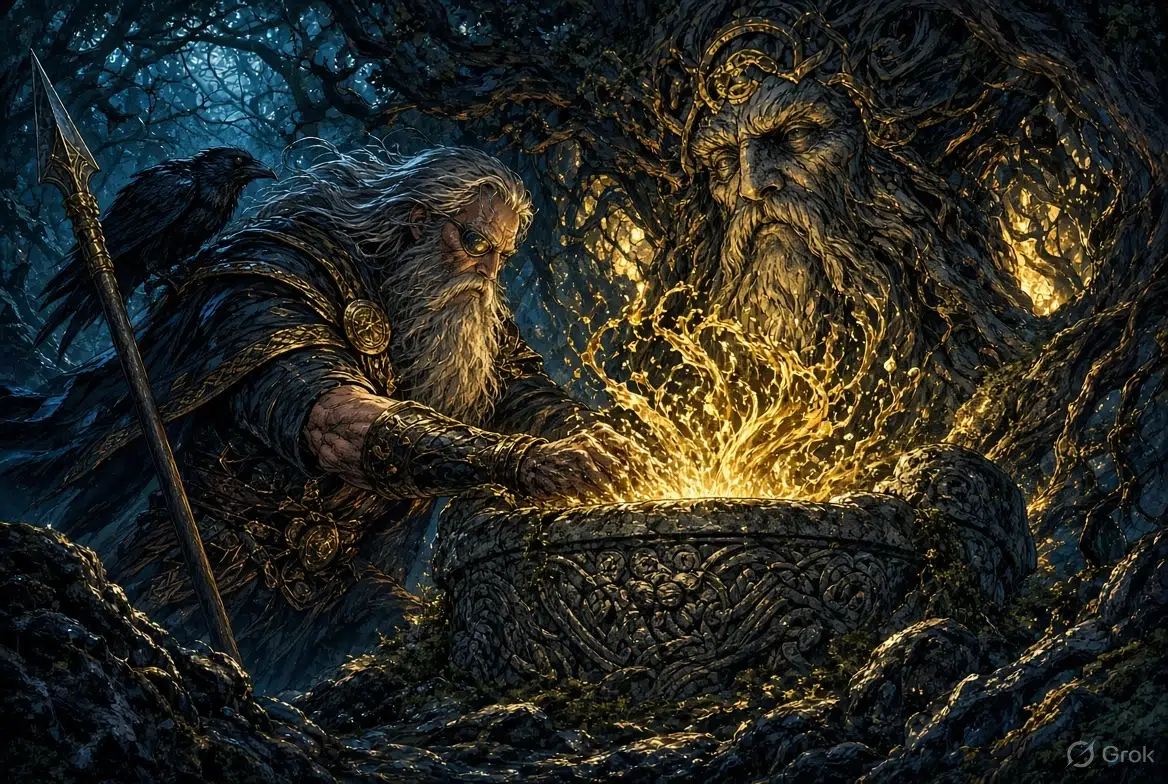
One of the most searched Odin stories concerns Mímir’s well, a source associated with extraordinary knowledge. In the account preserved by Snorri Sturluson, Odin cannot drink until he pledges an eye. The exchange expresses a central idea: insight has a price. The poem Völuspá also alludes to the eye hidden in Mímir’s well, but the poems and prose do not always present every detail in the same way.
For readers wondering which eye Odin lost, caution is useful. Art often shows a patch over a particular side, but the most important source detail is the sacrifice itself rather than a reliably specified left-or-right portrait. A Pinterest image showing ‘Odin’s exact missing eye’ should therefore not be mistaken for historical documentation. A painting is an interpretation of a myth, and its creator may choose a viewpoint simply to make the composition work.
Nine Nights on the Tree: Odin and the Runes
Another sacrifice is described in Hávamál. Odin recalls hanging for nine nights on a wind-swept tree, wounded by a spear and denied ordinary comfort. He offers himself to himself and gains the runes. This account is distinct from the eye given at the well; illustrations that merge the two into one physical event can confuse beginners. The hanging-tree scene is commonly associated with Yggdrasil, the world tree, though the relevant verse does not explicitly name it.
Runes were real writing signs used by Germanic-language communities. The myth of their acquisition is not a license to assign verified powers to every modern ‘rune for love’, ‘rune for wealth’ or tattoo pattern. Historical alphabets, later magical traditions and today’s artistic bindrunes should be distinguished. If you want to understand a rune chart, begin with when and where that script was used, rather than a viral graphic promising instant luck.
Huginn and Muninn: What Do Odin’s Ravens Mean?
Two ravens named Huginn and Muninn are closely linked with Odin. Their names are often explained in relation to thought and memory. In the literary tradition they fly out and return with information, emphasizing the god’s hunger to know what happens beyond his own hall. Visual art shows the pair resting on his shoulders or circling above him, making them among the most recognizable Odin symbols.
A raven, however, is not the same as a crow. Both are intelligent corvid birds, but their size, beaks, throat feathers and calls can differ. When using images for a mythological article, it is better to say ‘two ravens associated with Odin’ than to call any black bird a verified representation of Huginn or Muninn. The birds have rich symbolic interpretations, yet their precise modern psychological meanings should be presented as interpretations rather than statements carved into ancient stones.
Gungnir, Sleipnir, Valhalla and Odin’s Companions
Odin is also associated with Gungnir, his spear, and Sleipnir, an exceptional eight-legged horse. Mythological descriptions of weapons can be vivid, but online blueprints that invent Gungnir’s length, metal alloy or modern engineering specifications are fantasy designs, not measured archaeological records. In the sources, the spear matters as an emblem of power and the conduct of war. Sleipnir gives Odin extraordinary movement between different settings of the mythical world.
Valhalla, the hall of the slain, connects Odin to warriors chosen from battle. The Valkyries select certain fallen warriors, who become the einherjar. It is an oversimplification to say every Viking who died automatically entered Valhalla. Norse death beliefs also include other places and figures, and the surviving evidence does not tell us exactly what every community believed. Together the spear, ravens, horse and hall make a recognizable visual vocabulary for Odin, but the stories behind them are more interesting than a list of accessories.
Odin’s Family: Thor, Baldr, Frigg and Loki
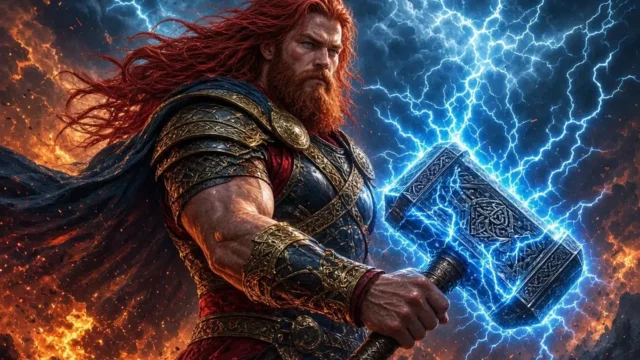
Thor is Odin’s son in the familiar mythological genealogy; Thor’s mother is Jörð, a figure associated with the earth. Frigg is Odin’s wife and Baldr is among the sons linked with them. The extended family includes complicated relationships that are easy to misdraw in a family-tree infographic. A useful chart should mark parents, partners and descendants with different line styles and explain when the evidence is uncertain or inconsistent.
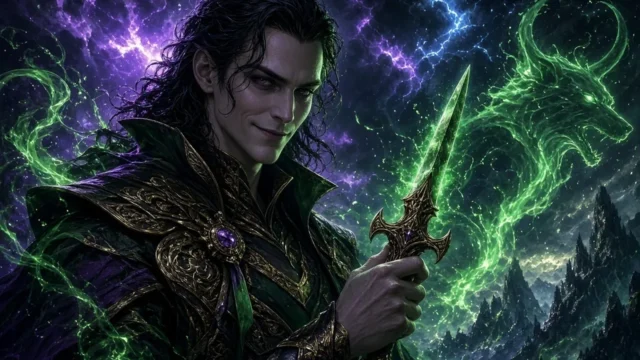
One very common error comes from film adaptations: Loki is not Odin’s adopted son and Thor’s adopted brother in the standard Norse texts. The poem Lokasenna refers to an old bond between Odin and Loki, commonly discussed as blood-brotherhood, which is different from biological parentage. Loki himself has giant ancestry and is father to Fenrir, Jörmungandr and Hel with Angrboða. These distinctions let a reader enjoy comics without accidentally treating the cinematic family tree as medieval mythology.
How Does Odin Die at Ragnarok?
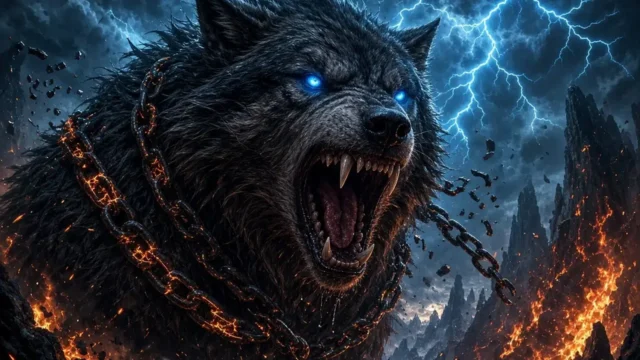
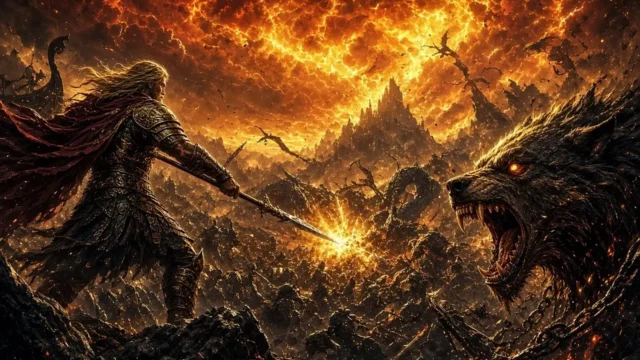
At Ragnarök, the destruction and transformation of the mythological world, Odin faces the monstrous wolf Fenrir. Accounts describe Fenrir swallowing him. Odin’s son Víðarr then avenges his father by killing the wolf. That outcome creates a dramatic contrast with Odin’s lifelong pursuit of knowledge: he seeks understanding of fate, yet knowing a prophecy does not necessarily allow him to avoid it. The surviving tales frame the confrontation as a turning point in the larger cosmic cycle.
Ragnarök is not simply the final screen of a video game. Along with battles and loss, the poems describe a world that returns, survivors among the gods and the renewal of life. Details vary across sources and retellings; a responsible explanation identifies the older poem or medieval prose account behind a particular scene. Search phrases such as ‘Who killed Odin?’ have a direct answer—Fenrir—but understanding the prophecy explains why that image has so much force.
Sources, Artwork and How to Read Odin Stories
The major texts to consult are poems preserved in the Poetic Edda, especially Völuspá and Hávamál, and Snorri’s Prose Edda. They were written down in medieval Iceland and do not provide one complete, contradiction-free handbook. Even an apparently detailed modern retelling must make interpretive decisions when poems leave gaps. Begin with the exact episode, then compare how a medieval text and a modern illustration present it.
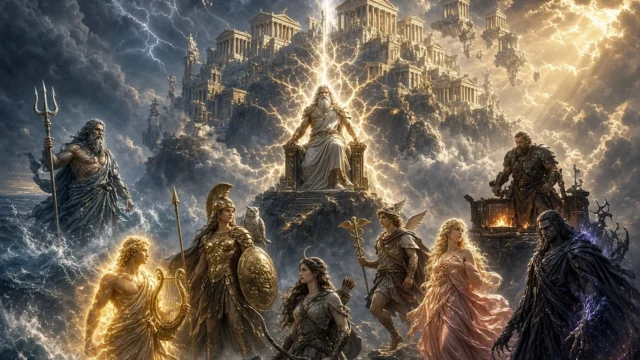
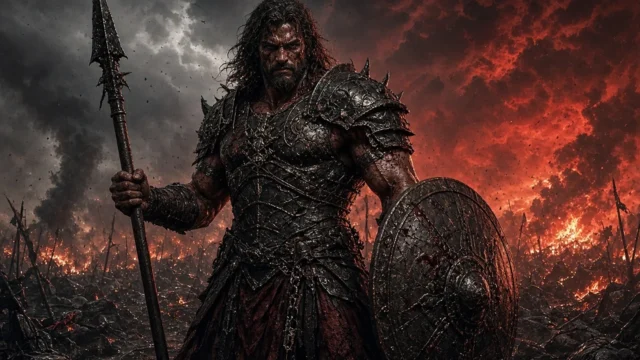
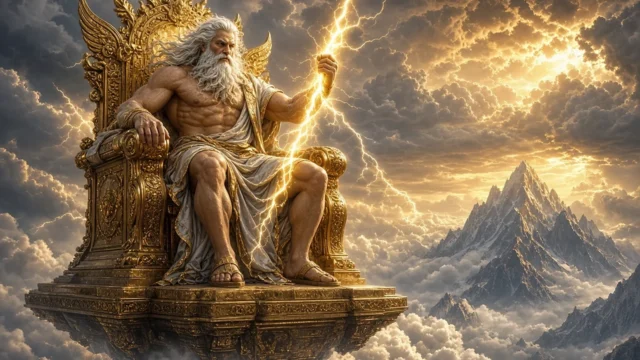
All Odin images on this page are illustrative representations, not ancient photographs or proof of specific historical beliefs. Eye patches, runic glows and cinematic storms can make a scene compelling, but claims about a tattoo’s guaranteed power or an invented ‘original Odin symbol’ should not appear as facts. The best Odin art makes the visitor curious enough to read the story, then the article supplies the source context that the picture alone cannot.
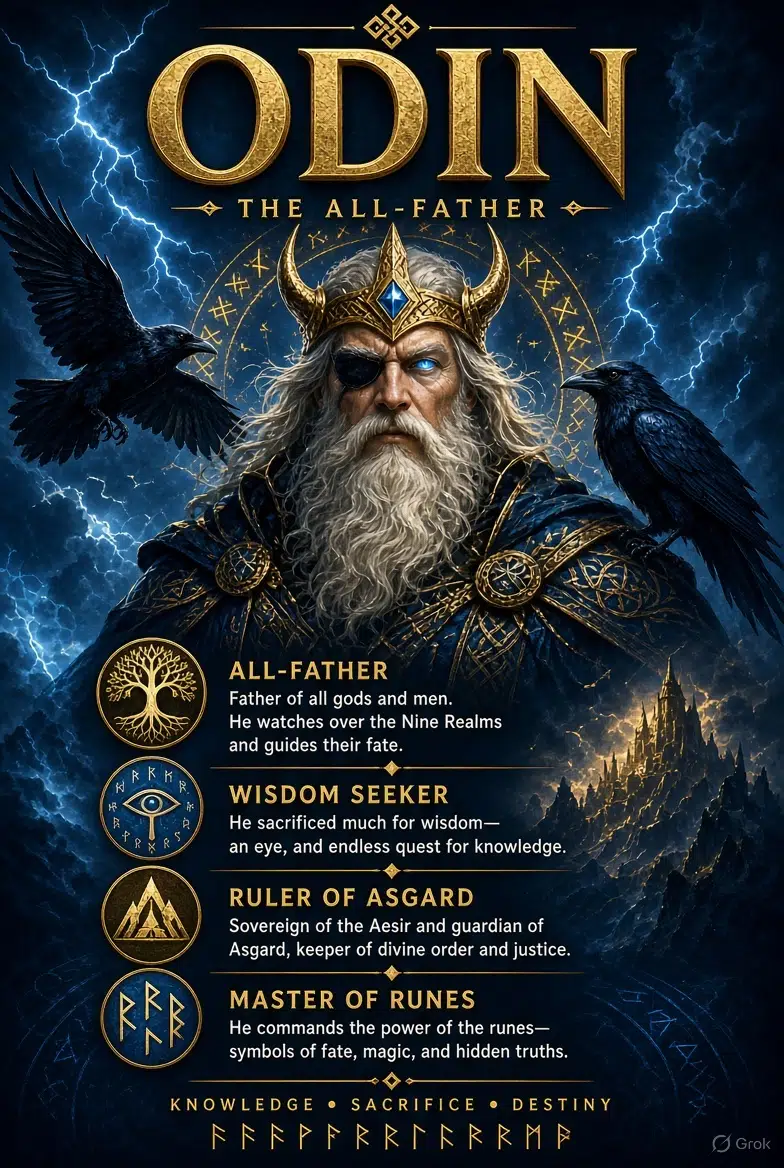
Artwork and source Allfather is an epithet for Odin in the Eddas. The gods also have other parents in these stories.
Frequently Asked Questions
Is Odin the father of Thor?
Yes. In the familiar surviving Norse genealogy Odin is Thor’s father, while Jörð is Thor’s mother.
Why does Odin have one eye?
He pledges an eye at Mímir’s well in exchange for access to wisdom.
Are Huginn and Muninn crows?
They are described as ravens associated with Odin. Calling them merely crows loses a useful distinction.
Did Odin invent the runic alphabet?
The myths describe Odin acquiring knowledge of runes. Historical runes were writing systems used by real communities; mythology and linguistic history are different subjects.
Who kills Odin during Ragnarok?
The wolf Fenrir swallows Odin; Odin’s son Víðarr later kills the wolf.
Conclusion
In short: Odin’s power in Norse mythology is not just physical strength. His missing eye, runic sacrifice, ravens and final confrontation with Fenrir tell a story about the limits and cost of knowledge. If you arrived searching for Odin Norse god images, use the illustrations to recognize the characters—but use the texts to understand what the myth actually says.
Sources: World History Encyclopedia — Norse Mythology; Oxford Academic — Snorra Edda; Oxford research on Odin’s sacrifice. Last content review: 14 November 2026. Illustrations represent mythology, not historical photographs.
Share Your Opinion
Comments are closed on this post.