 Vista
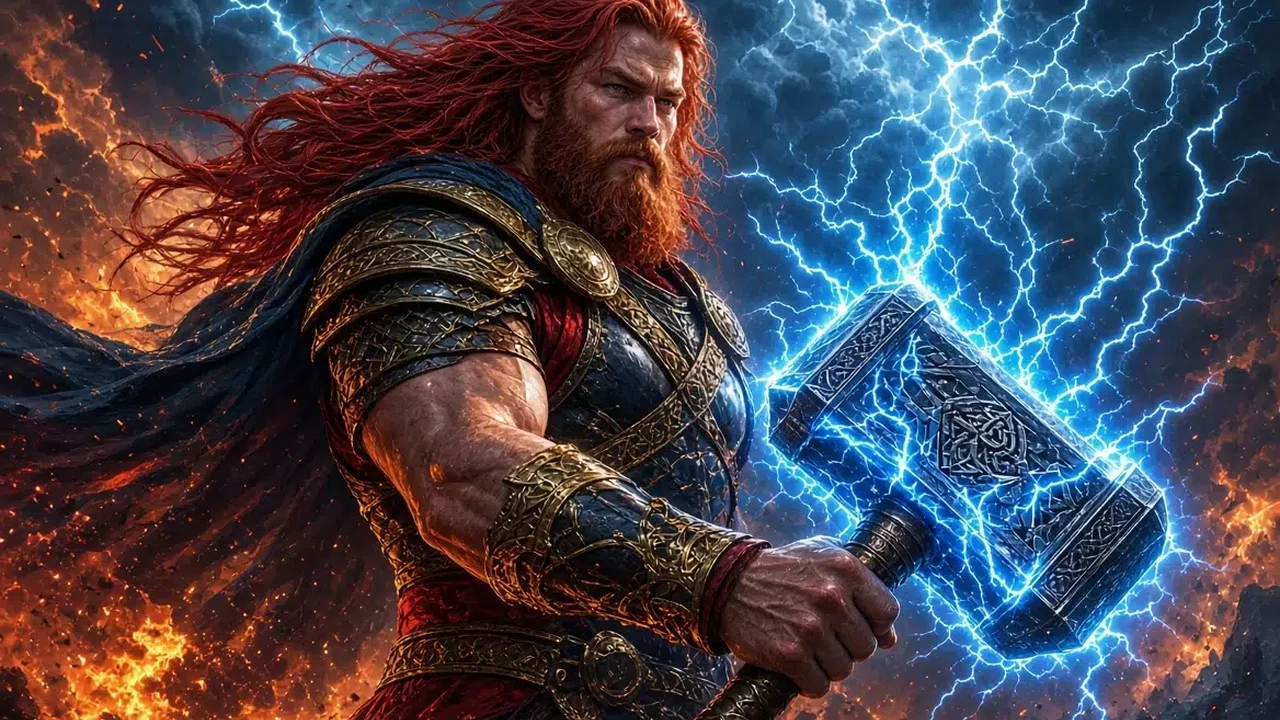
Thor in Norse mythology is the thunder god associated with immense strength, protection and the hammer Mjölnir. He is the son of Odin and Jörð, is married to Sif and famously fights giants and the world serpent Jörmungandr. Unlike many superhero adaptations, the traditional Thor is a forceful and sometimes humorous figure who uses his hammer in battles, blessings and episodes where the gods’ survival depends on his courage.
If you searched for Thor Norse god images, Thor’s hammer meaning, the difference between Marvel Thor and mythological Thor, or how Thor dies at Ragnarök, this guide brings those questions together. It uses medieval Norse poetry and prose as its framework while explaining what later fantasy films, games and online illustrations have changed. Ancient myths do not offer a single modern character profile, and that makes the original stories worth exploring.
Who Is Thor? Son of Odin and Protector of Midgard
Thor, Þórr in Old Norse, is one of the best-known gods in the Scandinavian stories preserved from the medieval period. His father is Odin, while his mother, Jörð, is a personification of the earth in familiar accounts. Thor is strongly linked with storms, physical power and the defense of the divine and human world against hostile forces. In many tales he sets off into dangerous places with companions, confronts giants and protects the order that keeps the world habitable.
Calling Thor simply ‘the god of thunder’ is accurate as a quick introduction, but it does not describe every role he plays. His hammer can consecrate a marriage or funeral scene in the narratives as well as serve as a lethal weapon. Thor sometimes appears in stories that mix danger and comedy: he gets outwitted, loses patience and still finds a way to act. This is different from a uniformly solemn superhero who always wins through an unquestioned rule of worthiness.
Mjolnir: What Does Thor’s Hammer Mean?
Mjölnir is Thor’s defining object. In Skáldskaparmál, the dwarven craftspeople Brokkr and Sindri are associated with making it during a competition over extraordinary treasures. The hammer is famous as a formidable weapon and a symbol of protection. Its short handle matters to the story of its creation. Later popular designs show a broad square head and blue energy, but there is no single authoritative official ‘real picture’ of a supernatural weapon.
The hammer’s importance extends beyond fictional battles. Archaeologists have found hammer-shaped pendants in Viking Age contexts, which shows that the image could be a meaningful symbol. It does not prove that every present-day claim about Mjölnir’s magical properties is ancient. You may see articles saying it can only be lifted by someone ‘worthy’; that is a major part of a modern comic adaptation, not a universal rule in the Eddic myths. A careful guide separates source-supported tales from entertainment rules.
Thor’s Family: Sif, Magni, Modi and Thrud
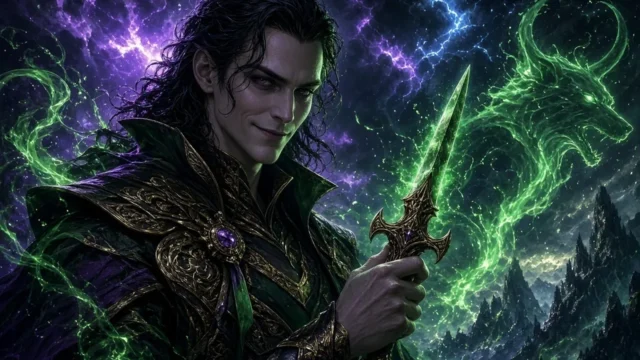
Thor is married to Sif, whose golden hair is the focus of a famous myth involving Loki. In that episode Loki cuts off her hair and is required to obtain a replacement; the consequences of the wager lead to the crafting of valuable divine objects, including Mjölnir. The story connects Thor’s household to the wider network of Norse gods and the cunning, often disruptive actions of Loki. It also shows why a family list can be more than an isolated collection of names.
Thor’s children are identified in various passages as Magni, Móði and Þrúðr; details and maternal connections are not equally explicit in every source. Magni and Móði have a particularly important role in the mythology of the world after Ragnarök, when they survive and inherit the hammer. Sif is not a substitute for Jörð, Thor’s mother, and Loki is not Thor’s adopted brother in the standard medieval genealogy. Family trees that copy a film’s relationships distort the traditional tales.
Goats, Iron Gloves and the Strength Belt
Thor’s chariot is pulled by the goats Tanngrisnir and Tanngnjóstr in the medieval stories. A memorable episode says he can slaughter them for food and restore them, provided their bones are treated properly. That scene has a folkloric quality rarely captured in popular action posters. Thor is also associated with the belt Megingjörð and iron gloves called Járngreipr, which are useful details when looking at his traditional equipment.
These objects should not be described like real museum artifacts with invented weights, materials and precise dimensions. The surviving narratives use them to establish a hero’s unusual abilities and to move the plot forward. Modern artists are free to design striking gauntlets or a lightning belt, but informational captions should identify such features as interpretations. The real reader benefit comes from knowing which objects are attested and what actions they perform in the story.
Thor vs Jormungandr: The World Serpent Story
One of Thor’s greatest opponents is Jörmungandr, the serpent associated with the sea surrounding Midgard. In an early adventure Thor goes fishing with the giant Hymir and uses an extraordinary bait to draw the serpent from the depths. Depending on the retelling and text, the dangerous confrontation ends without the final kill. Its visual potential is enormous: a small boat on a wild sea, a giant serpent and Thor straining against a terrible weight.
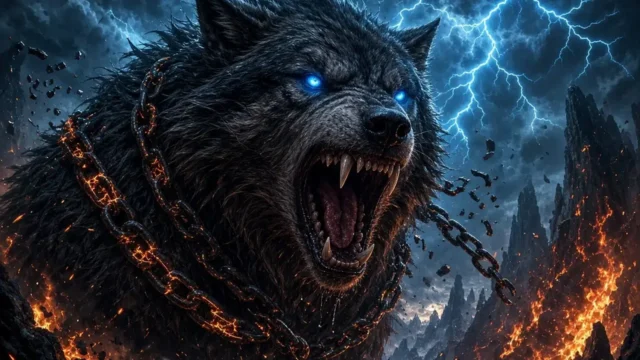
But the fishing episode is not identical to the later Ragnarök confrontation. At the end of the world Thor is destined to kill the serpent, then walk only nine paces before dying from its venom. Merging the two scenes into one fight makes for a dramatic image but a confusing timeline. When you see ‘Thor vs Jormungandr’ artwork, ask whether it depicts the earlier fishing myth or the final battle. The distinction also lets an article answer both ‘Who kills Thor?’ and ‘What happens when Thor catches the serpent?’
How Does Thor Die at Ragnarok?
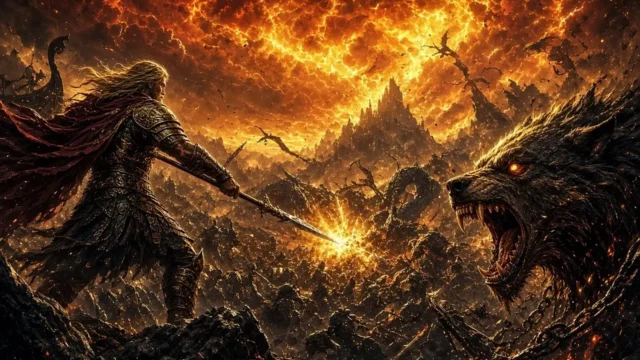
At Ragnarök, giant adversaries and other cosmic enemies clash with the gods. Thor confronts Jörmungandr and succeeds in killing the world serpent. The victory is tragically short: the poison from the creature takes Thor’s life after he has stepped away. The often-mentioned number is nine paces. This is why the question ‘Who killed Thor in Norse mythology?’ is not answered by a rival thunder god or by Odin. It is the world serpent’s venom following their mutual destruction.
Thor’s death is part of a larger narrative of collapse and renewal, not proof that the entire mythology ends in permanent nothingness. His sons Magni and Móði are among figures who survive to a new world, where Mjölnir remains important. That is an especially useful detail for readers comparing comics with myth: the older tale centers fate, sacrifice and a renewed world, while adaptations can rewrite any character’s survival for their own continuing plots.
Marvel Thor vs Mythology Thor: The Crucial Differences
The films give Thor a recognizable visual identity: often blond hair, stylized armor and complex family drama with Loki. Traditional descriptions are less consistent about precise appearance; later popular depictions commonly emphasize a red beard and rugged physicality. The adoption story involving Loki is an invention of the adaptation. In the myths, Loki’s relationship with Odin and the Æsir is difficult and sometimes dangerous, but not the same family arrangement.
Mjölnir’s rule of worthiness is another important divergence. Ancient stories involve the hammer being stolen and recovered, its use in consecration and the creation of its short handle. These are excellent separate search questions. A responsible article can enjoy films, comics and video games while making clear where the screenwriters supply a new rule. There is no need to frame one version as a fraudulent ‘real Thor’; mythological traditions and modern fictional universes simply have different purposes.
Best Sources and How to Understand Thor Images
For the ancient material, look at Hymiskviða for the fishing story, Þrymskviða for the stolen-hammer adventure and Snorri’s Prose Edda for connected episodes and the context of Mjölnir’s creation. Spelling can vary: Thor, Þórr, Mjolnir and Mjölnir are common search and transliteration forms. Using a consistent main spelling with a brief note on variants helps both readers and search engines without cramming every variation into every heading.
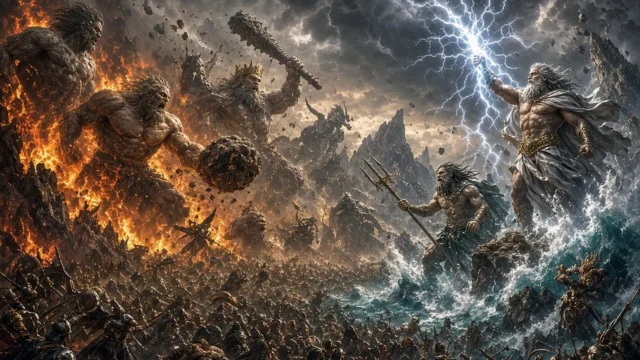
The accompanying Thor images are modern artwork, not excavated depictions from an ancient battle. An excellent illustration should make the hammer, hero and setting easy to identify. A useful informational poster should tell the visitor what the hammer is, who Sif is and what happens at Ragnarök. It should never add an invented statistic, an anonymous ‘ancient quote’ or a film-specific rule as though it appeared in the medieval record.
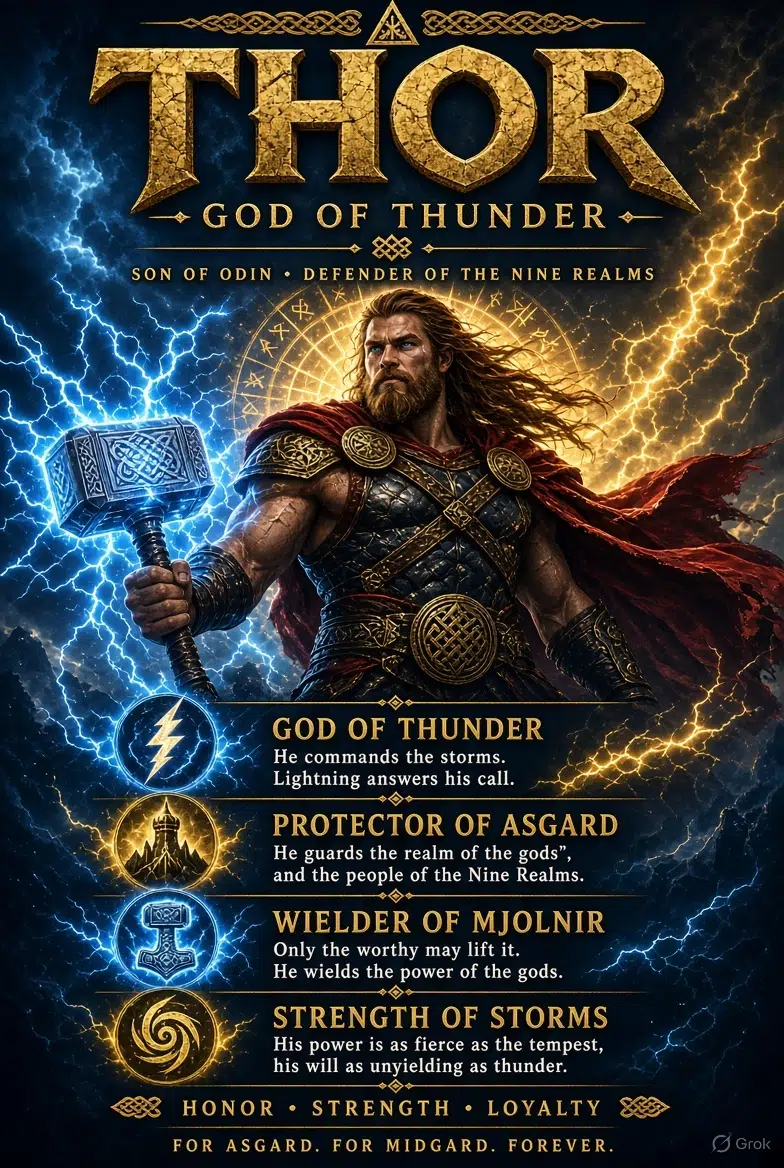
Artwork and source The poster’s worthiness rule comes from Marvel. The Eddas describe Thrym stealing Mjolnir and others carrying it.
Frequently Asked Questions
Is Thor the son of Odin?
Yes. Thor’s father is Odin in traditional Norse mythology, and his mother is Jörð.
What is Thor’s hammer called?
Mjölnir, often written Mjolnir in English search queries.
Is Loki Thor’s brother in Norse mythology?
No. The sibling relationship belongs to modern adaptations, not the traditional genealogy.
Who is Thor’s wife?
Sif is his wife in the myths and is associated with the story of Loki cutting her hair.
Who killed Thor at Ragnarok?
Thor kills Jörmungandr but dies soon afterward from the serpent’s venom.
Conclusion
Takeaway: Thor is remembered for thunder and Mjölnir, yet his mythology also concerns family, protection, strange journeys and a heroic death. These layers make him far more interesting than the question of who can lift a hammer. Use the artwork to enter the story; use the source-based explanation to see the difference between Norse lore and modern screen fiction.
Sources: World History Encyclopedia, Oxford — Snorra Edda, Thor source guide. Reviewed 14 November 2026. Artwork is illustrative, not historical photography.

Share Your Opinion
Comments are closed on this post.