 Vista
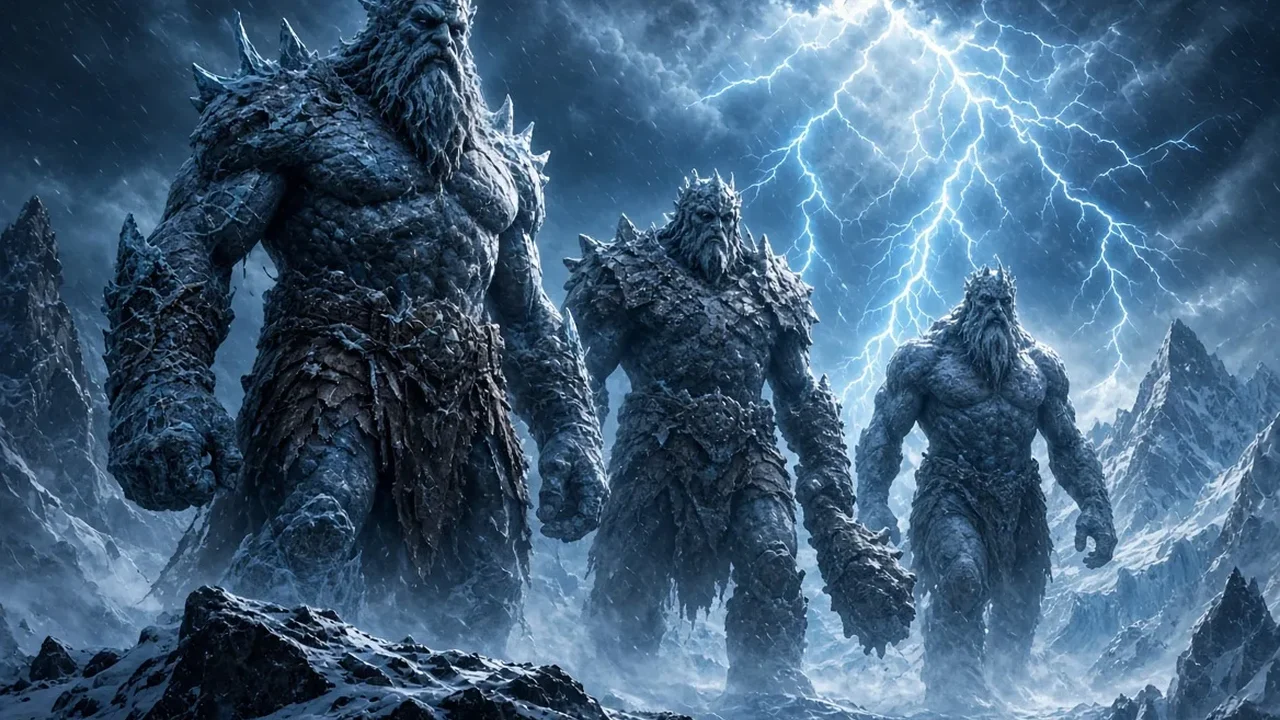
Jötnar are a diverse group of beings in Norse mythology, often translated into English as ‘giants’, although that label can be misleading. Some appear as dangerous enemies of the Æsir gods, while others are wise, wealthy, beautiful, related to gods through family ties or important to the origins of the world. A jötunn is not necessarily portrayed as an enormous stupid monster. Scholarly research has emphasized that the Old Norse term has a broader range of social and literary meanings than the modern English word giant.
This guide explains Jotnar Norse mythology, the meaning of singular jötunn, Jotunheim, the distinction between frost giants and other figures, why Odin and Thor have jötunn ancestors, and famous names such as Ymir, Skaði, Gerðr, Hymir, Hrungnir and Útgarða-Loki. It also helps readers understand giant images without mistaking video-game designs for exact medieval descriptions.
What Does Jötunn Mean? Jötnar, Jotnar and Giants
The singular Old Norse form is jötunn, while jötnar is its plural; English spelling often simplifies the letters to jotunn and jotnar. The word is conventionally translated as giant, but scholars have shown why it is risky to assume that every member is a physically gigantic human-shaped creature. Tom Grant’s published study distinguishes Old Norse terms such as jötunn and risi and warns against treating ‘giant’ as a fully accurate analytical category. In the stories, a jötunn may be a dangerous opponent, a sophisticated host, a parent of a god or a keeper of unusual knowledge. Some are shown in very large forms, while the size of others is not their defining feature. This matters for visual SEO: a digitally painted ten-storey blue monster is a modern interpretation of a particular fantasy ideal, not necessarily a portrait of the character as described in an Eddic stanza. A truthful article names the term and makes room for variation.
Jotunheim: Where Do the Jötnar Live?
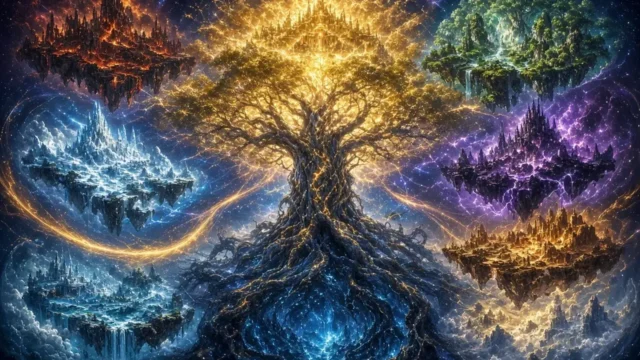
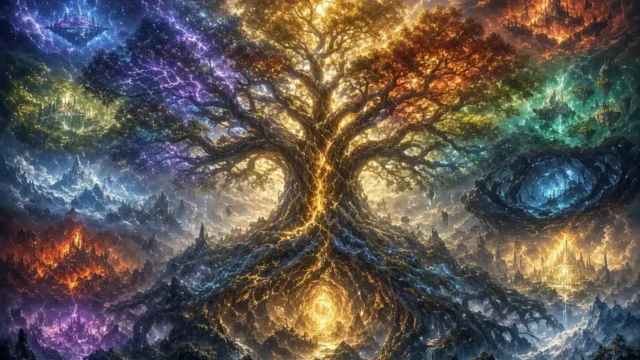
Jötunheimr or Jotunheim is associated with jötnar in Norse mythical geography. Its name is commonly presented as the home or realm of these beings. Thor undertakes journeys involving giant households, halls and challenging landscapes, and several important stories move between gods’ territory and jötunn territory. The surviving poems and prose do not give one standardized modern national border for Jotunheim or a complete numbered map of nine neatly stacked worlds. Some places are called Útgarðr or connected with individual figures, and the precise relationship between them varies with the episode. Artists often present Jotunheim as a frozen kingdom of enormous mountains and blue monsters. Snow and danger can be useful creative shorthand, but not all jötnar belong to ice or have the same appearance. A strong informational poster describes the mythic association with jötnar and distinguishes geographic interpretation from the text’s actual named places.
Are All Norse Giants Evil?
No. Many jötnar oppose the Æsir in specific stories, but some cooperate with them, join their families or offer knowledge the gods seek. Skaði, the daughter of Þjazi, marries Njörðr after negotiating compensation for her father’s death. Gerðr becomes central to Freyr’s love story, while Odin’s mother Bestla belongs to a jötunn family. These relationships do not imply that conflict disappears, but they clearly contradict a simple ‘all gods good, all giants evil’ classification. The Eddas frequently tell stories from a god-centered perspective, and the jötnar may be portrayed as opponents within that literary frame. Scholars have emphasized their social and cultural roles in addition to monstrous images. In an accurate visual hub, family links and named episodes are more meaningful than a single generic monster gallery. A picture showing a peaceful noble jötunn is not automatically less accurate than one showing an enormous creature in battle.
Ymir, Bestla and the Jötunn Roots of the Gods
The creation story gives jötnar a place at the beginning of the cosmos. Ymir is a primordial figure whose body is used to form the world after he is killed by Odin, Vili and Vé. Odin’s father Borr marries Bestla, the daughter of the jötunn Bölþorn, and they become the parents of the three brothers. This intertwining of divine and jötunn ancestry is important: the mythology does not divide all beings into two perfectly isolated biological populations. Thor’s mother is Jörð, often connected with the earth and the jötnar in wider traditions. Modern family-tree diagrams sometimes erase these connections because they want a tidy superhero family. But the older genealogical details reveal a complicated world of kinship, marriage and rivalry. A beginner article should not treat the word ‘giant’ as an insult applied to one uniform species. It should name specific relationships and remember that the primordial Ymir story belongs to myth, not recorded human history.
Skaði and Gerðr: Jötunn Women in the Divine World
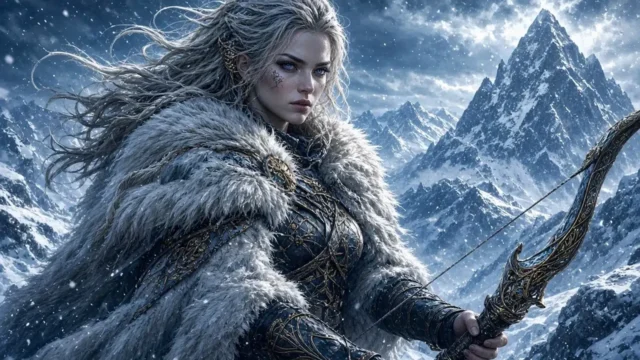
Skaði moves into the world of the gods after a settlement concerning the death of her father Þjazi. She is associated with mountain hunting and snowshoes, and her marriage to the sea-connected Njörðr reveals their incompatible preferences. Gerðr, another jötunn figure, is approached on behalf of Freyr by his servant Skírnir. The poem Skírnismál includes gifts but also threats and coercive language, which should not be erased to make the story a flawless modern romance. These stories show that women of jötunn origin do not all exist merely to be defeated by Thor. They are involved in negotiation, grief, desire and conflict. An original illustration might portray a skilled snowy huntress or a sophisticated figure in a hall instead of a towering ice monster. The artistic details are optional, but accurate captions should identify Skaði, Gerðr and the relevant source episodes rather than label them as interchangeable ‘giant queens’.
Thor, Hymir, Hrungnir and Útgarða-Loki
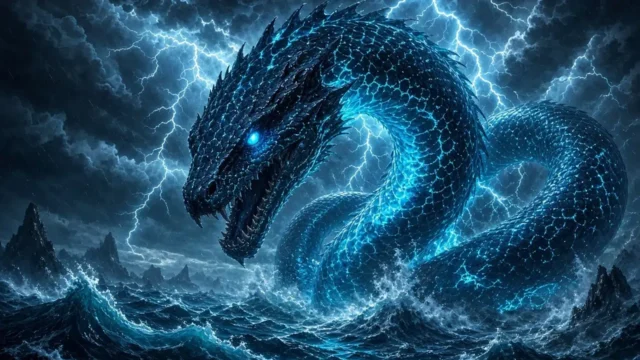
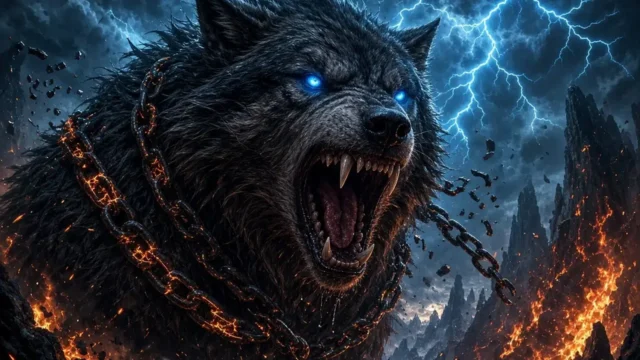
Thor’s journeys bring him into contact with several jötnar whose roles differ. Hymir is connected with an enormous cauldron and Thor’s dangerous fishing attempt involving Jörmungandr. Hrungnir participates in a confrontation with Thor, while Útgarða-Loki presides over strange contests in which appearances and hidden conditions matter more than straightforward physical strength. The famous episode of the apparently immense Skrýmir is also tied to deception and perception. Treating all these characters as identical frost giants who fight with clubs misses the distinctive literary point of each story. Some encounters are about hospitality, some about craft or knowledge, and some about power challenged by illusion. Modern games may create classes called frost giant, fire giant or stone giant with fixed ability lists. These categories are useful in gaming but do not automatically reproduce the social distinctions and episodes of the medieval sources. Caption each scene with the particular character and narrative event.
Frost Giants, Fire Giants, Rísar and Þursar: Different Terms
English summaries frequently bundle jötnar, frost giants, rísar and þursar together as though they are one rigorously defined biological classification. Old Norse vocabulary is more varied. The literature uses words that can overlap in some contexts and differ in others. ‘Frost giants’ evokes the primordial hrímþursar and cold-associated beings; Surtr and the forces of Múspell bring fiery destruction at Ragnarök. The word risi has a history distinguishable from jötunn, as scholarly research demonstrates. An accurate educational article should explain the vocabulary without building a rigid taxonomy that the texts never provide. Likewise, it is wrong to assume that every jötunn lives in Jotunheim and every other being in a different country. The myths use geography, kinship and symbolic relationships differently across texts. Visual art can show fire, frost or mountains as themes, but captions should avoid claiming a guaranteed universal species or magical power from one costume colour.
Why Do Odin and the Gods Seek Wisdom from Jötnar?
Some jötnar possess valuable knowledge about the past, cosmos or future. In Vafþrúðnismál, Odin competes in a contest of wisdom with the knowledgeable jötunn Vafþrúðnir. The poem is memorable precisely because the supposed enemy is not a foolish brute. He can engage with the god on difficult questions about the world’s beginnings and the fate awaiting it. Other narratives also place valuable resources or specialised knowledge outside the gods’ immediate household. This creates a relationship of both rivalry and dependence. A simple gods-versus-giants poster emphasizing only warfare will miss this dimension. A better comparison can show ‘conflict’, ‘kinship’ and ‘knowledge’ as three overlapping relationships. In stories like these, intelligence and language are as important as physical force. The term jötunn is thus part of a complex mythological network rather than a label for monsters that exist only to be beaten.
Jotnar Images, Tattoos and Common Modern Mistakes
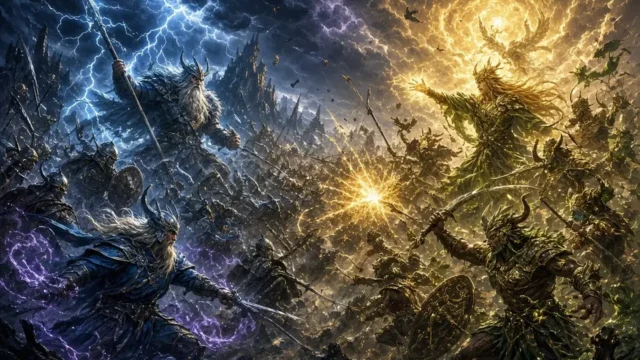
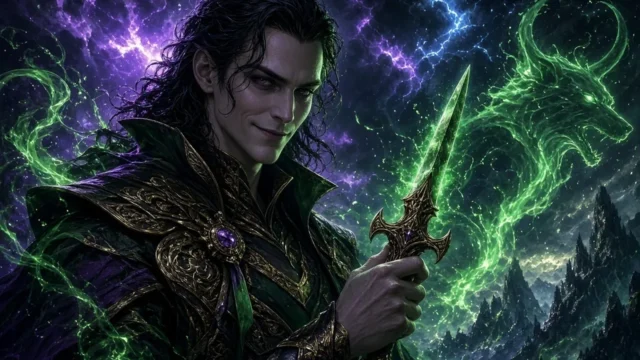
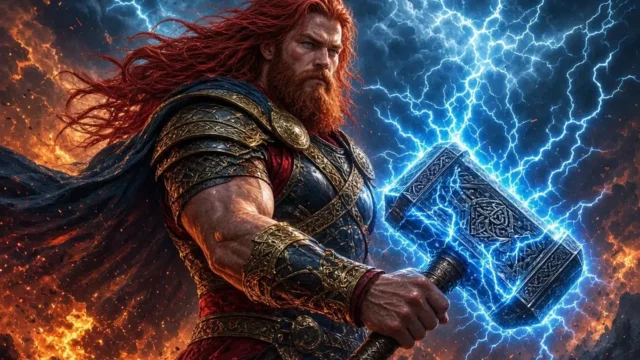
Search phrases such as ‘Jotnar Norse mythology images’, ‘Jotunheim giants wallpaper’, ‘frost giant mythology’, and ‘Norse gods vs giants’ bring visitors with different intentions. Featured art can depict a dramatic confrontation or the scale of a mythic landscape; an internal poster should explain the term, Jotunheim and a few well-attested named figures. If the image shows a gigantic horned humanoid, describe it as a creative rendering and do not assume the Eddas give every jötunn that exact design. Tattoo and rune symbols linked to ‘giant power’ also need careful labeling: a new bindrune does not become an authenticated Viking Age symbol because it appears in a popular image. Related articles about Ymir, Skaði and Thor can eventually become useful internal links after publication. Above all, a trustworthy guide explains that size and moral character vary instead of advertising a fake official list of giant species.
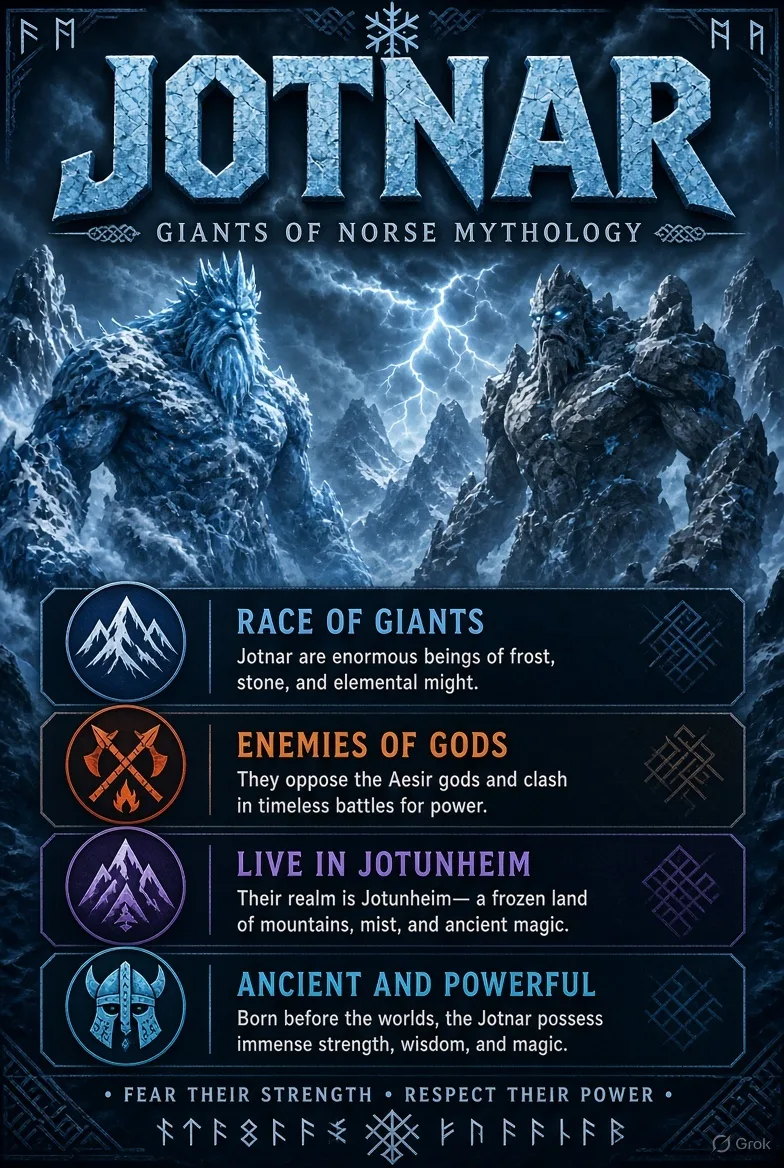
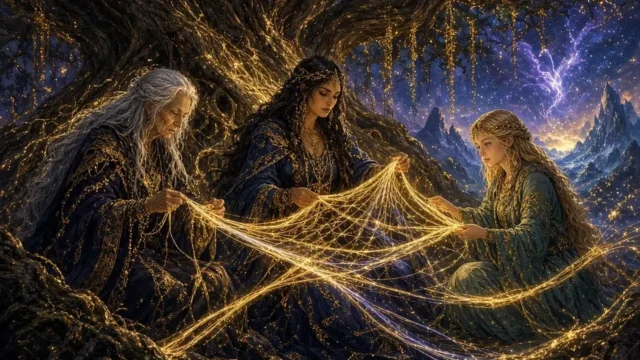
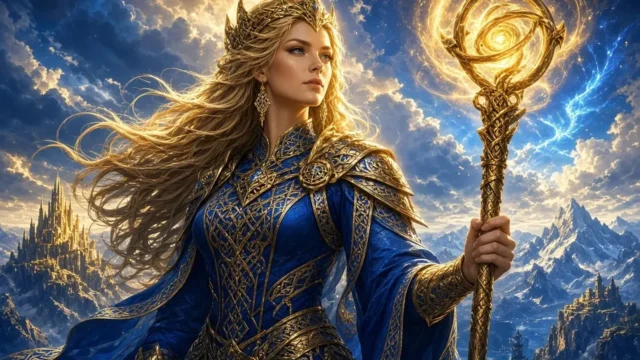
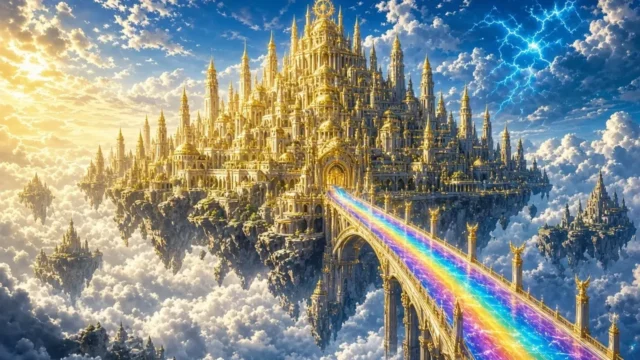
Artwork and source The jötnar vary in stature and role. They can oppose, aid or intermarry with the gods, and their homes are not all described as icy.
Frequently Asked Questions
What does jötnar mean?
Jötnar is the plural of jötunn, often translated as giants, though the English term can be misleading.
Are all jötnar gigantic?
No. Medieval descriptions do not make extraordinary physical size a universal requirement.
Are all Norse giants evil?
No. They can be enemies, kin, spouses, hosts or wise figures in different stories.
Where do the jötnar live?
Jotunheim is strongly associated with them, although mythic geography is not one fixed modern map.
Is Odin related to the jötnar?
Yes. His mother Bestla is a daughter of the jötunn Bölþorn in the familiar creation genealogy.
What is the difference between jötunn and risi?
Both are often translated ‘giant’, but Old Norse usage and scholarship distinguish the terms in important contexts.
Conclusion
Jötnar are crucial to Norse cosmology because the gods oppose them, marry them, learn from them and share ancestry with them. Calling every jötunn a huge evil ice monster hides much of the literature. The best images are powerful and varied, supported by captions that identify specific figures and their actual stories.
Sources and artwork note
Tom Grant — A Problem of Giant Proportions (academic study); Old Norse jötnar in the Eddas — Gylfaginning; Academic research on the jötnar and their presentation.
Reviewed 15 November 2026. Illustrations are fantasy interpretations, not historical photographs.












Share Your Opinion
Comments are closed on this post.