 Vista
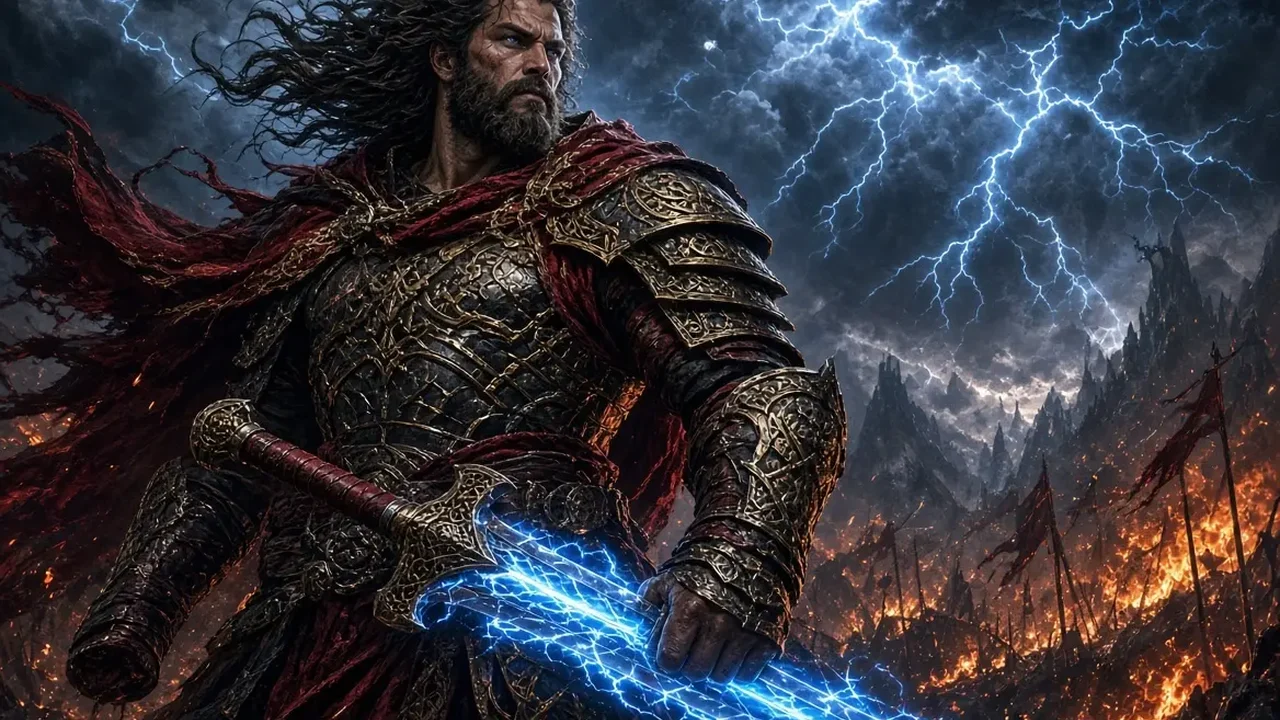
Týr (Tyr) is a courageous god in Norse mythology, best known for losing his right hand while the gods bind the monstrous wolf Fenrir. The wolf accepts the seemingly fragile magic band Gleipnir only if a god places a hand in his mouth as a pledge. Týr volunteers, and when Fenrir discovers the gods will not free him, the wolf bites off the hand. In Snorri’s account Týr later fights the hound Garmr at Ragnarök, and both die. His connection with battle is clear in the texts, but his reputation as a universal ‘god of modern justice’ is a more complicated interpretation.
This guide covers Tyr Norse mythology, Tyr and Fenrir, the binding of Gleipnir, the meaning of Týr’s missing hand, the disputed identity of his father, his connection with Tuesday, and his role at the end of the world. All illustrations are artist impressions of old stories.
Who Is Týr? Courage, Battle and the Æsir
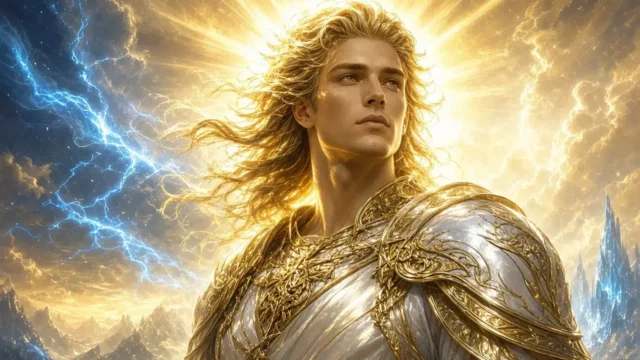
Týr is named among the Æsir, though he receives fewer surviving stories than Odin or Thor. Snorri describes him as a daring, brave figure whose name is associated with victory in battle. The most famous incident explains his missing hand, giving artists and readers a recognizable image: a one-handed god standing near a huge wolf. He is frequently called a god of war, and that is a reasonable short description, but he is not the only Norse deity associated with warfare. Odin governs many stories of battle, victory and fallen warriors, while Thor defends the gods with extraordinary physical strength. Trying to turn the pantheon into a Greek-style department list, with one exclusive god for each human activity, can distort the material. Týr’s surviving portrayal is a combination of courage, combat and a decision with painful consequences. The myth tells us what he does, not an official percentage rating of his powers.
Why Did the Gods Want to Bind Fenrir?
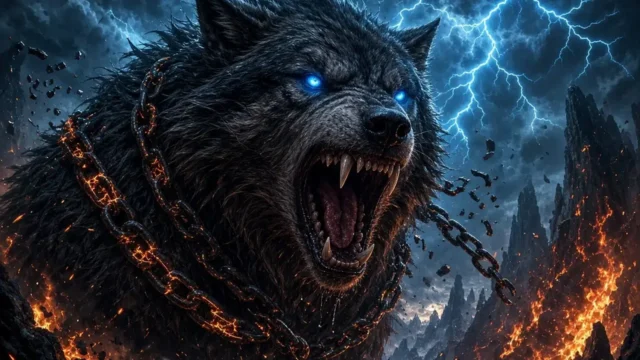
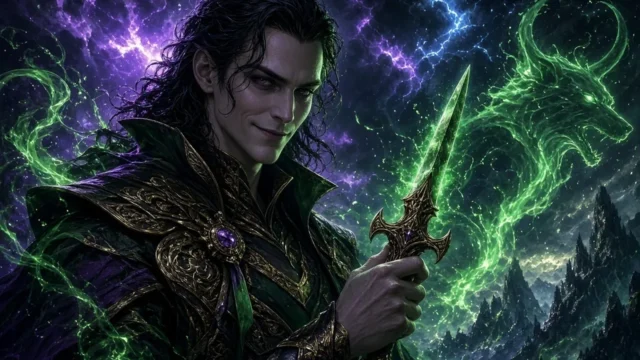
Fenrir is the giant wolf born to Loki and the jötunn Angrboða. The gods fear the wolf because of its growth and prophecies of destruction. In the Prose Edda, they try to contain the threat while presenting the tests as contests of strength. The first restraints, Læðing and Drómi, are broken; neither is strong enough to hold Fenrir. Týr is already associated with the wolf because he is one of the few willing to approach and feed him. That earlier familiarity helps explain why he is such a striking choice when the final test demands a guarantee. This is not a simple animal-rescue story or proof that real wolves behave like mythical monsters. The wolf’s intelligence and distrust belong to a supernatural tale. His sense that the gods are planning to deceive him is important: by the time Gleipnir arrives, he has good reason not to accept another offer at face value.
Gleipnir: The Magical Bond Made from Impossible Things
The gods obtain Gleipnir from the dwarfs after the earlier bindings fail. According to Snorri, the band is made from six impossible ingredients: the sound of a cat’s footstep, a woman’s beard, the roots of a mountain, the sinews of a bear, the breath of a fish and a bird’s spittle. These elements belong to a wonder story, not a workshop recipe that can be physically replicated. Gleipnir looks slender and delicate, which makes Fenrir especially suspicious. A visual poster that renders it as an ordinary massive iron chain loses the point of the trick. The strength of the object lies in the contrast between appearance and magical power. The scene also introduces a sharp moral problem: the gods intend the test to become permanent imprisonment, while the wolf asks for something that would ensure their promise is genuine. Týr enters the scene at precisely that moment.
Which Hand Did Týr Lose, and What Happened?
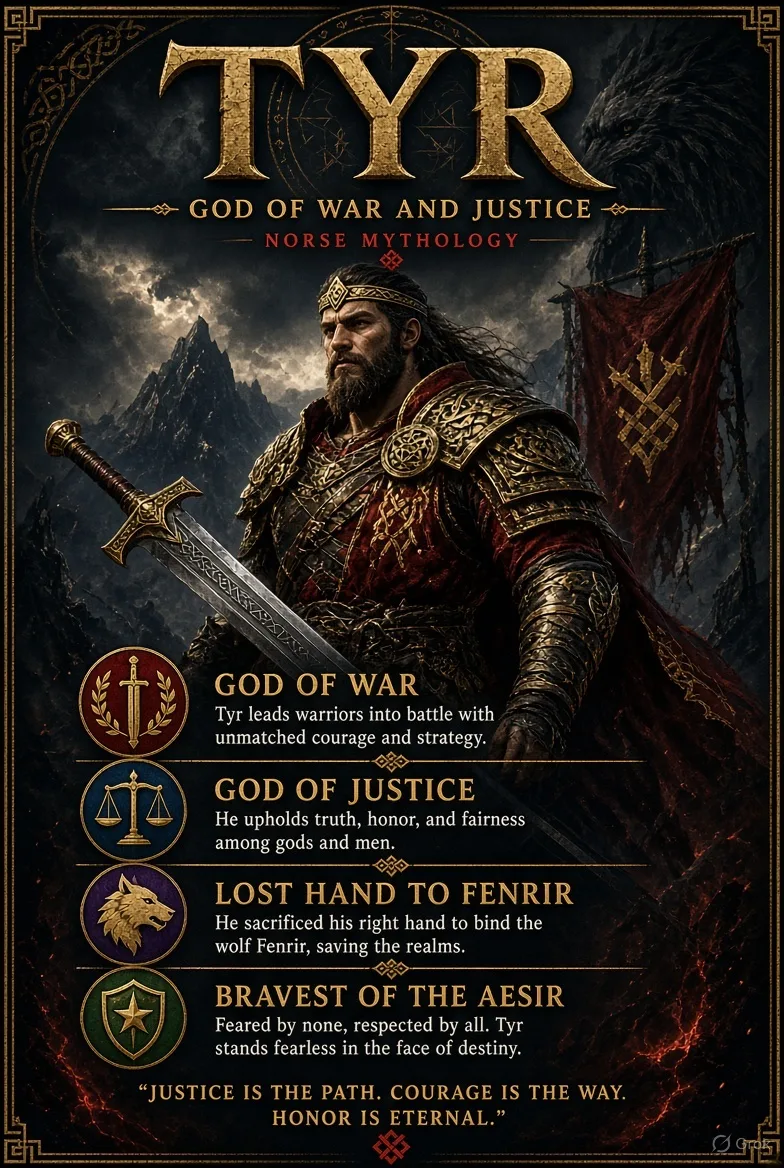
Fenrir agrees to the trial only if one of the gods places a hand inside his jaws as a pledge of good faith. The other gods hesitate, and Týr gives his right hand. When the band holds, the wolf demands release, but the gods do not undo it. Fenrir bites off the hand, leaving Týr one-handed. The Prose Edda makes the right-hand detail explicit. It is easy to label this ‘victory over an evil monster’, but the underlying scene complicates that reading: the gods have achieved their protective aim at the cost of a promise and the physical injury of the one who gave it. That moral tension is why Týr remains memorable even though fewer long stories survive about him. Artwork showing the bitten hand should identify Fenrir and the binding; it should not invent a magical prosthetic or a healed arm without saying the artist is making a modern adaptation.
Is Týr the Norse God of Justice and Oaths?
Modern summaries often introduce Týr as the god of law, justice, oaths and honorable war. His willingness to place his hand at risk makes such interpretations appealing, and linguistic and historical comparisons connect his name to wider Germanic and Indo-European traditions. Yet the surviving Eddas do not present a simple job description appointing him supreme judge of every dispute. Snorri says he is associated with bravery and battle victory, while some wider associations are scholarly inferences. It is more precise to say that Týr’s binding episode raises questions about trust, promises and consequences than to claim that he established a universal legal code. For readers choosing a ‘Tyr justice rune’ tattoo, the distinction matters. Personal modern symbolism is legitimate as interpretation, but it must not be advertised as a guaranteed ancient spell or a fixed legal emblem carved by every Viking.
Who Is Týr’s Father? Odin or the Giant Hymir?
This is one of the important factual difficulties in Norse mythology family trees. Snorri’s Skáldskaparmál includes ‘son of Odin’ among names associated with Týr. But in the Eddic poem Hymiskviða, Týr travels with Thor to Hymir’s dwelling and speaks of Hymir as his father. The accounts cannot be collapsed into a single perfectly settled genealogy. Scholars have discussed whether the wording reflects different traditions or issues of poetic identification. A responsible article presents both references instead of quietly choosing the version that makes the neatest illustration. Some modern charts claim Týr is definitely Thor’s full brother; others make him simply a giant’s son. Neither formulation captures the variation. An educational poster can say ‘parentage varies by source’ and refer the reader to the two texts. Accuracy sometimes means explaining disagreement rather than eliminating it.
Týr, Thor and the Giant’s Cauldron
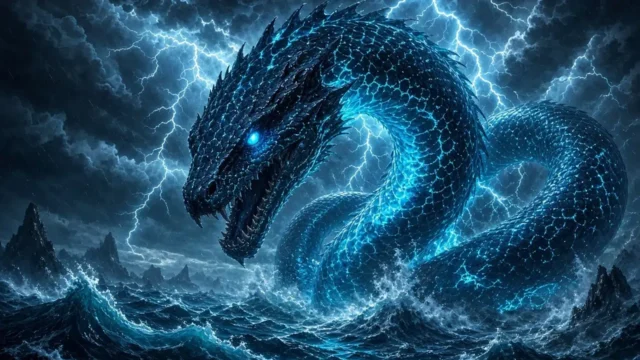
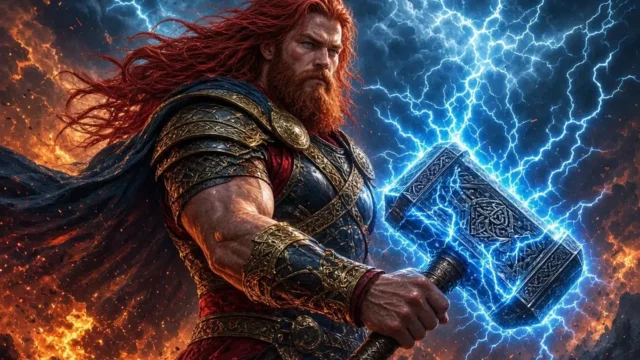
The poem Hymiskviða tells of Thor and Týr seeking a huge cauldron so the gods can prepare a feast. The journey to Hymir includes hospitality, danger, extraordinary strength and the famous connection between Thor and the world serpent Jörmungandr. In this poem Týr is a companion rather than the main champion of the fishing feat. The story also contributes to the disagreement about his parentage. Separating it from Fenrir’s binding is useful because the scenes have completely different narrative purposes: one concerns a dangerous bargain with a wolf, the other a quest and an enormous vessel. Modern artwork can show Týr alongside Thor, but it should not label the world serpent as the creature that bit Týr’s hand. That injury came from Fenrir. In a linked mythology hub, each episode can lead naturally to the other character’s own article.
Is Tuesday Named After Týr?
The English weekday Tuesday comes from Old English Tīwesdæg, meaning Tiw’s day, where Tiw is a related Germanic form of the deity’s name. This is commonly understood through a naming pattern that aligns a Germanic god with the Roman Mars. Scandinavian languages also preserve related weekday names. This etymological connection is historical language evidence, not proof that people everywhere worshipped the god in the same way. It also does not establish a numerological ritual for every Tuesday, as some online posts suggest. A clear heading such as ‘Why is Tuesday named after Tyr?’ helps readers connect an everyday English word with mythic history without promising supernatural results. The relationship is interesting precisely because a familiar calendar word preserves a trace of older naming practices. Keep the linguistic explanation separate from modern motivational claims about the day’s supposed powers.
Týr, Victory Runes and Ragnarök: Who Kills Him?
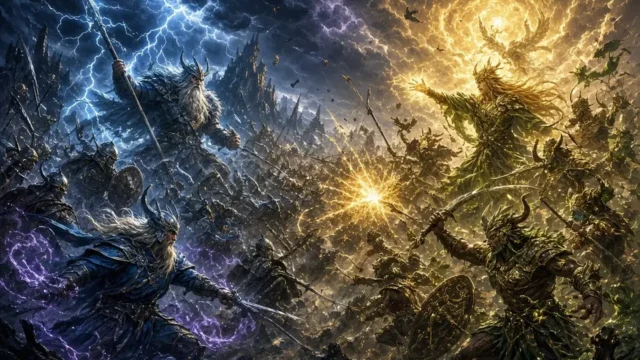
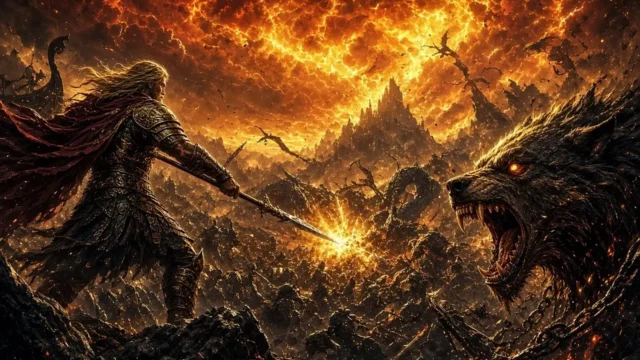
The poem Sigrdrífumál links the god’s name with advice about victory-runes on a sword, illustrating an association with combat and success. This does not make every modern symbol labelled ‘Tyr rune’ an authenticated talisman. The historical Tiwaz rune has a separate history as a character in runic writing systems and should be discussed in its appropriate period. At Ragnarök, Snorri describes Týr fighting the hound Garmr, which has been bound near Gnipahellir. The two kill one another. This is different from Fenrir’s clash with Odin and Thor’s fight against Jörmungandr. Some poetic references mention Garmr without specifying Týr’s duel, so attributing the explicit encounter to Snorri helps avoid confusion. A truthful final-battle caption might name both Týr and Garmr rather than present the wolf Fenrir as his last opponent again. The source-based story gives Týr a consistent tragic arc from his lost hand to his final struggle.
Frequently Asked Questions
Why does Tyr have only one hand?
Fenrir bit off his right hand when the gods refused to free the wolf from Gleipnir.
Who is Tyr’s father?
The sources differ: Skáldskaparmál associates him with Odin, while Hymiskviða calls Hymir his father.
Is Tyr a god of war?
Yes, Týr has associations with bravery and battle victory, although he is not the only Norse deity linked with war.
What is Gleipnir?
The magical, deceptively thin band used to bind the wolf Fenrir.
Is Tuesday named for Tyr?
Yes, the English name reflects Old English Tiw, a related Germanic deity name.
Who kills Tyr at Ragnarok?
In Snorri’s Prose Edda, Týr and the hound Garmr kill one another.
Conclusion
Týr’s story is valuable not because he has an unbeatable weapon, but because the famous pledge to Fenrir costs him a hand. His disputed parentage, battle associations and death alongside Garmr show how varied Norse sources can be. The most useful illustrations identify the incident accurately and explain where the older texts disagree.
Sources and illustration note
Gylfaginning: Týr, Fenrir and Ragnarök; Týr: conflicting parentage and Eddic passages; Hymiskviða (Poetic Edda).
Reviewed 15 November 2026. Artwork is illustrative, not documentary evidence.













Share Your Opinion
Comments are closed on this post.