 Vista
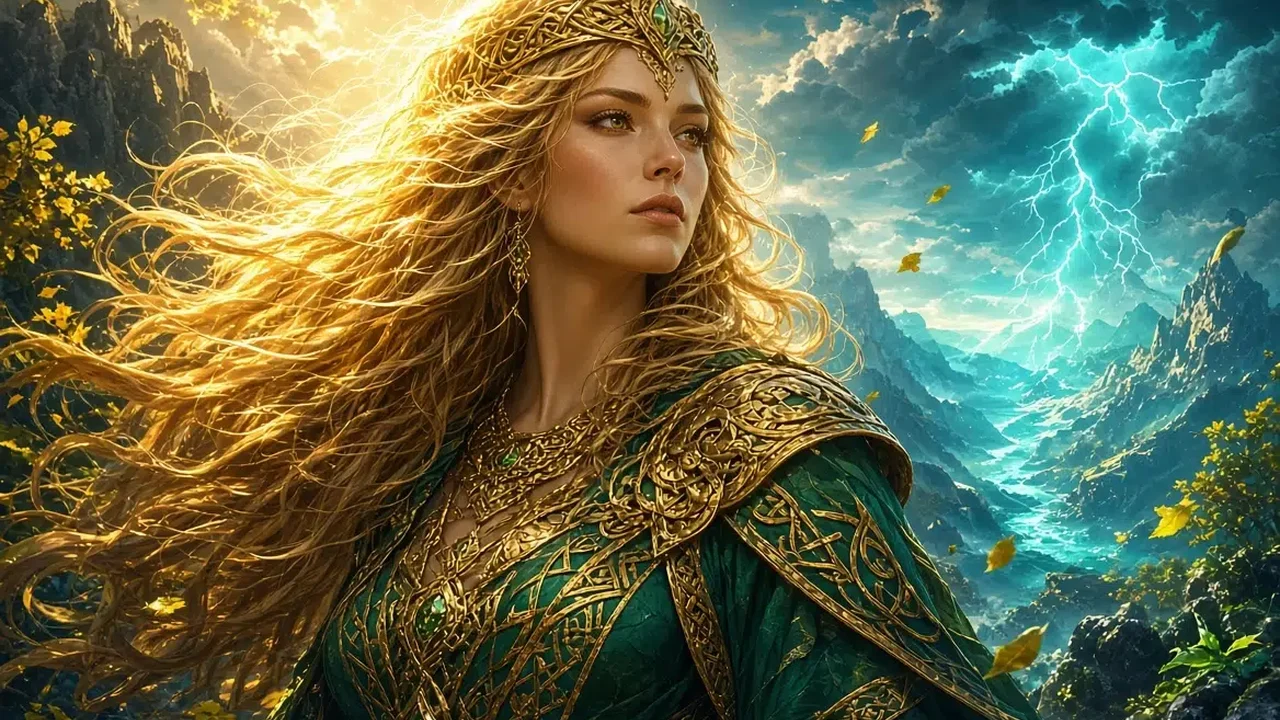
Sif is a goddess in Norse mythology best known as the wife of Thor and the figure whose golden hair is cut by Loki. Thor is furious when Loki removes her hair, and Loki must seek a replacement from skilled dwarven craftsmen. The ensuing contest over extraordinary divine objects leads to the creation of treasures including Thor’s hammer Mjölnir and Odin’s spear Gungnir. Sif therefore occupies an important place in one of the most recognizable Norse mythic sequences, even though fewer independent stories survive about her than about Odin or Thor.
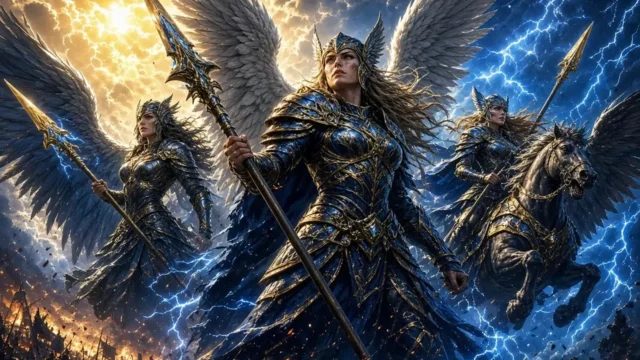
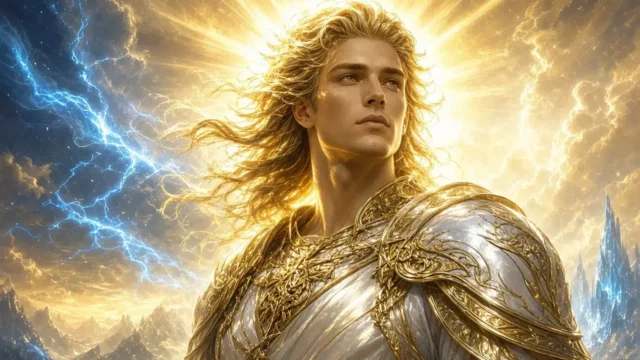
This guide answers Sif Norse mythology, Sif’s golden hair meaning, why Loki cut her hair, who made the magical replacement, how the episode relates to Mjölnir, the identities of Sif’s children, and why claims that she was simply a ‘goddess of wheat’ deserve caution. The featured art and inside poster are interpretations, not an ancient portrait.
Who Is Sif? Thor’s Wife in the Norse Sources
Sif appears as Thor’s wife in the familiar sources of the Prose Edda and in references across older poems. While Thor is repeatedly portrayed fighting giants and undertaking dangerous journeys, Sif is especially visible in a domestic incident that becomes a wider story about mischief and divine craftsmanship. The surviving texts do not provide a complete biography, exact age, birth date or modern-style list of magical abilities for her. That uneven record is common in Norse mythology: a name can be important to several poems yet have relatively few extended narratives. A modern character portrait may show Sif carrying a spear or standing beside a thunderstorm, but the specific weapon and costume can be an artist’s invention. The dependable identifiers are her relationship to Thor and the famous hair episode. An introductory paragraph should state those clearly rather than pretending a cinematic costume is the authentic attire of a goddess from pre-Christian Scandinavia.
Why Was Sif’s Hair So Important?
The story emphasizes Sif’s beautiful hair and the severity of Loki’s act in cutting it away. In later art her hair is often coloured golden like ripened grain. Some readers interpret it as a symbol of agricultural fertility and harvest, and that interpretation can be evocative. But it should not be promoted as a complete, indisputably ancient explanation of every aspect of Sif’s role. The Prose Edda’s clear narrative fact is that Loki cuts the hair and is compelled to replace it. The link between the goddess’s hair and the literary language of gold is particularly important: the story contributes to poetic expressions that refer to gold as Sif’s hair. A fantasy picture of shining braids may help visitors identify her, while a factual caption can simply say ‘Sif with golden hair, the subject of Loki’s famous trick’. This keeps symbolism and direct evidence distinct.
What Did Loki Do to Sif?
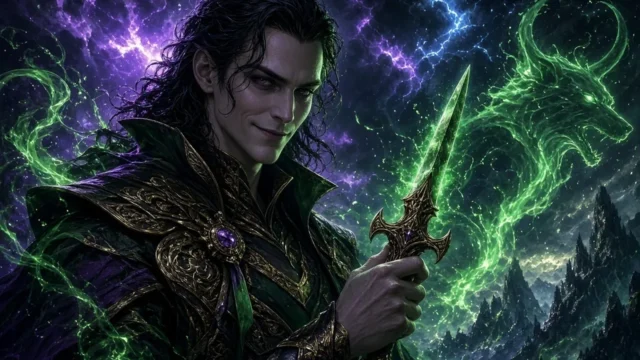
In Skáldskaparmál, Loki cuts off Sif’s hair. The account does not provide a long psychological explanation of his motivation, and modern retellings invent details such as a wager, jealousy or an elaborate revenge plot. What matters is the destructive act and Thor’s immediate reaction. When Thor discovers what happened, he threatens Loki unless the damage is repaired. The episode is a recognizable example of Loki causing trouble and then being forced to use his cunning to obtain a solution. It also reminds readers that the gods do not always act according to a consistent modern code of fairness. The event sets in motion a chain of magical craftwork, much of which is more famous than the first offense. If an image depicts Loki standing over a sleeping Sif with scissors, the exact arrangement of room, tool and posture is an interpretation unless a specific text describes it. A reader deserves to know the basic event rather than invented cinematic detail.
The Dwarfs Make Replacement Golden Hair
Loki visits the sons of Ívaldi, extraordinary dwarven craftsmen, and obtains hair made of gold for Sif. The account emphasizes that the new hair has magical qualities and can grow like natural hair. This is not a real historical cosmetic technique, nor evidence of a particular Viking hair treatment. It is a supernatural solution in a myth. The craftsmen also create other valuable gifts, including Skíðblaðnir, the wonderful folding ship later associated with Freyr, and Gungnir, Odin’s spear. The existence of several objects in one episode gives readers a reason to follow related stories. The replacement hair is important not only as a golden object but because it repairs, within the myth’s logic, a wrong Loki committed. A strong infographic should distinguish Sif’s replacement hair from Mjölnir: they are made during connected episodes of craftsmanship, but not in exactly the same step by the same named pair of smiths.
How Did Sif’s Hair Lead to Mjolnir Being Forged?
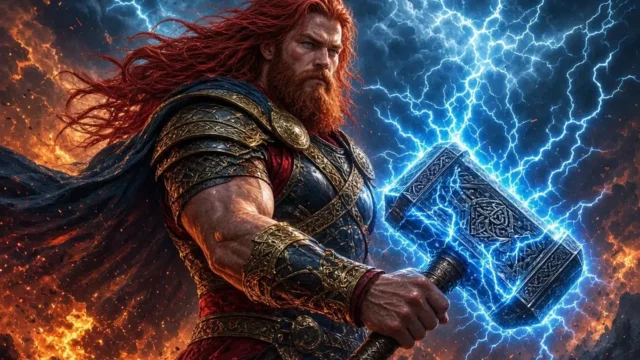
After the first set of gifts is made, Loki enters a contest involving Brokkr and his brother, named Eitri or Sindri depending on the version. The dwarf smiths produce further remarkable treasures, including Gullinbursti the golden-bristled boar, Draupnir the multiplying ring and Mjölnir the hammer. Loki tries to interfere with their work while transformed into a fly. The hammer ends up with a short handle, yet is considered indispensable to the gods. This chain of events explains why a search about Sif’s hair may lead naturally to Thor’s hammer. A common oversimplification is that Sif personally forged Mjölnir or that the replacement hair and the hammer are one object. Neither is accurate. The episode showcases two stages of dwarven craftwork and a wager driven by Loki. Accurate illustrations label the craftsmen and objects carefully, showing how a single act of mischief reshapes several gods’ possessions.
Who Are Sif’s Children? Thrud and Ullr
Sif is connected with Þrúðr (Thrud), a daughter of Thor and Sif in familiar family descriptions. She is also the mother of Ullr, a figure associated in Old Norse material with archery and skiing or snowshoes; the surviving texts do not securely identify Ullr’s biological father in the same manner. Some modern charts incorrectly present all of Thor’s sons and daughters as Sif’s children without checking the parentage in the sources. Thor’s sons Magni and Móði appear in the mythology, but their maternal relationships are not identical in all accounts; Magni is specifically linked to the giantess Járnsaxa in the Prose Edda. A responsible family tree therefore labels relations individually. It is fine to introduce Sif as Thor’s wife and Thrud’s mother, while adding Ullr as her son and noting the uncertainty around his father. An SEO post that treats the entire family as one simple cinematic household loses the more interesting variety of the medieval evidence.
Is Sif the Goddess of Harvest or Wheat?
Many modern websites call Sif a harvest goddess because her golden hair resembles ripened wheat. This has become a popular interpretation in neopagan and fantasy art. But the medieval evidence does not provide a detailed independent cult or an explicit story saying that Sif alone controls agricultural yields. Nor should the thematic resemblance be presented as proof of a specific ancient fertility rite. Freyr is a figure more directly described in Snorri’s prose as governing fruitful seasons and prosperity. By contrast, Sif’s golden hair is strongly established in the craftsman story, while interpretations of its meaning deserve clear labels. A reader asking ‘Is Sif the goddess of wheat?’ deserves a balanced response: the association exists in later interpretations, but the surviving Old Norse texts offer limited direct support for assigning her that exact exclusive role. Good myth research should acknowledge where a popular explanation outruns its sources.
Does Sif Appear at Ragnarok?
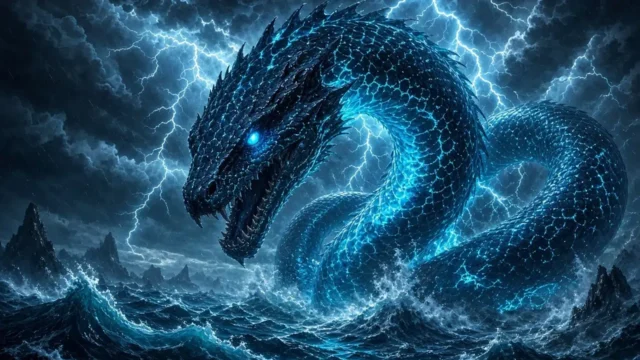
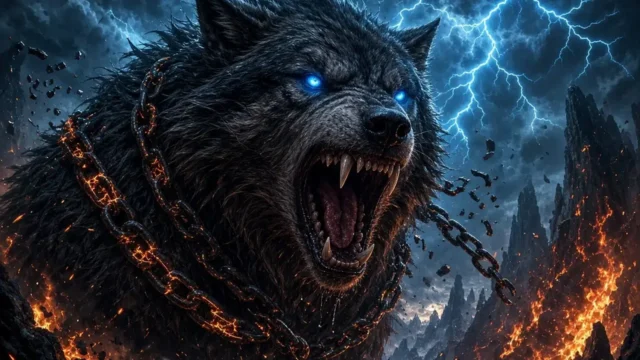
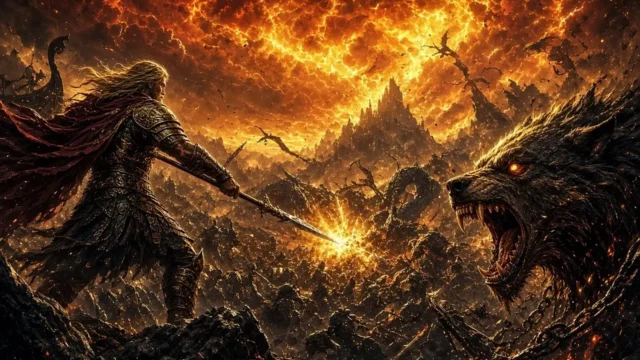
Ragnarök is the foretold crisis in which many divine figures and their enemies fight. Thor faces Jörmungandr, kills the world serpent and then dies of its venom after nine paces. The surviving major descriptions do not give Sif a similarly detailed final duel or a universally confirmed scene of death. Articles that claim she definitely fights a named monster, gains a special sword and dies in a specific manner may be importing details from games, comics or modern fantasy. We should not invent a missing episode just to complete a character’s biography. A good post explains what the texts do say about Thor and his family, and what they do not clearly say about Sif’s final fate. This nuance adds trust: readers can still enjoy artworks of Sif amid Ragnarok’s flames when the captions identify them as imaginative rather than canonical scenes.
Sif Images, Hair Symbolism, Tattoos and Marvel Differences
Sif’s most useful image-search terms are ‘Sif Norse mythology’, ‘Thor wife Sif’, ‘Sif golden hair’, ‘Loki cuts Sif hair’ and ‘Sif goddess pictures’. Some film and comic versions depict a warrior character with dark hair or revised relationships. Those creative versions should not be conflated with the Prose Edda’s golden-hair episode. A modern tattoo may combine wheat, a braid, a hammer and runes; the wearer can give it personal meaning, but that does not prove a fixed Viking Age Sif symbol. For an OG image, a strong portrait of a goddess with distinctive long hair fits the familiar story. The informational poster can explain Loki’s act, the sons of Ívaldi, the golden replacement and the chain of treasure-making. Accurate ALT text should describe what is actually visible, not repeat every keyword or pretend the artist’s face is the ‘real photo’ of a mythological figure.
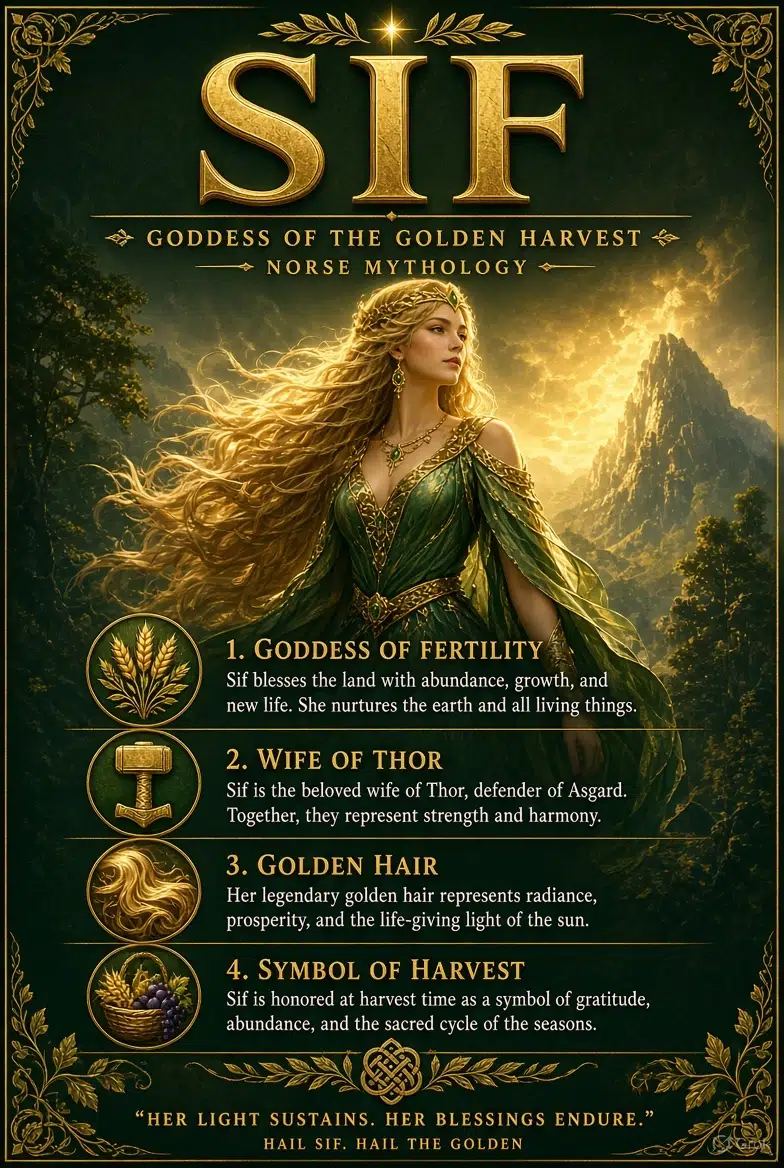
Artwork and source The harvest imagery is an interpretation of Sif’s golden hair. The surviving tale explains how the hair was made, and evidence for a historical harvest cult is limited.
Frequently Asked Questions
Who is Sif in Norse mythology?
Sif is a goddess and the wife of Thor, famous for the story of Loki cutting her hair.
Why did Loki cut Sif’s hair?
The surviving story describes the act but does not give a complete motive; Thor forces Loki to repair the damage.
Who made Sif’s golden replacement hair?
The sons of Ívaldi, skilled dwarven craftsmen, in Skáldskaparmál.
How is Mjolnir related to Sif?
The effort to repair Loki’s offense sets off a treasure-making competition that also produces Thor’s hammer.
Who are Sif’s children?
Thrud is associated with Thor and Sif; Ullr is Sif’s son, with uncertain paternal identification in the main sources.
Was Sif the goddess of wheat?
That is a common modern interpretation of her hair, but direct medieval evidence for an exclusive wheat-goddess role is limited.
Conclusion
Sif’s golden hair is more than a decorative detail: Loki’s mischief leads to exceptional craftwork and helps explain the origin of famous Norse treasures. Her family relations and the limits of the harvest-goddess label make the story an excellent example of why accurate captions matter as much as attractive mythology art.
Sources and artwork note
Skaldskaparmal: Loki, Sif’s hair and the dwarfs; Gylfaginning: Thor’s family and Sif; Academic edition of Skaldskaparmal.
Reviewed 15 November 2026. Artwork is illustrative, not ancient photography.










Share Your Opinion
Comments are closed on this post.