 Vista

Sköll and Hati are the two wolves who pursue the sun and moon in Norse mythology. In the familiar version preserved by Snorri’s Prose Edda, Sköll chases the sun, while Hati Hróðvitnisson pursues the moon. Their eventual success is linked with the cosmic darkness surrounding Ragnarök. The poems are not entirely uniform about how the celestial wolves are named or described, so a reliable article should avoid insisting that every early source uses one exact diagram.
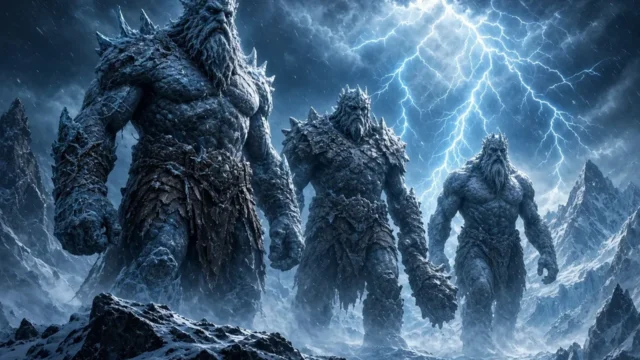
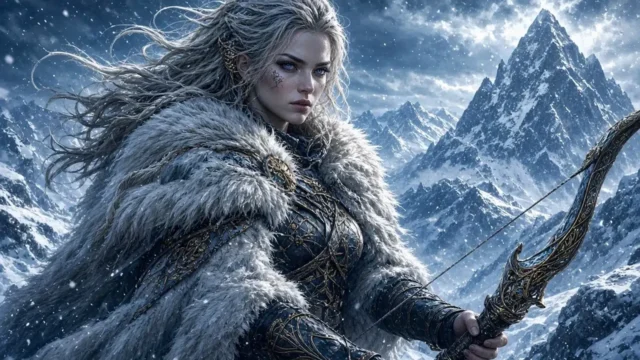
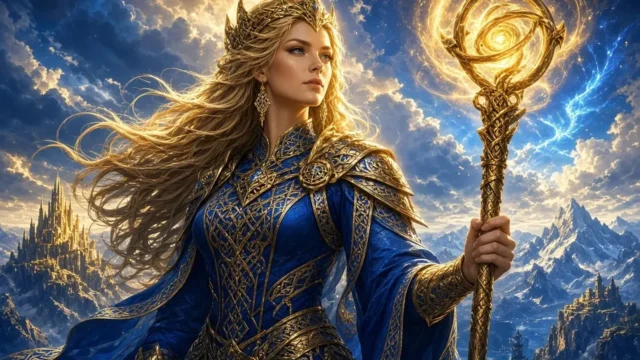
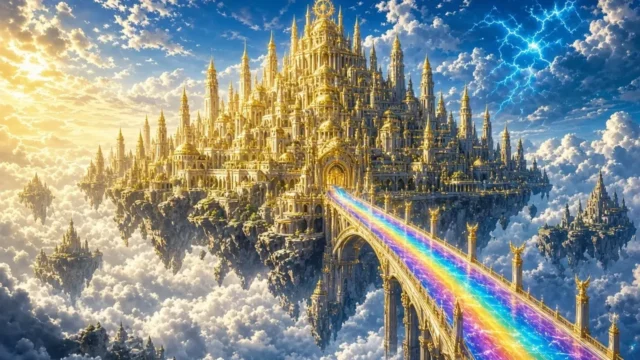
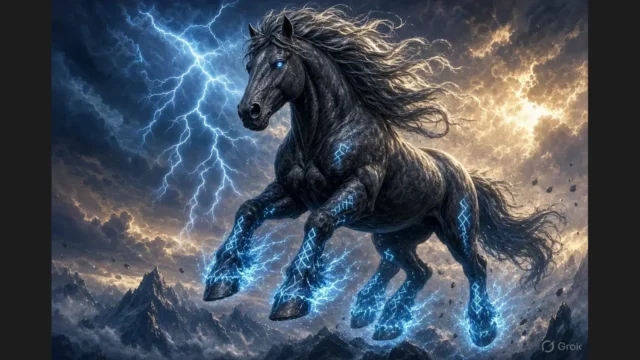
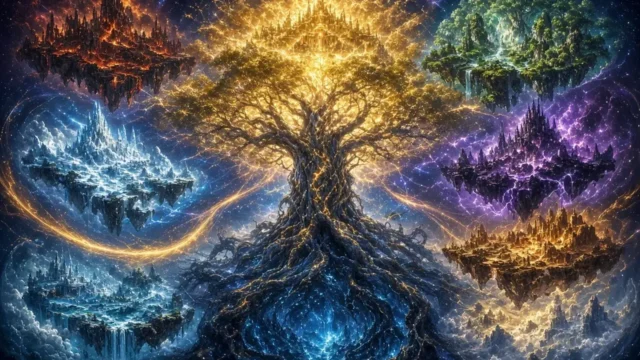
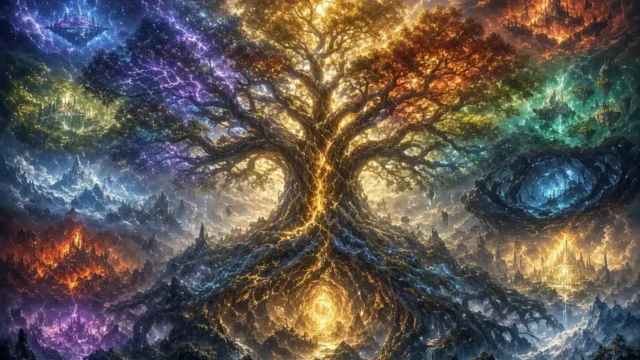
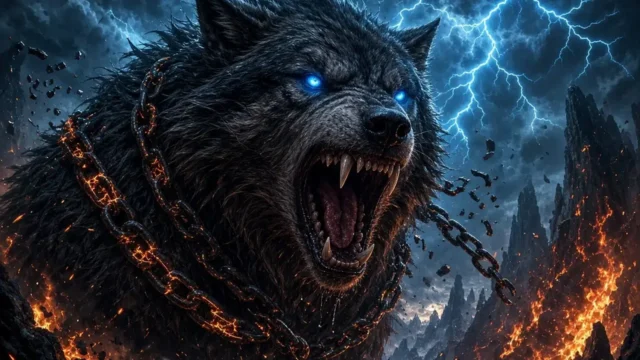
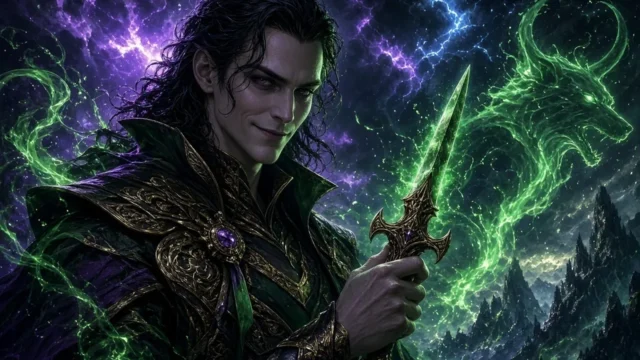
This guide explains Skoll and Hati Norse mythology, the meaning of the wolf names, whether they are Fenrir’s children, the strange Ironwood family, links with Sól and Máni, the mythological eclipse interpretation, and what happens when the sky darkens at the end of the world. The pictures are fantasy illustrations, not real images of wolves chasing astronomical bodies.
Which Wolf Chases the Sun, and Which Chases the Moon?
The best-known assignment comes from Gylfaginning: Sköll pursues the sun, and Hati, whose name appears with the patronymic Hróðvitnisson, seeks the moon. This formula makes a clear beginner’s poster: Sun—Sköll; Moon—Hati. Yet Norse poetry is more complicated. Grímnismál speaks of Sköll pursuing a shining deity and Hati moving before a heavenly bride, language that has invited discussion about the exact objects and motions. Vafþrúðnismál associates Fenrir with catching the sun, while other references describe a frightening moon-hound. These sources are related but not a fully standardized modern astronomical chart. Thus a page can confidently report what Snorri writes while acknowledging that older verses preserve variations. It is better to label a diagram ‘the common Prose Edda interpretation’ than claim every Viking believed a pair of physically identical, colour-coded wolves followed the same satellite paths.
Who Are Sól and Máni?
In Snorri’s cosmology the sun and moon are personified through named figures, Sól and Máni, who are siblings. The sun travels in a chariot drawn by horses with names including Árvakr and Alsviðr, while the moon’s movements are described in the same mythic register. The pursuing wolves add danger and urgency to these journeys. Many modern illustrations make the sun a fiery disc pulled directly by a wolf’s jaws or the moon a glowing orb resting between trees. Those can communicate the story but should not erase the roles of the celestial drivers. The old narrative is not a scientific account of how the earth rotates or why the moon has phases. It belongs to a cosmological story in which personal beings, animals and the sky are connected. Learning Sól and Máni’s names helps readers understand that the wolves have specific targets rather than merely being enemies of Odin’s hall.
Are Sköll and Hati the Sons of Fenrir?
An especially common family-tree claim says that Sköll and Hati are both children of Fenrir. The evidence requires care. Snorri calls Hati Hróðvitnisson—son of Hróðvitnir—and the name Hróðvitnir is associated with Fenrir in other Old Norse passages. That supports a possible identification but does not mean every text explicitly states a complete two-wolf parentage. Gylfaginning also traces the wolf brood to an ogress dwelling in the Ironwood east of Midgard. The poem Völuspá mentions a giantess there bearing offspring of Fenrir’s kind. The different descriptions can be understood together in several ways, but forcing them into one unquestioned genealogy hides genuine ambiguity. A careful poster can mark Hati’s patronymic and note the Fenrir association as a traditional interpretation. It should not invent an otherwise unattested mother for both wolves or list them as Odin’s pets.
Járnviðr: What Is the Ironwood?
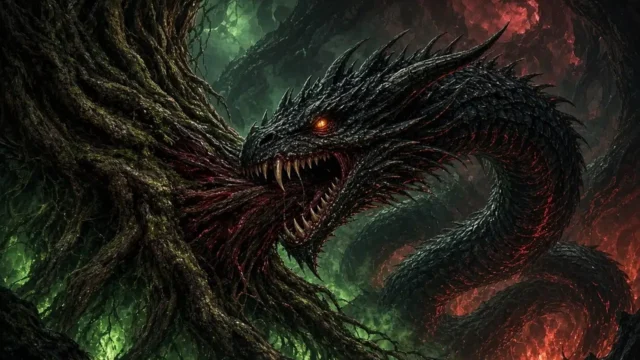
The forest Járnviðr, commonly rendered Ironwood, lies to the east of Midgard in Snorri’s description. It is associated with terrifying giantesses or troll-women and with the production of wolves who threaten the cosmic order. This imagery makes Ironwood a striking backdrop for darker Norse art: thorny trees, shadowy figures and supernatural wolves. But the medieval texts do not give an actual modern forest reserve, a verified country or coordinates where tourists can photograph the celestial wolf family. The place functions within mythical geography. Its role also reminds us that the source does not simply introduce the wolves as two independent sky pets with no ancestry. They belong to a broader community of dangerous beings and prophecies. The poster should label the Ironwood as a mythic origin setting while reserving precise family assignments for claims the texts actually support. A dramatic forest picture can inspire curiosity without becoming fabricated geography.
Who Is Mánagarmr, the Moon-Hound?
Mánagarmr is another important wolf-like name in Gylfaginning. Snorri describes a fearsome member of the Ironwood brood, often called the Moon-Hound, who will swallow the moon and stain the sky with blood. Modern summaries sometimes merge Mánagarmr and Hati into one figure; others treat them as two completely unrelated wolves. The textual relationship is not spelled out with the kind of precision a contemporary fantasy encyclopedia would provide. This makes it important to identify the exact passage being summarized. An image featuring a giant black wolf consuming the moon could be inspired by Mánagarmr, Hati or a generalized Ragnarök scene, and its caption should say which version the artist intended rather than claiming a universal identification. That uncertainty is educationally useful. It shows how mythic traditions can preserve overlapping names and deeds without a single official character database.
How Do Sköll and Hati Relate to Solar and Lunar Eclipses?
People sometimes describe the wolves as an ancient explanation of solar and lunar eclipses, imagining a beast briefly catching the sun or moon and later letting it escape. This is a plausible popular interpretation of sky-chasing imagery, but the best-known prose account focuses on pursuit and final destruction rather than providing a standardized recurring eclipse schedule. A scientific eclipse has an astronomical cause involving alignment and shadows, not real wolves in space. The mythology can still be discussed as a cultural way of imagining the sun and moon’s vulnerability. A responsible educational post should distinguish mythic explanation from astronomy. It should not predict the next eclipse from the names Sköll and Hati, nor claim that an eclipse is proof Ragnarök has begun. Visual art can show a wolf silhouette around a darkened sun, provided the caption identifies it as a symbolic scene rather than an astronomical photograph.
What Happens to the Wolves at Ragnarök?
The catastrophic events of Ragnarök include a darkening of the heavens. In Snorri’s final-battle account a wolf swallows the sun and another seizes the moon, with stars disappearing from the sky. The consequences are cosmic, not merely the defeat of two celestial travelers. Other poems, such as Vafþrúðnismál, preserve related but different naming details and also mention the sun’s daughter continuing her path after renewal. For a complete timeline, it helps to put the wolf chase near the celestial disasters without inventing the exact minute of each event. One may interpret the chase as a symbol that the regular order of the day and night finally breaks down. A fantasy poster showing an enormous wolf at an eclipse can express that idea, but it should not claim that the Eddas provide a complete physical simulation of the apocalypse.
Sköll, Hati and Fenrir: Three Wolves or More?
The names Sköll, Hati, Fenrir and Mánagarmr appear in a network of stories involving wolves, ancestry and the end of the world. Fenrir is the giant wolf bound with Gleipnir who ultimately swallows Odin; Sköll and Hati are associated with the sky chase in Snorri’s description. They are not interchangeable labels for one ordinary animal. Some video games use all of them as distinct characters with new relationships, while others combine their roles. Those adaptations belong to entertainment. A family-tree illustration should not make the wolf that eats Odin automatically the same one that captures the moon, unless it clearly indicates which poetic variant is being discussed. It is perfectly possible to enjoy separate artwork for each wolf while explaining the source-based uncertainty in a concise note. The key is to avoid a confident but unsupported list of parents, siblings, ages and magical powers.
Skoll and Hati Wallpaper, Tattoo and Image Search Keywords
A pair of wolves running around a bright sun and a glowing moon is an effective Norse-themed artwork for wallpapers or tattoos. Related searches include ‘Skoll and Hati sun moon tattoo’, ‘Skoll Hati Ragnarok’, ‘Norse wolves chasing the sun’ and ‘Skoll Hati meaning’. A modern tattoo can symbolize the cycles of day and night, fear of fate or persistence. Those personal meanings should not be sold as one unchanged Viking Age rune ritual. For search visibility, a caption should say which wolf corresponds to which object in the chosen interpretation; ALT text should describe the actual image, not list unrelated gods. An informative poster can include Sköll, Hati Hróðvitnisson, Sól, Máni and the note that sources vary. That small factual qualification adds more value than a dramatic but misleading promise that the image reveals a hidden ancient calendar.
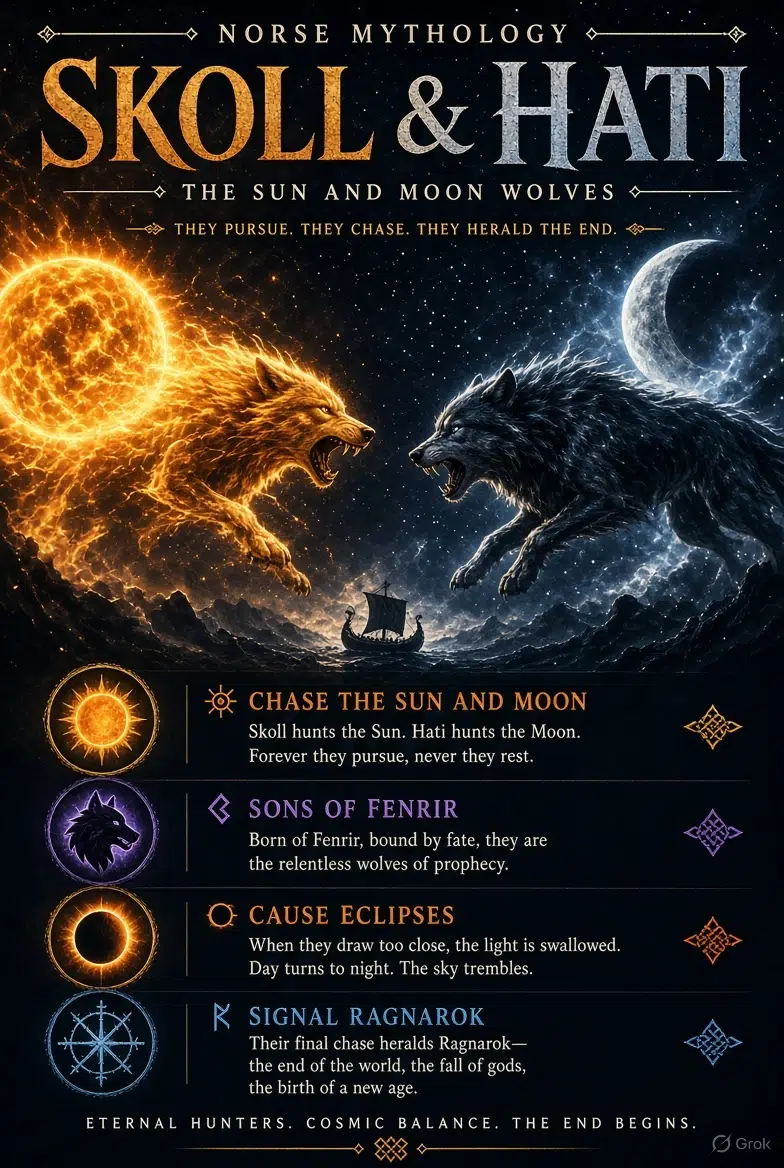
Artwork and source The wolves’ ancestry varies across readings of the sources. The chase is mythic imagery, while eclipses have an astronomical explanation.
Frequently Asked Questions
Which wolf chases the sun in Norse mythology?
Sköll chases the sun in Snorri’s Prose Edda account.
Which wolf chases the moon?
Hati Hróðvitnisson is linked with pursuit of the moon in that same account.
Are Sköll and Hati Fenrir’s children?
There are related names and lineages, but the sources do not all supply one fully explicit family tree.
What is Mánagarmr?
The Moon-Hound, a fearsome member of the Ironwood wolf brood in Gylfaginning.
Do the wolves cause real eclipses?
No. Eclipses have natural astronomical causes; the wolves are mythological imagery.
What happens at Ragnarök?
The pursuit culminates in the destruction or darkening of the sun and moon in the familiar prose tradition.
Conclusion
Sköll and Hati turn the movement of the sun and moon into a story about threat and fate. The popular sun-wolf and moon-wolf assignment comes from Snorri, while older poems preserve additional complexities. Accurate names and captions help the dramatic wolf images teach real mythology.
Sources and illustration disclaimer
Prose Edda: wolves pursuing Sun and Moon; Seiðr Loom: Sköll and Hati source comparison; Grímnismál and other early poetry.
Reviewed 15 November 2026. Illustrations are symbolic mythology art, not scientific images.












Share Your Opinion
Comments are closed on this post.