 Vista

Heka was the ancient Egyptian god of magic, medicine and the creative power of words and rituals. The word heka itself means “magic” or “magical power”, and the god personifies it. He is shown as a man holding a staff with two entwined serpents, and he travels in the boat of the sun god, where his power helps defend the world against chaos. For Egyptians, heka was not “spooky” supernatural trickery. It was a respected force that the gods themselves used, and that priests and physicians drew on in prayer, ritual and healing.
This guide explains who Heka was, what Egyptians meant by magic, how it was connected to medicine and temple ritual, who practised it, and how it differs from the modern idea of occult magic. It is a historical explanation only, and we separate mythology, documented practice and modern speculation. It is not a guide to performing rituals.

Quick Fact Box: Heka at a Glance
| Item | Detail |
|---|---|
| Meaning | Heka: magic, magical power; often explained as “activating the ka” |
| Domain | Magic, medicine, protection, ritual speech |
| Appearance | Man holding a staff with two serpents; sometimes a child god |
| Place in myth | Travels in the sun god’s barque |
| Family | At Esna, son of Khnum and Menhyt |
| Practitioners | Priests, lector priests, physicians, amulet makers |
| Key sources | Pyramid Texts, Coffin Texts, medical and magical papyri |
| Related god | Thoth, Isis, Sekhmet, Ra |
Who Was Heka?
Heka is both a god and a concept. As a concept, heka is the energy through which the creator god made the world and through which the gods keep the world in order. As a god, Heka appears in the Pyramid Texts and the Coffin Texts, and in later religion on temple walls. A spell in the Coffin Texts has the creator say that Heka existed before the gods and before duality, which means before there were two things to separate. Egyptians thus saw magic as part of the very fabric of creation.
Heka did not have large independent cult centres like Amun or Ptah. His main place was in the cults of other gods. In the temple of Khnum at Esna, from the Ptolemaic and Roman period, he is worshipped as the child of Khnum and the goddess Menhyt, completing a family triad.
What Did “Magic” Mean in Ancient Egypt?
The modern English word “magic” suggests tricks or the supernatural, and often something outside religion. In ancient Egypt, heka was inside religion. The same power was used by the gods, by priests performing temple ritual, by doctors treating illness and by ordinary people wearing amulets. The Egyptian word for the creative power of speech, the correct recitation of a spell with the right actions, was at the centre of all of these.
This is why many Egyptologists avoid separating “magic” and “religion” in Egypt. A prayer, a ritual offering and a spell for protection used similar methods: words, gestures, objects and the authority of a divine name.
Appearance and Symbols
- Two serpents on a staff: the control of dangerous forces.
- Man’s body: the usual form for a personified power.
- Child form at Esna: the divine child of the local triad.
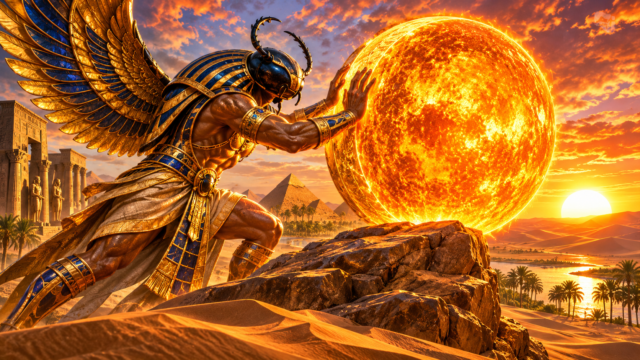
- Sun barque: Heka accompanies Ra and helps in the nightly defence against Apep.
Heka and Egyptian Medicine
Egyptian medicine combined practical treatment with spoken spells. The Ebers Papyrus, dated to around 1550 BCE, contains hundreds of remedies, including herbal and mineral prescriptions, and also incantations to accompany them. The Edwin Smith Papyrus, a little older, is more clinical and describes wounds and their treatment with few spells. The two show that Egyptians used observation and treatment, while also believing that words and ritual helped.
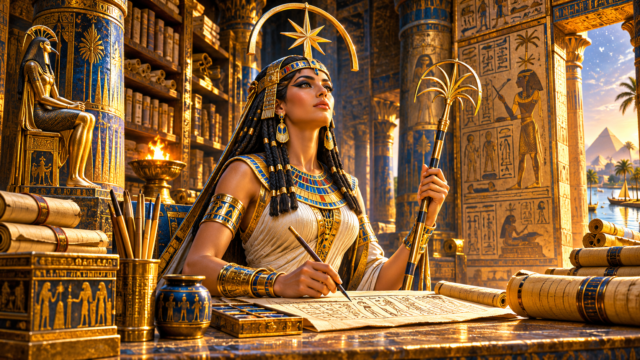
Priests of Sekhmet were associated with healing, and doctors often worked in temple settings. A “House of Life”, a scriptorium attached to temples, copied and kept medical, magical and religious texts. This is where heka, knowledge and healing met. Note that these were ancient beliefs. They are not a recommendation to treat illness with spells today; modern medical care should be used for health problems.
Story Box: Ivory Wands for Children
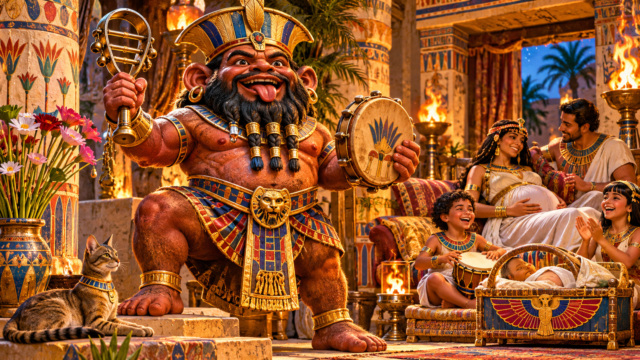
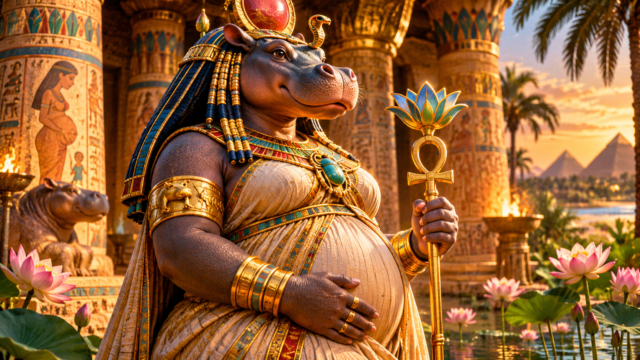
Museums hold curved ivory objects from the Middle Kingdom, often called magical wands, decorated with protective figures such as the dwarf-like Bes, the hippopotamus goddess Taweret, lions and serpents. They may have been used in rituals to protect mothers and babies during childbirth, a time of high risk in the ancient world. Their exact use is discussed by scholars, but they show how heka was applied to everyday dangers.
Who Practised Heka?
| Practitioner | Role |
|---|---|
| Lector priest (kheri-heb) | Read ritual texts in temples and at funerals |
| Priest of Sekhmet / physician | Combined medical treatment and spells |
| Scribes of the House of Life | Copied and preserved magical and medical texts |
| Local healers and amulet makers | Provided protection for ordinary people |
| The king | Holder of heka by divine right, central in state ritual |
Protective and Harmful Magic
Most surviving magic is protective: spells against snakebite, scorpion stings, nightmares, illness and demons. Egyptians also used execration rituals, in which names of enemies were written on pots or figures and then broken, a symbolic way of destroying their power. There are also records of people being tried for using magic against the king, which shows that unauthorised use was treated as a crime. Black magic as imagined in movies is not a category the Egyptians used in the same way. For a broader look at spells and rituals, see our guide to ancient Egyptian magic.
Mythology, History and Speculation
- Mythology: Heka is the power used by the creator and sails with Ra against chaos.
- History: documented practice of ritual, spells and magico-medical treatment in texts and objects from the Old Kingdom to the Roman period.
- Speculation: claims that Egyptian magic “really worked” supernaturally, or that spells can be used safely today, are not supported by evidence. Anyone interested should treat the subject as history.
Myth vs Fact
| Claim | Reality |
|---|---|
| Egyptian magic was separate from religion. | It was part of religion and medicine. |
| Heka was a minor, evil god. | He was a respected, protective power. |
| Egyptian doctors only used spells. | They also used observation, herbs, surgery and dressings. |
| Anyone could use any spell. | Many rituals were reserved for trained priests and scribes. |
| Spells can heal today. | There is no evidence; use proper medical care. |
Frequently Asked Questions About Heka
Who is Heka in Egyptian mythology?
The god of magic and medicine, the personification of magical power used by gods and priests.
What does heka mean?
Magic or magical power; some scholars explain it as “activating the ka”.
How is Heka shown?
As a man holding a staff with two serpents, or as a child god at Esna.
Was Heka worshipped in temples?
Mostly within other gods’ cults, such as at Esna with Khnum and Menhyt.
Was Egyptian magic the same as black magic?
No. Most magic was protective or healing, and Egyptians did not use the modern category of “black magic”.
What is the Ebers Papyrus?
A medical text of around 1550 BCE with remedies and spells.
Who was a lector priest?
A priest who read ritual texts aloud in temples and funerals and was linked with heka.
Did Egyptians use spells for medicine?
Yes, alongside practical treatments. Today, only medical care should be used for illness.
Is Heka linked to Thoth?
Both are tied to magic and speech; Thoth is also the god of writing and wisdom.
Is Heka similar to a concept in Indian tradition?
The power of ritual speech in Vedic mantra is a thematic parallel. They are separate traditions with no proven historical link.
Sources and Further Reading
- World History Encyclopedia: Egyptian Mythology
- Egypt Exploration Society: Gods of Egypt
- The Met: Divine Egypt
Last updated: 25 November 2026.
Related guides: Ancient Egyptian Magic: Spells, Rituals and Supernatural Beliefs · Ancient Egypt Mysteries: What We Know and What Remains Unsolved













Share Your Opinion
Comments are closed on this post.