 Vista

Khonsu was the Egyptian moon god, worshipped above all at Thebes as the son of Amun and Mut. His name means “traveller”, a reference to the moon’s journey across the night sky. He was a youthful, protective and healing deity, usually shown wrapped like a mummy and wearing the lunar crescent and disk on his head. Many readers know the name today through Marvel’s Moon Knight, but the ancient god was quite different from the comic-book “god of vengeance”.
This guide covers who Khonsu really was, how he looks in Egyptian art, what he did in myth and religion, where he was worshipped, and how he compares with Thoth and with the Marvel character. We keep mythology, documented history and modern pop-culture invention clearly separate, so you can see what is ancient and what is not.
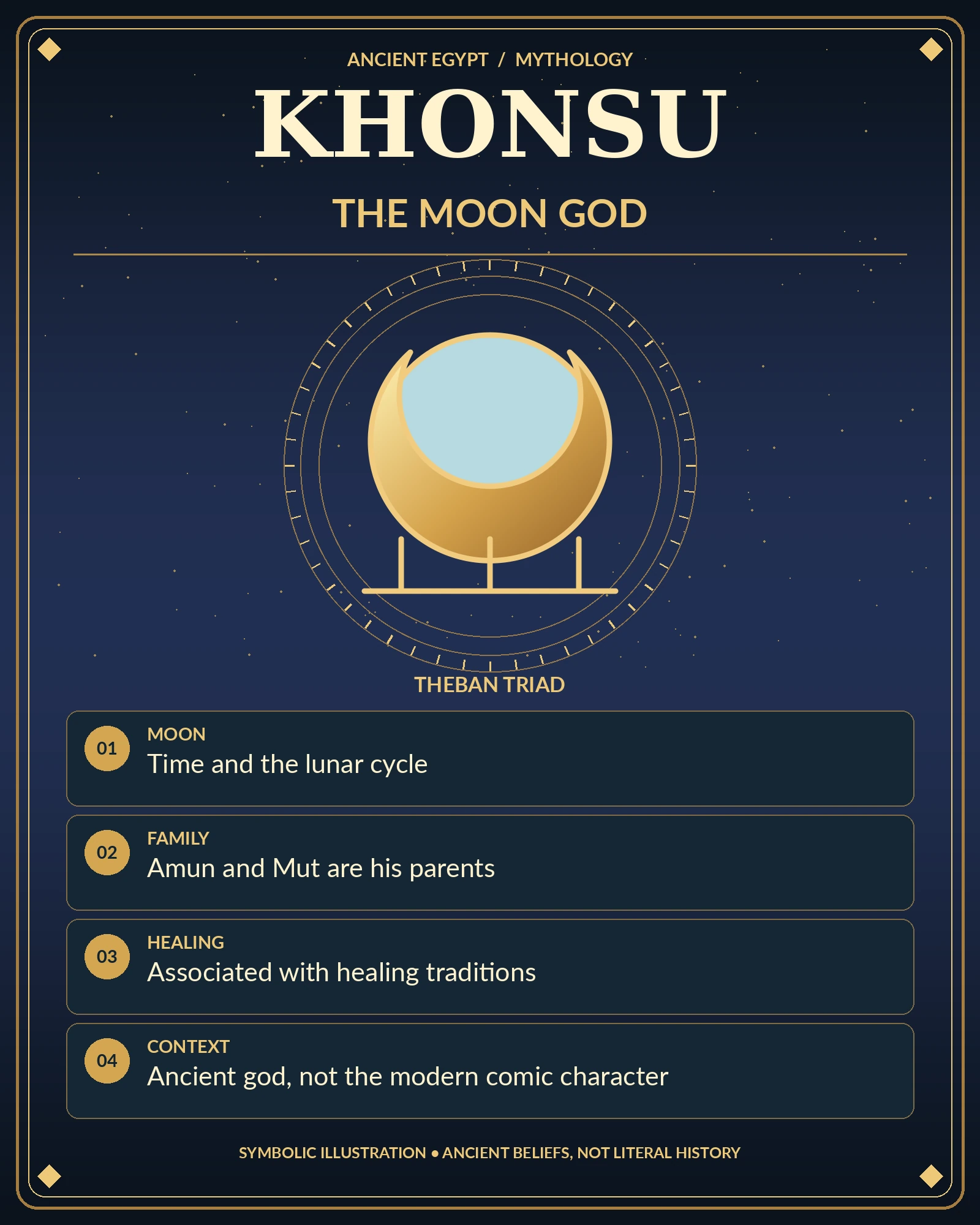
Quick Fact Box: Khonsu at a Glance
| Item | Detail |
|---|---|
| Name meaning | “Traveller” (also spelled Khons, Chons, Khonshu) |
| Domain | Moon, time, healing, protection, night travel |
| Parents | Amun and Mut |
| Cult centre | Thebes (Karnak temple of Khonsu) |
| Appearance | Mummiform youth with side-lock, lunar crescent and disk; sometimes falcon-headed |
| Holds | Crook and flail, and a combined was-djed-ankh sceptre |
| Greek equivalent | Often linked with Heracles |
| Not to be confused with | Thoth and Iah (other moon deities) |
Who Was Khonsu?
Khonsu was one of several moon gods in Egypt, but at Thebes he became the principal lunar deity. The moon was important to the Egyptians for practical and religious reasons. It marked the calendar for festivals, gave light for night travel, and was linked to renewal because it waned and returned. Khonsu embodied the moon as a traveller who crosses the night sky, protecting those who journey and watching over the world in the absence of the sun.
In the Theban triad he is the child of the king of the gods Amun-Ra and the mother goddess Mut. This made him a “divine child” figure, comparable to other youthful gods, and gave him a place in the most important state cult of the New Kingdom.
What Does the Name Khonsu Mean?
The Egyptian name is usually translated as “traveller” or “wanderer”, from the idea of movement across the sky. In English the god appears as Khonsu, Khons, Chons or, in Marvel comics and television, Khonshu. They are variants of the same Egyptian word, not different gods.
Appearance and Symbols
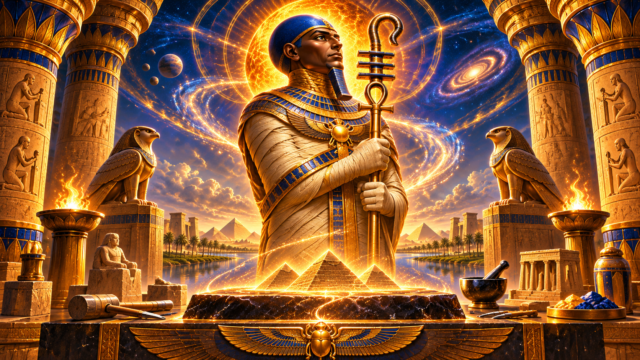
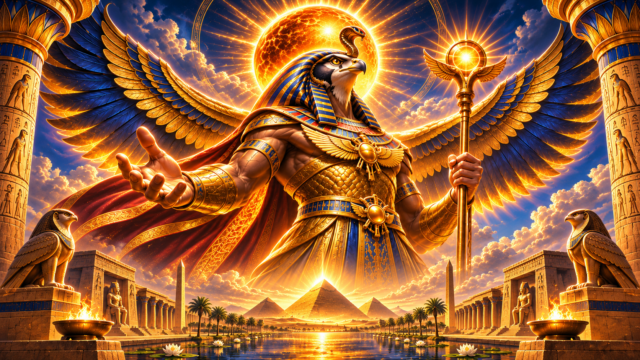
Khonsu is most often shown as a mummified young man whose hands emerge from the wrappings to hold a crook, a flail and a composite staff. He wears the sidelock of youth, a hairstyle used for children, and a headdress with a crescent moon cradling a full disk. He may also appear with a falcon’s head, wearing the same lunar symbol, linking him to royal and solar imagery. A broad collar (menat) often hangs from his neck.
- Crescent and disk: the moon in its phases.
- Side-lock of youth: divine childhood and renewal.
- Mummy wrapping: the god’s link with life after death and rebirth.
- Crook, flail and sceptre: kingship, authority and stability.
Khonsu in the Pyramid Texts and Later Religion
Khonsu is already mentioned in the Old Kingdom Pyramid Texts, where he plays a violent role on behalf of the dead king in the so-called Cannibal Hymn. This early image is very different from the gentle child god of the New Kingdom, which shows how a deity’s character could change over centuries. By the New Kingdom and later, Khonsu was mainly known as a protector and healer, and people prayed to him for help with illness and for safety at night.
The Temple of Khonsu at Karnak
The temple of Khonsu stands inside the Karnak complex, south of the great Amun-Ra precinct. Its construction began under Ramesses III in the 20th Dynasty and was continued and decorated by later rulers. It is one of the best-preserved New Kingdom temples at Karnak and gives a clear picture of how an Egyptian temple was laid out, with a pylon, court, hypostyle hall and sanctuary leading step by step into the most sacred space.
Khonsu’s statue also took part in the Opet Festival, travelling with Amun and Mut from Karnak to Luxor. Because he was the divine child of the triad, his presence represented the continuity of the family and, symbolically, of kingship.
Story Box: Khonsu Heals a Foreign Princess
The Bentresh Stela, a text from the late period set in the reign of Ramesses II, tells how the king married the sister of a foreign princess. When the princess Bentresh fell ill, Ramesses sent the statue of “Khonsu the Plan-Maker in Thebes” to Bakhtan to cure her. The god’s image drove out the spirit that afflicted her. The story was likely written long after Ramesses II, so scholars treat it as a religious tale showing Khonsu’s reputation as a healer, not as a historical record of an event.
Khonsu vs Thoth vs Iah: The Egyptian Moon Gods
| God | Moon role | Other role | Main centre |
|---|---|---|---|
| Khonsu | Travelling moon, protector | Healing, divine child | Thebes |
| Thoth | Moon as measurer of time | Wisdom, writing, magic | Hermopolis |
| Iah | The moon itself | Minor, often a name for the moon | Widespread, little cult |
Egyptians did not see a conflict in having several moon gods. Each emphasised a different aspect: Khonsu the traveller, Thoth the reckoner of time, Iah the moon disk.
Khonsu vs Marvel’s Khonshu: Mythology vs Moon Knight
Marvel’s Moon Knight first appeared in comics in 1975. In the comics and the 2022 television series, Khonshu is a powerful being who grants abilities to a human avatar and is associated with vengeance and a skull-like bird appearance. This is an invention of modern fiction. It borrows the name and the moon theme but changes the character’s role and look.
| Feature | Ancient Khonsu | Marvel’s Khonshu |
|---|---|---|
| Role | Moon, healing, protection, divine child | God of vengeance who empowers an avatar |
| Appearance | Youthful mummiform figure, or falcon-headed | Skeletal bird-like figure |
| Family | Son of Amun and Mut | Not part of the Theban triad in the stories |
| Worship | State cult at Thebes, temple at Karnak | Fictional cult |
| Source | Egyptian texts and temples | Comics and television |
Other mythological figures in the series, such as the devourer Ammit, are also reworked for the story. Enjoy the fiction, but do not treat it as a record of ancient belief. The Ammit of Egyptian religion is covered in its own guide.
Mythology, History and Speculation
- Mythology: Khonsu travels across the night sky, protects travellers and heals the sick.
- History: a Theban god attested from the Old Kingdom, prominent in the New Kingdom, with a temple at Karnak.
- Speculation and fiction: claims that Khonsu gave people superpowers or “moon-knight” avatars come from Marvel, not from Egyptian sources.
Myth vs Fact
| Claim | Reality |
|---|---|
| Khonsu was the god of vengeance. | No. That is Marvel’s version. The ancient god was a moon deity and healer. |
| Khonsu had a bird skull head. | No. He was shown as a youth or, at times, falcon-headed. |
| Khonsu was Egypt’s only moon god. | No. Thoth and Iah were also lunar figures. |
| Khonsu was worshipped across Egypt equally. | His main cult was at Thebes. |
| Khonsu gave humans avatar powers. | Not in Egyptian sources. This is a comic-book idea. |
Frequently Asked Questions About Khonsu
Who is Khonsu in Egyptian mythology?
He is the moon god of Thebes, the son of Amun and Mut, associated with travel, protection and healing.
What does Khonsu mean?
“Traveller”, from the moon’s movement across the sky.
What are Khonsu’s symbols?
The crescent moon with a disk, the sidelock of youth, the crook and flail, and a combined sceptre.
Is Marvel’s Khonshu the same as the real god?
No. The Marvel character shares the name and the moon connection but is a fictional reimagining with a different role and appearance.
Was Khonsu a god of death or vengeance?
Not in his main New Kingdom form. An early Pyramid Text shows him in a violent role for the king, but later he was a protector and healer.
Who are Khonsu’s parents?
Amun (Amun-Ra) and Mut, forming the Theban triad.
Where was Khonsu worshipped?
Primarily in Thebes, where his temple stands within the Karnak complex.
What is the difference between Khonsu and Thoth?
Both relate to the moon, but Thoth is mostly the god of wisdom, writing and measuring time, while Khonsu is the travelling, healing moon child of Thebes.
Why is Khonsu shown as a mummy?
Mummiform dress linked a god to renewal and life after death. Other gods, such as Ptah and Osiris, share this form.
Is Khonsu similar to an Indian moon deity?
Chandra in Hindu tradition is also a moon deity, but the two come from separate cultures and the similarity is thematic. No historical link is proven.
Sources and Further Reading
- World History Encyclopedia: Egyptian Mythology
- Egypt Exploration Society: Gods of Egypt
- The Met: Divine Egypt
Last updated: 25 November 2026.
Related guides: Tutankhamun's Curse: The Truth Behind the Pharaoh's Tomb and the Deaths Blamed on It · Thoth: Egyptian God of Writing, Wisdom, the Moon and Magic (Myths, Symbols and Hermes Trismegistus)















Share Your Opinion
Comments are closed on this post.