 Vista

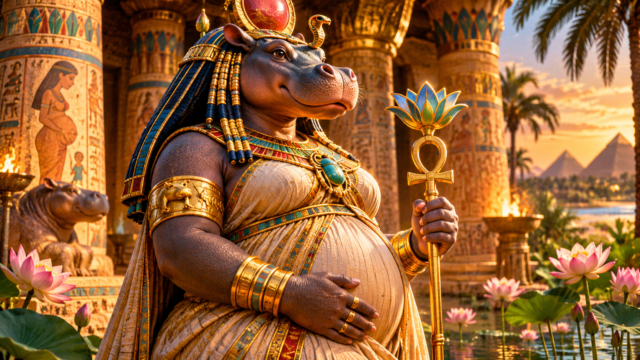
Hapi was the ancient Egyptian god of the annual Nile flood, called the inundation. He is shown as a plump, androgynous figure with a full belly and hanging breasts, blue or green skin, and a crown of water plants such as papyrus or lotus. These features were not meant as a joke. A heavy body showed abundance, because a good flood meant full granaries. Hapi brought food, fertility and wealth, and Egyptians sang hymns to him each year when the river rose. Do not confuse him with Hapy, one of the four sons of Horus on canopic jars, or with Apis, the sacred bull of Memphis.
This guide explains what Hapi looked like, how the flood shaped Egyptian life, the Hymn to the Nile, how to separate the three similar names, and how modern engineering changed the river that he represented.

Hapi Quick Facts
| Item | Detail |
|---|---|
| Domain | Nile flood, fertility, abundance |
| Appearance | Plump figure, blue or green skin, hanging breasts, water-plant crown |
| Offerings | Often shown carrying trays of food and water-related gifts |
| Home | Said to live in caverns near Elephantine and the First Cataract |
| Famous text | The Hymn to the Nile, a literary work known from Middle Kingdom times |
| Do not confuse with | Hapy (canopic son of Horus) and Apis (sacred bull) |
Who Was Hapi?
Egypt depended on the Nile in a way few countries do. Rain is rare, so the river’s yearly rise and fall decided whether people ate well or went hungry. Egyptians divided the year into three seasons based on this cycle: the inundation (Akhet), the growing season (Peret) and the harvest (Shemu). Hapi was the personification of the flood itself, not a god who lived in the sky or ruled a city. He was the water bringing fresh silt to the fields.
Because the flood was so important, Hapi was honoured with festivals, offerings and hymns. He never became the centre of a giant state cult like Amun or Ra, but he was close to everyone’s daily life, from the farmer waiting for the water to the king who depended on tax from the harvest.
Why Does Hapi Look the Way He Does?
| Feature | Likely meaning |
|---|---|
| Large belly | Plenty and well-fed prosperity; a fat man was a successful man |
| Hanging breasts | Nourishment and fertility, combining male and female life-giving power |
| Blue or green skin | Water and vegetation |
| Papyrus or lotus on the head | Links with Lower and Upper Egypt, and with marsh plants |
| Trays of food | Gifts brought by the flood |
Hapi is often shown in pairs, tying together the symbols of Upper and Lower Egypt around the sign for unity. This two-Hapi image appears on thrones and temple bases, showing that the river joined the two halves of the country.
The Flood Calendar and the Nilometer
The Nile begins to rise in Egypt around mid-summer, because of heavy seasonal rain in the highlands far to the south. The water spreads over the floodplain, leaves rich silt and then falls. Egyptians measured the rise with structures called nilometers, often stairs or wells marked with levels. The result gave an early estimate of the harvest and influenced tax assessments. A low flood meant hunger and a very high flood could destroy villages, so both extremes were feared. This is why the Famine Stela and many other texts treat the flood as a matter of divine favour.
Story box (imagined scene based on the farming year): A village waits at the river’s edge in late summer. Children watch the water creeping up the bank. An elder says that Hapi is arriving with his gifts. When the fields are covered, work stops for a while and many men are called to labour on royal projects. The flood is both a blessing and a signal for a new round of life. This scene is a reconstruction from what we know about the Egyptian calendar and labour system.
The Hymn to the Nile
The Hymn to the Nile (sometimes called the Hymn to Hapi) is a literary composition praising the river as the provider of food and prosperity. It is usually dated to the Middle Kingdom, and later scribes copied it for training, which is why it survives on several papyri and ostraca. The hymn describes how people rely on the flood, how rich and poor alike depend on it, and how the river brings life. It is an important text because it shows that Egyptians thought about the river with real gratitude and awe.
The ancient text is public, but modern translations are protected, so please consult a published translation or museum edition if you want to read the full wording.
Hapi vs Hapy vs Apis: Avoiding Confusion
| Name | Who or what | Where you see it |
|---|---|---|
| Hapi | God of the Nile flood | Temple reliefs, thrones, hymns |
| Hapy | Baboon-headed son of Horus who guards the lungs | Canopic jars |
| Apis | Sacred bull of Memphis linked to Ptah | Serapeum at Saqqara |
The spellings of these names overlap in English, which makes online articles messy. When you see “Hapi” check whether the article is talking about the flood god, the canopic jar or the bull. Our guide to Nephthys mentions the canopic guardian Hapy, and our guide to Ptah explains the Apis link.
Where Was Hapi Believed to Live?
Egyptian tradition placed the source of the flood in a cave or cavern near Elephantine and the First Cataract, where the river passes through granite rocks. There, Hapi was believed to release the water each year, working with Khnum who guarded the source. This is religious geography, not physical geography; the real flood came from rainfall far to the south in the highlands of East Africa. For a closer look at the creator god of this region, see our guide to Khnum.
The Aswan High Dam: The End of the Flood
For thousands of years the flood was a fact of life. In the twentieth century, dams changed this. The Aswan High Dam, built in the 1960s and completed in 1970, created Lake Nasser and ended the yearly natural flood in Egypt. This gave controlled water and electricity, but it also reduced the silt that used to fertilise the fields, so farmers now use more artificial fertiliser. This is an example of how a religious symbol, the flood, ended up replaced by engineering, with both benefits and costs.
History, Mythology and Speculation
| Category | What belongs here |
|---|---|
| History | The flood cycle, nilometers, the Hymn to the Nile, Hapi figures in temple art, the Aswan High Dam |
| Mythology | Hapi living in caves and releasing the flood; his role as bringer of abundance |
| Speculation | Whether Hapi’s mixed-gender look had one fixed meaning; exact ritual details of flood festivals |
Myth vs Fact
| Popular claim | Reality |
|---|---|
| Hapi was a female god. | He is usually treated as a male god with symbolic female features that stress abundance. |
| Hapi and Hapy are the same god. | They are different figures with similar-looking names in English. |
| The flood came from a cave at Elephantine. | This was a religious belief. The real source is distant rainfall. |
| The Egyptians worshipped the river as a monster. | They saw the flood as a gift, though they feared floods that were too low or too high. |
Frequently Asked Questions About Hapi
What was Hapi the god of?
Hapi was the god of the annual Nile flood and the fertility and abundance it brought.
Why does Hapi have a big belly and breasts?
These features symbolise abundance and nourishment. In Egyptian art a full body showed prosperity.
Is Hapi the same as Apis?
No. Apis was a sacred bull associated with Memphis and Ptah. The names look similar in English, but the figures are different.
Is Hapi the same as Hapy of the canopic jars?
No. Hapy is a baboon-headed son of Horus who protects the lungs in the canopic set.
What is the Hymn to the Nile?
It is an ancient Egyptian literary hymn praising the river and its flood, known from Middle Kingdom tradition and later copies.
When did the Nile flood happen?
The natural flood usually began in the summer and covered the fields in the following weeks, before the Aswan High Dam ended it in the twentieth century.
How did Egyptians measure the flood?
They used nilometers, which are marked stairs or wells that show the water level.
Did the Aswan High Dam end the flood?
Yes. Since the dam was completed in 1970, the river’s flow is controlled and the traditional annual flood no longer reaches the fields.
Reliable Sources
- World History Encyclopedia: Egyptian Mythology
- Egypt Exploration Society: Gods of Egypt
- The Metropolitan Museum of Art: Divine Egypt
Last updated: 25 November 2026. Related reading on Vista Hub: our guides to Khnum, Ptah, Nephthys and the Egyptian gods and goddesses.
Related guides: Sobek: Egyptian Crocodile God of the Nile — Kom Ombo, Sacred Crocodiles and Myths · Khnum: Ram-Headed Egyptian God Who Shaped Humans on a Potter's Wheel — Elephantine, Esna and the Nile













Share Your Opinion
Comments are closed on this post.