 Vista
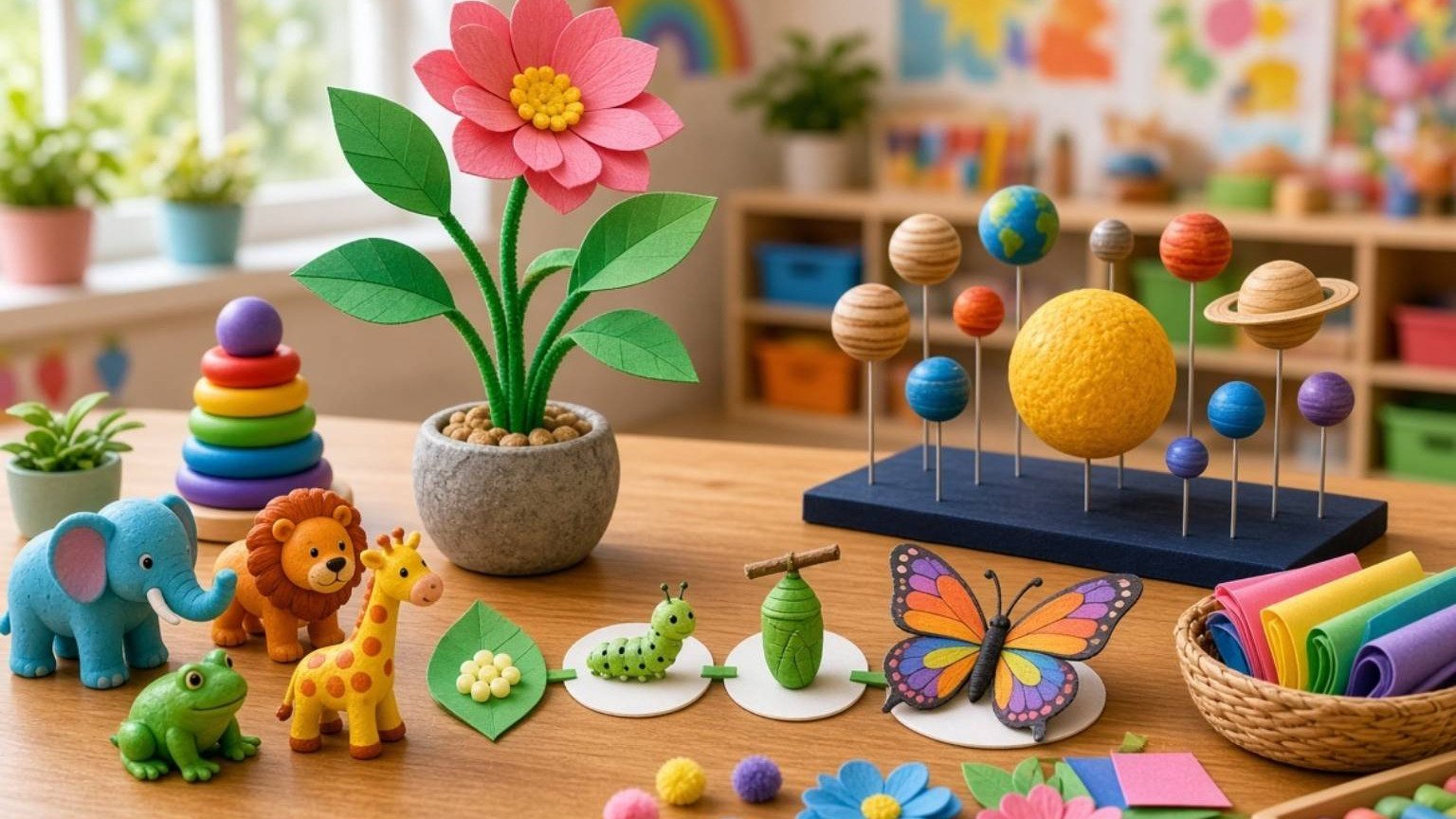
Looking for school project ideas with pictures? This illustrated guide brings together 44 real school-project topics from Vista Hub, with charts, labelled diagrams and models for Classes 1–12. Browse EVS, science exhibition working models, maths, environmental science, geography, robotics and social studies. Each picture opens a detailed project guide where you can find more images, explanations and the original image-view or download options.
Use this directory when you need an easy school project model, a science exhibition project with pictures, a school chart idea, or a more advanced experiment to explain in class. The class ranges below are suggestions based on conceptual difficulty, not official curriculum assignments. Teachers should select topics suited to students’ ages, materials and laboratory safety.
Find the right school project by class and subject
For Classes 1–5, begin with five senses, plants, animal habitats, healthy habits, life cycles and simple weather observations. In Classes 6–8, compare water filtration, ecosystem food webs, geometry, Moon phases, bridge structures and circuits. For Classes 9–12, focus on explainable principles, observation tables, graphs and teacher-guided chemistry or electricity experiments.
A strong project generally includes a clear question, an illustration or model, a list of supplies, a short method, observations and a conclusion. A still chart is useful when the goal is identification; a working model is worthwhile only when the movement demonstrates the idea correctly. You do not need to buy expensive kits if paper, cardboard and safe household items convey the concept.
Easy EVS project charts for Classes 1–5
Start with familiar subjects that students can observe at home or in school. Encourage children to draw and label their own versions after studying each reference poster.
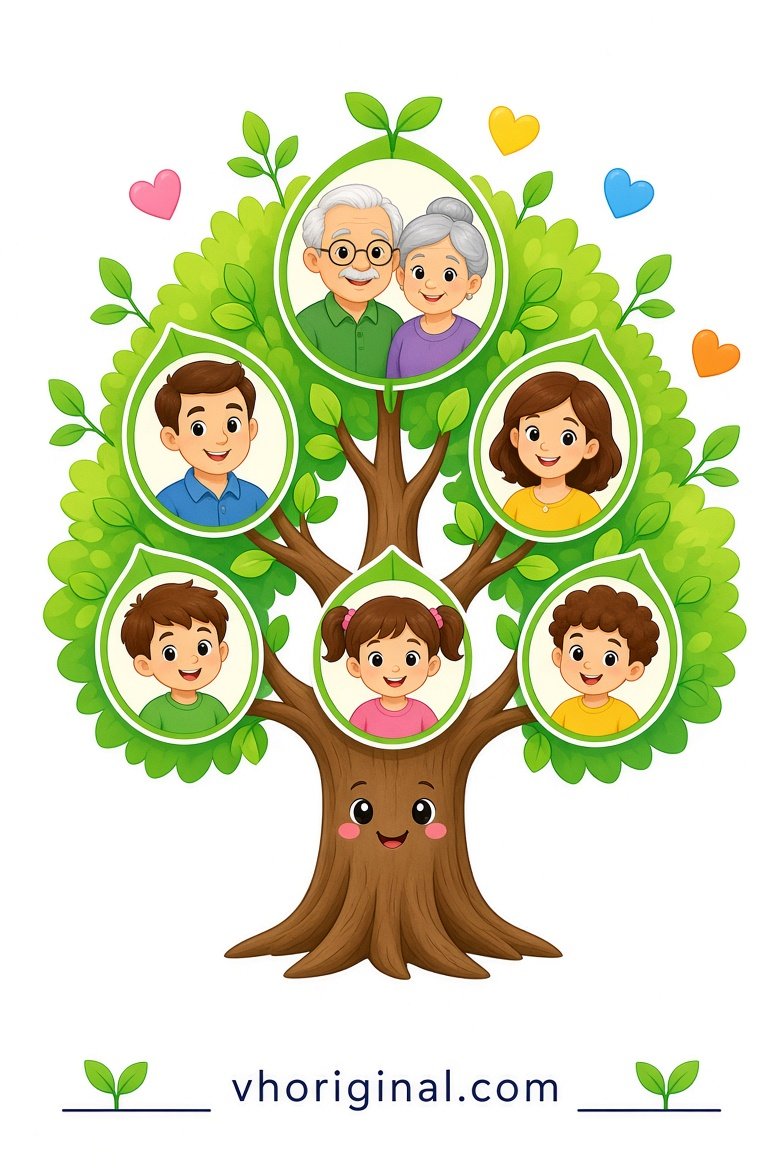
EVS School Project Charts: Family Tree, Community Helpers & Traffic Signs with Pictures
Suggested Classes 1–5 · EVS. Draw a family tree, recognise community helpers and learn essential traffic signs.
See the full picture gallery, project steps and image options
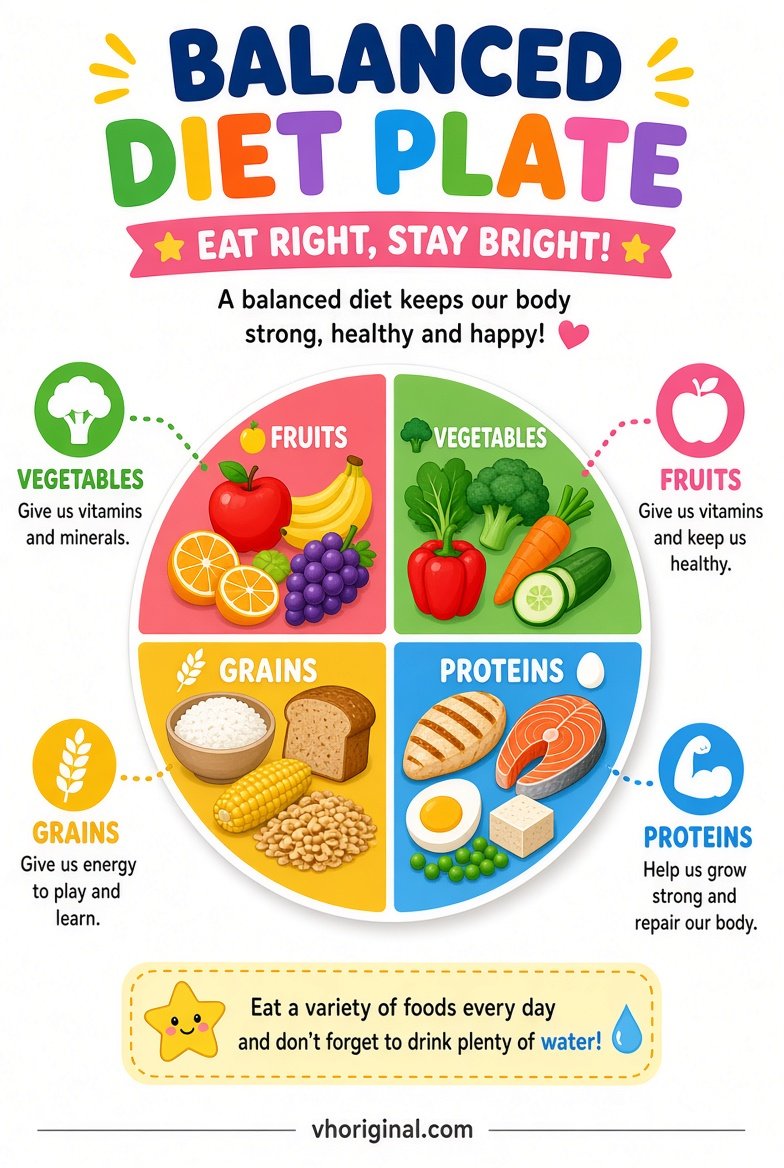
Healthy Habits and Balanced Diet School Project Charts: 6 Pictures for Kids
Suggested Classes 1–5 · EVS. Build a balanced-food-plate chart and explain handwashing, dental care and daily habits.
See the full picture gallery, project steps and image options
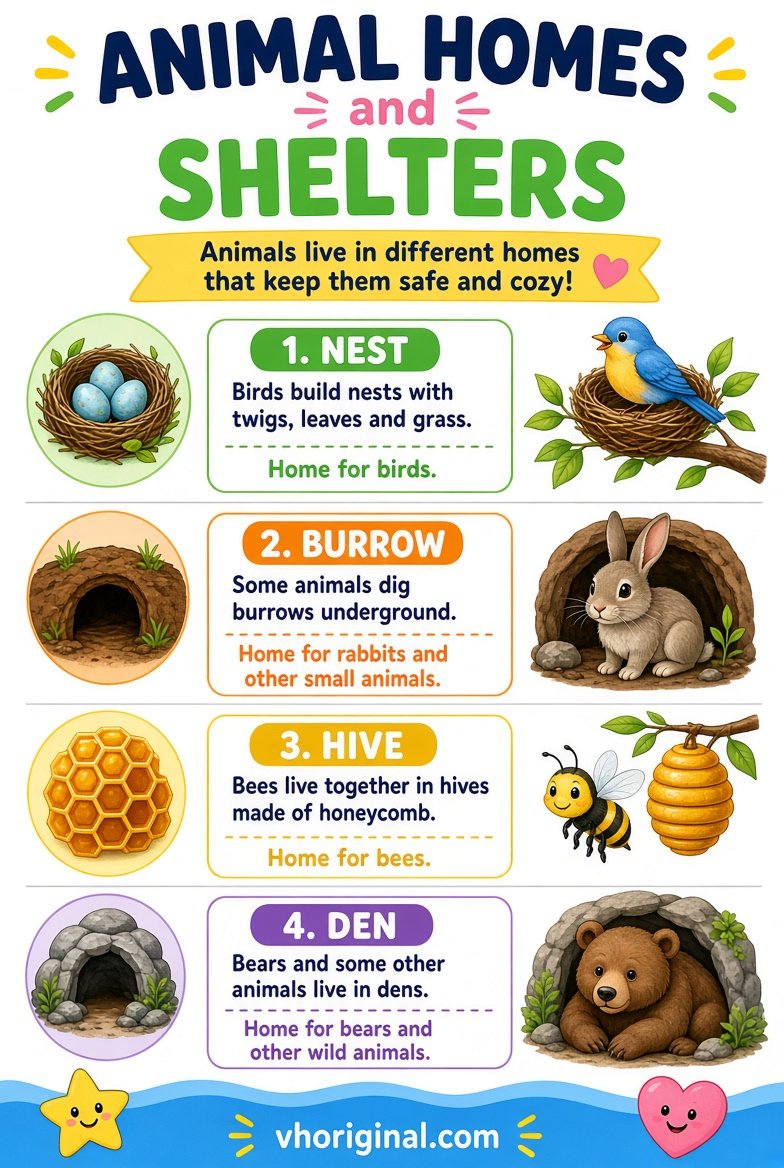
Animal Homes and Bird Beaks School Project Charts: Pictures, Examples & Easy Steps
Suggested Classes 1–5 · EVS. Compare animal homes and bird beaks, linking shapes to habitat and food.
See the full picture gallery, project steps and image options
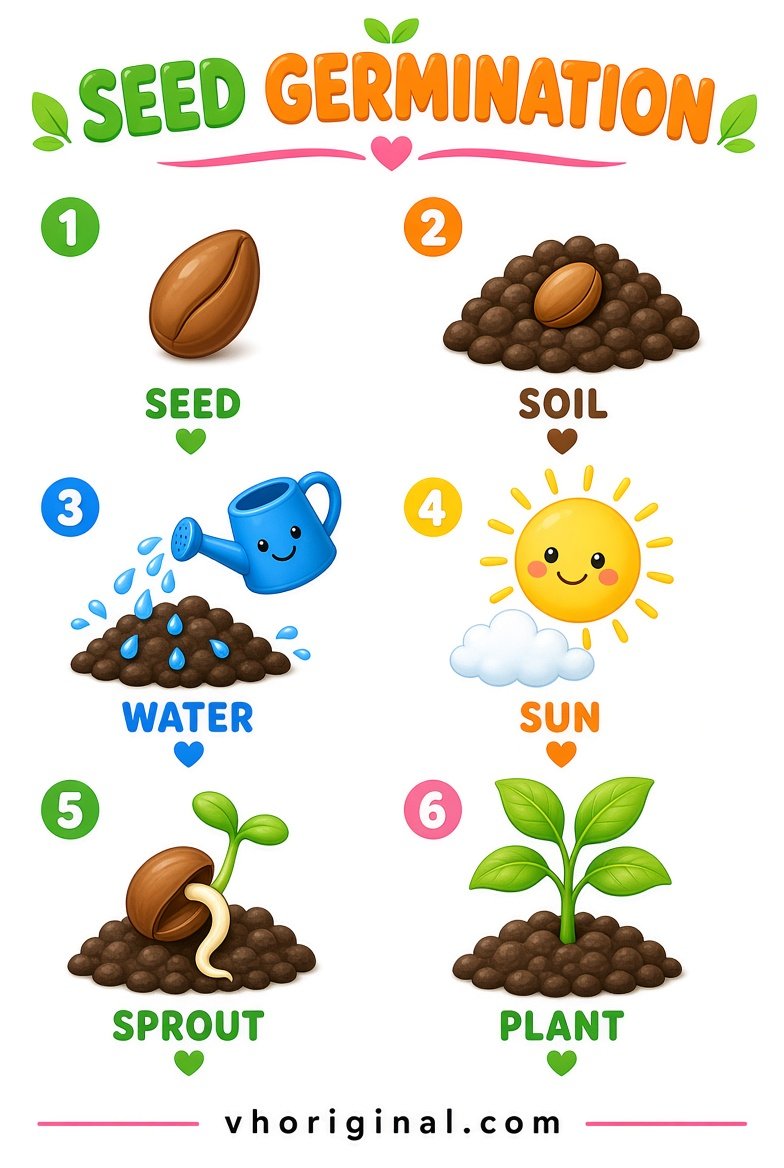
Life Cycle Charts for School Projects: Seed Germination, Butterfly & Frog Pictures
Suggested Classes 1–5 · EVS. Sequence seed germination, butterfly metamorphosis and frog development on illustrated charts.
See the full picture gallery, project steps and image options
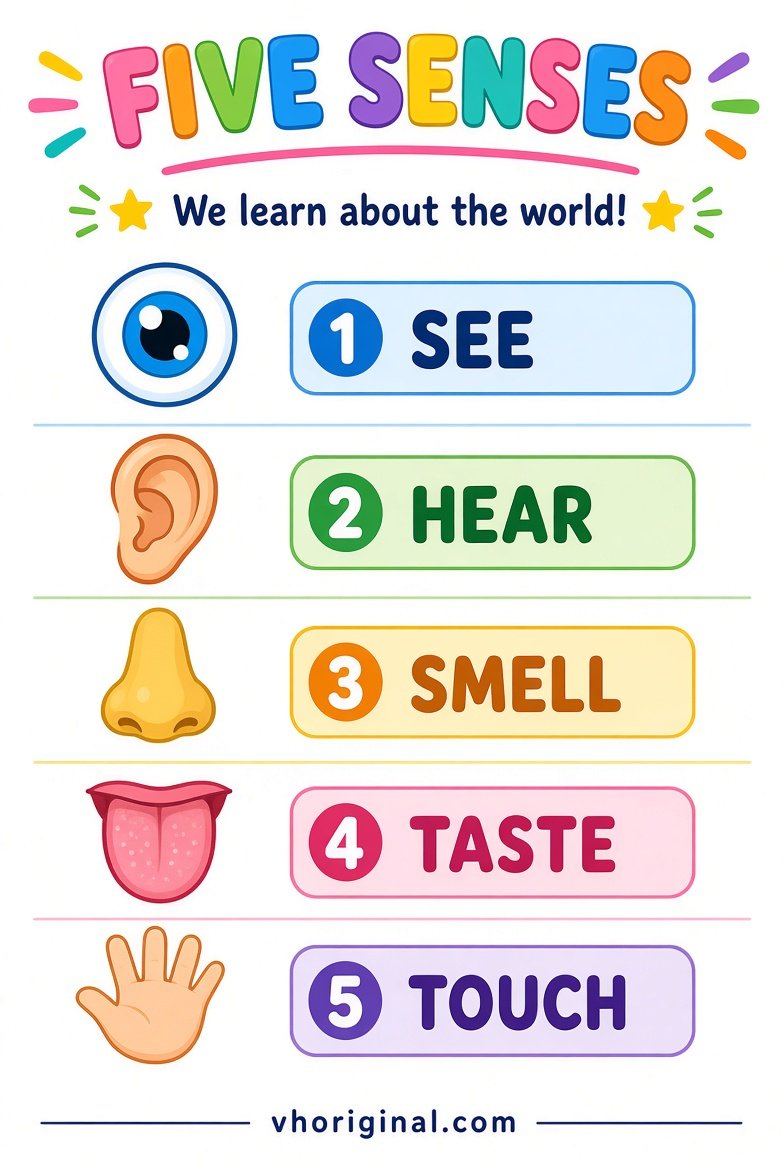
EVS Charts for School Projects: Five Senses, Living and Non-Living Things & Plant Parts
Suggested Classes 1–5 · EVS. Identify five senses, living versus non-living things and the labelled parts of a plant.
See the full picture gallery, project steps and image options
Environment, sustainability and water project pictures
Use these models to explain a real-world problem, a process and a practical response. Waste sorting, filtration and rainwater harvesting suit displays that invite visitors to ask questions.
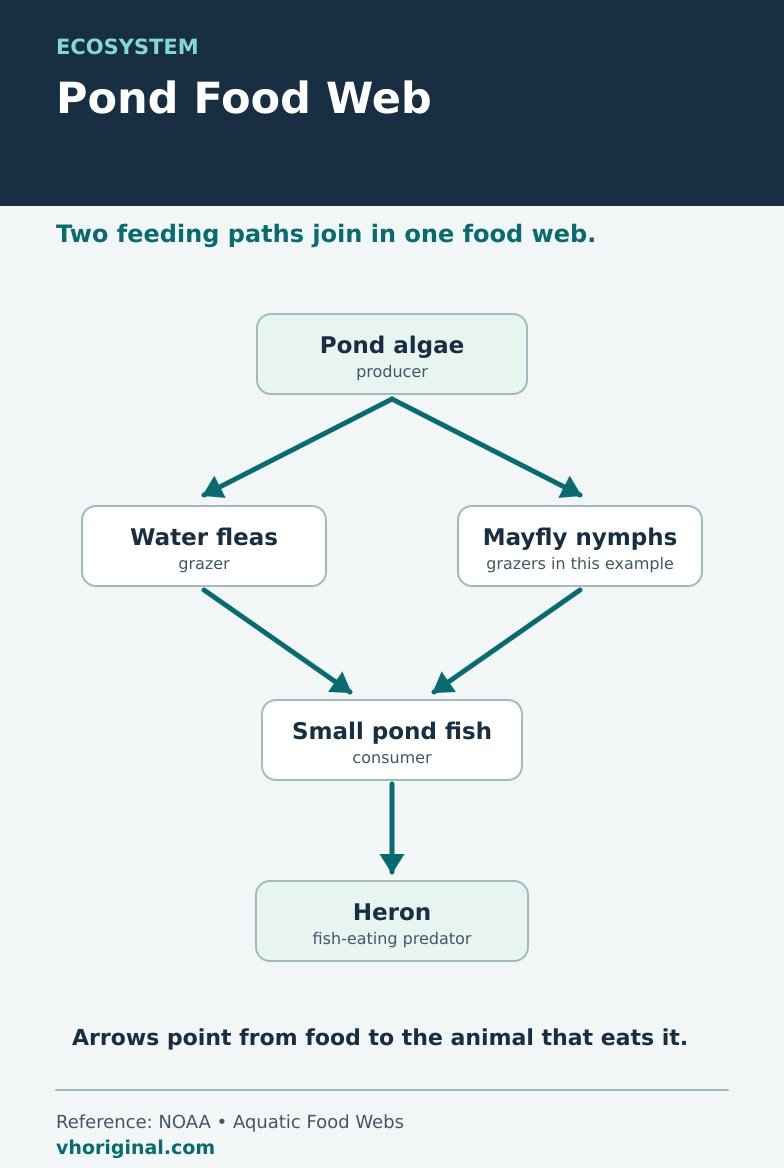
Ecosystem School Project Models: Food Web, Pond, Desert, Mangrove & 6 Pictures
Suggested Classes 6–10 · Environment. Connect producers, consumers and decomposers in pond, grassland, desert and mangrove ecosystems.
See the full picture gallery, project steps and image options
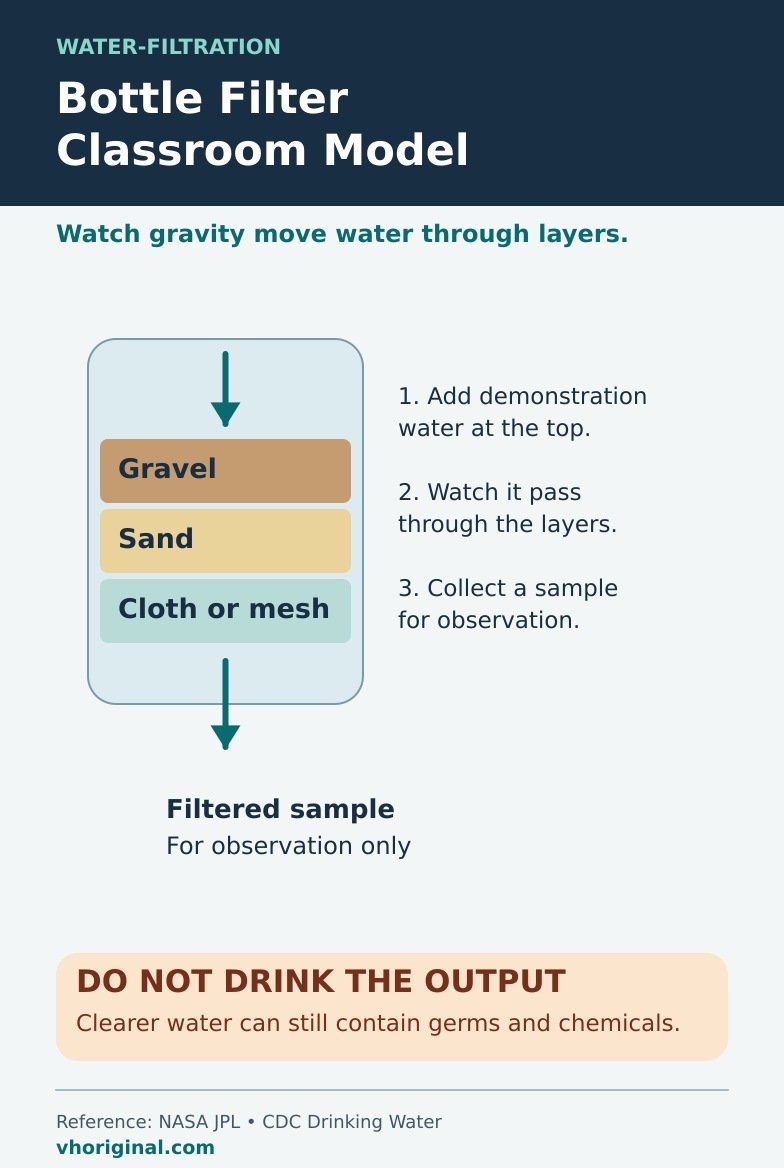
Water Filtration Working Model for School Project: 6 Diagrams & Easy Steps
Suggested Classes 4–8 · Environment. Create a sand-and-gravel filtration demonstration; filtered water is not automatically safe to drink.
See the full picture gallery, project steps and image options
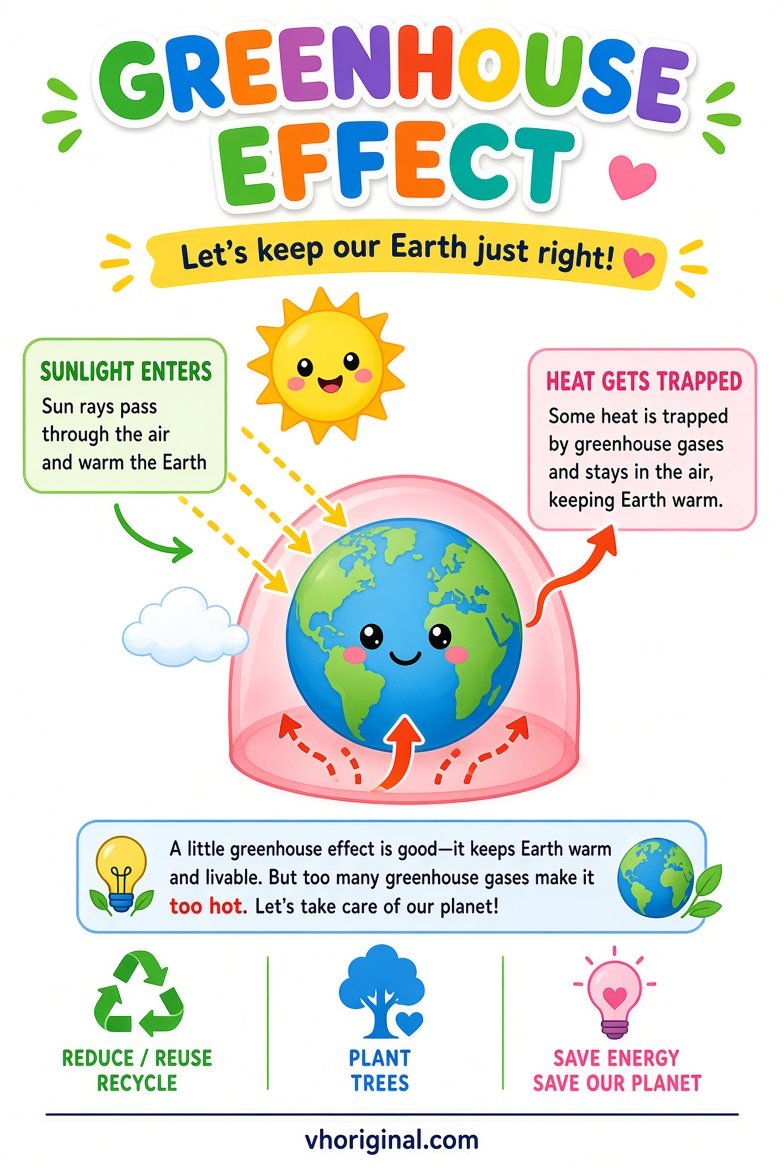
Carbon Cycle, Nitrogen Cycle & Greenhouse Effect: 3 School Project Diagrams
Suggested Classes 8–12 · Environment. Trace carbon and nitrogen pathways and explain the greenhouse effect. Plants take carbon dioxide from the air during photosynthesis; the illustration previews the greenhouse topic.
See the full picture gallery, project steps and image options
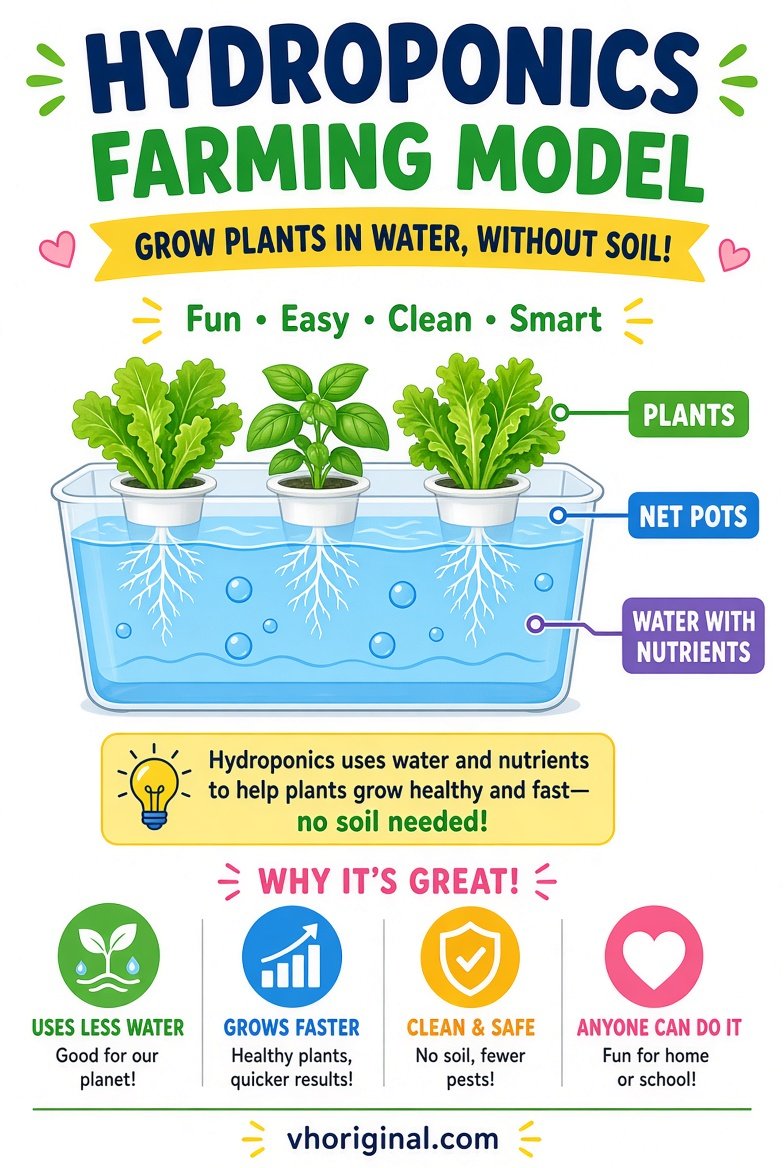
Sustainable Farming School Projects: Hydroponics, Drip Irrigation, Biogas & Smart City
Suggested Classes 7–12 · Environment. Compare hydroponics, drip irrigation, biogas and thoughtful smart-city design.
See the full picture gallery, project steps and image options
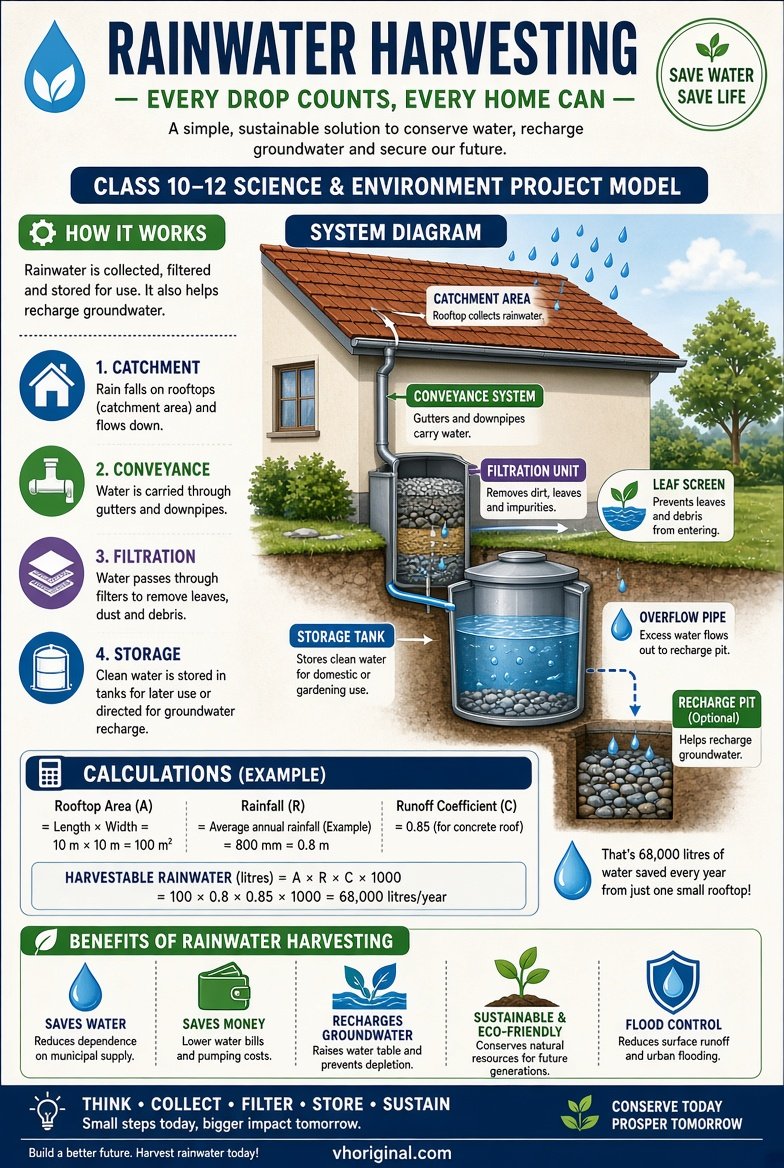
Rainwater Harvesting Working Model & Groundwater Aquifer: 3 Project Pictures
Suggested Classes 5–9 · Environment. Show roof catchment, storage and groundwater recharge with a rainwater-harvesting model.
See the full picture gallery, project steps and image options
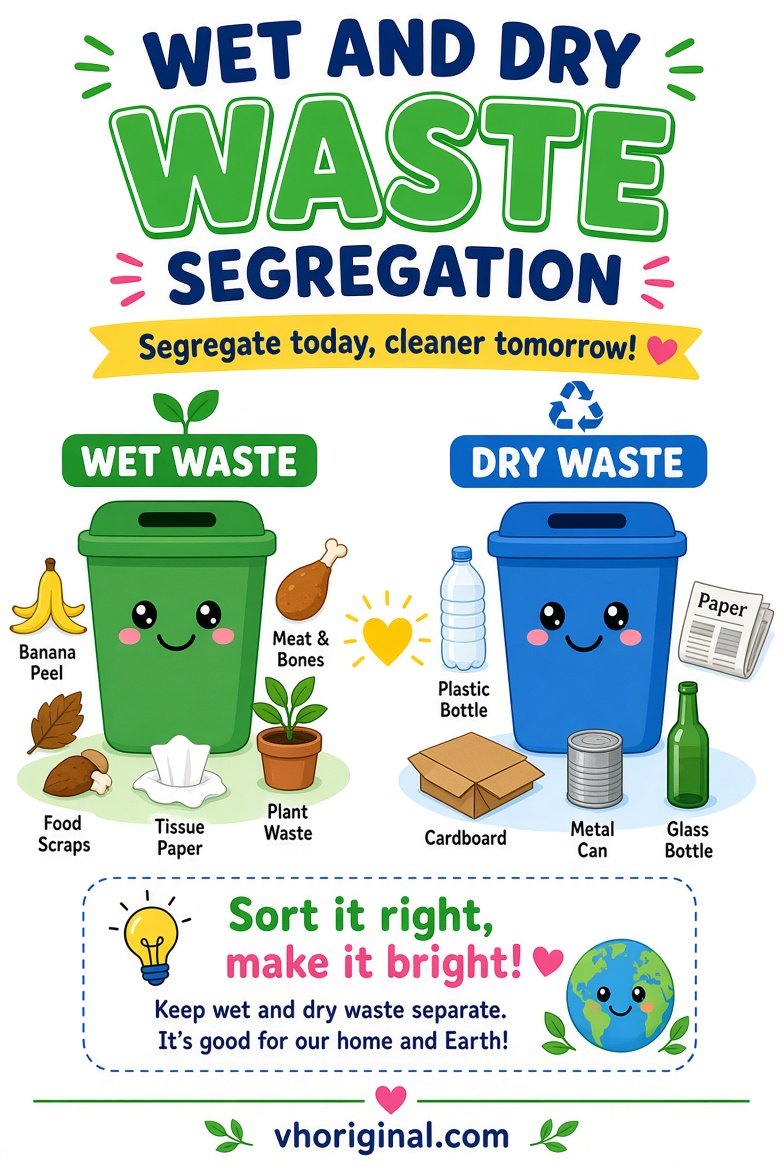
Waste Segregation, Recycling & Composting School Project: 4 Picture Charts
Suggested Classes 4–8 · Environment. Separate wet, dry, sanitary and special-care waste; check local collection instructions. Use clean paper props rather than hazardous waste when demonstrating recycling or composting.
See the full picture gallery, project steps and image options
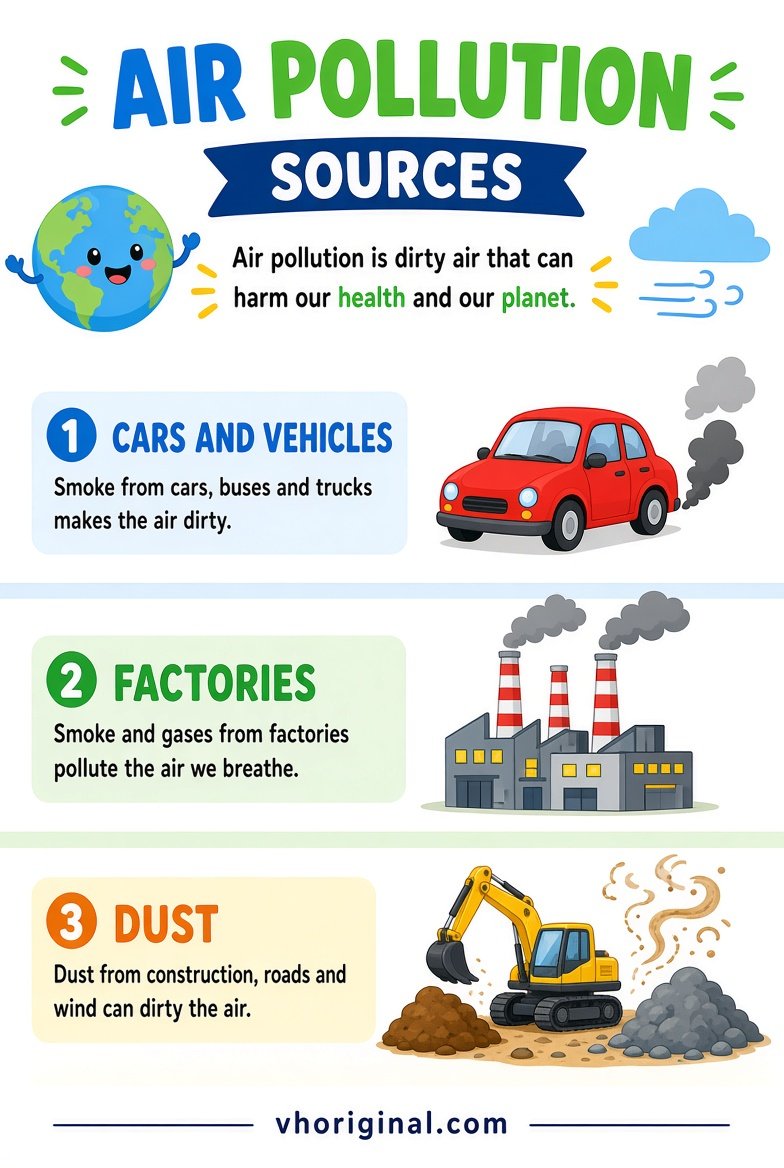
Pollution School Project Charts: Air, Water, Noise & Microplastics Pictures
Suggested Classes 4–9 · Environment. Illustrate causes and prevention of air, water and noise pollution, including microplastics.
See the full picture gallery, project steps and image options
Geography, weather, India map and Earth models
Maps and Earth-science diagrams need clear labels and scale notes. Compare a visual model with a textbook reference before copying boundaries or hazard information.
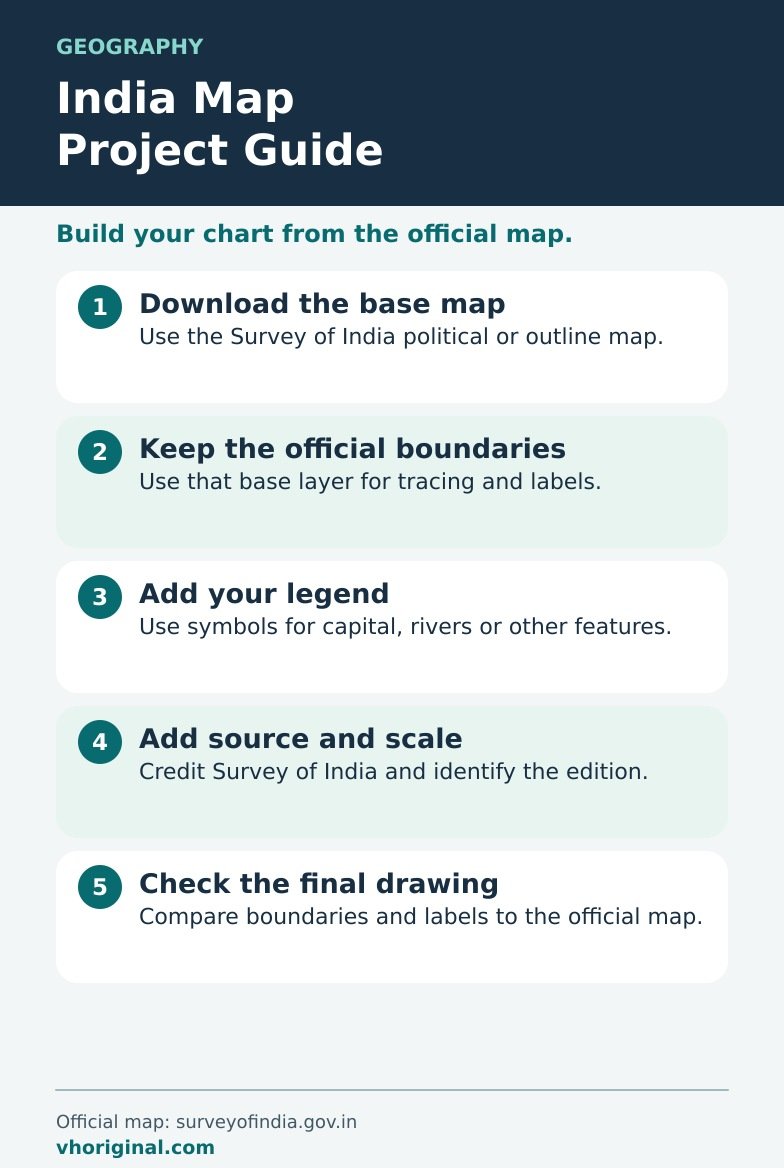
India Map School Project: Physical Features, Relief Map & Monsoon Model Pictures
Suggested Classes 5–10 · Geography. Study India’s physical features and monsoon patterns using corrected, labelled geographic references.
See the full picture gallery, project steps and image options

Plate Tectonics, Earthquake & Tsunami School Project: 3 Models and Diagrams
Suggested Classes 7–12 · Geography. Visualise plate boundaries, earthquake resistance and tsunami processes accurately.
See the full picture gallery, project steps and image options
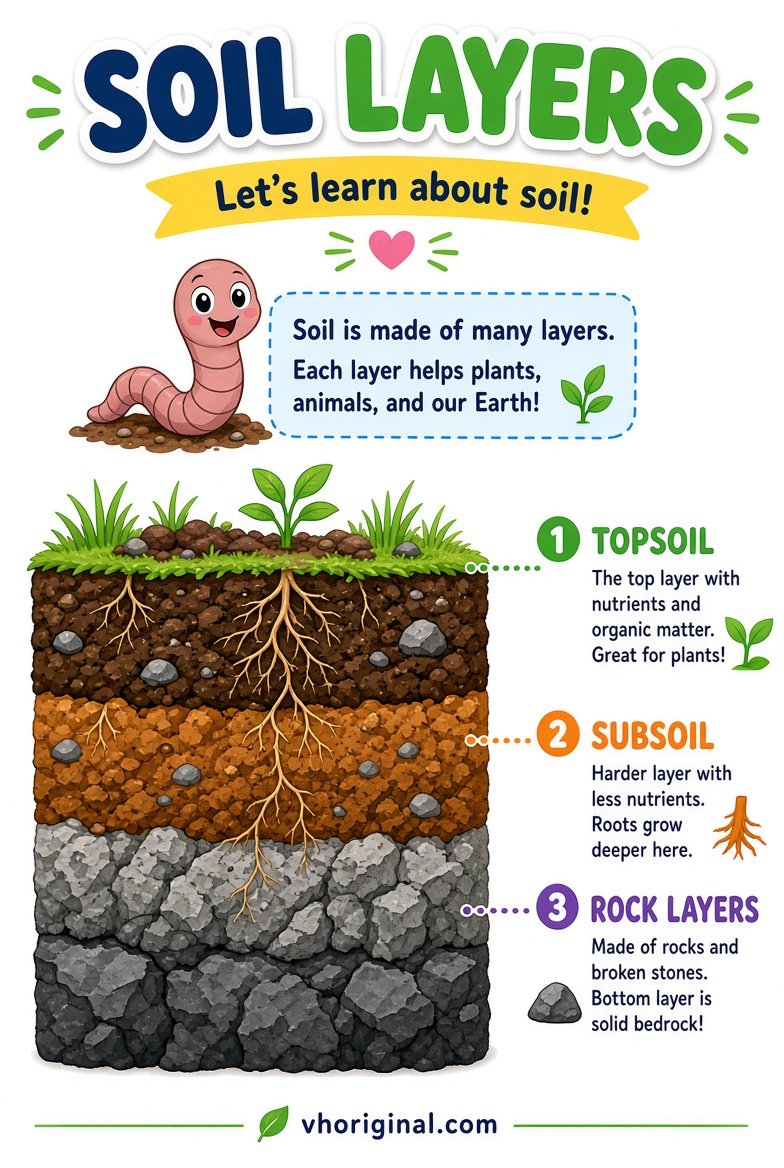
Soil Layers, River Erosion & Flood Prevention: 3 Geography School Models
Suggested Classes 5–9 · Geography. Label soil horizons and compare river erosion, deposition and flood-prevention strategies.
See the full picture gallery, project steps and image options
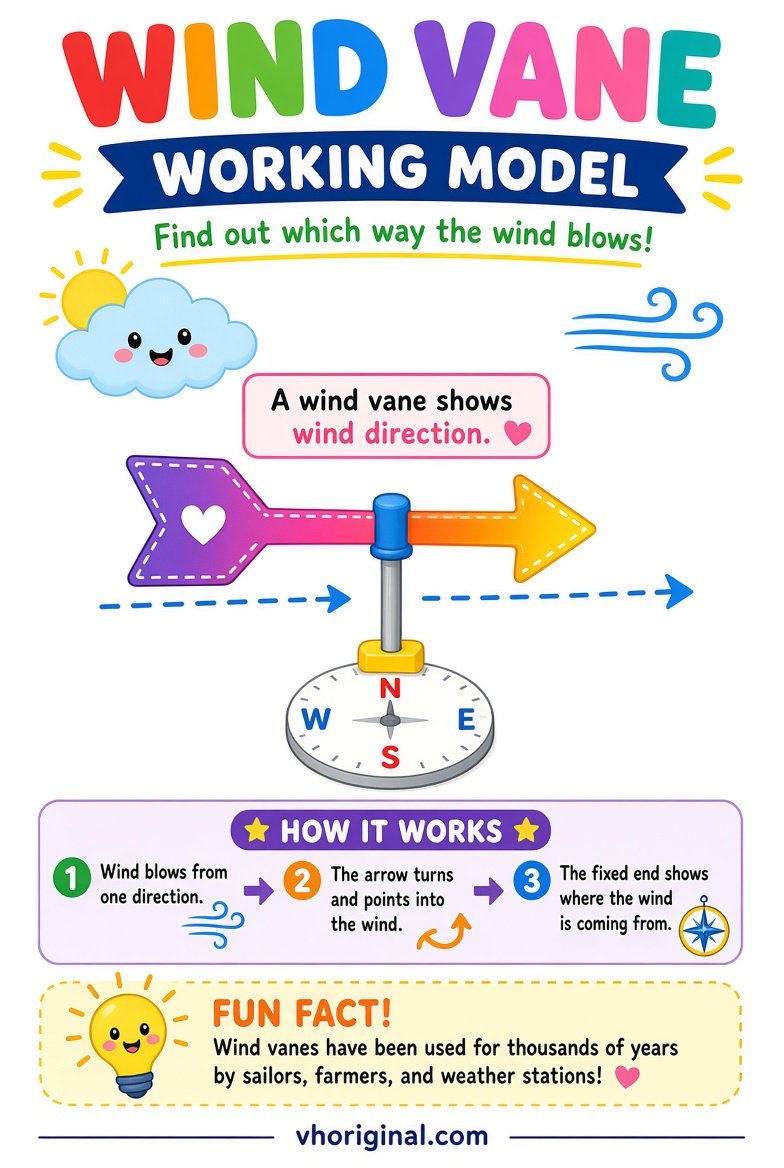
Weather Instruments School Project: Rain Gauge, Wind Vane, Anemometer & 6 Pictures
Suggested Classes 4–8 · Geography. Make simple wind vanes, rain gauges or anemometers and record weather measurements.
See the full picture gallery, project steps and image options
Solar system, Moon phases and space science models
Space projects look impressive, but miniature planets are rarely to scale. Explain which relationships are accurate—such as sequence or the Moon phase cycle—and which are only illustrations.
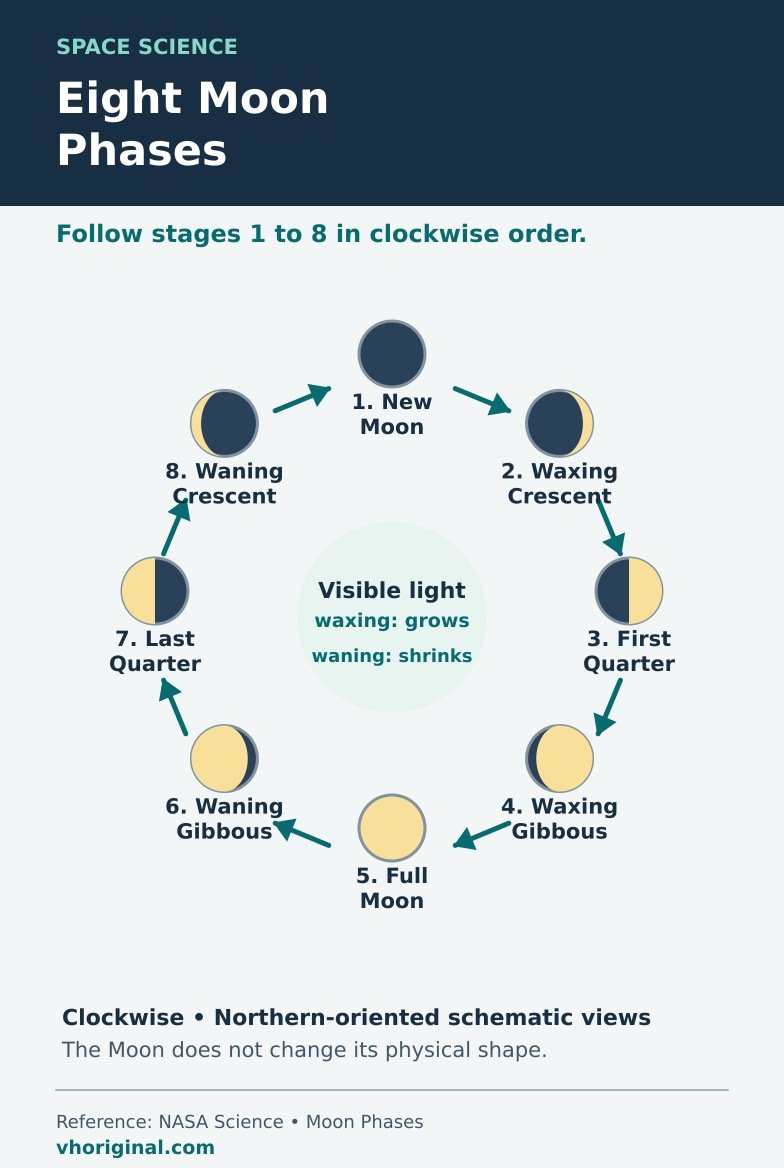
Moon Phases Wheel Model & Solar Lunar Eclipse: 2 School Project Diagrams
Suggested Classes 5–9 · Space. Arrange the eight lunar phases and distinguish solar eclipses from lunar eclipses.
See the full picture gallery, project steps and image options
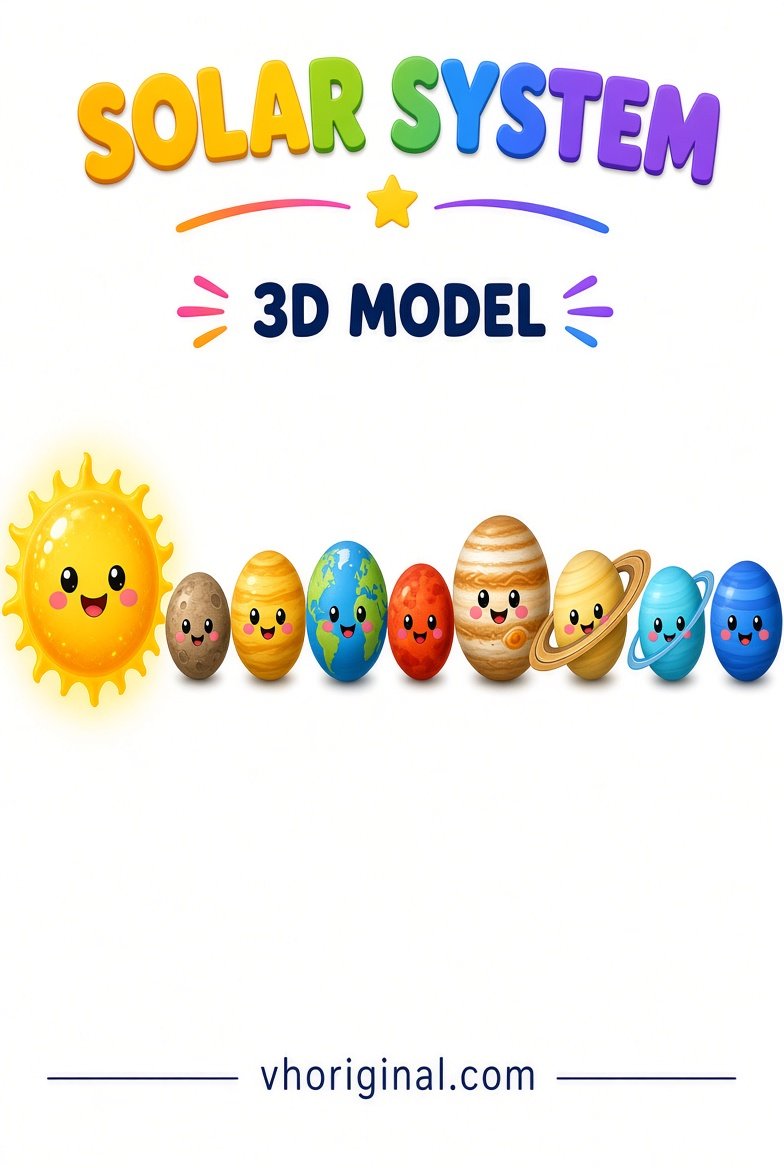
Solar System 3D Model for School Project: 8 Planets, Materials & Easy Steps
Suggested Classes 4–8 · Space. Build an eight-planet solar system model and distinguish orbital order from scale.
See the full picture gallery, project steps and image options
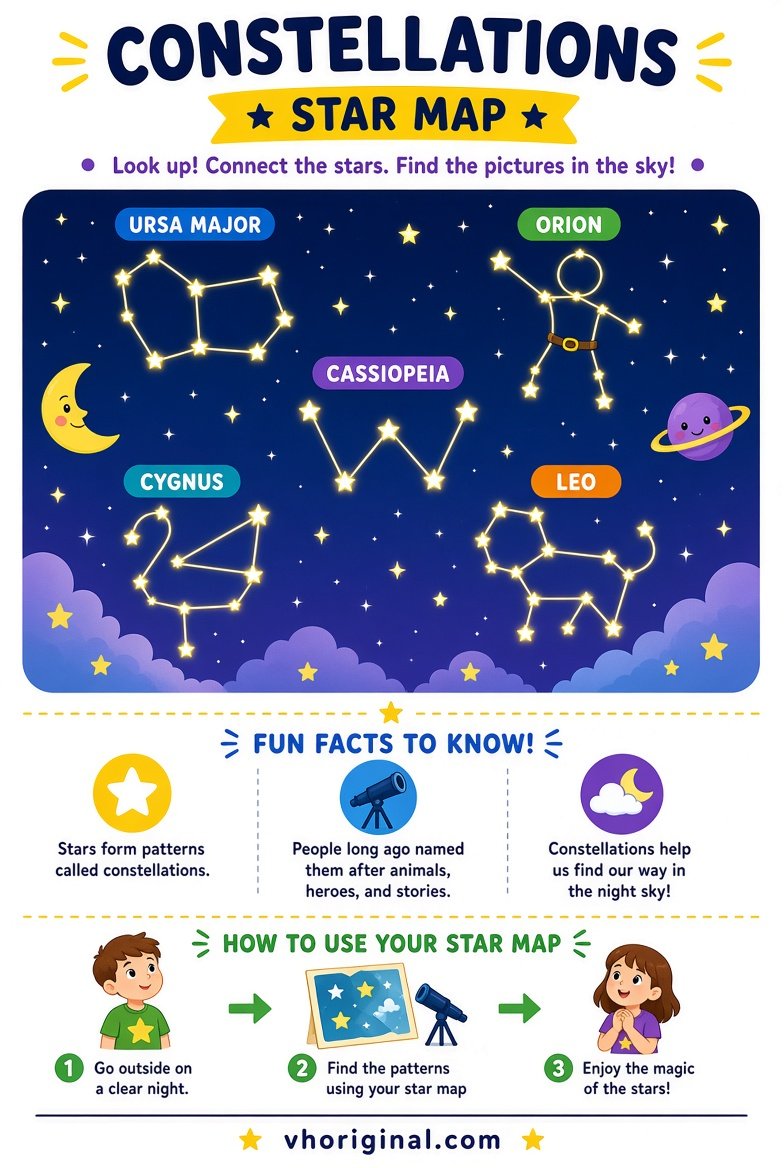
Space Science School Projects: Star Map, Satellite Orbit, Mars Habitat & Gravity Well
Suggested Classes 6–12 · Space. Use constellations, satellite orbits, Mars habitat models and gravity-well diagrams.
See the full picture gallery, project steps and image options
Maths school project models, charts and geometry
A good maths model lets the visitor change a quantity and see the result. Include a worked example, labels and a question students can answer without memorising a script.
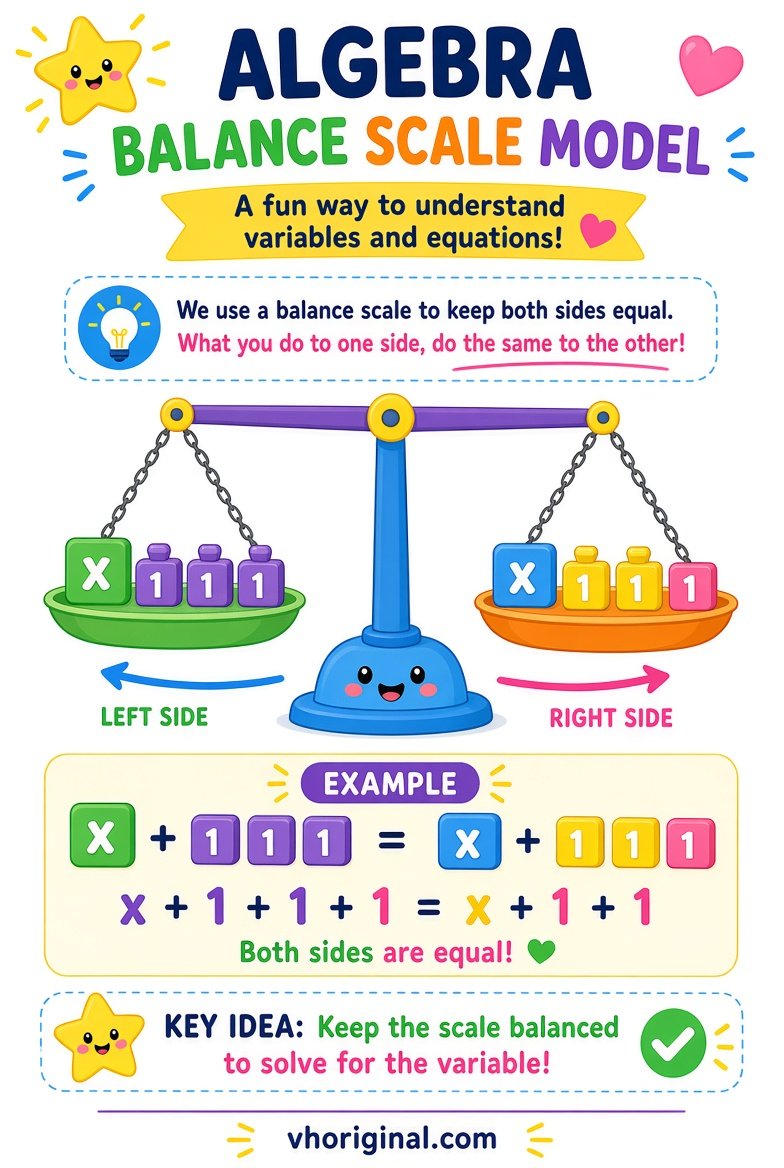
Algebra Balance Scale & Coordinate Grid String Art: 2 Maths School Projects
Suggested Classes 6–10 · Maths. Use a balance-scale analogy to explain equations, then explore coordinate-grid string art.
See the full picture gallery, project steps and image options

Probability Spinner, Pascal Triangle & Fibonacci Spiral: 3 Maths School Projects
Suggested Classes 6–10 · Maths. Compare spinner outcomes with predictions, Pascal’s triangle and patterns in a Fibonacci spiral.
See the full picture gallery, project steps and image options
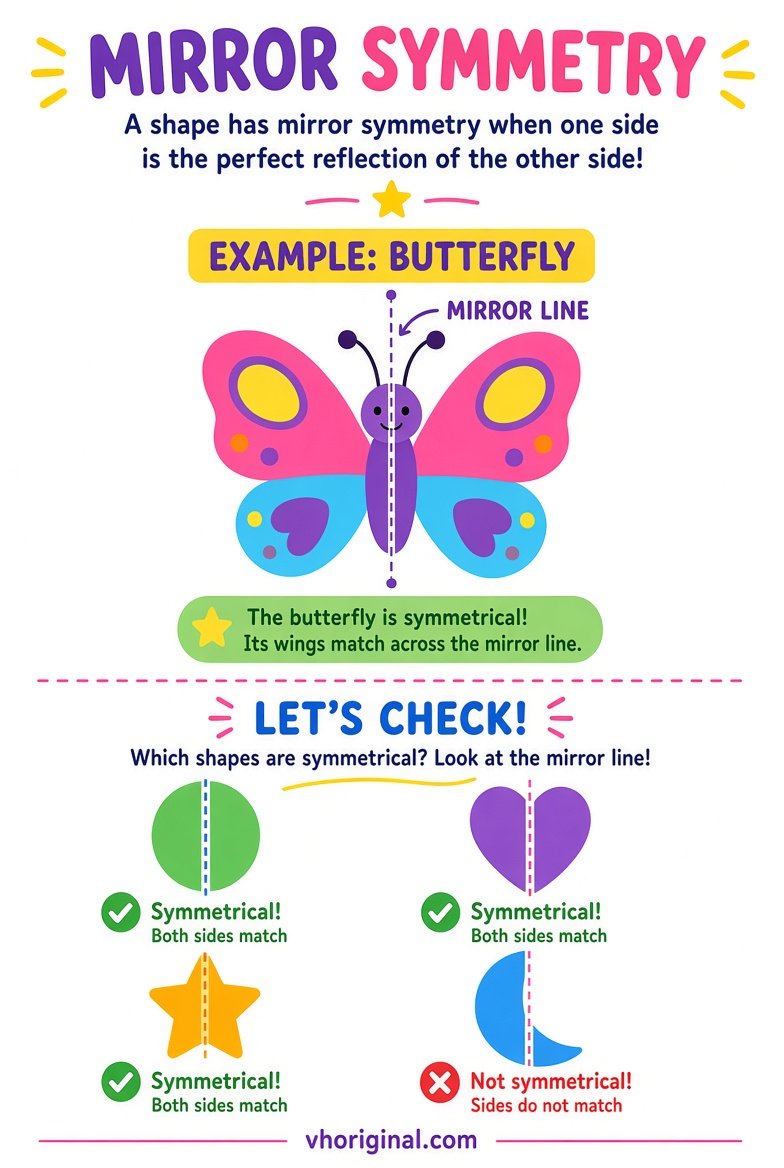
Symmetry, Tangram & Venn Diagram: 3 Maths School Project Pictures
Suggested Classes 3–8 · Maths. Discover mirror symmetry, rearrange tangram pieces and classify overlapping sets with Venn diagrams.
See the full picture gallery, project steps and image options
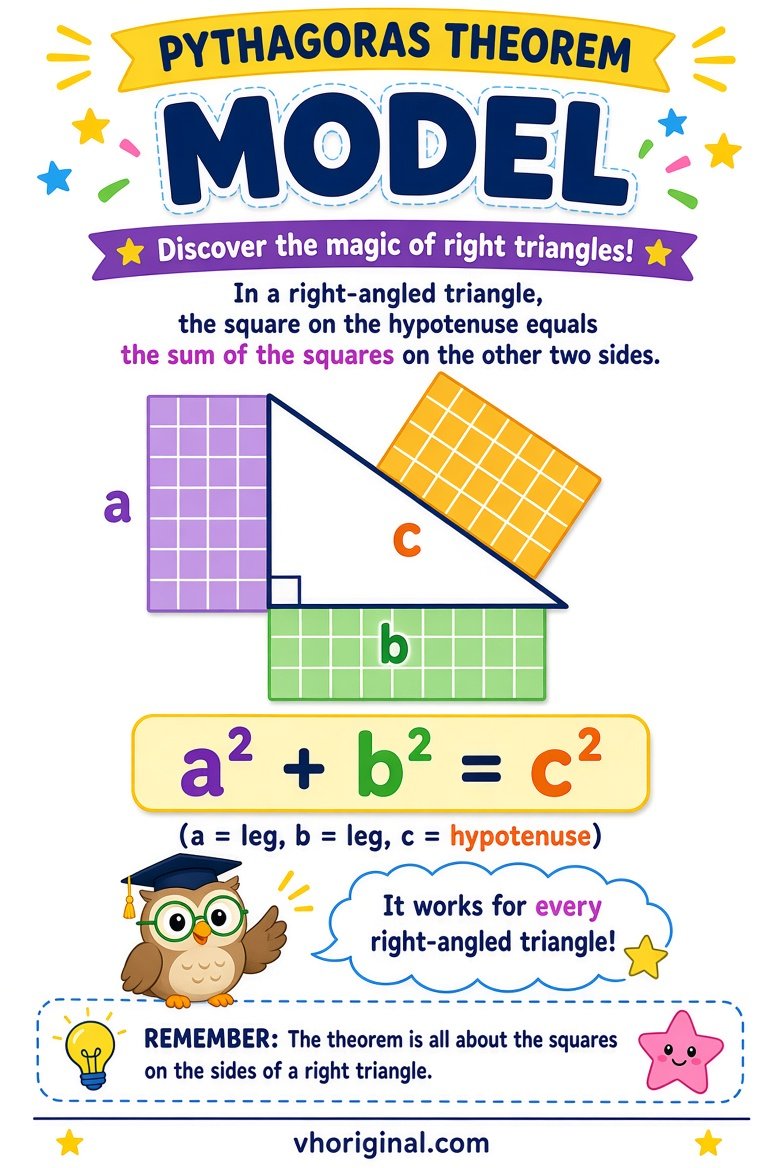
Pythagoras Theorem & 3D Shapes Nets: 3 Maths School Project Models
Suggested Classes 7–10 · Maths. Demonstrate the right-triangle relationship and build accurate nets for three-dimensional shapes.
See the full picture gallery, project steps and image options
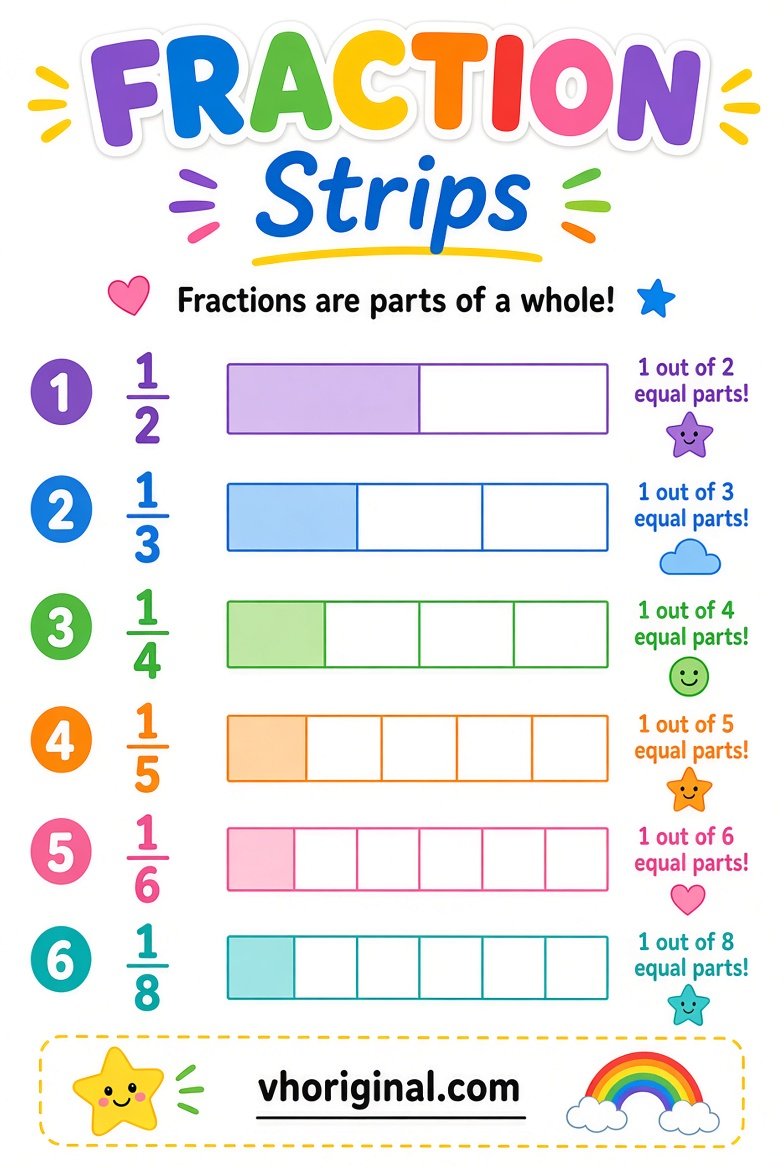
Fraction Wheel & Printable Fraction Strips: 2 Maths School Project Charts
Suggested Classes 3–7 · Maths. Make fraction strips and wheels to compare halves, thirds, quarters and equivalent fractions.
See the full picture gallery, project steps and image options
Physics experiments, circuits and working principles
Separate a diagram of how a device works from a claim that the poster itself is a functioning experiment. Use low-voltage materials and ask a teacher to supervise practical electrical work.

Heat Transfer & Thermal Expansion School Project: 2 Charts and Easy Steps
Suggested Classes 7–10 · Physics. Compare heat transfer by conduction, convection and radiation with thermal-expansion illustrations.
See the full picture gallery, project steps and image options

Liquid Density Tower, Surface Tension & Floating Sinking: 3 Science Projects
Suggested Classes 6–9 · Physics. Build a layered density display and explain surface tension and floating versus sinking.
See the full picture gallery, project steps and image options
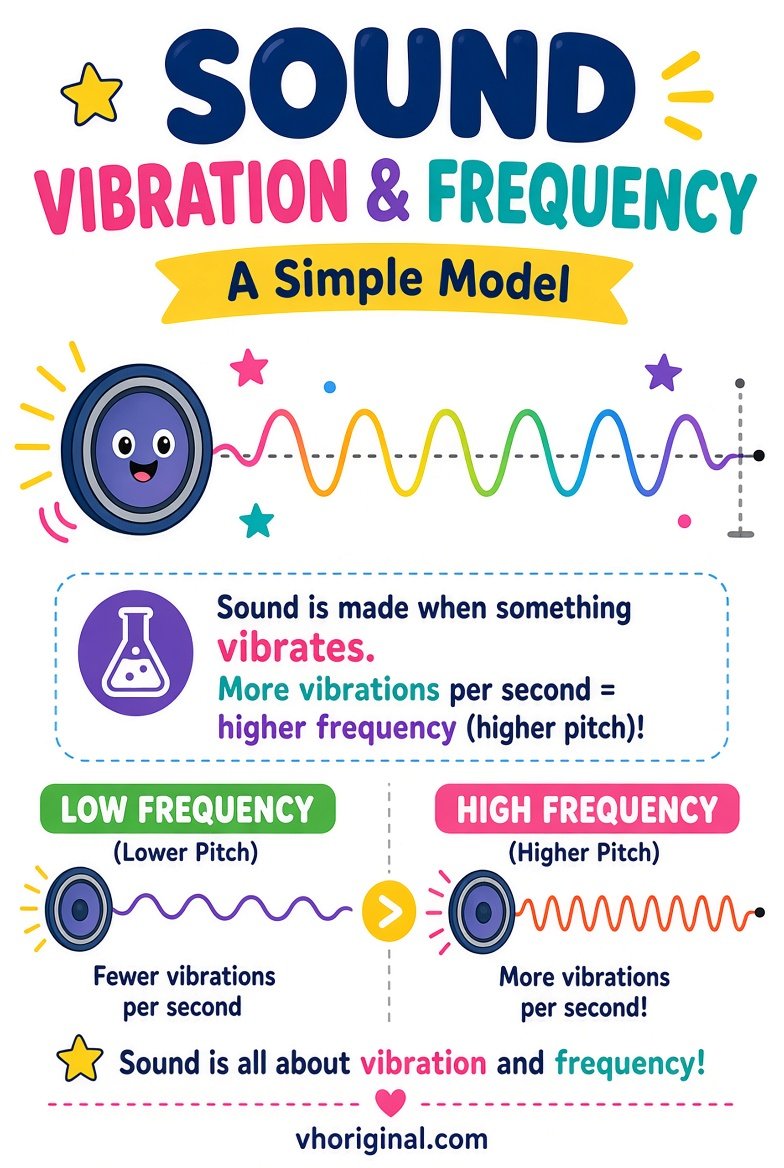
Sound Vibration & Resonance School Project: Frequency and Tuning Fork Diagrams
Suggested Classes 6–10 · Physics. Visualise amplitude, frequency and resonance with a tuning-fork activity.
See the full picture gallery, project steps and image options
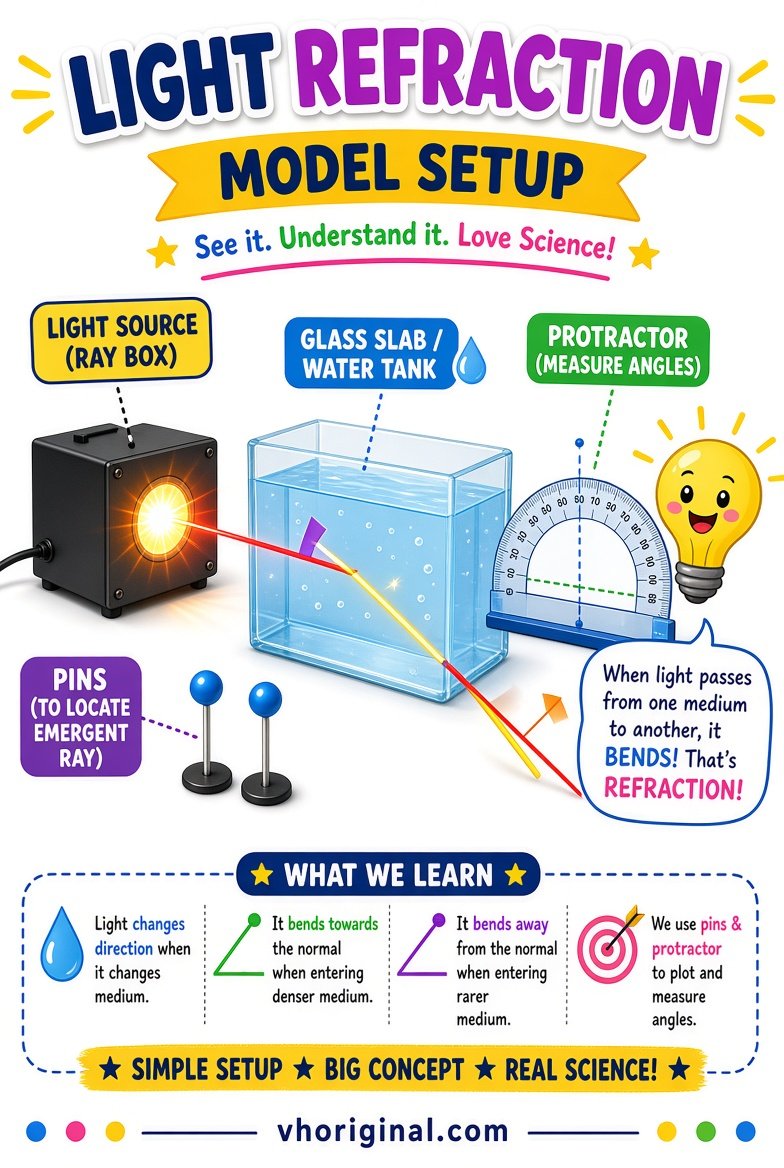
Light Refraction School Project: Ray Diagrams, Observation Chart & Newton Disc
Suggested Classes 7–10 · Physics. Follow refracted rays, record observations and explain the Newton colour disc.
See the full picture gallery, project steps and image options

DC Motor, AC Generator & Transformer: 3 School Project Working Principle Diagrams
Suggested Classes 9–12 · Physics. Compare the operating principles of a DC motor, an AC generator and a transformer.
See the full picture gallery, project steps and image options

Electric Circuit School Project: Series, Parallel & Logic Gates with 4 Charts
Suggested Classes 7–12 · Physics. Read safe low-voltage series and parallel circuits and introductory logic-gate charts.
See the full picture gallery, project steps and image options
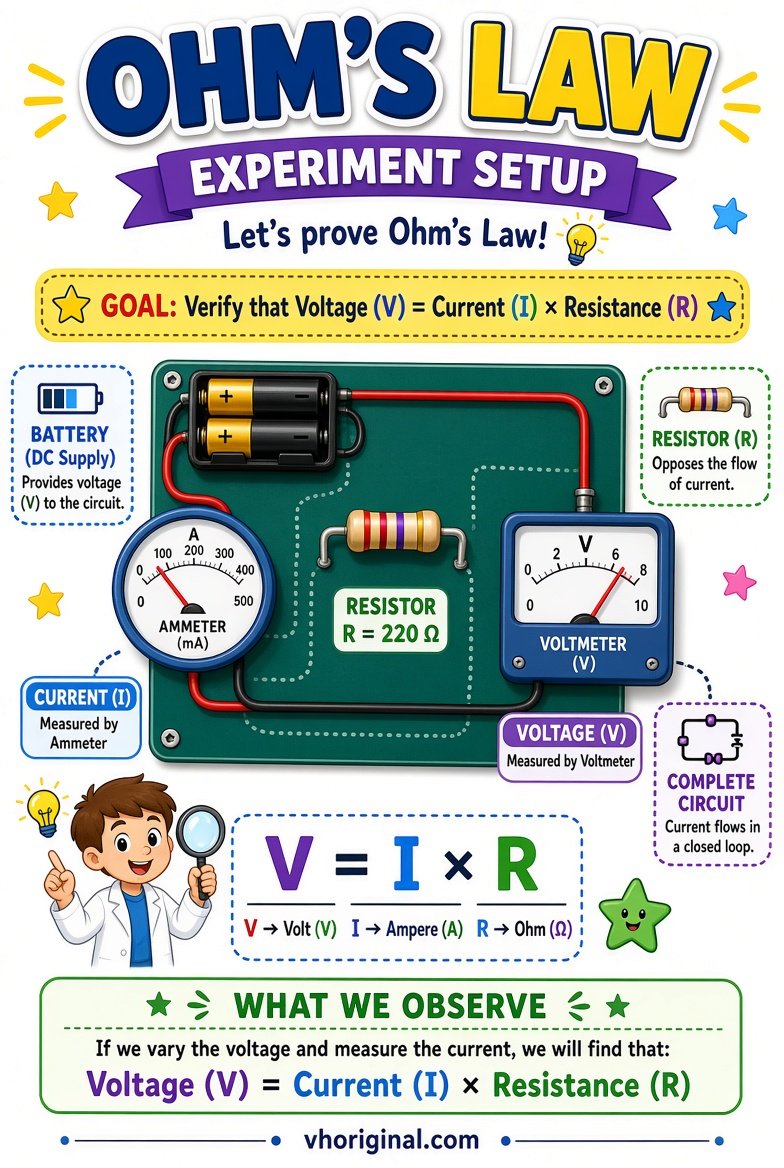
Ohm’s Law Experiment: Circuit Diagram, V–I Graph & 4 School Project Pictures
Suggested Classes 9–12 · Physics. Connect voltage, current and resistance using circuit diagrams, readings and a V–I graph.
See the full picture gallery, project steps and image options
Chemistry school charts and safe practical demonstrations
Charts help learners understand pH, separation and electrochemical processes. Titration, electrolysis and chemical testing require suitable lab equipment, protective measures and teacher supervision.

Electrolysis, Electroplating & Food Adulteration Tests: 3 Chemistry School Posters
Suggested Classes 9–12 · Chemistry. Understand electrolysis and electroplating diagrams; conduct chemical procedures only under trained supervision.
See the full picture gallery, project steps and image options

Titration & Paper Chromatography School Project: 2 Chemistry Diagrams
Suggested Classes 9–12 · Chemistry. Read titration apparatus and paper-chromatography diagrams before supervised laboratory work.
See the full picture gallery, project steps and image options

pH Scale School Project: Acids, Bases & Natural Indicator Experiment Charts
Suggested Classes 6–9 · Chemistry. Compare acids, bases, pH colours and safe examples of natural indicator tests.
See the full picture gallery, project steps and image options
Biology, cells and human body project diagrams
Compare structure and function: what each part does, how different systems connect and which simplified poster features should not be taken as medical diagrams.

Plant vs Animal Cell, Mitosis & Potato Osmosis: 3 Biology School Charts
Suggested Classes 8–12 · Biology. Identify differences between plant and animal cells, then study mitosis and potato osmosis.
See the full picture gallery, project steps and image options

Human Body School Project: Heart, Lungs, Kidney & Reflex Arc — 5 Diagrams
Suggested Classes 7–12 · Biology. Trace blood circulation and study clear labelled diagrams of the lungs, kidney and reflex arc.
See the full picture gallery, project steps and image options
Robotics, hydraulics, bridges and mechanical working models
When demonstrating movement, explain the energy source and the physical mechanism. Test a model on a table before presenting it and keep moving parts away from little fingers.
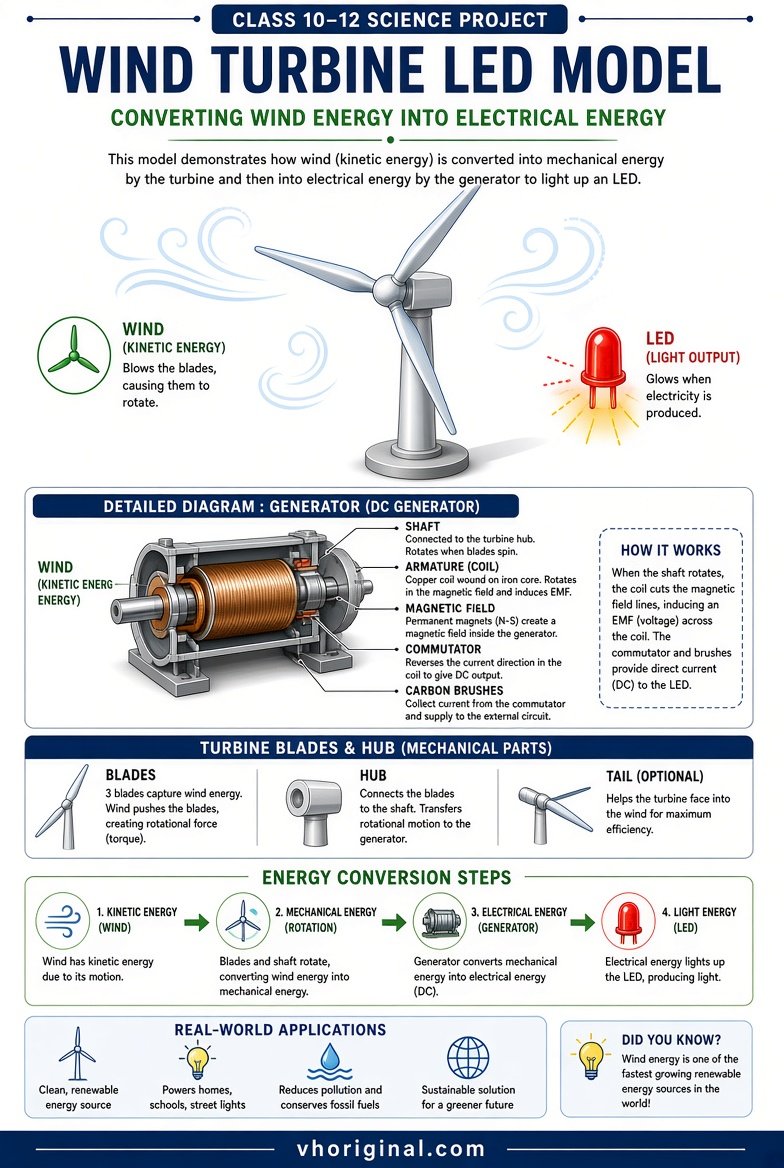
Wind Turbine LED Working Model for School Project: 6 Pictures, Circuit & Steps
Suggested Classes 7–10 · Engineering. Understand how a small turbine can demonstrate energy conversion with a low-voltage LED.
See the full picture gallery, project steps and image options
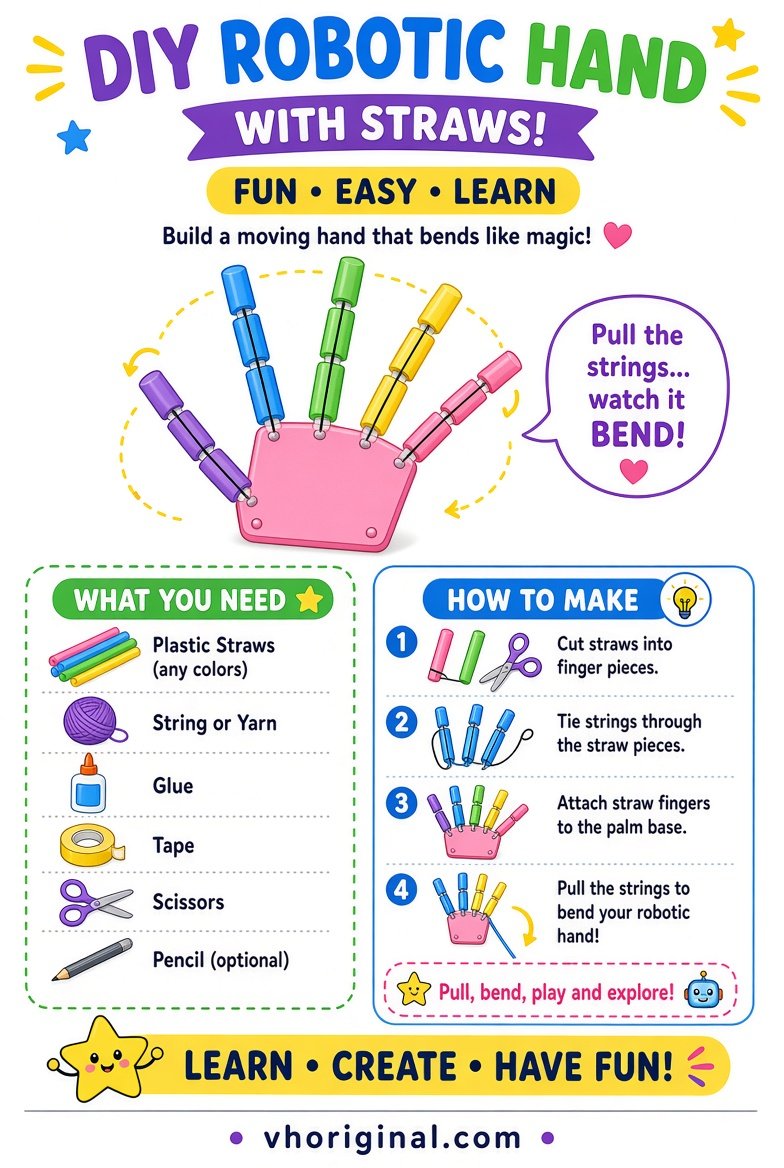
Robotics School Projects: Straw Robotic Hand, Electromagnet Crane & LDR Light
Suggested Classes 7–12 · Engineering. Model a robotic hand with strings, then learn electromagnets and light-sensor streetlights.
See the full picture gallery, project steps and image options
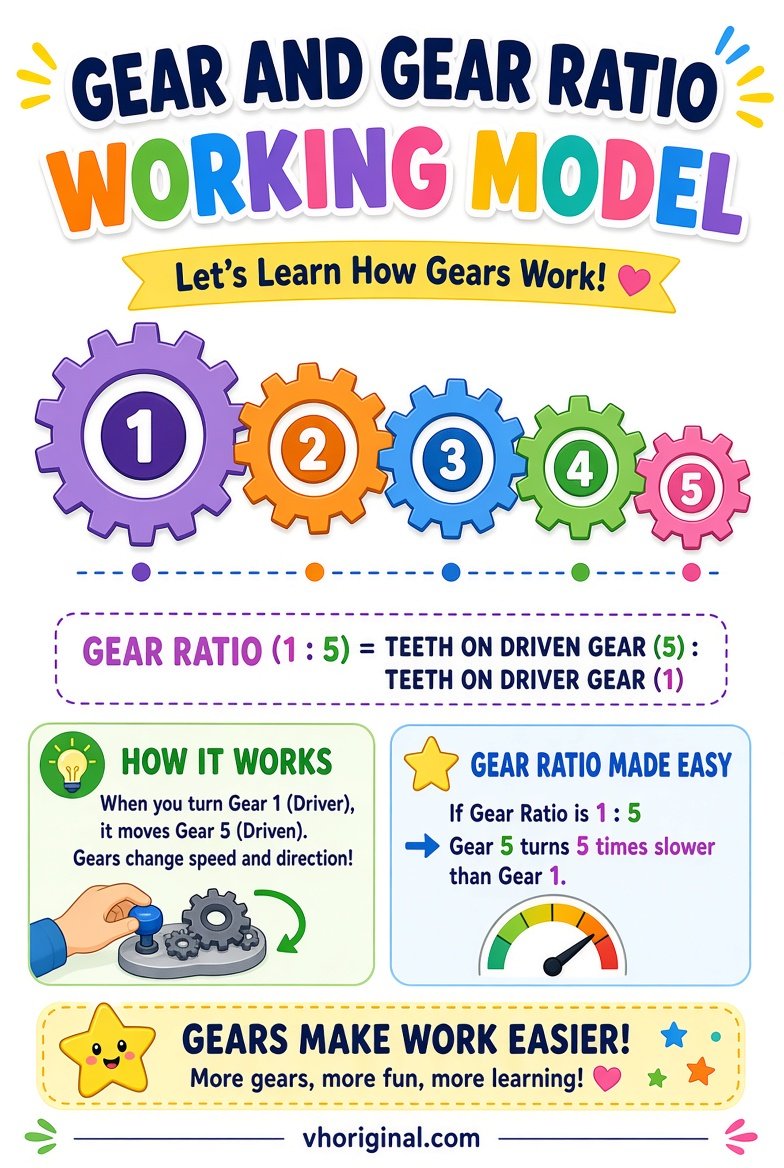
Mechanical Working Models: Gear Ratio, Cam Follower, Crank Slider & Water Wheel
Suggested Classes 7–12 · Engineering. Compare gears, cams, crank sliders and water-wheel motion in mechanical demonstrations.
See the full picture gallery, project steps and image options
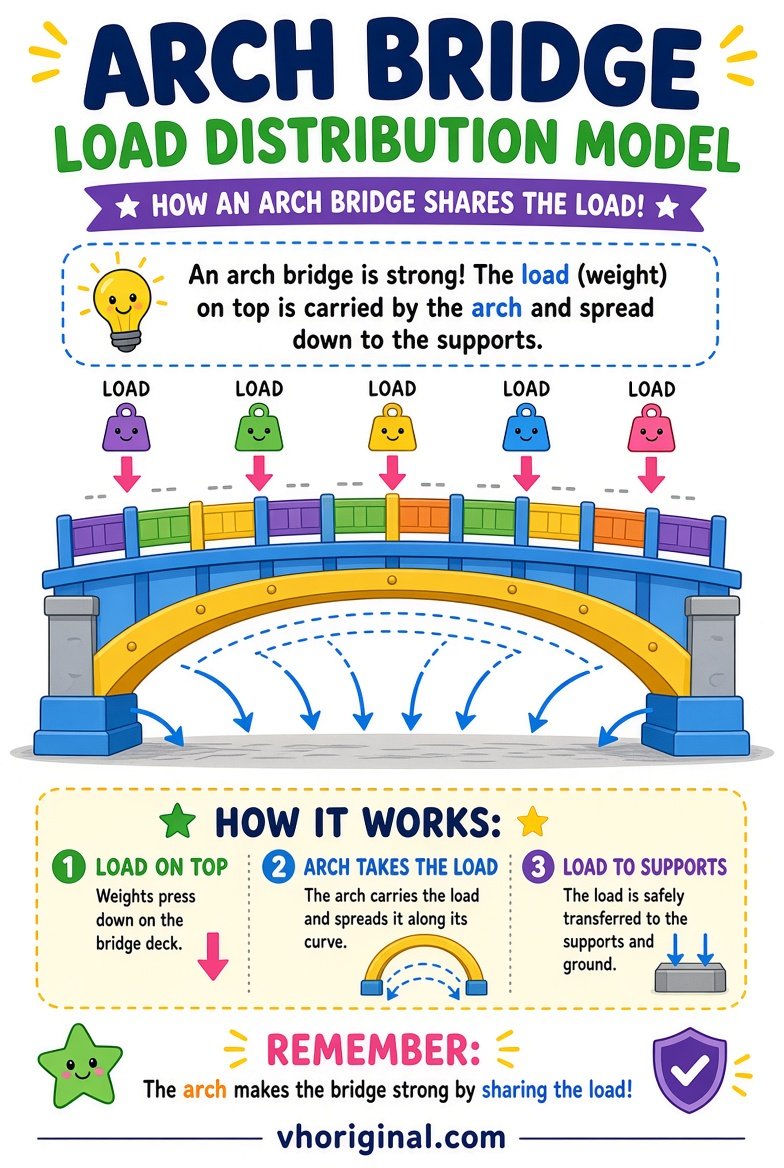
Arch vs Truss Bridge School Project: Load Distribution & Strength Models
Suggested Classes 5–10 · Engineering. Build bridge shapes and compare arch and truss structures with controlled loads.
See the full picture gallery, project steps and image options
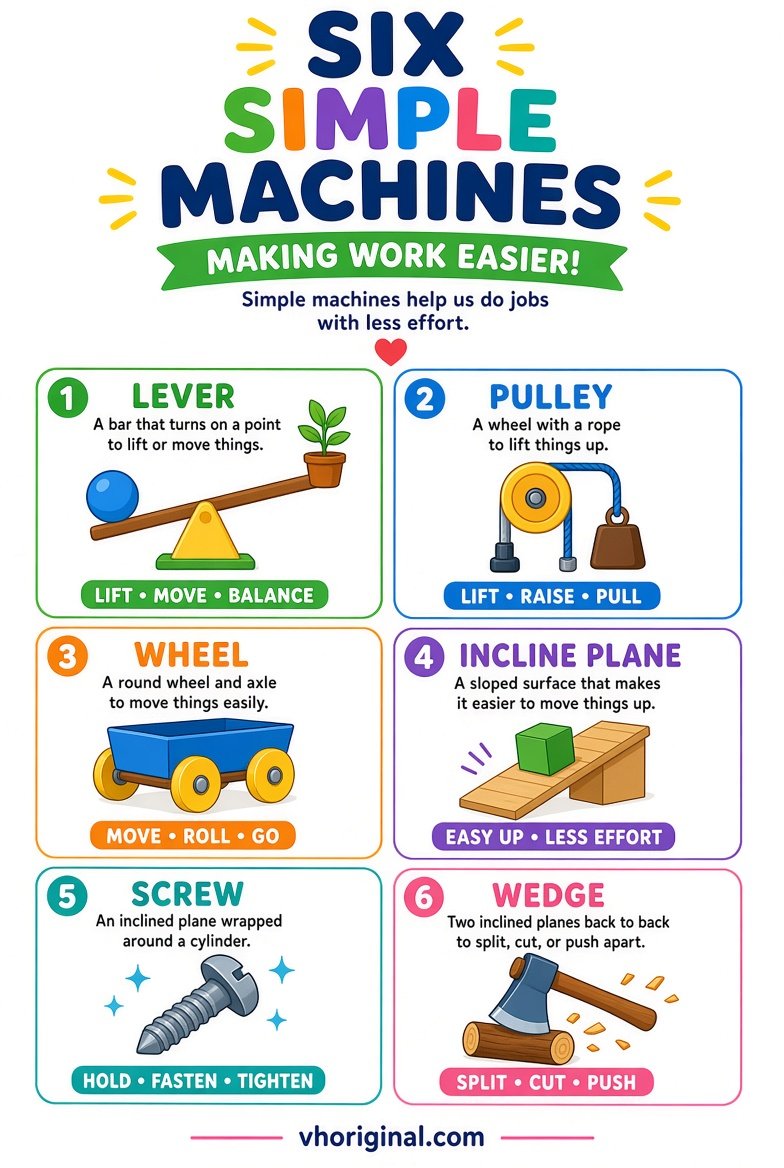
Simple Machines School Project: 6 Types, 3 Lever Classes & Pulley Model
Suggested Classes 4–8 · Engineering. Identify the six simple machines, lever classes and pulleys through everyday examples.
See the full picture gallery, project steps and image options

Hydraulic Bridge Working Model for School Project: 6 Pictures & Step-by-Step
Suggested Classes 6–10 · Engineering. Explore how linked syringes transfer pressure in a small bridge model without mains power.
See the full picture gallery, project steps and image options
History and ancient civilisation working models
Treat an archaeological reconstruction as a model rather than a photograph of the past. Show what evidence explains the design and where modern materials are just visual substitutes.
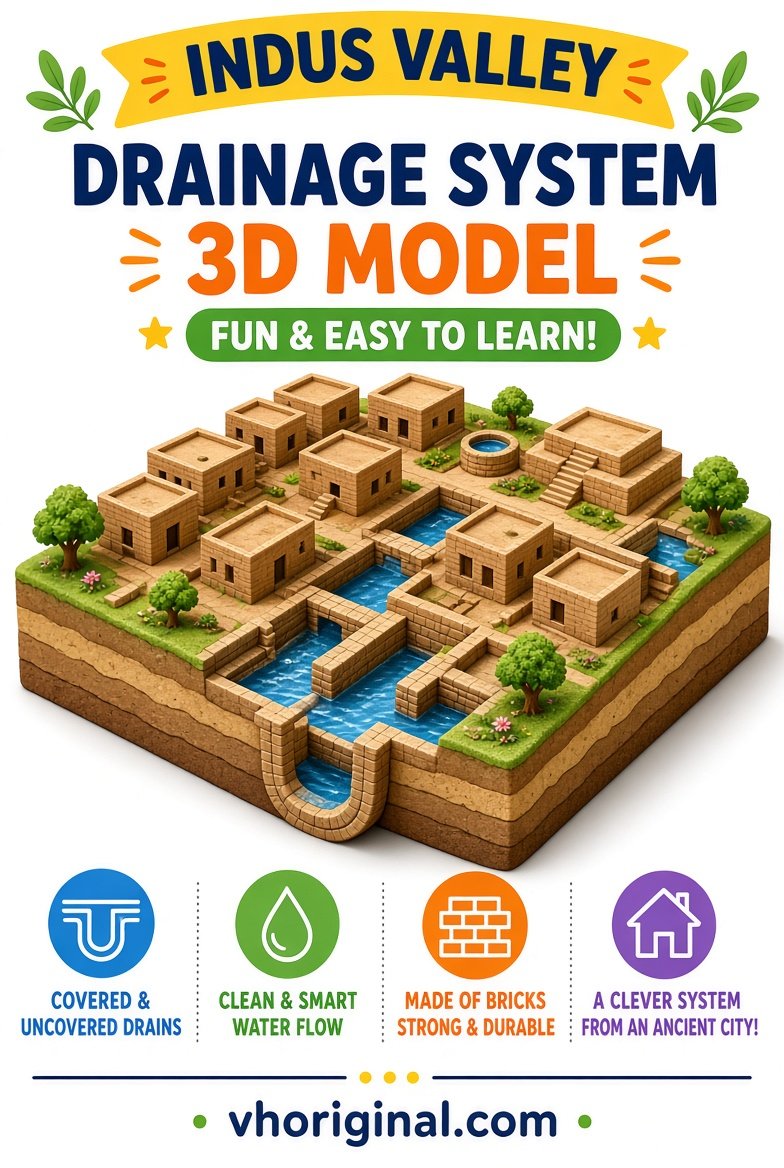
Indus Valley Drainage System 3D Model: Harappan Town Planning School Project
Suggested Classes 6–10 · History. Explore planned streets, covered drains and the engineering achievements of Harappan settlements.
See the full picture gallery, project steps and image options
Social science, civics and citizenship projects
Voting and constitutional-rights charts should communicate verifiable civic concepts without encouraging a particular political choice. Keep educational demonstrations non-partisan.
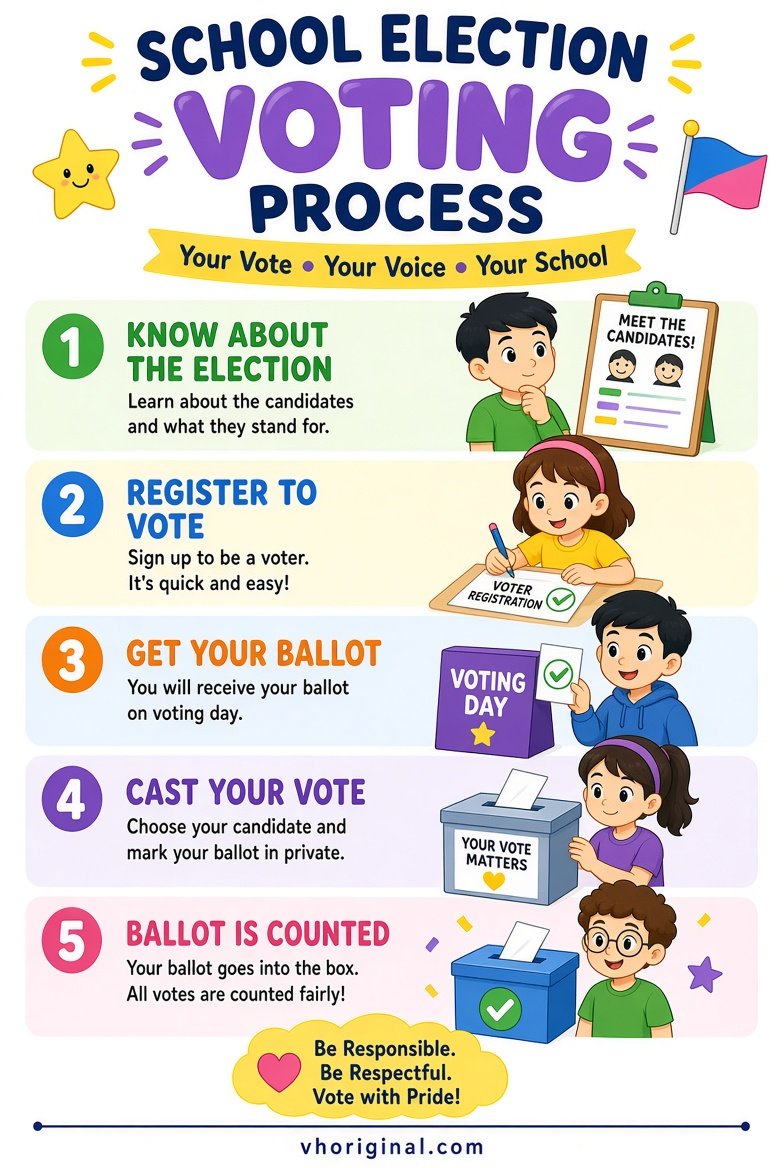
School Election Voting Process & Indian Fundamental Rights: 3 Civics Charts
Suggested Classes 6–10 · Civics. Show ballots, voting steps and fundamental rights as two distinct civic-learning activities.
See the full picture gallery, project steps and image options
How to choose a school exhibition project that explains itself
First read the teacher’s instructions. Confirm whether a labelled chart, a 3D static display, a working model or an investigative report is required. Choose one main idea rather than combining too many unrelated mechanisms. Next, write a one-sentence question such as “How do different materials filter visible particles?” or “What changes when a circuit is wired in parallel?” Your poster should help answer that question, not merely decorate the table.
When preparing a science working model, demonstrate only what you can reliably repeat. Practise the explanation: name the parts, show the process, describe the observation, point out one limitation and answer an obvious follow-up. Photograph the setup before carrying it to school. Keep small loose parts, hot surfaces, chemicals and electrical connections under suitable adult supervision.
School project charts, diagrams and image downloads
The thumbnails above come from the existing published Vista Hub project articles. Open a project’s guide to see its individual posters in context. Where the original page offers a full-size view or image-download link, use that page’s own method rather than assuming every thumbnail is a printable PDF. The educational illustrations are reference aids; labels, scale, scientific accuracy and school submission requirements should still be checked by students and teachers.
For image search queries such as school project images, science model picture, school project chart drawing, easy working model photo and maths project model with pictures, browse the relevant subject above. A close-up image is not a substitute for materials, assembly steps or understanding what the example shows.
School project FAQs
Which school project is easiest for Classes 1–5?
Five senses, plant parts, healthy-habits charts and seed germination are good starting points. Children can explain them using objects they already recognise.
What are useful science exhibition projects for Classes 6–8?
Try a rain gauge, a safe bottle-filter demonstration, Moon phases, a simple bridge structure or a fraction model. Pick one whose results you can explain.
What works well for Classes 9–12?
Choose a curriculum-relevant question such as Ohm’s law, human biology, pH indicators or an energy-conversion model. Graphs and observations help more than elaborate decoration.
Are all pictures on this page downloadable?
Each linked project article has its own image-view and download options. Check that page for the available file and conditions; the thumbnail in this directory is for navigation.
Can I drink water from the school filtration model?
No. A sand-and-gravel classroom filter does not establish that water is microbiologically safe to drink.
Can I copy a model exactly for my assignment?
Use the diagrams as learning references, but follow your school’s originality rules. Understand the science, cite relevant sources when asked, and explain any changes you make.
Bottom line: A useful school project is clear, accurate and age-appropriate. Choose a topic above, open its picture guide, gather safe materials and practise explaining the principle in your own words. For projects involving chemicals, mains electricity or hazardous tools, teacher supervision is essential.







Share Your Opinion
Comments are closed on this post.