 Vista
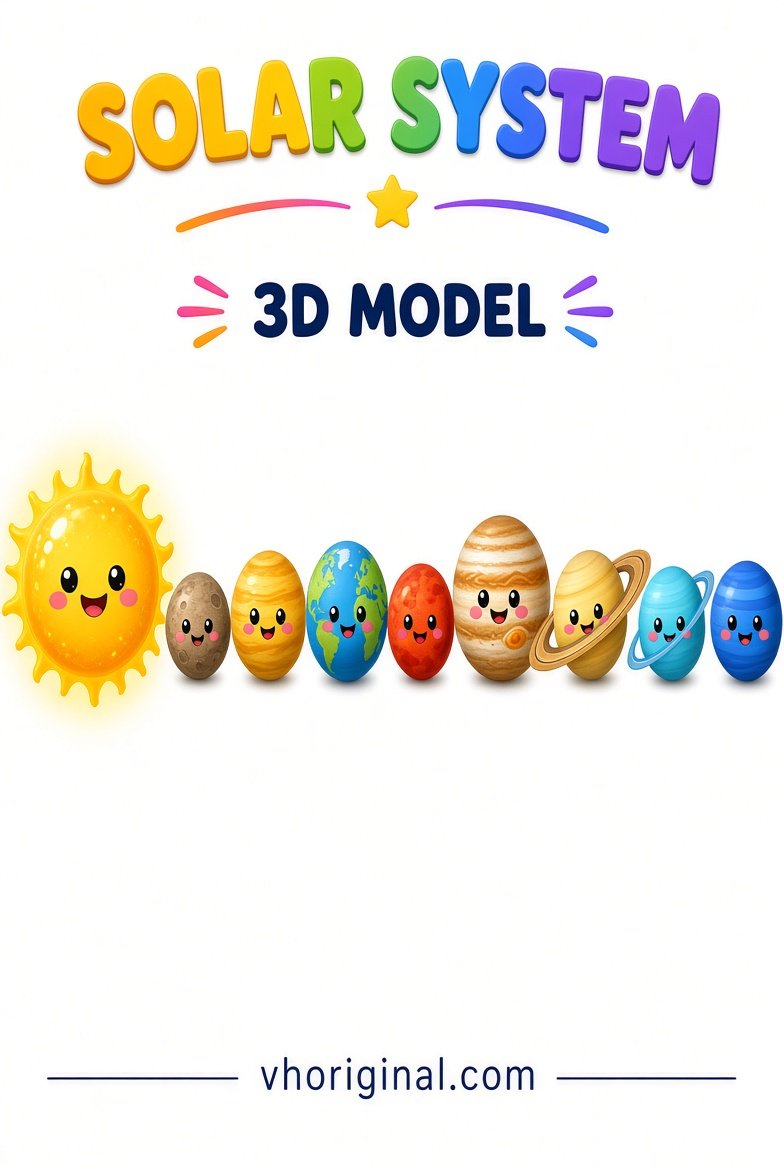
Need a solar system 3D model for a school project? This guide explains how to build a classroom display featuring the Sun and eight planets, using cardboard, lightweight paper balls and easy labels. Students in roughly Classes 3–8 can follow the picture and prepare a portable science project without motors or hot lamps. The correct order from the Sun is Mercury, Venus, Earth, Mars, Jupiter, Saturn, Uranus and Neptune. Pluto still belongs to the solar system but is classified as a dwarf planet, not one of the eight major planets. Real planetary sizes and distances cannot both be represented accurately on a small board, so label the model ‘Not to Scale’.
Correct order of the eight planets
Mercury is closest to the Sun, followed by Venus, Earth and Mars. Jupiter, Saturn, Uranus and Neptune follow farther outward. Jupiter is the largest planet in the solar system. Saturn is especially recognisable for its broad ring system, although other giant planets also have rings. Pluto is classified as a dwarf planet under the International Astronomical Union definition. A school model can display it separately if the teacher wants to discuss dwarf planets; it should not be labelled the ninth major planet. Write each planet name in a large font and use a clear legend when colour-coding.
Picture: Solar System 3D Model Reference
The poster shows one approach to arranging an educational set of planets on a base. Its proportions and positions are illustrative. A real solar system at consistent scale would require huge differences in size and separation, making it impractical on most school desks. If Jupiter is shown only slightly larger than Earth or the Sun fits beside a small orbit, add ‘Not to Scale’. Planet colours are also simplified for easy recognition. Use the picture as a build reference, not proof of accurate astronomical distances. It is better to get the names and order right than to copy every decorative detail.
Materials for a cheap school model
Prepare strong cardboard for the base, reused lightweight paper balls or suitable foam spheres, safe glue, colour paper, pencil, ruler and water-based paints if available. Make Saturn’s rings from a paper circle. Avoid heavy objects hanging over a display board or sharp exposed wire supports. An adult should handle any cutter or hot-glue tool if the class permits it. For younger pupils, wrapping paper balls in coloured sheets may be easier than painting. Let all pieces dry before attachment. A stable model is more useful for an exhibition than a tall structure that breaks during transport.
Step-by-step: build the base and planets
Choose a base large enough for readable names. Mark a central place for the Sun and draw simple orbit paths lightly in pencil. Prepare different-size balls for the planets and place them in order. Glue each object to its intended position without blocking the label. Make Saturn’s rings from lightweight card and add a separate title for the whole model. Use arrows only to indicate the intended orbit direction, not to suggest that all planets are permanently aligned. Write ‘Solar System — 8 Planets’ and ‘Not to Scale’. Once the glue dries, move the board carefully to test stability.
Inner planets versus outer planets
Mercury, Venus, Earth and Mars are the inner rocky planets. Jupiter and Saturn are gas giants, while Uranus and Neptune are commonly called ice giants. The phrase ‘ice giant’ refers to planetary composition and structure, not to an ordinary solid ball of ice like one from a freezer. Each planet has distinctive characteristics, atmosphere and orbital period. Students can put a small bracket around the four inner planets to distinguish them from the giant planets. Do not invent travel times or distances for the poster without checking authoritative data. A few correct comparisons are enough.
Presentation and viva questions
A student can introduce the model: ‘This shows the Sun and the eight planets of our solar system.’ Point to the first planet, Mercury, and the farthest major planet, Neptune. A teacher may ask which planet is largest; answer Jupiter. They may ask why Pluto is absent; explain the dwarf-planet classification. Other questions include why planets stay in orbit, why Saturn has rings and whether all planets move at the same speed. Keep the explanations simple and accurate for the student’s class level. An attractive model cannot replace the child’s understanding of what it shows.
Common mistakes and safe handling
Do not reverse Uranus and Neptune or place Earth before Venus. Do not draw every orbit as a tight row if the student then claims the real planets stay aligned. Check that the poster labels are not misspelt. Avoid heating plastic or installing hot bulbs to represent the Sun. The Sun can be a yellow or orange paper sphere without any electricity. Make the base stable before carrying the model. When a teacher requests only a 2D drawing, use the site’s separate solar system drawing guide rather than presenting a 3D build as a required replacement.
Download the poster and final checklist
Tap the full-size picture to inspect its names and arrangement; use Save Image in your browser if needed. Before submitting, count eight planets, read each label and point out the Sun. Make sure no glue or supports hide the names. Check that Saturn’s ring shape is secure and that all balls are fixed firmly. Ask the child to explain what ‘Not to Scale’ means. The final result should be a portable display that explains planetary order and basic categories, not a claim to reproduce the entire solar system with realistic dimensions.
Frequently asked questions
How many major planets are in the solar system?
Eight, from Mercury to Neptune; Pluto is a dwarf planet.
Does a school 3D model have to be to scale?
No. Label the display clearly as Not to Scale.
Which is the largest planet?
Jupiter is the largest planet in the solar system.
Do I need a motor or light bulb?
No. A safe, stationary cardboard model is enough for a school assignment.
Conclusion and references
A clear eight-planet 3D model teaches planetary order and the limits of classroom scale without requiring expensive or unsafe equipment.
Related projects: Solar System Drawing Guide · Chandrayaan-3 School Model
Sources: NASA — Solar System Planets; NASA — Pluto.
Related project: constellation and satellite orbit models






Share Your Opinion
Comments are closed on this post.