 Vista
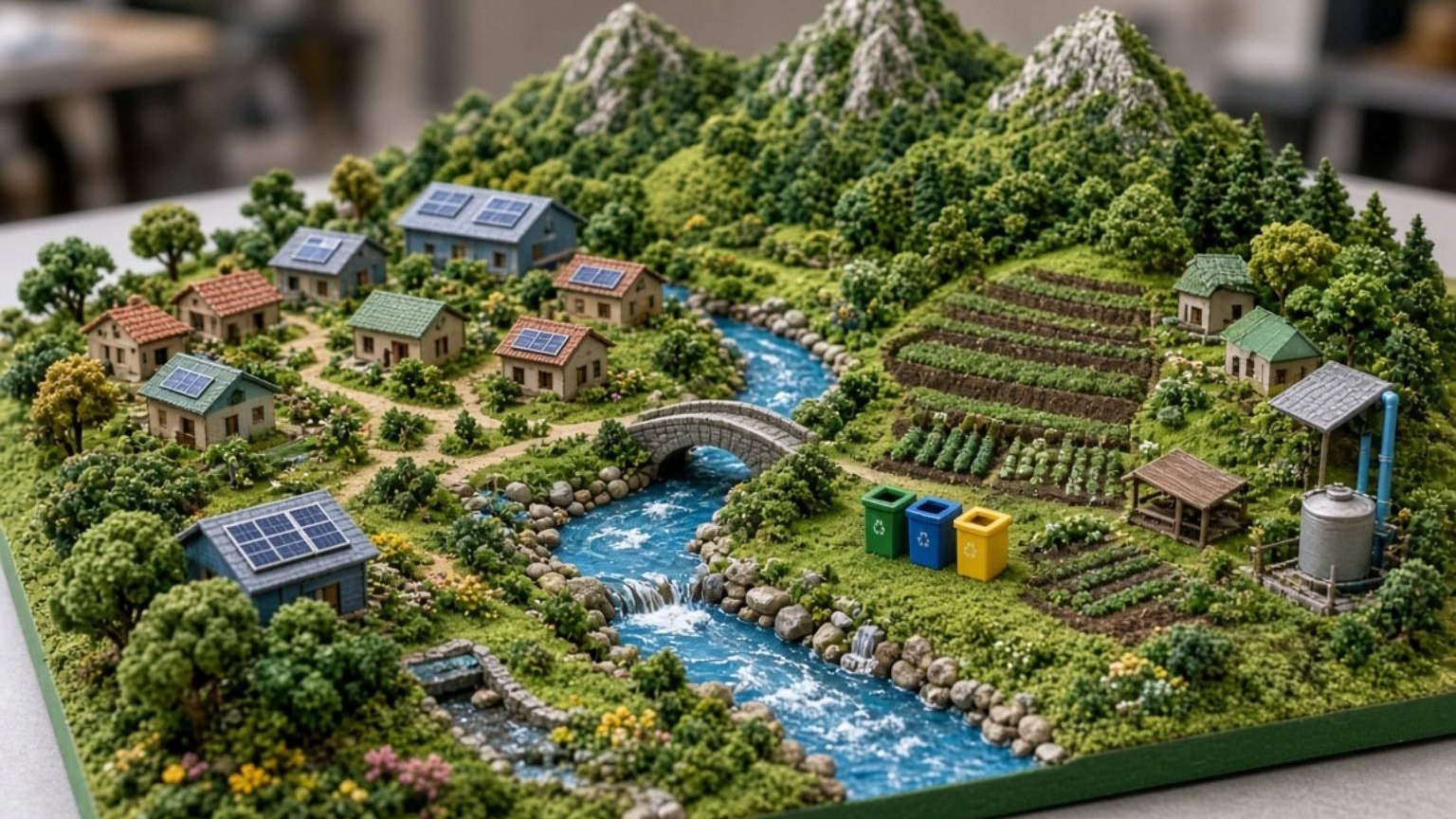
Planning a waste segregation school project with pictures? This page combines four related educational charts: wet and dry waste sorting, plastic recycling symbols, the composting cycle, and a vermicompost working model. They make a useful environmental science display for roughly Classes 4–10, with full-size images that can be viewed or saved. The important distinction is that separating waste, recycling selected materials and converting organic scraps into compost are different activities. Students should also know that plastic identification numbers do not guarantee local recycling. Use the posters to learn accurate concepts, check local rules and create a safe, readable A4 chart or exhibition board.
Waste segregation versus recycling versus composting
Waste segregation means sorting discarded materials at their source, before they get mixed together. Recycling means processing suitable collected materials into useful new resources. Composting is the controlled breakdown of suitable organic matter into a soil amendment. India’s Solid Waste Management Rules, 2026 describe four streams: wet, dry, sanitary and special-care waste. A classroom picture showing only two bins may help explain basic sorting, but it should not be presented as the entire current system. Ask students what happens after each stream is collected, and remember that local municipal instructions can affect how particular items should be handed over. These processes are related, not interchangeable.
Picture 1: Wet and Dry Waste Segregation
Fruit peels, vegetable scraps and some food leftovers are familiar wet-waste examples. Clean paper, metal and certain plastics can be dry waste, depending on collection arrangements. Sanitary products and special-care items such as batteries and discarded medicines require separate handling. For a school chart, draw four clearly labelled boxes and use paper cutouts representing items; do not collect used sanitary material, broken glass, needles or contaminated waste. When a poster uses simplified green and blue bins, add a note explaining the additional categories. Sorting at source helps keep useful material from becoming needlessly contaminated and gives downstream systems a better starting point.
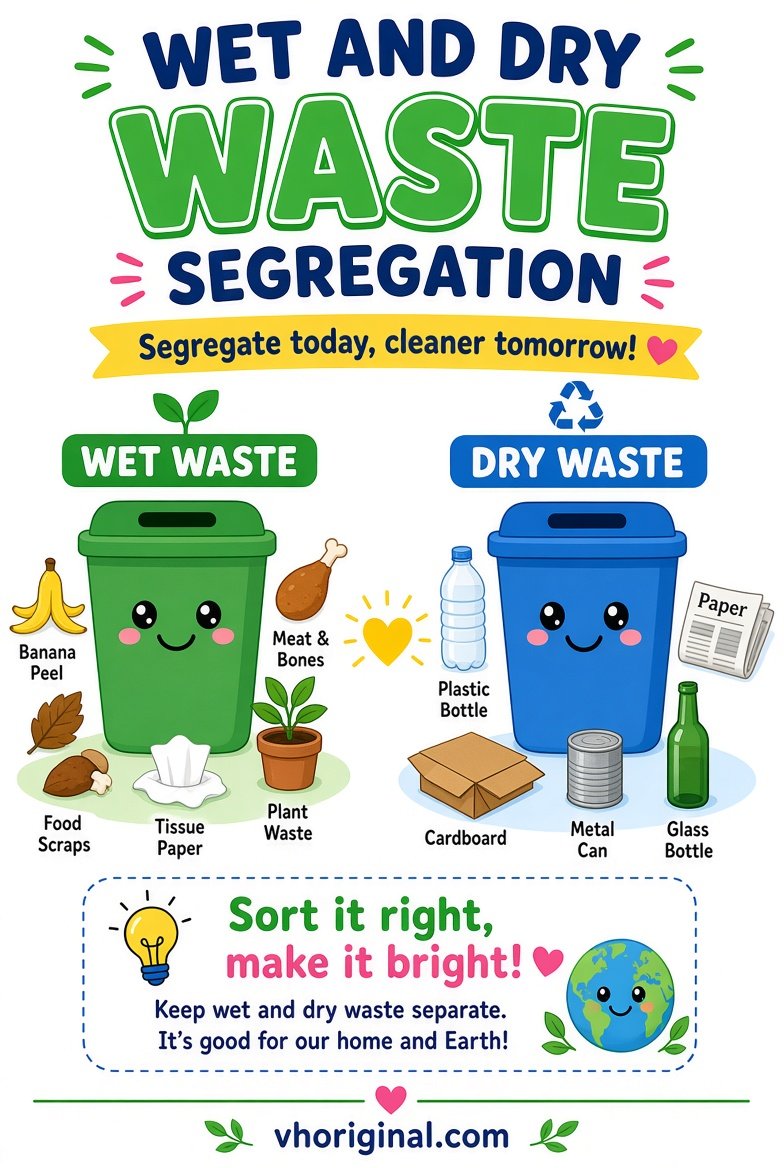
Chart note: This chart shows only wet and dry waste. India’s rules in force from 1 April 2026 require four separate streams: wet, dry, sanitary and special-care waste. Follow local collection instructions.
Picture 2: Plastic Recycling Symbols
Numbers such as 1 through 7 printed on plastic packaging commonly refer to resin identification codes. They identify plastic families; they are not a universal promise that an item will be recycled. Whether a facility accepts a package depends on local infrastructure, the material and its condition. A useful chart separates Resin Code, Material Name and Check Local Rules. Do not tell children that every triangular arrow symbol makes a package environmentally harmless. Confirm names and numbers before reproducing a generated poster. Never burn, melt or shred plastics as part of a classroom recycling demonstration; a paper classification model communicates the concept safely.
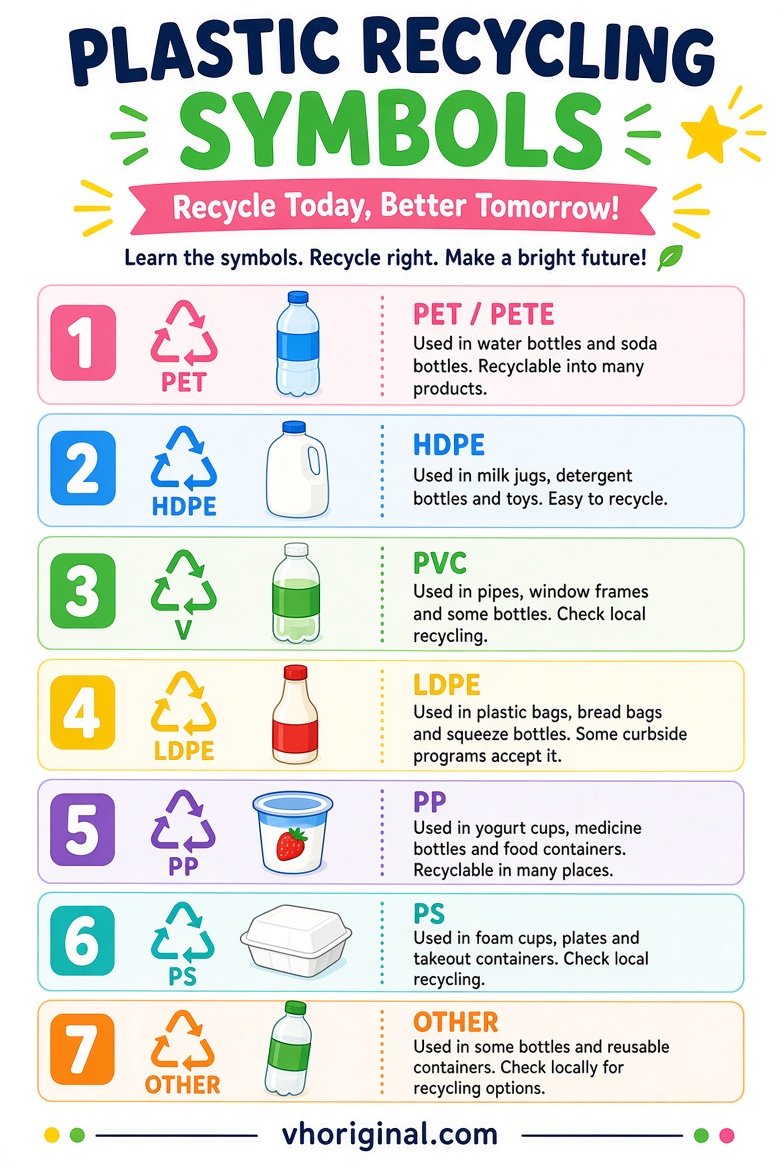
Chart note: Resin identification codes identify plastics. Local collection and processing rules determine which items are accepted.
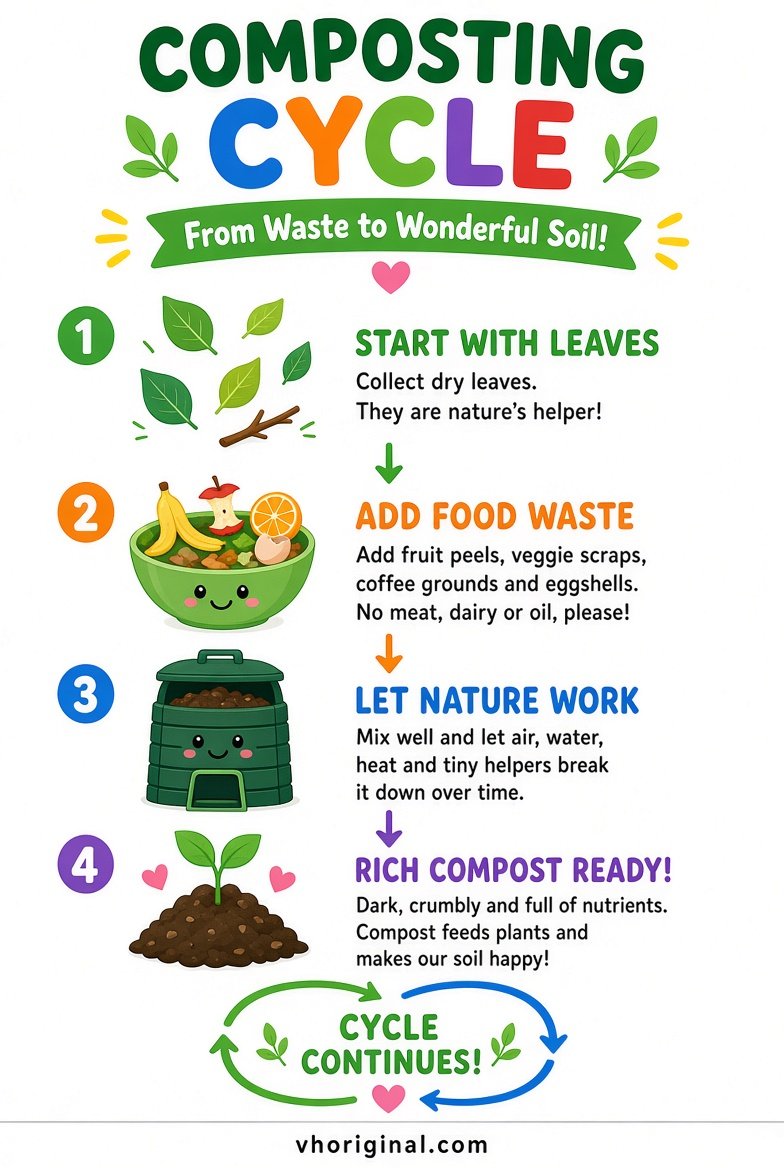
Picture 3: Composting Cycle Chart
Composting depends on microorganisms breaking down suitable organic material under appropriate conditions. Dry leaves and some shredded paper supply carbon-rich ‘browns’, while fruit and vegetable scraps are examples of nitrogen-rich ‘greens’. The mixture also needs moisture and oxygen; excessive wetness and poor aeration can create unpleasant conditions. The EPA recommends balancing the ingredients and avoiding meat, dairy and greasy foods in common backyard compost piles. A school chart can show collecting materials, mixing, maintaining air and moisture, observing decomposition and using finished compost. Do not promise that compost becomes ready in a fixed number of days regardless of conditions.
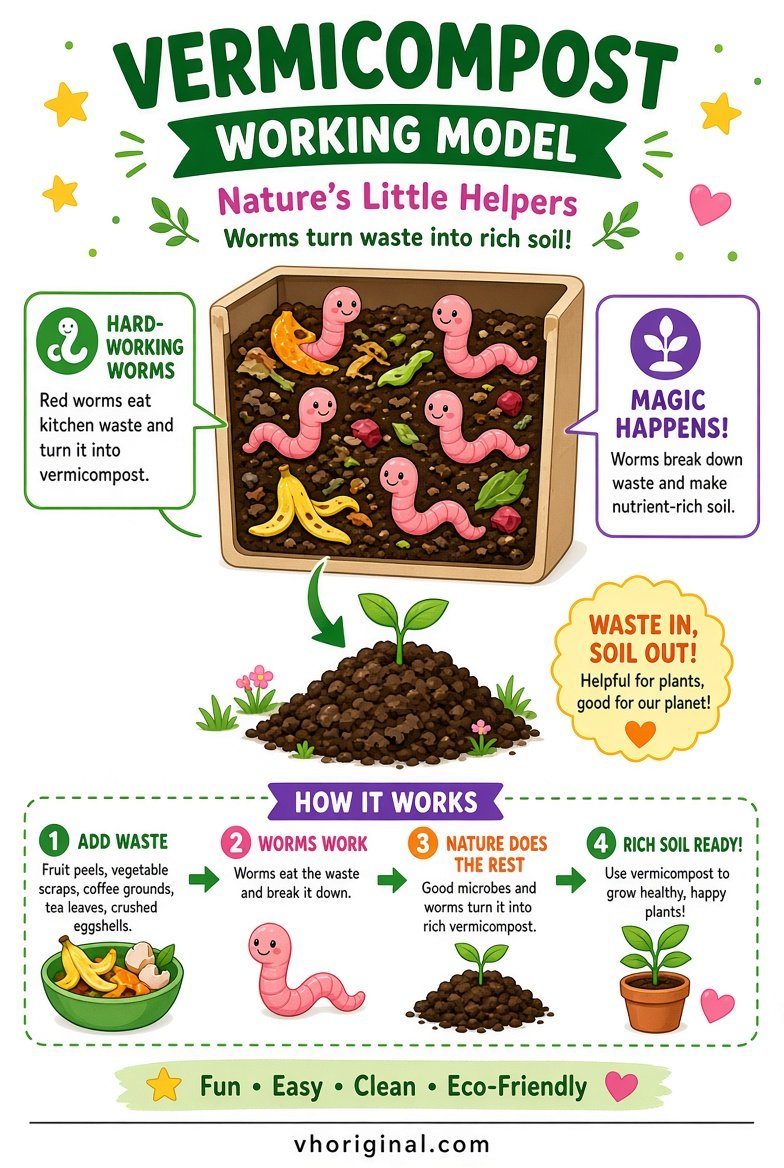
Picture 4: Vermicompost Working Model
Vermicomposting uses suitable earthworms and microorganisms to help process organic scraps into worm castings. A real worm bin needs appropriate bedding, moisture, air, food and care. Meat, dairy and greasy scraps are poor choices for a basic school vermicompost setup. Younger children can make a labelled cardboard cutaway instead of keeping living worms. If the school already maintains a worm bin, students can observe it under supervision. Do not put worms in an unventilated sealed container or in direct heat for the sake of a model. A clear schematic often explains the system better than a rushed live experiment.
Materials and steps for a safe exhibition model
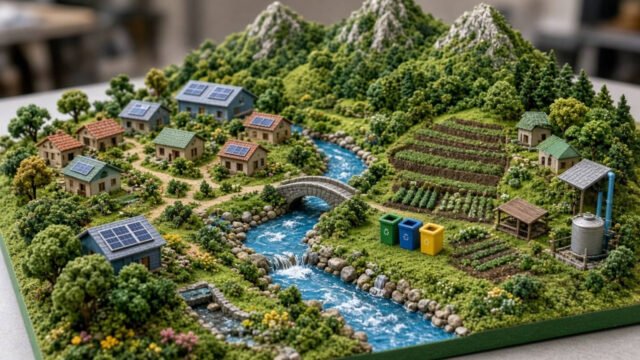
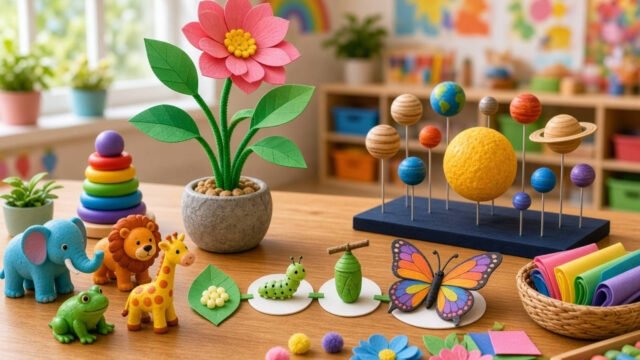
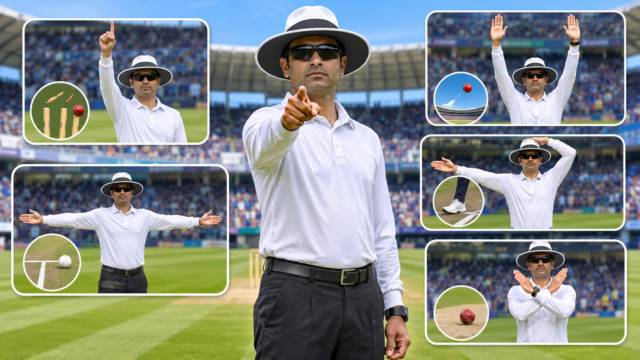
Use chart paper, a pencil, ruler, eraser, coloured pens, clean cardboard and optional glue. Divide the board into sorting, plastic identification, composting and vermicomposting. Draw one large example per section and leave room for two explanatory sentences. For sorting, use clean paper representations rather than real rubbish. For compost, show brown and green materials with simple arrows describing a gradual process. For worms, draw layers of bedding and food scraps. Check the poster labels, then add a short note on safety. The finished display should let students describe each topic without touching hazardous or decaying materials.
Class presentation and useful viva answers
Students can explain that sorting helps different waste streams be handled properly, that recycling depends on material and local facilities, and that composting uses biological decomposition. A teacher may ask whether a plastic number guarantees recycling: it does not. Another question is why a compost pile needs air and moisture: they support the organisms involved in decomposition. Why should worm bins be looked after? Because worms are living animals with particular needs. Explain that an illustrative bin colour may vary by local system.
Downloading pictures and checking common mistakes
Use each poster’s full-size link and save the image if needed. Do not mistake a plastic resin code for a recycling promise. Never mix hazardous waste with compost materials. Check each generated symbol against a reliable reference before printing, and use a cardboard worm-bin illustration where living-worm care is not possible.
Frequently asked questions
Does India use more categories than wet and dry waste?
Yes. The 2026 rules specify wet, dry, sanitary and special-care streams.
Do plastic codes 1–7 guarantee recycling?
No. Codes identify resin types; local acceptance depends on collection and processing facilities.
Is compost ready in a few days?
Not generally. Conditions and materials determine how long decomposition takes.
Should students keep live worms in a model?
Only with proper care and adult supervision; a cardboard cutaway is often sufficient.
Conclusion and sources
Waste sorting and composting projects work best when they teach accurate distinctions, local responsibility and safe habits rather than simply decorating a coloured bin.
Sources: PIB — Solid Waste Management Rules 2026; US EPA — Composting at Home; CalRecycle — Vermicomposting.

















Share Your Opinion
Comments are closed on this post.