 Vista

Updated: 16 November 2026 | Short answer: You can learn stage magic, but spells that grant verified supernatural abilities have not been demonstrated by reliable scientific evidence.
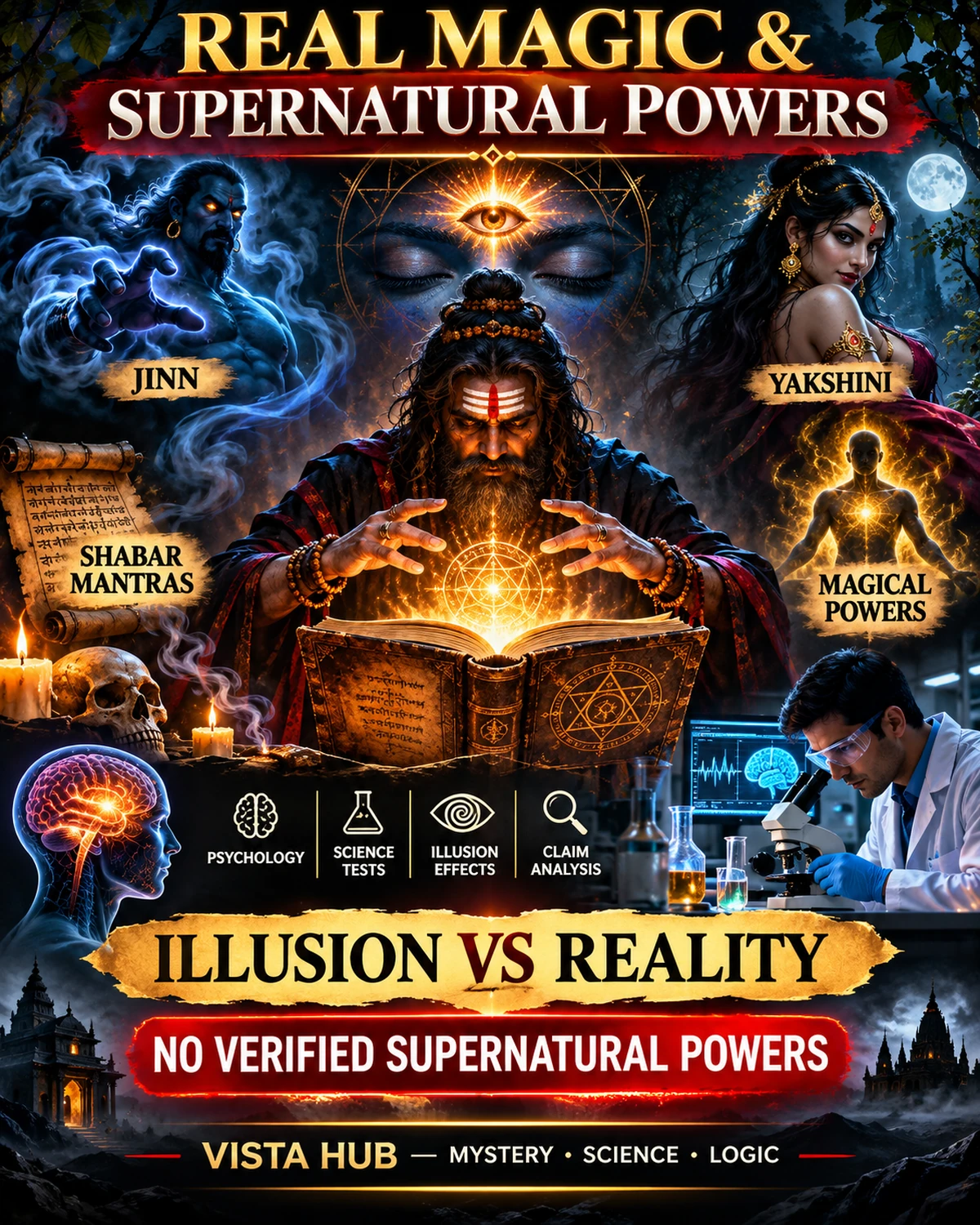
Can you learn real magic, summon a jinn, perform Yakshini sadhana, activate a third eye, or become invisible using a Shabar mantra? The direct answer depends on what you mean by magic. Stage magic is a real and learnable performing art based on technique, timing, psychology, and the management of attention. Claims that a spell can suspend gravity, make an individual invisible, predict an exact lottery result, or command a supernatural being have not been demonstrated through reliable, independently repeatable scientific evidence.
That distinction matters because search results often mix dramatically different topics: real magic tricks for beginners, real magic spells that work, jinn summoning, Yakshini sadhana, Shabar mantra PDFs, Karn Pishachini, third-eye opening, telekinesis, invisibility spells and sleep-paralysis experiences. They do not all come from the same religion or literature, and they are not all factual claims of the same kind. A meaningful guide can respect the traditions behind the terms without presenting sensational claims as established facts.
This article explains the history and cultural contexts where sources are available, how physical and psychological illusions work, why frightening experiences can feel supernatural, and how to learn safe theatrical magic. It does not provide hazardous rituals or promise miracles; its goal is curiosity grounded in evidence.
What is real magic: performance skill, spiritual belief, or supernatural claim?
One of the biggest mistakes in discussions of magic is treating three separate meanings as interchangeable. A stage magician uses carefully practiced methods to make a coin apparently vanish or to predict a card. A spiritual practitioner may use prayer, chanting, or meditation for purposes grounded in a particular religious tradition. A third person might claim that a secret mantra can make objects levitate, control other minds, or generate cash. These activities can sound similar in a search engine, but their methods, expectations, and evidentiary standards are different.
In stage magic, spectators see an effect, not the full method. A performer may control the timing of a gesture, the direction of the audience’s gaze, the wording of a question, or the apparent location of an object. The surprise comes from a gap between what the audience thinks it saw and what actually occurred. This does not mean every trick uses the same method; some involve sleight of hand, others props, prepared setups, optical properties or digital editing. Learning a method can be hard work, and the mystery is part of its entertainment value.
Researchers have studied magic as a window into cognition. A 2020 paper on the cognitive bases of illusionism described several processes involving attention, perception, memory and decision-making that performers can manipulate. Another study of magic and visual cognition found that some magicians’ own assumptions about why a trick works did not hold up in experiments. Scientific investigation makes theatrical magic more interesting, not less. Neither result supports a claim that stage magicians possess supernatural powers.
To learn real magic safely, decide first whether you want a hobby, a performance skill, or a cultural study. Beginner coin-and-card routines can offer a genuine sense of accomplishment without requiring secret substances, sleep deprivation, frightening invocations or large payments to an anonymous guru.
Are jinn real, and can a jinn-summoning spell work?
Jinn occupy a significant place in Islamic religious thought and in Arab, Persian and regional folklore. The subject is not reducible to the lamp-dwelling genie popular in entertainment. Encyclopaedia Iranica traces the term and describes the way religious teachings, literary sources and folktales have discussed jinn in different contexts. Some descriptions concern belief and theology; others are narratives with fantastic transformations and moral lessons. A respectful overview should distinguish a believer’s theological understanding from an experimentally verified observation.
Searches such as ‘how to summon a jinn’, ‘jinn summoning spell’, ‘jinn that grants wishes’ and ‘jinn friend for wealth’ frequently lead to pages promising an immediately usable secret formula. Such pages often fail to identify a credible source, a reproducible result, or independent verification. A flickering bulb, a moving door, smoke in a video or an unexplained noise alone cannot establish the presence of a supernatural being. Physical causes, performance effects and editing should be considered before reaching an extraordinary conclusion.
A person may find comfort or significance in faith-based recitation; that is a personal experience. It is a different matter when a seller promises that an invisible entity will deposit money, make someone fall in love, or reveal private information in exchange for advance fees. Those are testable claims and potential financial risks. The claim becomes especially suspicious if the seller demands secrecy, requests private photographs or passwords, or says the client will suffer unless they pay again.
A responsible inquiry into jinn can involve comparative religion, anthropology, literary history and the study of traditional storytelling. It does not require contacting strangers online for a ceremony or subjecting yourself to frightening physical experiments.
Yakshini sadhana, yakshas and Karn Pishachini: meanings behind the names
Yakshas and yakshis or yakshinis appear in several South Asian cultural and religious traditions. The Metropolitan Museum of Art’s essay on early South Asian nature deities describes yakshas and yakshis as semi-divine nature spirits associated with the earthly world. Their imagery developed across multiple historical contexts and cannot accurately be condensed into one modern internet formula. They may be connected with landscapes, fertility, abundance or the religious iconography of specific communities. Reading these traditions as art and literature is very different from verifying a promise that a ritual will conjure a being.
Contemporary websites market phrases like ‘Yakshini sadhana in seven days’, ‘Yakshini mantra for money’, ‘Karn Pishachini reveals the future’ and ‘secret spirit powers’. A common problem is the absence of basic textual documentation: which manuscript, chapter, edition or critical study contains the quoted statement? The word ‘ancient’ on a video thumbnail does not settle authorship or historical age. Texts can also vary by region, language and later additions. Cultural history deserves better than anonymous copy-pasted instructions.
Karn Pishachini is often described online as an entity that can whisper secrets or reveal facts unknown to an observer. If a performer correctly states someone’s name or personal history, there may be less dramatic explanations worth examining: public social-media information, a conversation held earlier, broad statements interpreted as personal, or well-designed questions. A single successful prediction is not a controlled demonstration of paranormal knowledge.
Some versions of alleged sadhana involve isolation, prolonged fasting, loss of sleep or potentially toxic substances. None of those should be treated as a safe prerequisite for learning about folklore. Instead, explore primary texts when reliably available, art-historical research, and responsible introductions from knowledgeable scholars. Cultural respect does not require accepting a hazardous claim.
Shabar mantras and PDF collections: tradition, authenticity and online claims
The phrase ‘Shabar mantra’ or ‘Sabar mantra’ is used in discussions of vernacular mantra traditions, often with varying regional associations and narratives. Online collections may label hundreds of unrelated passages as a single secret archive. Search terms such as ‘Shabar mantra collection PDF’, ‘Shabar mantra siddhi’, ‘Gorakhnath mantra’, ‘Shabar mantra for protection’ and ‘real magic mantra PDF’ represent a mixture of cultural interest, religious devotion and claims of immediate practical power.
A PDF is a file format, not a certificate of authenticity. A document can contain errors, modern additions, mistranslations, invented historical claims or hidden payment links. If a passage is presented as an original traditional formula, a careful reader should look for the original language, source title, publication information, editor and where possible scholarly discussion of manuscript history. A convincing page layout or Sanskrit-style lettering does not independently establish accuracy.
More importantly, textual existence does not prove causal effectiveness. Someone can study a mantra in literature or practice recitation as part of their beliefs without concluding that it can make a person invisible, transfer wealth or control another person’s decisions. Claims about controlling another person are especially concerning when they are promoted alongside paid ‘guarantees’ and demands for personal information.
Download safety is another real-world issue. Avoid unknown executable files disguised as reading materials, suspicious APK installers, copyright-infringing download portals and links that request a banking login before allowing you to read a text. Use reputable publishers, libraries and legal sources where available. A cultural practice should never require surrendering account credentials.
Third-eye activation and meditation: what can science actually say?
The third eye is frequently used as a spiritual metaphor for insight, perception and self-awareness. In some Hindu and yoga-related traditions it is linked with the ajna chakra. That symbolism is meaningful within its tradition, but it does not establish a literal additional organ capable of viewing another person’s thoughts or events happening miles away. Searches such as ‘how to open your third eye in 24 hours’, ‘third-eye powers’, ‘see spirits with third eye’ and ‘telepathy after meditation’ often blur these distinctions.
Meditation can have ordinary, measurable psychological effects for some people, such as changes in attention, stress perception and emotional regulation. Research on these outcomes is not equivalent to evidence for clairvoyance or supernatural sight. The US National Center for Complementary and Integrative Health reviews evidence on meditation and notes that adverse experiences have been reported, even though many people practice it without major difficulty. Serious claims of effortless supernatural power deserve far more scrutiny than an account of feeling calm after a mindfulness exercise.
Instructions that require days without sleep, extreme fasting, fear-inducing ceremonies or abandoning medical care are not sensible routes to self-awareness. If you want to try ordinary mindfulness, a short, comfortable session in a safe environment may be a reasonable place to begin. If it makes you distressed or you have persistent unusual experiences, pause and seek appropriate professional advice.
A useful distinction is between an internal experience and an external claim. Feeling a sensation or seeing an image while meditating is an experience. Proving that it reveals a hidden external event requires reliable, independent testing. Without that step the interpretation remains personal or spiritual, not a confirmed scientific finding.
Invisibility spells, levitation and mind reading: how illusions create impossible scenes
An ‘invisibility spell’, ‘levitation mantra’ or ‘telekinesis ritual’ makes a striking headline because it promises to overturn normal physical expectations. Films and online clips can depict bodies floating, objects moving without contact and people disappearing. But a video does not show every relevant detail: stage supports may be hidden, cameras may avoid certain angles, effects may use selective editing or CGI, and an apparently random spectator may be part of a prepared performance. The possibilities have to be investigated case by case.
Mind-reading routines are another example. The performer may frame the options, use information found online, rely on probabilistic observations, or design an interactive effect that feels like direct access to a person’s private thoughts. The experience can be entertaining even when the audience knows it is an illusion. A trick that appears to predict a birthday does not automatically establish telepathy or supernatural power.
Science does not require pretending to know the explanation for every unfamiliar event. It does require distinguishing the observation from the interpretation. ‘I saw something unusual’ is a report; ‘therefore a jinn did it’ adds a causal claim that needs evidence. An independent demonstration with transparent conditions, controls and repeated success would be far stronger than a short edited social-media clip.
Safety matters. Do not attempt jumping from a height, suspending yourself with improvised materials, exposing yourself to fumes, applying unknown chemicals to the skin, or testing breathing restrictions to imitate an apparent miracle. Enjoy the fiction and learn the psychology of illusion instead.
A shadow in the room or a presence at night: the role of sleep paralysis
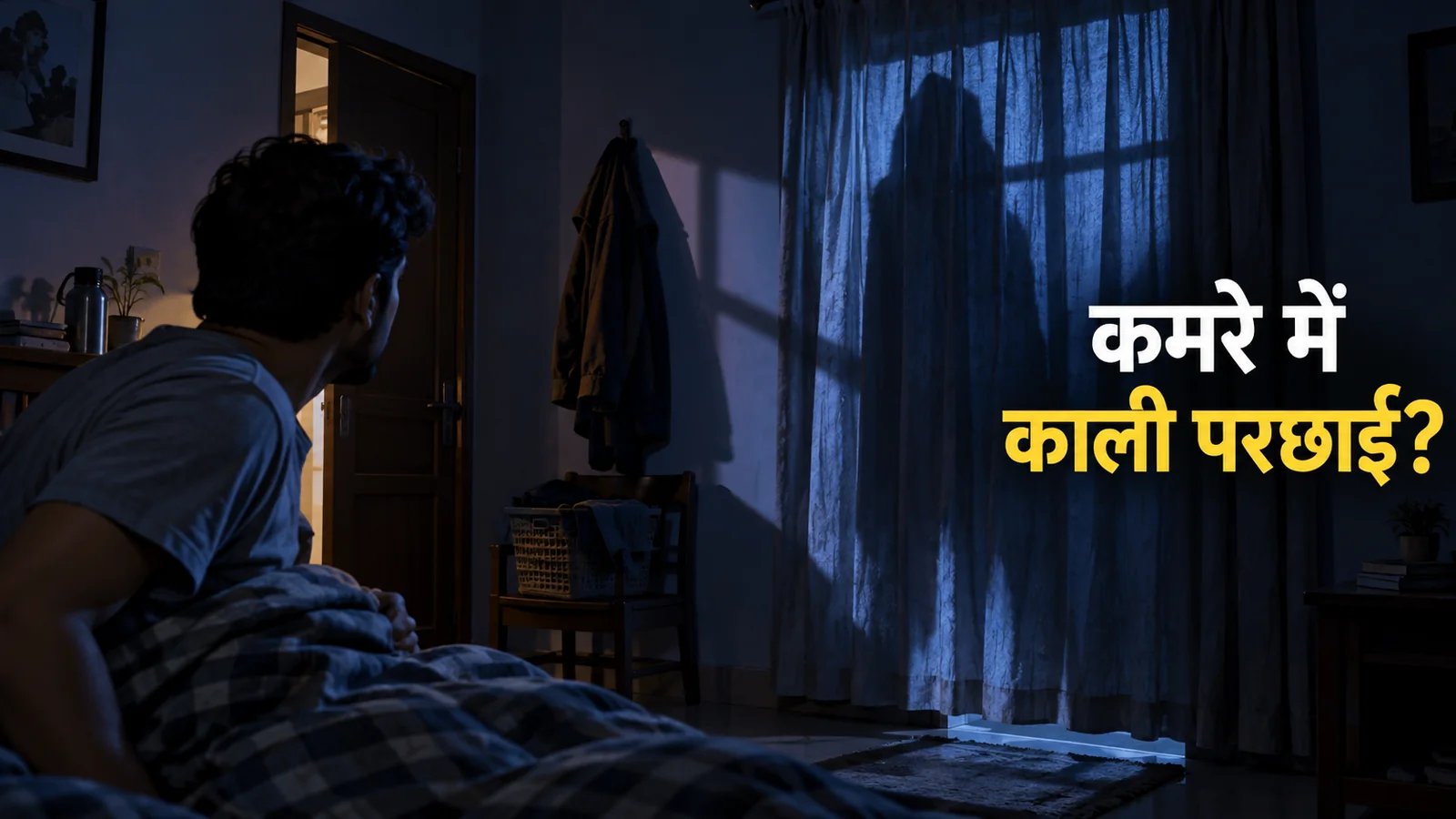
One of the most unsettling experiences people report is waking up apparently alert, sensing another presence, and finding that they cannot move or speak. Sometimes there is a sensation of pressure on the chest or an image of a dark figure. The experience can feel completely real. The NHS explains that sleep paralysis can occur as a person falls asleep or wakes up, with temporary inability to move or speak and a sensation that someone is nearby. That gives a well-recognized medical explanation for some such experiences without dismissing how frightening they feel.
Cleveland Clinic likewise describes hallucination-like perceptions during sleep paralysis, and notes possible associations with irregular sleep, sleep deprivation and certain other conditions. Importantly, not every unusual experience is sleep paralysis, and online articles should not diagnose an individual. A sense of a presence by itself is not proof of a jinn, yakshini, ghost, possession or a newly activated third eye. It may be one of several phenomena that deserve a calm, careful evaluation.
If episodes recur, affect your sleep or cause significant fear, speak with a clinician or sleep specialist. New or persistent hallucinations while fully awake, sudden confusion, or safety concerns call for timely professional assessment. A person describing these experiences needs understanding, not ridicule; frightening them with claims of a curse or charging them for a guaranteed supernatural cure can increase distress.
Good sleep habits, paying attention to medications and stress, and seeking clinical advice when warranted are practical steps. They do not invalidate someone’s religious identity; they simply keep health questions separate from claims about unseen beings.
A practical route to learning magic and an eight-point scam checklist
Learning stage magic starts with observation and repetition. Choose a beginner-friendly card effect, coin illusion or simple puzzle that does not need dangerous equipment. Practice slowly in front of a mirror, then record the performance from different angles to see what an ordinary viewer notices. Work on clear storytelling, natural movement, timing, and genuine audience consent. When you perform, focus on delight and curiosity rather than humiliating viewers or pretending you can diagnose illnesses.
If you are exploring mystical traditions instead, make your goal reading and understanding rather than a guaranteed miracle. Compare reputable historical sources, look for named authors, and check whether a claim is a belief, a work of fiction or an independently tested observation. Avoid interpreting a feeling of fear or an ordinary coincidence as an urgent demand to make a payment.
Watch for eight warning signs in paid occult services: a 100-percent guarantee of results; a fixed deadline to summon a being; new fees after an initial payment; demands to keep the service secret; threats that misfortune will follow if you stop; requests for intimate photographs, OTPs or financial credentials; a promised refund that requires another payment; and directions to undertake unsafe physical rituals. None is evidence of supernatural capability, and several point to manipulation or potential fraud.
In India, if money has been transferred through an online scam, contact the bank or payment service immediately. Cyber-financial fraud can be reported through the 1930 helpline and the National Cyber Crime Reporting Portal at cybercrime.gov.in. Preserve transaction details, messages, account identifiers and promotional screenshots. A refund cannot be guaranteed, but prompt, documented reporting is preferable to paying a scammer again.
Frequently asked questions (FAQ)
Can you actually learn real magic?
Yes, if you mean stage magic, sleight of hand and the psychology of illusion. Reliable evidence has not established that spells can give people supernatural control over physical events.
Is there a proven jinn-summoning spell?
Jinn are significant in Islamic religious traditions, but independently verified evidence that an online spell can summon and command them is lacking.
Does Yakshini sadhana or Karn Pishachini reveal the future?
These terms appear in religious or occult discussions, but predictions based on such claimed powers have not been established through reliable controlled testing.
Are Shabar mantra PDF collections authentic?
A PDF alone does not establish authorship, manuscript history or supernatural effects. Check the source, original text and editor before treating its claims as historical facts.
Can opening the third eye make you see invisible entities?
The third eye is a spiritual symbol. Meditation may have psychological effects, but dependable evidence for literal supernatural vision is lacking.
Can sleep paralysis feel like an encounter with a spirit?
Yes. It can involve temporary inability to move and a vivid sense of someone nearby. Recurrent or distressing experiences merit discussion with a health professional.
Conclusion: keep the wonder, test the claims
Real magic can mean a rewarding craft of visual illusion, an important spiritual vocabulary, or a claim about powers beyond current physical understanding. Those are not interchangeable. Jinn, yakshini, Shabar mantras, the third eye and invisibility make fascinating subjects for comparative religion and cultural history. They do not justify promising a supernatural result, charging repeated secret fees, or dismissing a possible medical explanation for a frightening experience. Learn stage magic if you want a skill; study the traditions if you want their meanings; insist on reliable evidence before accepting extraordinary claims.
Related reading in English: Black magic: claims and realistic explanations · Black magic vs Vashikaran · Shiva’s third eye and its symbolic meaning.
Sources: Encyclopaedia Iranica: Jinn · The Met: South Asian Nature Deities · Peer-reviewed research on illusionism and cognition · NHS: Sleep Paralysis · NCCIH: Meditation Effectiveness and Safety · India: Cyber Crime Reporting Portal.
Disclaimer: This article explains cultural beliefs and scientific research, and offers general safety information. It does not certify paranormal abilities, promise spiritual results or substitute for medical or legal advice. The illustrations depict concepts, not verified supernatural events.


















Share Your Opinion
Comments are closed on this post.