The Corner Figure: Object or Imagination?
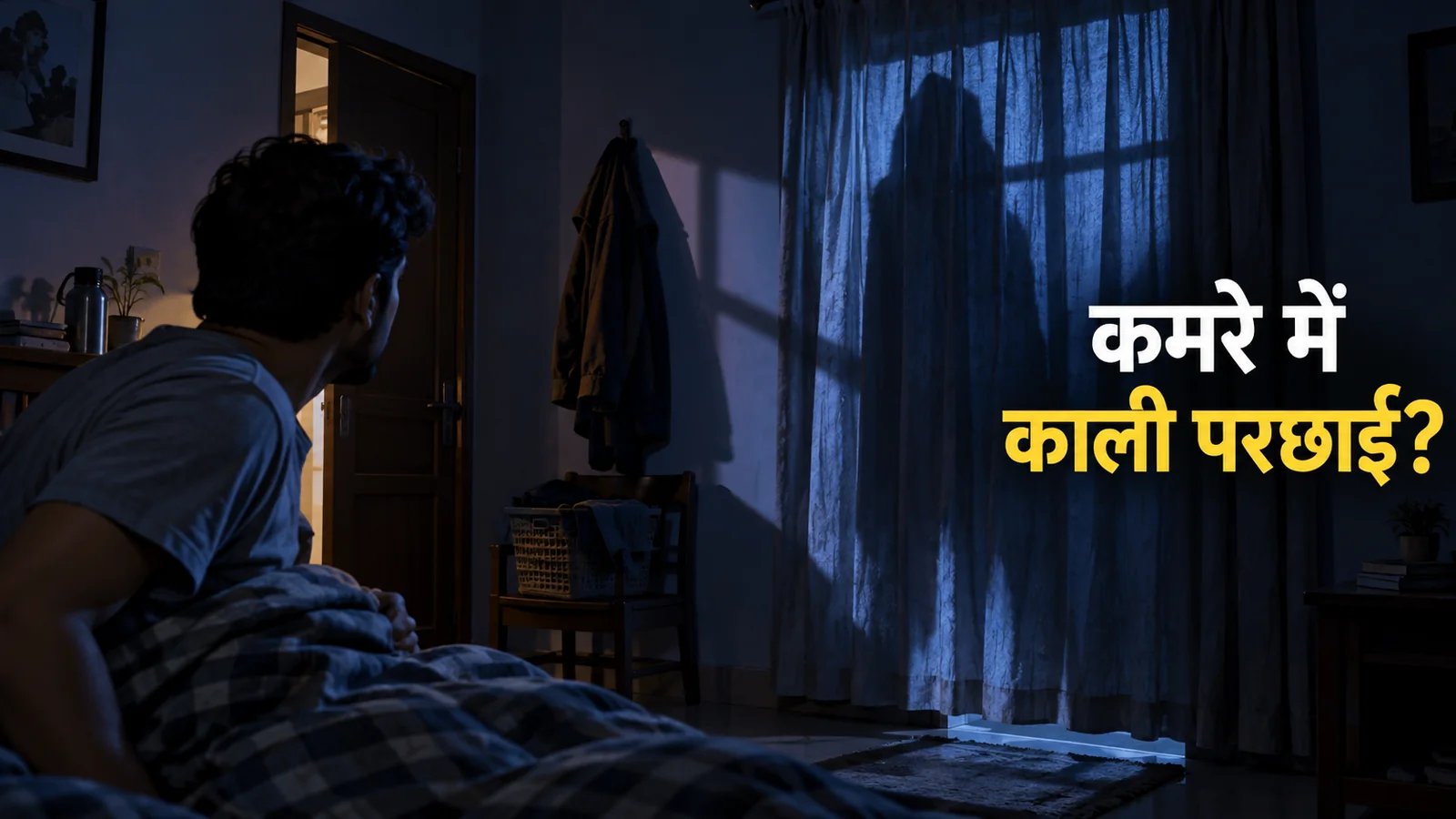
Imagine waking in the night to see a tall, dark figure in the corner of your room. Your heart races, but you can’t move or speak. When you finally turn on the light, you realize it was just clothes draped over a chair, with a curtain behind it. This is a hypothetical scenario to illustrate a common experience. Not every instance of seeing a black shadow in a dark room is the same. Misidentifying a familiar object in low light, a sleep-related phenomenon, or an eye or health complaint are distinct issues. It’s crucial not to jump to conclusions about ghosts or illness without differentiating.
If you suddenly experience a curtain or shadow across your vision, new bright lights, or numerous floating spots, seek immediate medical attention. This is a more urgent warning than seeing a shadow of clothes in a corner.
If you experience sudden confusion or severe distress, seek medical help.
The Simple Logic of Low Light and Misidentification

In darkness, our vision struggles to gather complete information. The combined shapes of a chair, clothes, and curtains can easily be mistaken for a human form. If you’ve recently heard a scary story, it becomes easier to label this shape with a frightening meaning. This is one possible explanation, not a definitive cause for your specific experience.
Think of it like trying to read blurry text from a distance; you might recognize familiar letters but misinterpret the word. You see something, but your identification is incorrect. Keeping the object in your room and your interpretation of it separate allows for a safer investigation. If the object becomes clear with light, remember that source. However, avoid telling others that ‘it was just clothes’ if the source wasn’t clear, as their experience might differ.
If a clear source isn’t found or the experience recurs, further investigation and potential medical evaluation may be necessary.
Did It Happen Upon Waking?
Some individuals experience dream-like visuals or a sense of presence while transitioning between sleep and wakefulness. If you find your body temporarily unable to move, it might be related to sleep paralysis, which warrants separate discussion. However, simply seeing a dark shape doesn’t automatically confirm this diagnosis.
For a doctor, note the timing: Were you falling asleep, just waking up, or fully awake for a while? Did the vision change when you turned on the light? Could you move your body? There isn’t a specific time of night that dictates the assessment. One person’s experience might be close to sleep, while another’s occurs in the middle of the afternoon, leading to different explanations.
Finding ‘shadow person’ in online searches doesn’t validate an entity; it may simply be a descriptive term for people’s experiences.
Investigating Safely That Night
Unless there’s a real emergency like a gas leak or electrical hazard, use a dim light source from a safe distance to investigate. Look for the chair, clothes, curtain, and any light sources. Running towards a dark shape with a weapon or confronting a family member is not a safe investigation method.
Note the position of car lights from outside or a moving curtain. Even a camera’s picture can have reflections, blurriness, or limitations. Finding a shape in a blurry photo isn’t proof of a ghost, and its absence isn’t proof of illness.
Listen calmly to the person who is scared. Say, “Let’s figure out what that was.” If crowds, scary videos, or repeatedly staring at the same corner increase anxiety, stop the investigation and focus on rest and conversation.
What to Do If It Happens Repeatedly While Fully Awake?
Recurrent visual disturbances, especially when fully awake, warrant a prompt discussion with a doctor. This could involve assessing sleep, vision, medications, illnesses, and other health factors. It’s incorrect to assign a mental illness diagnosis based on a single symptom.
If you notice changes in your vision, consulting an eye specialist may be appropriate. Don’t wait for a routine appointment if you suddenly experience new floaters, flashes, or curtain-like visual shadows.
Clearly describe the difference between an external shadow (like from a window) and a shadow within your field of vision. Bring a list of your current medications and a brief record of the events. Suddenly stopping prescribed medication or taking sedatives is not a solution. Ask about warning signs that require immediate follow-up and those that can wait.
Advice: Respecting Fear and Honesty About Causes
You can say, “That shape seemed very real to me, but we don’t know the cause yet.” This doesn’t invalidate the experience. It means you’ll investigate by separating memory from conclusion. A lingering mystery doesn’t automatically confirm a frightening explanation.
Families can hold their beliefs while also pursuing proper checks for lighting, sleep, and health. Actions like causing injury through rituals, fumigation, or pressuring someone to leave their home can be harmful. Relief often begins with support.
If a child is scared, explain by looking at their room’s normal objects together during the day. Don’t force them to repeat the story of the frightening shape. Similarly, don’t dismiss an adult’s vision or sleep complaints as a joke. Safe help is necessary at all ages.
Frequently Asked Questions
Is seeing a black shadow a sign of a ghost?
Such a visual alone does not confirm a supernatural cause. Consider the context of lighting, sleep, and any accompanying health symptoms.
What if the shadow disappears when the light is turned on?
A common shadow or misidentification is a possibility, but this doesn’t explain every instance.
Does the 19 Hz frequency from a fan show ghosts?
There isn’t sufficient basis to explain every shadow with this theory. Experimental results should be viewed within their context.
What should I do if I see a curtain in front of my eye?
For sudden visual curtains, new flashes, or numerous new floaters, seek an immediate eye assessment.
Does one event prove a mental illness?
No. For new or recurring complaints, seek a professional assessment; do not self-diagnose.
Related Information
Why do I find blue marks or scratches on my body after waking up?
Why do I hear sounds like anklets, footsteps, or pebbles on the roof at night?
Why do dogs howl at night? Do they see ghosts?
What to do if there’s a rotten egg smell in the house?
Why do I wake up at 3 AM? Causes, fears, and what to do.
Sleep Paralysis: When Your Body Can’t Move During Sleep.
Hearing Your Name Called at Night.
Why do I wake up at 3 AM? Causes, fears, and what to do.
Source and Information Verification
Information verified: October 14, 2026. The initial scenario is hypothetical for explanation. NHS: Hallucinations and hearing voices. The Haunt Project: Controlled Experiment. National Eye Institute: Retinal detachment. NHS: Sleep paralysis. This is general information, not personal diagnosis or treatment. Seek professional help for severe or persistent symptoms.



















Share Your Opinion
Comments are closed on this post.