The clock says 3:00, and a story keeps you awake
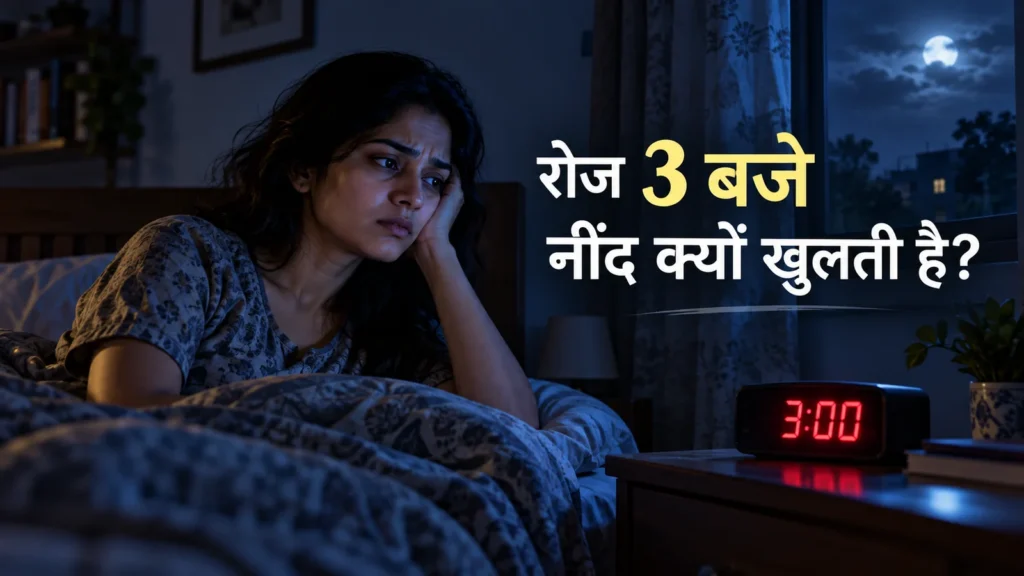
Imagine waking and seeing 3:00 on the clock. You remember a frightening story about that hour, and ordinary room sounds suddenly seem different. A brief awakening becomes prolonged worry. This is an illustrative scene, not evidence of a paranormal event.
Why you wake up at 3 AM has no single answer for everyone. Ordinary awakenings, sleep disruption, stress and other symptoms may be relevant. A clock number cannot establish a ghost, a special power or one particular illness.
Severe chest pain, continuing breathing difficulty, fainting or new serious weakness needs a response appropriate to the symptom. Do not let a story about the hour distract from urgent help. The rest of this article discusses sleep, not a way to dismiss emergencies.
Sleep does not remain in one uniform state
Sleep includes non-REM and REM stages, and their pattern changes through the night. Brief waking can occur without automatically indicating illness. Difficulty returning to sleep and effects the next day are separate questions.
A sleep cycle should not be treated as an exact 90-minute clock for every person. Timing varies. A calculation from an assumed bedtime cannot prove that an individual woke at three because a particular cycle ended.
Consider the whole pattern: time asleep, how often you wake and how you feel during the day. Clock time is a useful detail, not a diagnosis. One night and a recurring problem over many nights do not provide the same information.
Environment and routine are worth reviewing
Heat, noise, light, changing sleep times and caffeine can be relevant to a sleep assessment. Finding one factor does not establish that it caused the awakening. Brief notes may help identify a pattern without promising certainty.
Stress may become more noticeable when you wake and thoughts begin running. Discuss concerns about work, relationships or money if they are relevant. Do not assign every awakening or physical symptom to stress; describe new or different symptoms separately.
Avoid presenting one caffeine cutoff as a rule for all people. Discuss use, bedtime and your own response. Changes to prescribed medicines should be agreed with a clinician rather than made from an internet timetable.
FACT: a universal 3 AM hormone explanation is too certain
Daily rhythms and hormones are involved in sleeping and waking. That does not establish one exact hormone event as the cause of every 3 AM awakening. Applying a single cortisol story to every bedtime and person goes beyond what can be inferred.
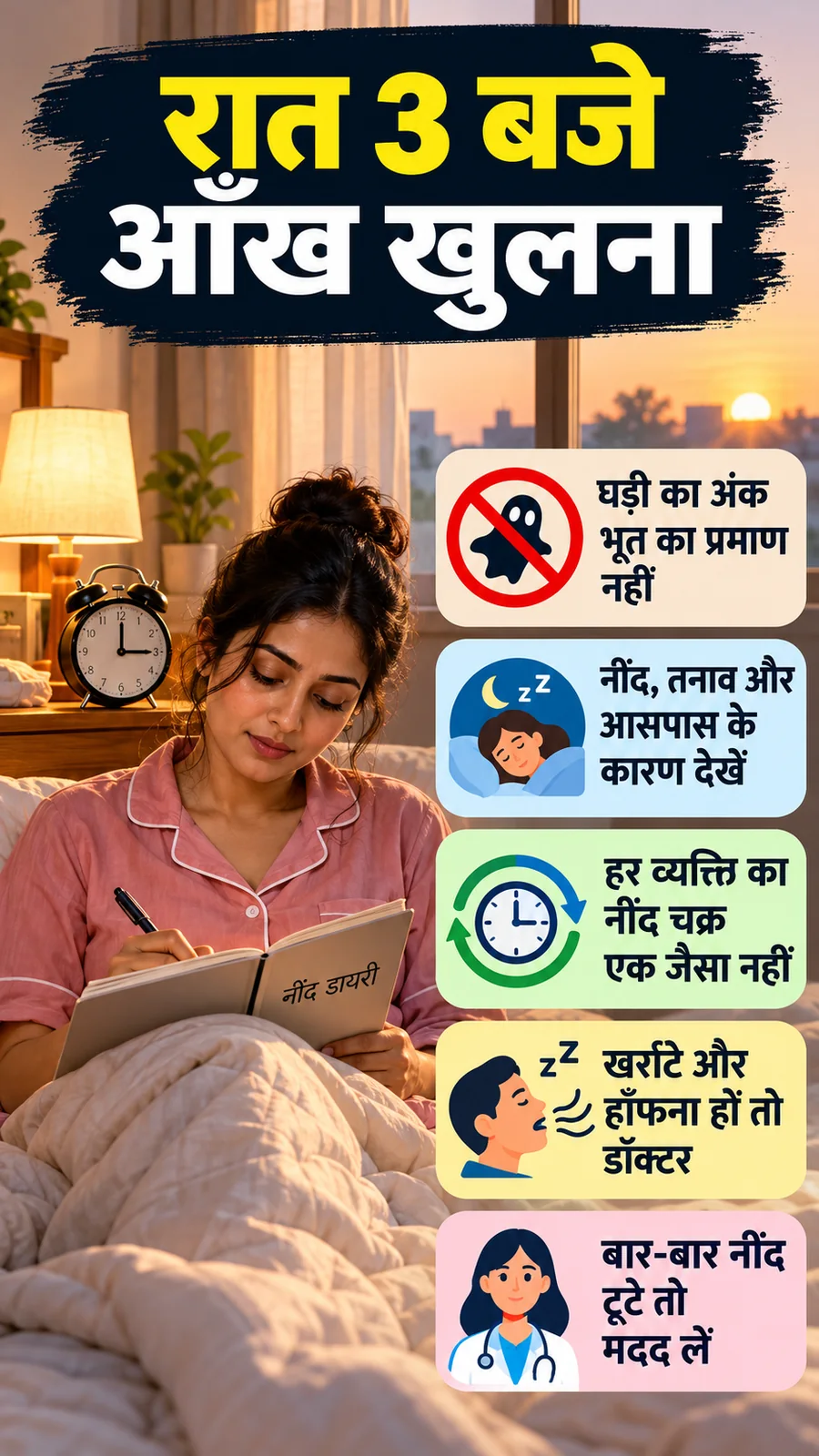
Cultural stories about a frightening hour do not establish a medical rule either. Nor should an unsourced account be presented as the one origin of those stories. Focus on the actual sleep pattern and its effects instead of turning a number into evidence.
Source: NHS: Insomnia
Breathing symptoms and temporary paralysis are different questions
Loud snoring, witnessed breathing pauses, gasping and substantial daytime sleepiness warrant a conversation about sleep apnea and other possibilities. Focusing only on the time may obscure the breathing complaint. A partner’s observations can help.
Brief inability to move at a sleep transition may raise the separate possibility of sleep paralysis. Repetition or fear of sleeping can justify assessment. Not every awakening at three involves sleep paralysis.
Nightmares, panic-like experiences and ordinary waking also differ. Describe what you felt, what you remember and when normal control returned. “I woke at three” alone cannot provide the complete clinical history.
Practical steps for the night and the following day
If there is no emergency warning sign, stay in a comfortable, calm setting. Repeatedly checking the clock for a predicted event or opening frightening videos is not necessary. Avoid forcing yourself to meet a sleep target while anxious.
Review a regular waking time and a manageable routine the next day. Consistent timing, a wind-down routine and a suitable bedroom environment can be useful habits. No single household trick is a guaranteed cure for every sleep problem.
Keep a brief diary of bedtime, approximate awakenings, caffeine, medicines and daytime effects. A few lines are enough. If tracking every minute increases anxiety, simplify the record and discuss the worry with your clinician.
Prepare a useful medical conversation
You might say: “I wake around this time repeatedly, and this is how it affects my day.” Describe whether you return to sleep, feel breathless or have a remembered dream. Use your own experience rather than adding symptoms from an article.
Ask which possibilities need consideration, whether any tests are indicated and what changes you should make before follow-up. If treatment is proposed, clarify how to use it and what improvement to look for. A written plan can help the family support you without inventing a new explanation.
If another person noticed snoring or pauses, invite their account while keeping space for your own. You do not need a paranormal debate before discussing sleep, medicine and safe daily activity. Keep the conversation directed at those practical questions.
Advice: seek help for a pattern that affects your life
Repeated waking, ongoing sleep difficulty or problems with daytime functioning can be reasons to start with primary care. Symptoms may guide referral to a sleep specialist or mental-health support. Do not wait for a frightening explanation to feel certain before seeking help.
Report breathing pauses or sleepiness that makes driving unsafe promptly. Do not start sleeping tablets yourself, borrow medication or use alcohol as sleep treatment. Assessment and treatment should follow the cause rather than the clock number.
A useful family statement is: “The time frightened me, but the practical problem is disrupted sleep. Let us understand that.” Harmless prayer may provide comfort while medical assessment and routine changes continue. The aim is support and clearer next steps.
Frequently asked questions
Does 3 AM establish a supernatural event?
No. Clock time cannot prove that explanation.
Are sleep cycles always exactly 90 minutes?
No. Do not use a fixed calculation as a diagnosis for an individual awakening.
Is every 3 AM awakening insomnia?
One awakening does not diagnose a disorder. Frequency, returning to sleep and daytime effects matter.
What about snoring and gasping?
Discuss breathing symptoms with a clinician, including the possibility of sleep apnea.
Should I take a sleeping pill?
Do not start one yourself. Explain the pattern and current medicines to your clinician.
Related reading
Unexplained Bruises or Scratches After Sleep: What to Check
A Dark Shadow in Your Room: Sleep, Vision and What to Check
Footsteps or Jingling Sounds on the Roof at Night: What to Check
Why Do Dogs Howl at Night? Sounds, Distress and Ghost Claims
Rotten Egg Smell in the House: Safety First, Then the Cause
Sources and review
Information reviewed: 14 October 2026. The opening scene is illustrative, not a reported case.
NHLBI: Sleep phases and stages
This is general information, not an individual diagnosis or treatment. Seek professional help for severe or persistent symptoms.