Waking short of air can be frightening
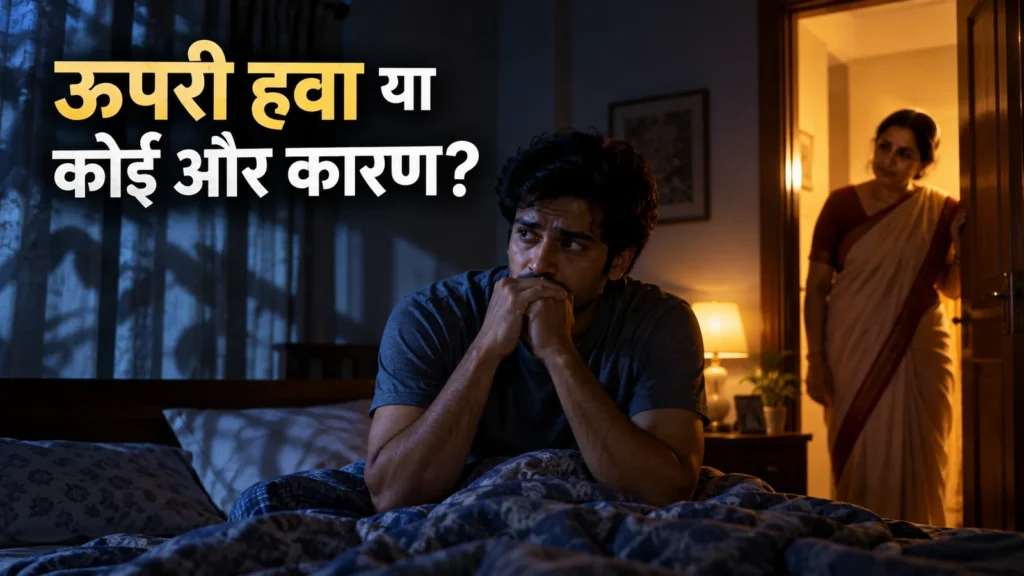
Imagine waking abruptly and sitting up because you feel unable to get enough air. The sensation eases, but the fear remains. A partner says there was loud snoring, then a quiet pause followed by a gasp. This is an illustrative scenario, not evidence about any particular reader.
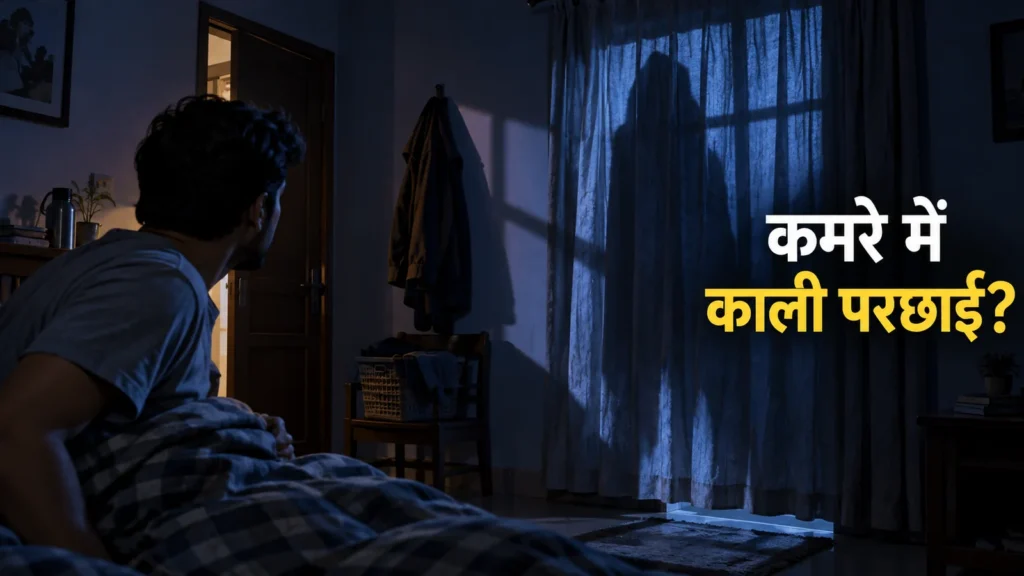
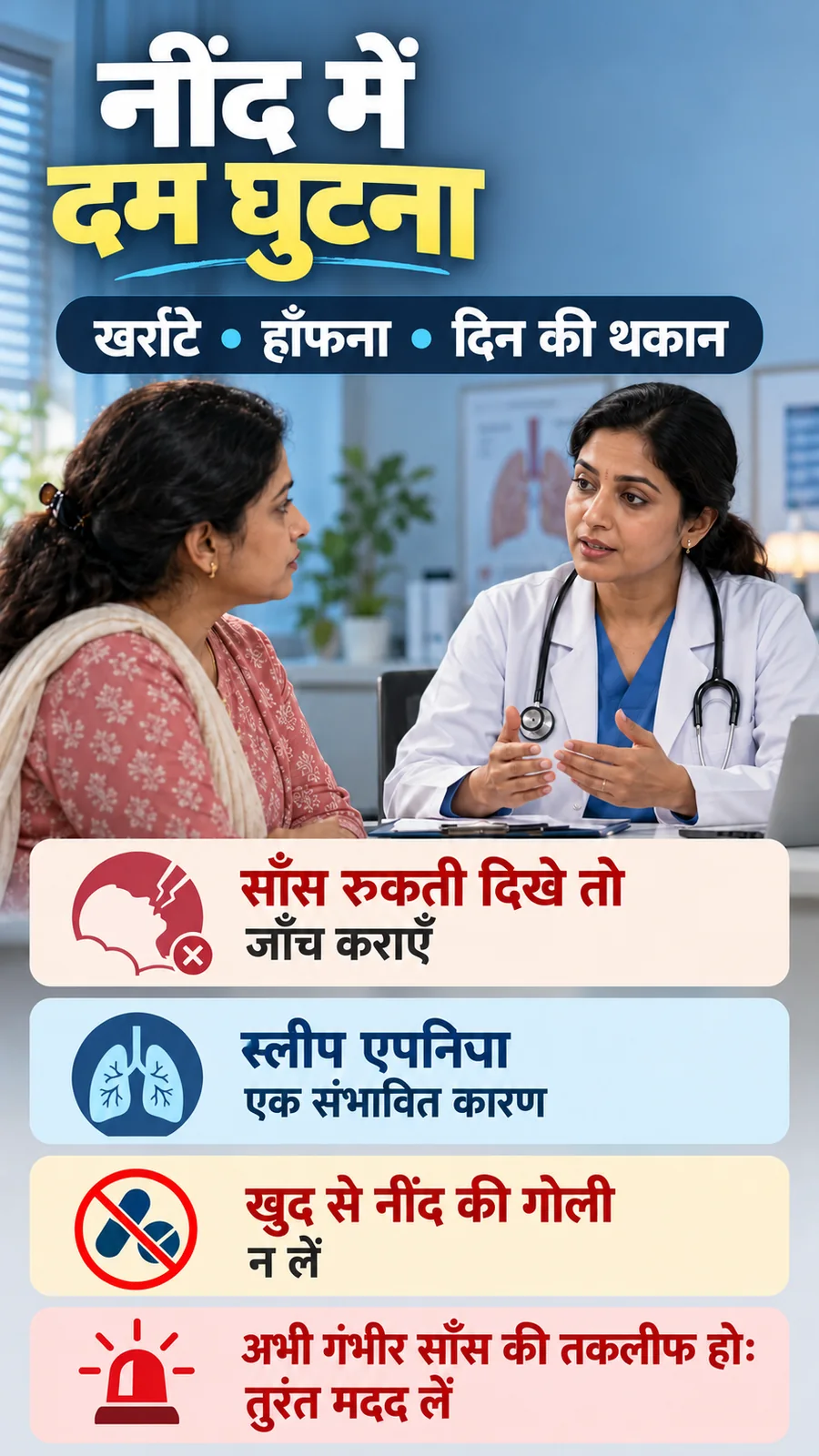
Waking up gasping or choking is not proof of a supernatural presence. Sleep apnea is one possible explanation for repeated breathing disruption during sleep, but an article cannot diagnose it. Recurrent episodes need a medical conversation.
If you currently have severe breathing difficulty, new severe chest pain, fainting or blue lips, seek urgent medical help. Do not spend the night waiting for reassurance from search results. In India, contact 112 or the nearest emergency department.
What sleep apnea means
Sleep apnea involves repeated stopping and starting of breathing during sleep. In the common obstructive form, narrowing or blockage of the airway affects airflow. It needs assessment and, where indicated, treatment.
A restricted air passage is a useful basic analogy, but the body and the causes of sleep apnea are more complex than a bent tube. A video or a diagram cannot tell you that you have an obstructed airway.
Not every snore means sleep apnea, and a person may not notice their own breathing pauses. Observations from someone sharing the room can therefore help. A person sleeping alone should still be heard and assessed when they report repeated gasping.
What to tell your clinician
Mention loud snoring, witnessed pauses, gasping or choking sounds and significant daytime sleepiness. The combination can make sleep apnea worth assessing; it is not a diagnosis that family members should make themselves.
Describe the following day as well as the night. Do you feel unrefreshed after spending enough time in bed? Is sleepiness affecting work or safe driving? Concrete examples are more useful than describing the problem only as fear.
A recording may help explain a sound, but it cannot measure every breathing pause or establish severity. Respect the sleeper’s privacy. A phone app, watch or audio recording should not replace appropriate assessment.
FACT: paralysis, panic and disrupted breathing are different possibilities
Brief inability to move at a sleep transition can resemble sleep paralysis. A sudden surge of fear with palpitations may be panic-like. Gasping with breathing pauses raises another question. Some experiences can overlap, so one label may not explain everything.
The useful details are what breathing was doing, whether the episode recurs and what other symptoms accompany it. Saying “a spirit” or “only anxiety” without those details can delay a more useful investigation.
Source: NHS: Sleep apnoea
Safe next steps after an episode
Emergency symptoms come first. Breathing trouble that continues after you are fully awake should not be dismissed as part of a dream. Let a trusted person know what is happening, and call for help when needed.
Even when an episode has ended, arrange an appointment if gasping recurs. A regular sleep routine and a comfortable side-sleeping position may be helpful habits. They do not establish the diagnosis or remove the need for recommended treatment.
Do not use alcohol, unknown remedies or someone else’s sleeping tablets to get through the night. Smoke-based rituals or covering the face can cause harm. Do not stop prescribed medication abruptly; bring a complete list to your clinician.
What assessment may involve
A primary-care clinician can review your sleep, medical history and possible causes. If sleep apnea is suspected, a sleep study may be recommended. Whether it is done at home or in a centre depends on your needs and the available service.
Testing can record breathing and other sleep-related signals. Not everyone needs the same set of tests. Ask what a proposed test will answer, how to prepare and who will explain the results before spending money.
A family member who has noticed pauses or gasping can accompany you. They should describe their observations without minimising the complaint. If a diagnosis is made, make sure you understand the next steps rather than just keeping the report.
How to prepare for the first appointment
Bring a short description of an ordinary night and a problem night. Include approximate sleep times, whether someone has heard gasping and how alert you feel during the day. A family member can describe what they saw without trying to turn it into a diagnosis. If nobody shares your room, say that too.
Ask whether sleep apnea or another cause is suspected and what a recommended test would establish. Check who will explain the report, what the next step will be and whether you need any preparation. If a treatment device is discussed, ask how it will be fitted and how you can report difficulty using it.
You should not have to exaggerate fear or produce a dramatic recording to make the complaint worth discussing. Repeated breathing symptoms and their effects are enough to explain why you have sought help. Keep a copy of the plan so that the family knows what was actually recommended, rather than relying on memory.
Advice: choose treatment from assessment, not fear
Some people with confirmed sleep apnea need PAP/CPAP treatment or another medical approach. The choice depends on the condition, severity and clinical advice. Do not buy a machine for every snore or choose settings from an online video.
Do not drive when daytime sleepiness makes it unsafe. At follow-up, report both improvement and practical problems with treatment. A difficulty using a mask, for example, is worth discussing rather than silently abandoning care.
Harmless personal faith practices can coexist with treatment. They should not be used to call breathing disruption a ritual attack or to prevent assessment. A clear family explanation is enough: “This breathing problem is repeating during sleep. Let us get it checked.”
Frequently asked questions
Does waking gasping prove a ghost is present?
No. Repeated breathing disruption calls for attention to sleep and medical causes.
Does every snore mean sleep apnea?
No. A clinician considers breathing pauses, gasping, daytime symptoms and other details.
Is side sleeping a complete treatment?
It may help some people, but does not replace assessment or prescribed treatment.
Should I take sleeping pills?
Do not start them yourself. Discuss your breathing symptoms and current medication with your clinician.
Can an app diagnose sleep apnea?
A consumer app cannot replace clinical assessment or a sleep study when one is indicated.
Related reading
Cannot Move in Your Sleep and Feel Pressure on Your Chest: Sleep Paralysis Explained
Sudden Anxiety and a Racing Heart at Night: Causes and What to Do
Hearing Your Name Called at Night: Sleep Experiences and What to Do
Why Do Deceased Loved Ones Keep Appearing in Dreams? Grief, Memory and Fear
Sources and review
Information reviewed: 14 October 2026. The opening scene is illustrative, not a reported case.
NHS: When breathlessness needs urgent help
This is general information, not an individual diagnosis or treatment. Seek professional help for severe or persistent symptoms.