 Vista
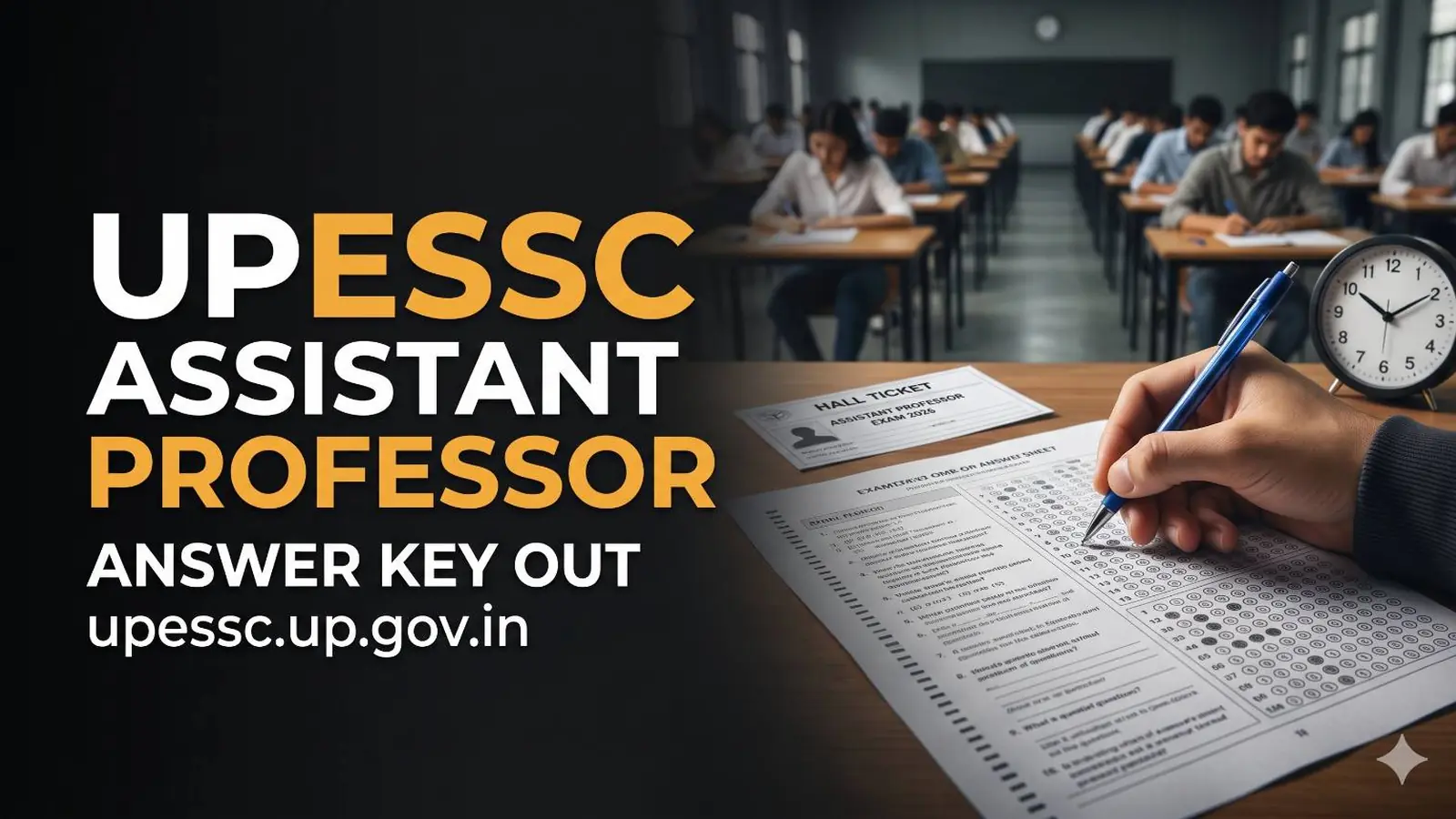
Updated: 23 November 2026. The UPESSC Assistant Professor Answer Key 2026 has been released for the recruitment examination held on 19 and 20 November 2026. Candidates can consult the provisional answer key and master question paper through the Uttar Pradesh Education Services Selection Commission’s official website, upessc.up.gov.in. The currently reported deadline to challenge an answer is 29 November 2026. This is the stage at which careful comparison of questions, accepted options and supporting evidence matters most. An answer key is not a result, and the provisional version can change after valid objections are reviewed.
What exactly has UPESSC published?
UPESSC, based in Prayagraj, administers recruitment-related examinations under its mandate. For the Assistant Professor recruitment process associated with advertisement 04/2026, it has made a provisional answer key available following the examination. Published recruitment coverage identifies a drive covering 1,936 posts, but candidates should rely on the official examination notice for the advertisement-wise vacancy structure and any revisions. A provisional key provides the commission’s initial accepted answers and lets candidates identify questions they consider incorrect, ambiguous or affected by printing issues. It may also be accompanied by the master question paper or a separate login-based response or objection interface. Do not mistake a coaching institute’s solved PDF for the commission’s official key.
UPESSC Assistant Professor answer key 2026 download steps
Visit the official UPESSC site and find the Latest Notices, Answer Key or Assistant Professor 2026 examination section. Match the advertisement number and subject before clicking a notice. If a downloadable PDF is provided, save the file to your device and note its publication date; if the page redirects to an official objection or candidate login, follow the instructions shown there. Candidates may need registration credentials, an exam roll number or another identifier to access an individual response sheet, but requirements depend on the portal. Compare the question number and series against the master paper rather than guessing from the order in a downloaded image. Keep a local copy of the document, because later corrected versions can replace provisional files.
How to match your answers and estimate a tentative score
Open your own answer record if the commission has made it available, alongside the official master question paper and answer key for your subject. Align the question IDs or sequence carefully: different sets sometimes reorder questions while retaining the same content. Mark correct, incorrect and unattempted items separately. Apply only the official scoring and negative-marking rules announced for that recruitment; do not copy a generic calculation from another exam. A tentative tally helps you understand your position but cannot substitute for the commission’s final marks or merit list. Changes after objections, category-wise cut-offs, normalization policies and eligibility verification can alter outcomes. If you cannot match a question because a scan is unclear, document the discrepancy rather than inventing an answer.
Objection deadline and fee: what to check before filing
Reports dated 23 November give 29 November 2026 as the deadline to submit objections to the provisional key. Some coverage describes an objection charge of ₹100 per challenged question; check the portal for the operative amount, permitted payment method and whether refunds apply when a claim is accepted. An objection is not a request to re-evaluate every response. The commission generally expects a specific question number, the answer you believe is correct and credible supporting material. Avoid waiting for the deadline evening, as candidate portals may become congested. Save the final acknowledgement or transaction receipt. A draft objection left unsubmitted, or a payment without confirmation, should not be treated as successfully filed.
How to raise a strong answer-key objection
Begin by identifying the precise advertisement, subject, question number and officially marked option. State clearly why the key appears incorrect and show the correct answer with a recognized textbook, statute, scholarly reference or another authoritative source that is genuinely applicable to the question. Page numbers, edition details and concise explanation can make the claim easier to review. Avoid citing unsourced social-media posts, altered screenshots or AI-generated assertions as evidence. Follow the commission’s document format and size limits exactly. Review the objection form before paying and submitting; a vague comment like “answer is wrong” may not provide enough basis for a correction. Keep a separate record of each challenged question rather than combining unrelated issues into one unsupported note.
Final answer key, result and expected cut-off
Once the objection window closes, subject experts may review challenges and the commission can issue a final or revised answer key. The result and selection list are separate official announcements; neither is guaranteed to appear immediately after 29 November. Cut-off marks vary with subject, category, vacancies, performance and the commission’s selection rules. Any exact number circulating before verified result data is speculation, not an official expected cut-off. Use previous recruitment statistics only as context and label estimates clearly. Candidates who believe their score is near a likely threshold should continue preparing documentation without assuming selection. Follow the official site for result dates, interview or verification notices, and information on the next recruitment stage.
Useful checklist before the 29 November deadline
Confirm the correct official notice, download the matching subject file, retain your roll number and exam details, compare question IDs, note any disputed answers and prepare evidence before entering the objection form. Submit only documented challenges; paying a fee without strong support serves little purpose. Download acknowledgement and preserve screenshots of the completed application and payment for future reference. Students sharing a PDF in group chats should include its original date and explain that it is provisional. The most useful follow-up searches are UPESSC Assistant Professor response sheet 2026, UPESSC answer key objection fee, UPESSC final answer key date and UPESSC Assistant Professor result 2026. Treat every date after the objection deadline as unconfirmed until officially issued.
Frequently Asked Questions
Is the UPESSC Assistant Professor answer key final?
No, the version reported on 23 November is provisional. The commission may revise answers after assessing objections.
What is the last date to object?
Current reports state 29 November 2026; check the official objection portal for any later notice or exact cut-off time.
Do all candidates need to object?
No. Submit an objection only when you can identify a disputed answer and support your position with appropriate evidence.
Is an expected cut-off available?
Any unofficial expected cut-off is an estimate. A verified category- and subject-wise cut-off will depend on the commission’s result.
Where should I download the answer key?
Use the official commission website and the notice matching the Assistant Professor advertisement, not an unrelated third-party copy.
Sources and important note
UPESSC official portal; reporting on the provisional key and objection deadline: Times of India. Information updated 23 November 2026. Confirm fee, login instructions and any revised dates from UPESSC itself; this is an independent informational article.
























Share Your Opinion
Comments are closed on this post.