 Vista
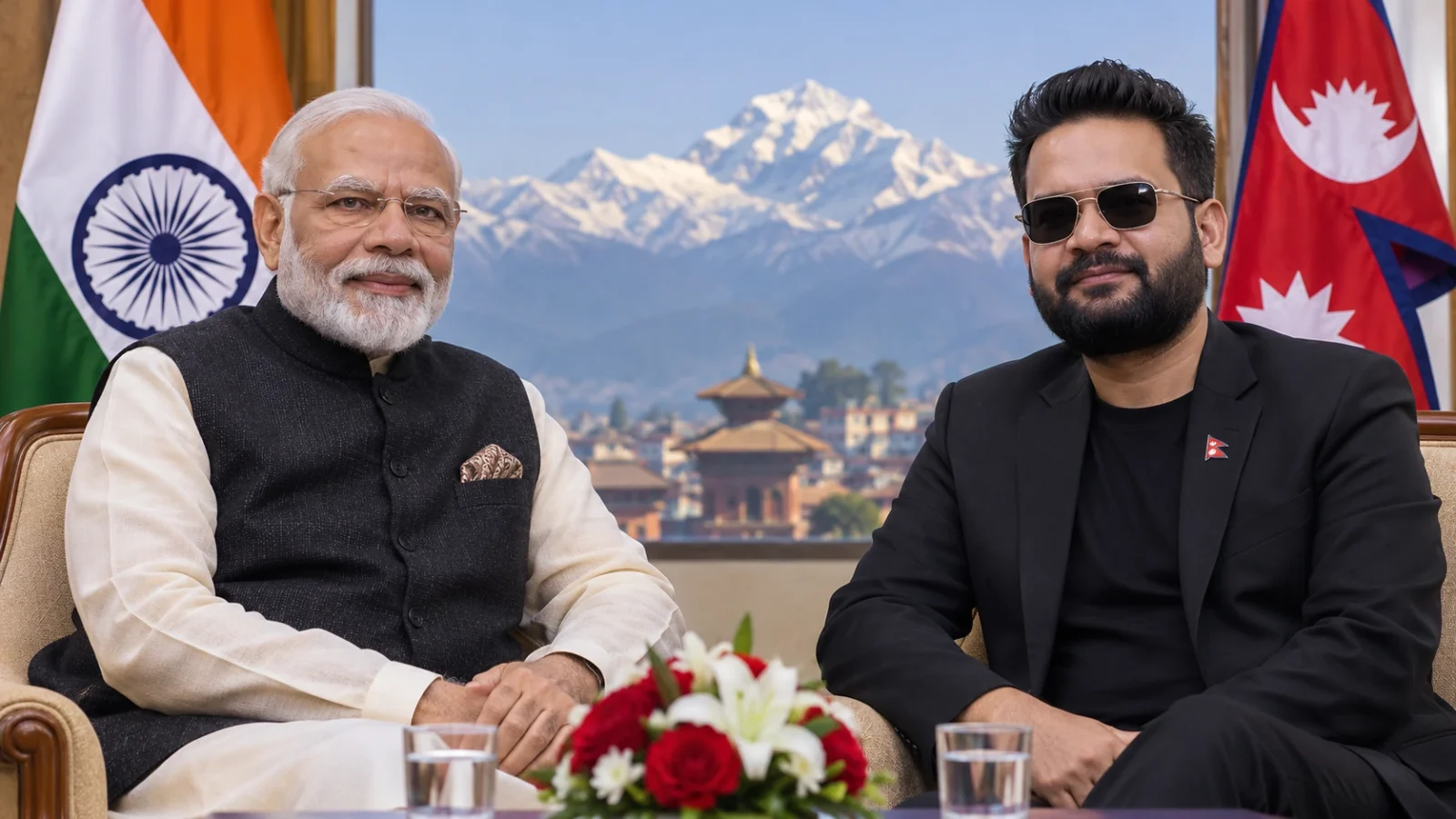
Indian Prime Minister Narendra Modi and Nepal’s Prime Minister Balendra ‘Balen’ Shah held talks in New Delhi on 23 November 2026, with India announcing an economic and reconstruction package of 240 billion Nepalese rupees, roughly $1.62 billion at the reported exchange rate. The two governments signed agreements to strengthen economic ties and jointly inaugurated a cross-border rail connection, according to Reuters. The meeting was Shah’s first bilateral India visit since taking office in March 2026. These are reported outcomes of the summit, not merely promises that the meeting may take place.
Updated: 23 November 2026 | Summit: New Delhi | Financial package: NPR 240 billion
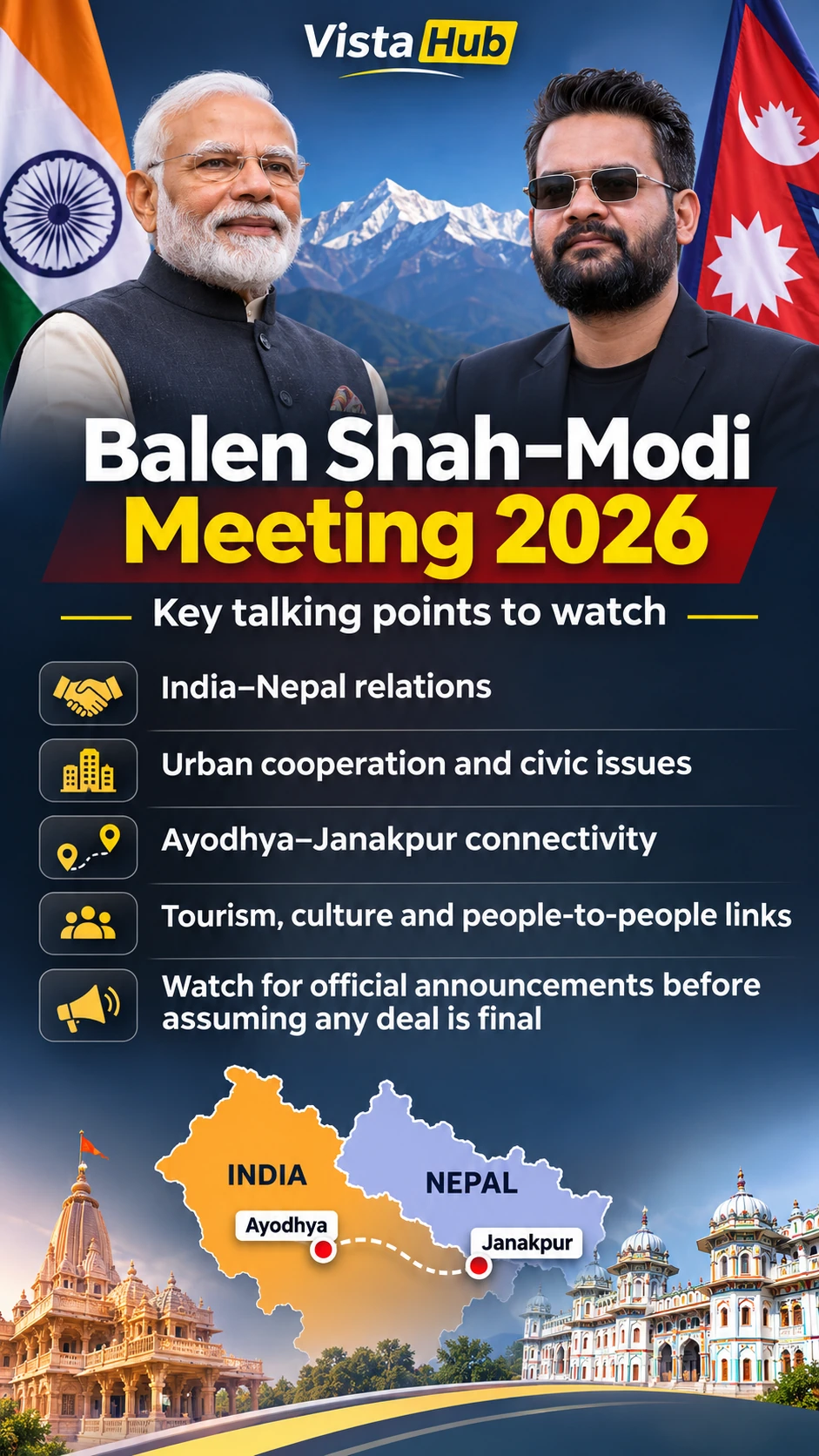
What happened at the Modi–Balen Shah meeting on 23 November?
The two prime ministers held talks during Shah’s two-day visit to New Delhi, which began on 22 November. Their discussions covered bilateral relations and practical cooperation at a time when Nepal is recovering from serious flooding and both countries are considering how to strengthen transport and commercial links. Reuters reported that the leaders met at Hyderabad House and announced a substantial financial package afterward. This is a development from the early-morning agenda stories that had said the meeting would take place later in the day. Accurate news should therefore describe confirmed decisions while avoiding invented details about any proposals that were not publicly finalised. The meeting also carried diplomatic symbolism: Shah, who became Nepal’s prime minister in March, was making his first bilateral visit to India as head of government.
NPR 240 billion aid: what was announced?
Modi said India would provide a development cooperation package worth NPR 240 billion, or 24,000 crore Nepalese rupees, estimated at about US$1.62 billion in contemporary reporting. The announcement linked the assistance to Nepal’s reconstruction and long-term development after major flood damage. The precise structure of the package—such as the mix of grants, loans or project financing—must be evaluated from detailed bilateral documents rather than guessed from the single headline figure. A press statement that announces a financial envelope is not necessarily the same as cash transferred immediately on the day of the meeting. The figure is stated in Nepalese rupees; confusing it with Indian rupees would change the apparent size of the announcement. Readers should distinguish commitments, future implementation milestones and completed disbursements.
Why Nepal’s flood recovery is central to the package
The talks follow a devastating flood in Nepal in August 2026 that damaged communities and transport infrastructure. Reuters describes the disaster as linked to a glacier collapse near Nepal’s border with China, causing flooding that swept away villages and damaged highways, bridges and power lines. Damage of this kind can leave lasting problems beyond the immediate emergency: displaced households need housing, essential services must be restored and roads rebuilt before local commerce can recover. Modi presented India’s support as a way to assist affected families, encourage reconstruction and strengthen preparedness for future disasters. Shah acknowledged India’s earlier response during the emergency. It is important not to confuse the aid announcement with proof that specific villages have already been rebuilt or that every family has received compensation. Project execution and oversight are the next questions.
Ayodhya–Janakpur train: what was inaugurated?
The leaders jointly opened a new cross-border rail link, according to reporting from Reuters and AP. Indian coverage identifies the featured service as the Saryu–Kamala Express, a weekly train connection designed to link Ayodhya in Uttar Pradesh with Janakpur Dham in Nepal. The symbolic connection draws on long-standing cultural links between Ayodhya, associated with Lord Rama, and Janakpur, associated with Sita in the Ramayana tradition. Railway inauguration news does not in itself provide a verified public timetable, every intermediate stop, exact ticket fare or booking opening time. Those details should be obtained from official railway schedules and the authorised booking channel before giving passengers travel advice. The practical benefit lies in making movement easier for visitors, families and communities across the border if service runs as planned.
Other announced projects and economic cooperation
The Associated Press reported that the leaders also virtually inaugurated a hydropower project, an oil storage facility and an oil pipeline. These fit into broader economic cooperation across energy, petroleum supply and connectivity. Reuters confirmed the signing of agreements intended to strengthen the economic relationship but did not provide a full itemised list of all terms in its initial story. It would be wrong to invent project capacities, funding shares or completion dates without original project documents. Nepal and India have long traded electricity and pursued infrastructure links, so a newly inaugurated facility should be distinguished from an older electricity agreement that is simply being discussed again. A useful policy explainer asks which assets are operational, which initiatives are approved but not complete and which are still proposals. Today’s summit provides confirmed headlines; subsequent government briefings can answer those implementation questions.
Why Balen Shah’s first India visit matters
Balendra Shah, popularly known as Balen Shah, came to the Nepal premiership in March 2026 after major political change in the country. His first bilateral trip to India has attracted attention because New Delhi and Kathmandu have extensive social and economic ties alongside a history of disputes and negotiation. Nepal is connected to India through an open border, extensive labour movement, pilgrimage and regional commerce. Changes in Nepal’s political leadership can alter priorities but do not eliminate these structural links. At a summit of this scale, the symbolism of a new administration meeting India’s leadership is important; however, the practical test is whether agreements translate into functioning services and projects. Avoid speculative claims about personal rivalries or dramatic diplomatic reversals when the verified reports describe policy talks, reconstruction and new transport and energy initiatives.
How can people use the Ayodhya–Janakpur connection?
For pilgrims or families, a direct cross-border train has the potential to simplify an itinerary between two well-known cultural destinations. Yet people should not rely on a short news report to decide which day to travel, the exact border crossing, the identification they must carry or whether a particular date is bookable. A weekly service may have different operational arrangements from a daily train, and plans can change after inauguration. Check the latest railway schedule, platform and booking rules from the authorised operators. If travelling internationally, confirm entry and identification requirements based on nationality and circumstances. News about an inauguration is an invitation to verify the new transport option, not a substitute for the official passenger timetable. A practical guide should update only when actual service information is publicly documented.
Which claims are confirmed and which need follow-up?
Confirmed as of the latest reporting: Modi and Shah held talks in New Delhi on 23 November; India announced a NPR 240 billion package; both sides signed economic-cooperation agreements; and a cross-border train connection was inaugurated. AP reported additional energy and petroleum infrastructure inaugurations. Still awaiting the appropriate official documents or operational updates are granular package terms, individual project allocations, train ticket prices and complete service schedules. For social-media image posts, the distinction matters because a dramatic AI composite of the two leaders is not a documentary photograph of their meeting. The existing poster used here is a conceptual illustration. The Reuters story contains actual photographs of the Hyderabad House event, which should be labelled correctly if readers follow the original source.
Frequently asked questions
When did Modi meet Balen Shah?
On 23 November 2026 in New Delhi during the Nepal prime minister’s two-day India visit.
How large was the announced aid package?
NPR 240 billion, approximately US$1.62 billion in contemporaneous reporting.
Is the package stated in Indian rupees?
No. The Reuters figure is in Nepalese rupees.
Which train link was inaugurated?
A cross-border Ayodhya–Janakpur Dham connection, reported as the weekly Saryu–Kamala Express.
Are official ticket prices available in the summit article?
Not in the reporting used here; confirm fares and times with railway operators.
Did the leaders inaugurate other infrastructure?
AP reported hydropower, oil storage and pipeline projects alongside the rail link.
Conclusion
The verified outcomes are the aid announcement, economic cooperation and opened rail link. Details of passenger operations and disbursement should be verified as they are officially published.
Sources
- Reuters, 23 November 2026
- Associated Press, 23 November 2026
- Indian Express — agenda and India-Nepal cooperation
News note: Verify future project and passenger-service details in official documents.

























Share Your Opinion
Comments are closed on this post.