 Vista
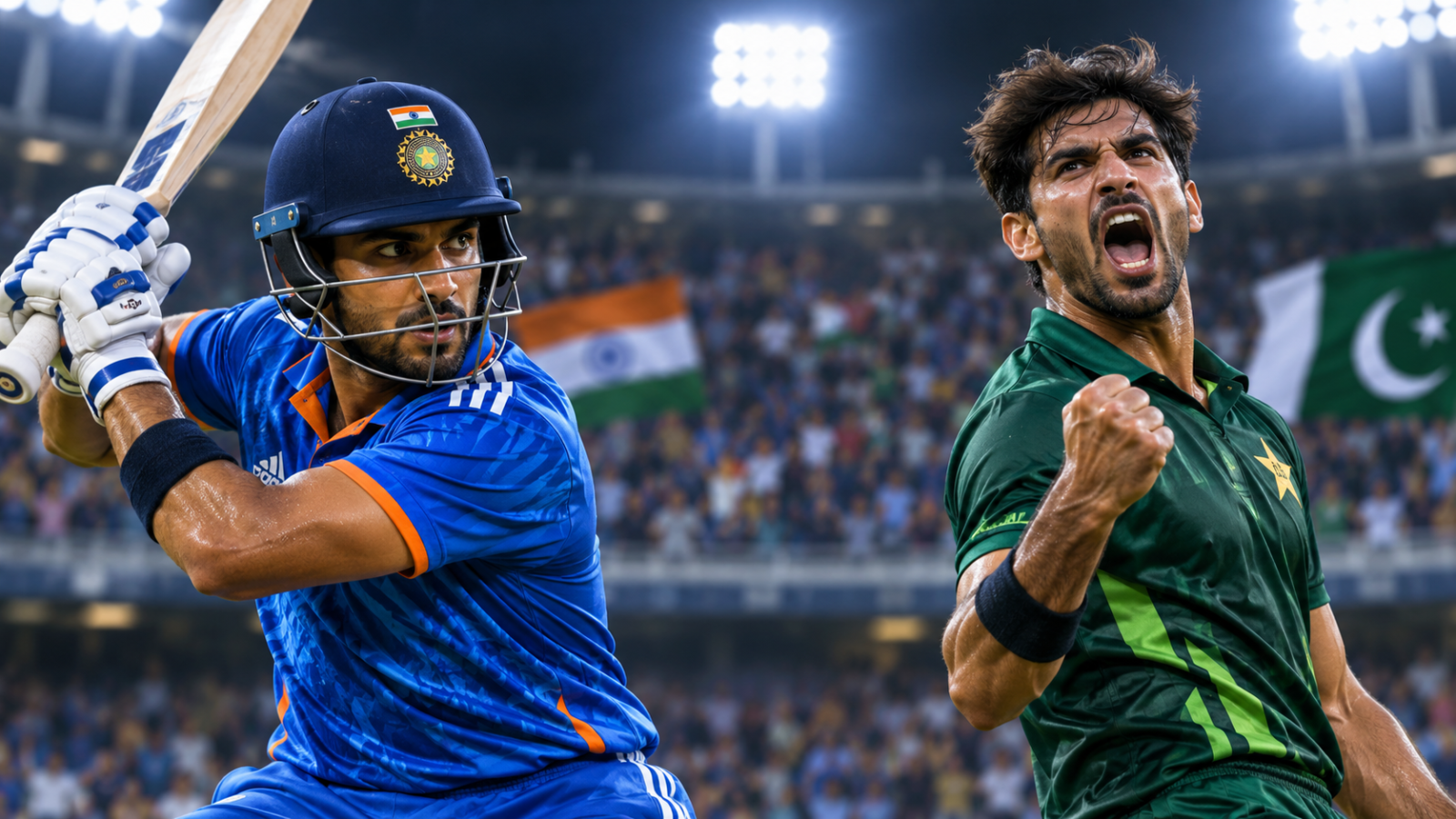
India A lost to Pakistan A by 48 runs in the ACC Men’s Asia Cup Rising Stars on 22 November 2026 in Doha. Pakistan A made 313 all out in 49.2 overs; India A finished on 265 all out in 49.1 overs. India captain Tilak Varma scored 100 off 149 balls, but the chase still ended short. The striking story is not merely the century: it is how Pakistan’s large total, wickets and Hasan Nawaz’s all-round performance decided the game.
Updated: 23 November 2026 | Match: 22 November 2026 | Venue: Doha
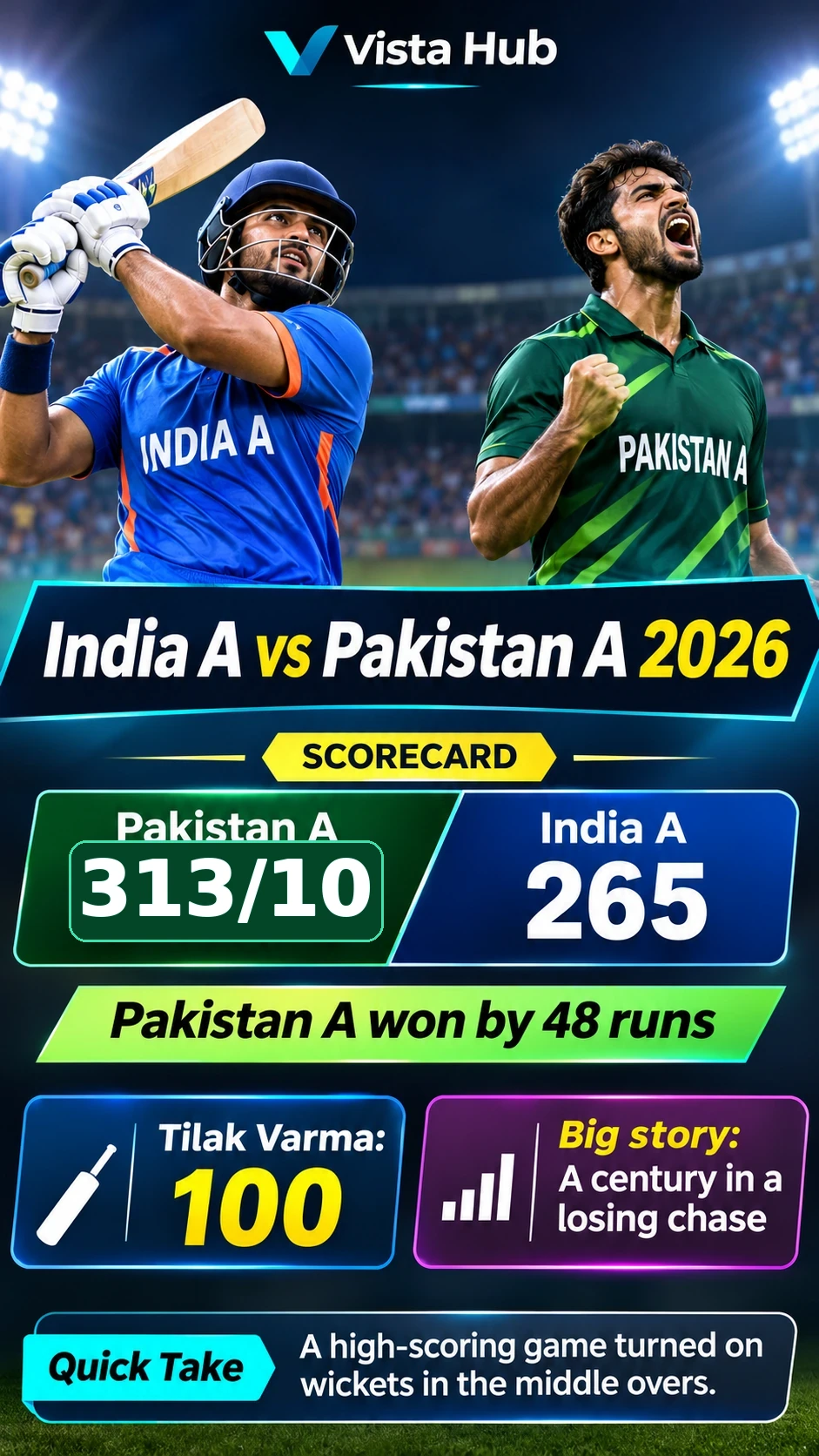
Verified match figures: Pakistan A 313/10 (49.2 overs); India A 265/10 (49.1 overs); Pakistan A won by 48 runs; Tilak Varma 100 (149 balls); Hasan Nawaz 79 and 3/45.
India A vs Pakistan A 2026: full result at a glance
The Group B clash took place at West End Park International Cricket Stadium, Doha. The 50-over format is important: a target of 314 meant the required run rate was just above six per over from the start. That sounds manageable in a modern limited-overs game, but a chase is not decided by a single batter’s score; wickets, partnerships and overs left all matter.
Pakistan A’s 313 came from 49.2 overs, meaning the innings ended all out before the full quota. India A’s 265 was likewise an all-out innings in 49.1 overs. That eliminates a common misunderstanding circulating with quick graphics: neither side’s score should be shown as 313/9 or 265/9. The verified score reads 313/10 versus 265/10, a difference of 48 runs.
The match featured both experienced emerging internationals and younger players. It is important not to confuse this India A fixture with a senior India–Pakistan international. It was a Group B match in the Rising Stars competition, not a senior World Cup or a final. Search terms such as India A Pakistan A highlights, Rising Stars Asia Cup 2026 scorecard and Tilak Varma century all refer to this fixture.
Pakistan A’s innings: where 313 came from
Hasan Nawaz was the central contributor to Pakistan A’s batting effort with 79 runs. The team did not bat out all 50 overs, yet its total required a sustained pursuit. A score over 300 can be chased, but the batting side normally needs a solid opening platform or multiple middle-order partnerships to keep the scoring rate under control.
Vipraj Nigam’s 2/46 was one of India’s notable bowling figures. Individual figures matter, but reading them without the innings context misses the larger issue: even with Pakistan dismissed, India’s batters were left a significant task. The opposition had enough runs to attack with close fielders and absorb a partnership without panicking.
When reading a scorecard, begin with runs, wickets and overs; then check top scorers, strike rates and the contributions of each bowling spell. A list of individual boundaries is less useful than understanding how the innings got to 313 and whether the target was realistic when the chase reached its middle overs.
Tilak Varma century: 100 off 149 balls
Tilak Varma’s hundred was a major personal contribution and came under pressure. However, 100 from 149 balls corresponds to a strike rate of roughly 67.11. For a 314-run chase, that tempo means other batters need to score quickly, or the side needs a long innings in which the required rate remains within reach. A century is not automatically a match-winning knock.
The point is not to reduce the performance to one statistic. Losing early wickets can force a batter to take fewer risks while rebuilding, especially if the team has a long way to go. Tilak provided resistance and brought the match deeper into the innings; the eventual 48-run gap shows the chase never secured the combination of batting resources and scoring momentum required to finish.
Shahbaz Ahmed scored 56 and was another significant contributor. Their partnership gave India a pathway back into the match, but with wickets down and a demanding target, the batting side required runs from the remaining order. The distinction between a fighting hundred and an innings that controlled the chase is central to explaining this result responsibly.
Hasan Nawaz’s all-round performance changed the match
Hasan Nawaz’s 79 runs and 3 wickets for 45 runs made his performance particularly influential. A player who contributes heavily to a 313-run total and then breaks a chase with the ball influences both innings. That provides a better account of the outcome than crediting the result to one late dismissal or assuming India lost only because of the target.
Ali Raza also took three wickets according to the contemporaneous match reports. A chase can appear stable while a set batter occupies the crease, then change rapidly once the lower order is exposed. Repeated wickets make boundary-hitting increasingly risky because partnerships and strike rotation become harder to sustain.
To evaluate an all-round display, examine the match situation at the time of the runs and wickets, not just the final tally. Hasan’s numbers are independently supported by match scorecard coverage and are included here because they explain both Pakistan’s strong total and the pressure on India’s response.
Group B points and qualification: what changes now?
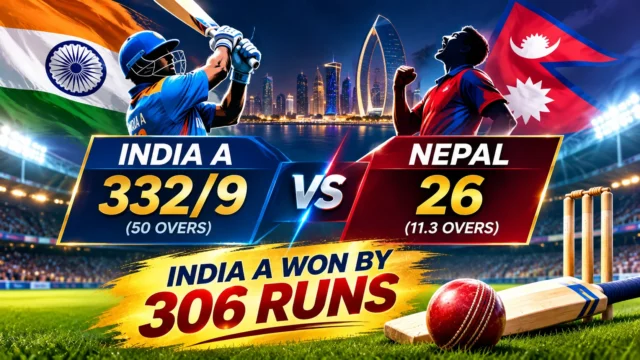
Pakistan A had won its opening match against the UAE and followed it with this win over India A. India had previously beaten Nepal. After the 22 November game, Pakistan stood on two wins while India had one win and one loss in the two matches discussed here. Net run rate and other group results remain important when teams finish level on points.
India A’s next scheduled opponent is the United Arab Emirates on Tuesday, 24 November 2026. Pakistan A are due to face Nepal. These next fixtures matter more to qualification than speculation about a rematch. A win improves India’s position, but the exact semi-final equation must follow the event’s published qualification rules and completed match results.
Do not assume India have already been eliminated, or that Pakistan have mathematically clinched every possible outcome, simply because of this result. The safe practical answer for readers searching ‘India A vs Pakistan A standings’ is to check the live Group B table after both next-round matches, especially the net run-rate column.
How to read the scorecard and watch genuine highlights
Check the full scorecard for each innings rather than relying on circulating screenshots. Confirm the batting total as 313 all out and 265 all out; look up the dismissals and balls faced next to each player’s name. For Tilak Varma specifically, 100 off 149 is the verified figure; a graphic saying 100 off a much smaller number of deliveries describes a different performance and is misleading.
Scorecard pages should also distinguish the match date, local time and competition. Search results can surface previous India A–Pakistan A fixtures and senior national-team meetings. The match in this article was played on 22 November 2026 in Doha. Its 48-run margin and Hasan Nawaz’s 79 with 3/45 help distinguish it from older results.
Use official rights-holders or competition channels when looking for video highlights. Unofficial clips can be edited, wrongly dated or AI-created. The infographic above is a designed illustration for explanation, not a photograph or replay of the real match.
What India A can learn before facing the UAE
The first lesson is about balancing consolidation and tempo. It is reasonable to protect wickets after an early collapse, but a target above 300 requires a plan for when to accelerate. The scoreboard should tell a batting pair not only how many runs remain, but how the required run rate will move if several quiet overs pass.
The second lesson is distribution of responsibility. A century and a half-century are valuable, yet a chase usually needs meaningful runs through the lineup. Lower-order batters should not be left with too many runs and too few balls. Rotating strike, preserving wickets and capitalising on loose deliveries matter together.
Finally, a single defeat need not determine the overall evaluation of an emerging-team squad. The tournament is also about pressure exposure, bowling combinations and decision-making. However, these broader development aims do not erase the immediate sporting consequence: India must respond strongly against the UAE.
Frequently asked questions
Who won India A vs Pakistan A on 22 November 2026?
Pakistan A won by 48 runs in Doha.
What was the full score?
Pakistan A scored 313 all out in 49.2 overs; India A made 265 all out in 49.1 overs.
How many balls did Tilak Varma face for his century?
He made 100 from 149 balls, an approximately 67.11 strike rate.
Who was the key Pakistan A all-rounder?
Hasan Nawaz scored 79 and took 3/45.
When is India A’s next match?
The next scheduled Group B fixture is against the UAE on 24 November 2026; always check the tournament schedule for any change.
Related on Vista Hub: India A vs Nepal 2026: Scorecard and standings.
Conclusion and what to watch next
India A’s match against the UAE on 24 November is the next meaningful checkpoint. Confirm the final Group B order from the competition’s official table once those fixtures finish; this article is based on the verified 22 November result and does not assume tomorrow’s outcome.
Sources
Sports reporting note: when live score pages are updated, the final competition scorecard takes precedence.























Share Your Opinion