 Vista
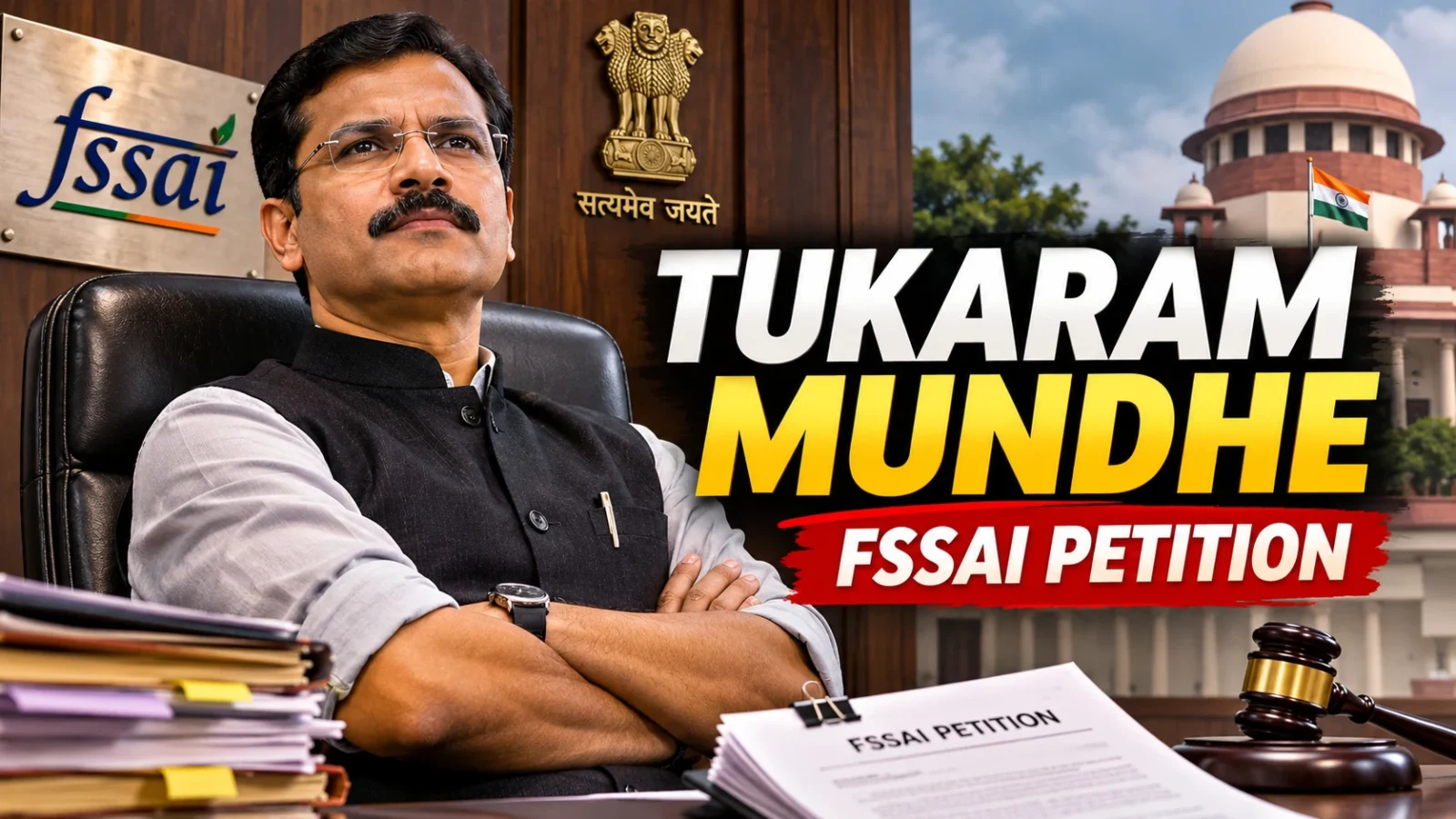
Updated 20 November 2026. The dispute involving Maharashtra Food and Drug Administration (FDA), its food safety commissioner Tukaram Mundhe, and the Food Safety and Standards Authority of India (FSSAI) has taken an important turn. After Maharashtra challenged certain central food-safety orders in the Bombay High Court, reports published on 13 November 2026 said that the state FDA had decided to withdraw its petition and written to the state Advocate General about the move. That is not necessarily the same as a final judicial order permitting withdrawal. We could not independently verify a final court disposal order as of this update.
The distinction matters. Posts claiming that “Tukaram Mundhe lost the case”, “the High Court struck down the FSSAI system” or “state officials can no longer inspect food businesses” go beyond what the available reporting establishes. The central issue was not a personal fight. It concerned the balance of responsibility between India’s national food regulator and state enforcement agencies—particularly when a business holds a central FSSAI licence but operates inside Maharashtra.
This guide separates the Tukaram Mundhe FSSAI petition latest update from the original allegations, explains what inspection powers were at stake, and outlines the separate 2026 changes to the FSSAI registration and licensing thresholds.
What happened on 13 November 2026?
According to 13 November reports by The Times of India and Maharashtra Times, Maharashtra’s FDA decided to withdraw the writ petition it had filed against the Union health ministry and FSSAI. A letter communicating that decision was sent to the state Advocate General, according to the reporting. Officials reportedly held discussions with FSSAI leadership, including CEO Rajit Punhani, and considered resolving the disputed issues administratively instead of continuing litigation.
Some reporting attributed the change to pressure from the Union government. This should be treated as a sourced allegation, not a proven finding about the reasons for the decision. Commissioner Mundhe was not available for comment to the publication. The definitive legal status depends on what was filed in court and what the judges subsequently ordered.
The petition had earlier been listed for a hearing on 26 November 2026. Because the withdrawal decision came after that scheduling report, it would be misleading to present the old listing as a confirmed forthcoming hearing without checking the current Bombay High Court cause list.
Readers following this story should distinguish three milestones: an internal government decision to withdraw, a filing through legal counsel, and an order recording withdrawal or disposal. News about the first milestone does not automatically establish the third.
Why did Maharashtra FDA challenge FSSAI?
The Food Safety and Standards Act, 2006 created India’s overarching framework for food regulation, with national standard-setting and state-level implementation responsibilities. Maharashtra’s petition argued that FSSAI had developed what the state described as a parallel enforcement arrangement that interfered with the powers assigned to state authorities under the statute.
One contentious issue involved inspections of food businesses holding a Central FSSAI Licence. Imagine a large packaged-food manufacturer or restaurant chain operating a unit in Mumbai. If the state food safety department receives a credible complaint about that location, can its appointed inspector independently visit, collect samples and take lawful action? Or must the process go through a central official or a separate approval mechanism?
The Maharashtra government contended that some central instructions had constrained locally appointed officers’ ability to act. The petition questioned, among other matters, a May 2023 FSSAI direction and earlier institutional arrangements concerning central food-safety officials. These were the state’s arguments before the court; they should not be described as judicially proven wrongdoing by FSSAI.
The public-interest dimension is substantial: delayed inspections can matter if food is unsafe, while conflicting chains of authority can create inconsistent decisions for businesses. At the same time, coordination between central and state authorities may help avoid duplicated inspections and unclear responsibilities. The debate, therefore, concerned how the existing law should operate—not whether food safety standards should be abandoned.
FSSAI vs Maharashtra FDA: who does what?
FSSAI: national regulatory framework
The Food Safety and Standards Authority of India establishes and administers national food standards, guidance, and key licensing-related regulatory systems. Its work affects manufacturers, importers, food service operators and numerous other categories of food businesses. It is not simply a website for issuing licence certificates: it plays a central role in determining the framework of compliance across India.
Maharashtra FDA: state enforcement
Maharashtra’s FDA is an important on-the-ground enforcement authority. Subject to the applicable statute, rules and lawful directions, its appointed officials investigate complaints, conduct inspections, collect samples and initiate appropriate action for food-safety violations. An individual establishment’s licence class and other relevant requirements may affect how responsibilities are shared.
FoSCoS: the digital licensing system
FoSCoS stands for Food Safety Compliance System. Businesses use this official FSSAI platform for online registration and licensing-related functions. Access to data and the allocation of administrative responsibilities connected with this platform were among the wider issues raised by Maharashtra. This does not mean the portal itself became unlawful when the petition was filed.
The most useful question for an operator is practical: does your business have the correct certificate, are its details up to date, and which legally appointed officers or departments should receive required information? A legal dispute between public agencies does not excuse failing to comply with established food-safety obligations.
Timeline of the FDA–FSSAI High Court dispute
| Period | Development |
|---|---|
| 2006 | Food Safety and Standards Act lays down the national legal framework. |
| 2011 | Food business licensing and registration regulations are introduced. |
| 2018 | Central food-safety enforcement roles later become an issue in the state’s petition. |
| 2020 | FoSCoS-related administration and data systems become an important part of online licensing. |
| May 2023 | An FSSAI direction concerning inspections of centrally licensed businesses is later challenged. |
| March 2026 | Union government announces reforms to turnover thresholds and compliance processes. |
| 1 April 2026 | New general turnover thresholds become applicable. |
| October 2026 | Reports describe the Maharashtra petition and a hearing scheduled for 26 November. |
| 13 November 2026 | News reports say FDA decided to withdraw its petition and contacted the Advocate General. |
| 20 November 2026 | Final court disposal has not been independently confirmed for this article. |
The timeline combines reported litigation developments with public regulatory announcements. It should not be read as an assertion that every listed government measure was ruled on by the Bombay High Court.
FSSAI Licence Rules 2026: registration, State Licence and Central Licence
People searching for the FDA dispute frequently also want to know whether 2026 rules changed their own food business licence obligations. They did—but the turnover reform is distinct from the litigation about enforcement jurisdiction.
The Union health ministry’s announcement of 13 March 2026 and FSSAI guidance describe revised general annual turnover thresholds effective from 1 April 2026:
| Annual turnover | General category |
|---|---|
| Up to ₹1.5 crore | FSSAI Registration |
| Above ₹1.5 crore and up to ₹50 crore | State Licence |
| Above ₹50 crore | Central Licence |
These are general turnover-based categories, not a replacement for every activity-specific rule. Depending on what a business produces, handles or sells, additional criteria may apply. Operators should review the current official regulations and their FoSCoS records before deciding they can downgrade, switch or stop using an existing licence.
One subtle but significant detail comes from FSSAI’s 27 March 2026 FAQ: the revised turnover-threshold order does not itself change the jurisdiction of licensing or registering authorities. That clarification is particularly relevant here because the Maharashtra litigation concerned inspection and enforcement powers, including earlier central directions. A revised revenue threshold cannot, on its own, answer every legal question raised by the state.
The 2026 reforms also addressed perpetual validity subject to continuing compliance and risk-based inspection. “Perpetual” is not a promise that a business may operate indefinitely regardless of hygiene, storage, labeling or safety requirements. Violations can still lead to lawful enforcement action.
What does the dispute mean for restaurants, food businesses and consumers?
For a restaurant owner, manufacturer or food seller, the immediate advice is to keep operating under the applicable requirements—not to take enforcement headlines as permission to stop meeting them. Review the licence category, ensure details on FoSCoS are accurate, keep records where required, and continue following the food hygiene standards relevant to your establishment.
Consider a customer who reports contaminated packaged food bought from a store. Useful evidence could include a receipt, product label, batch code, expiry date, the original packaging and photographs. A person can approach an appropriate official complaints channel with this information rather than relying on a viral message about the FDA and FSSAI dispute. If an illness is serious, medical attention is more urgent than documenting a complaint.
For smaller vendors, the reforms include certain deemed-registration provisions for street vendors already covered under the applicable municipal or vending framework. That does not imply a blanket exemption for every roadside seller; eligibility and hygiene obligations still need to be checked under official rules.
The dispute also illustrates why businesses should avoid conflating licensing, inspection, enforcement and court proceedings. A certificate may come from a national online platform, while lawful inspection arrangements may involve state and central bodies. A policy discussion about who coordinates those actions does not negate food-safety responsibilities.
Claims versus verified information
- Claim: Tukaram Mundhe lost in court. The available update reports a decision to withdraw the petition, not a verified judicial defeat on the merits.
- Claim: The High Court cancelled all central food safety inspections. No supporting final judicial order has been established for that claim.
- Claim: Maharashtra FDA cannot inspect food businesses now. This blanket statement does not follow from the reporting. Existing law and valid orders determine powers.
- Claim: Businesses below ₹50 crore only need registration. The general category for turnover above ₹1.5 crore and up to ₹50 crore is State Licence, subject to applicable criteria.
- Claim: Perpetual validity means food safety inspections end. Businesses must still comply with safety standards and can face lawful enforcement action.
Frequently Asked Questions
1. What is the Tukaram Mundhe FSSAI case about?
It concerns Maharashtra FDA’s challenge to certain central regulatory and enforcement arrangements that, according to the state’s petition, restricted the powers of state food-safety officers. Inspection of centrally licensed businesses was a key issue.
2. Has the FSSAI petition been withdrawn?
Reports dated 13 November 2026 say Maharashtra FDA decided to withdraw it and wrote to the Advocate General. This article has not independently established a final Bombay High Court order recording withdrawal.
3. Was the next hearing on 26 November 2026?
That was the hearing date mentioned in earlier reports. The later decision to seek withdrawal may affect proceedings, so check official court listings rather than assuming the original schedule remains in force.
4. What are the FSSAI licence turnover limits in 2026?
Generally, registration applies up to ₹1.5 crore annual turnover, a State Licence above ₹1.5 crore and up to ₹50 crore, and a Central Licence above ₹50 crore. Other activity-specific requirements may apply.
5. Can an FSSAI Central Licence exempt a business from hygiene rules?
No. The licence is not an exemption from food safety law. Applicable hygiene requirements and lawful regulatory oversight continue to matter.
6. Where can a food operator check official licence details?
Use the official FoSCoS portal and current FSSAI notices. Avoid giving login or business identity details to unofficial lookalike websites.
Bottom line
The most consequential update to the Tukaram Mundhe vs FSSAI story is Maharashtra FDA’s reported decision to withdraw its legal challenge and pursue discussions. That is a procedural development, not proof that every disputed inspection power has been settled by a court. Operators should follow the current law; readers should distinguish the reported decision from an actual court order and avoid sensational claims about an officer’s victory or defeat.
Sources: The Times of India, 13 November 2026; The Indian Express, October 2026; Press Information Bureau, 13 March 2026; FSSAI official FAQ, 27 March 2026.
Disclaimer: General news and regulatory information, not legal advice. The 20 November 2026 status reflects accessible reporting and official sources reviewed for this article. The accompanying featured illustration is conceptual and not an actual photo of the official or proceedings.

















Share Your Opinion
Comments are closed on this post.