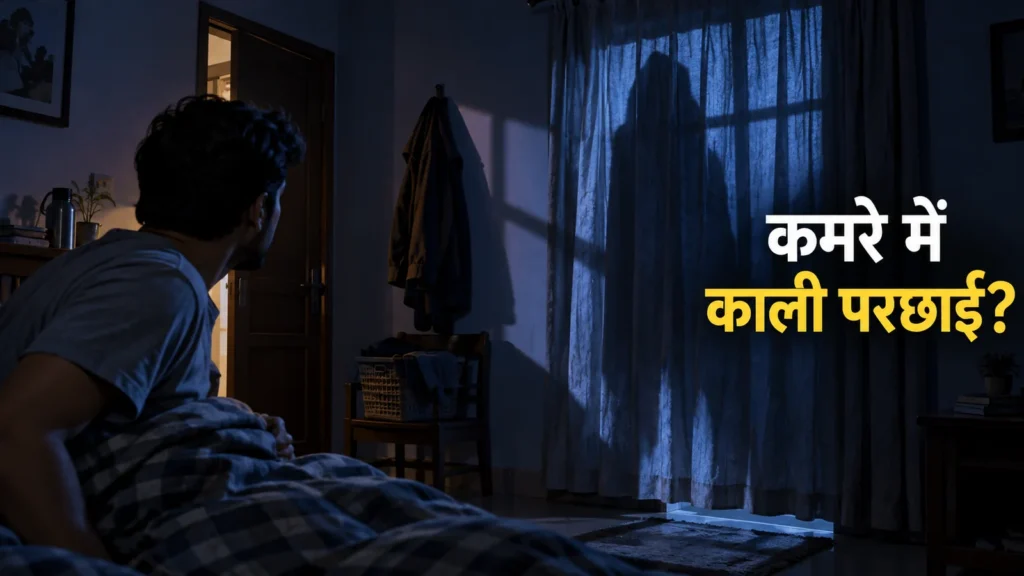
Who called when nobody was at the door?
Imagine drifting toward sleep and hearing your name as clearly as if someone had spoken from the doorway. You look outside, but find nobody there. A remembered warning about mysterious night-time voices makes you uneasy. This opening scene is illustrative, not a documented event.
Hearing your name called at night can happen in different circumstances. A real outside sound, a mistaken interpretation of a sound and a dream-like sleep-transition experience are different possibilities. Distinguishing them is more useful than immediately choosing a supernatural explanation.
Seek medical advice for new or recurrent voices, particularly when fully awake. Voices instructing harm, sudden confusion or an immediate safety risk need urgent help. In India, contact 112 or emergency medical services when there is an emergency.
Sounds around falling asleep or waking
Some people perceive sounds or images without a clear outside source close to falling asleep or waking. Hypnagogic refers to the transition into sleep and hypnopompic to the transition out of it. These terms describe timing; they do not diagnose every unusual sound.
A radio briefly seeming to mix two stations is a simple analogy for overlapping experiences. The brain does not contain literal radio stations. The analogy cannot explain exactly why a particular familiar voice appeared for a particular person.
One such experience does not automatically establish a serious mental-health condition. Nor should every repeated experience be dismissed as harmless simply because sleep is involved. Frequency, distress, other symptoms and what happens during the day all matter.
A real sound, a mistaken interpretation and a perceived voice
A neighbour, phone, television or person outside may provide an ordinary source. Check safely whether someone else heard it and whether a device was playing audio. Do not follow a sound into an unsafe rooftop, well or isolated place in the dark.
An unclear sound may also seem like a familiar word or your own name. Interpreting an existing sound incorrectly is different from perceiving a voice with no external source. Describing what happened does not require you to choose a technical label yourself.
Another person not hearing it does not settle the question: they may have been asleep or farther away. The useful evidence is a calm account of the situation. Neither “therefore a ghost” nor “therefore a psychiatric illness” follows from that observation alone.
FACT: not every voice is Exploding Head Syndrome
Exploding Head Syndrome is generally described as an abrupt, loud bang or explosion-like sound around a sleep transition. Its dramatic name does not mean the head has physically exploded. An ordinary name-call experience should not automatically receive that label.
New severe headache, injury, fainting or other symptoms need their own assessment rather than reassurance based on a syndrome name found online. Tell the clinician what the sound was like, whether there was pain and when it happened.

What to do that night and what to note afterward
Use a gentle light and check for ordinary sound sources. Speak to a trusted family member if that helps. Treat the event as something to describe rather than building a chain of frightening stories around it while you are alone.
Note whether you were falling asleep, waking or fully awake, what you heard, whether it was brief or repeated, whether you could move and whether it happened the following day. Record observations rather than writing a supernatural conclusion as if it were a fact.
Mention sleep loss, new medicines, illness or changes involving substances to your clinician. Do not stop prescribed medication abruptly or borrow someone else’s sedative. When the problem repeats, make an appointment as well as looking for information.
How family can help and when assessment matters
A useful response is: “You experienced a voice and we are listening. Let us understand when it happened.” Calling the person a liar or immediately confirming a spirit can both make the conversation less useful. Calm company helps someone give a clearer history.
New or recurring voices, especially while fully awake, warrant prompt medical advice. Assessment may consider hearing, medicines, sleep and other health issues. Do not diagnose schizophrenia, bipolar disorder or another condition from one symptom.
If significant daytime sleepiness accompanies sleep-transition experiences, mention that too. The clinician can decide whether a sleep specialist or another professional is appropriate. A list of rare diseases is not a substitute for a focused assessment.
A clear account is more useful than a frightening label
At an appointment, you might say: “I heard my name while drifting to sleep, checked the room and found no obvious source.” If it happened while fully awake or on several days, say that instead. Timing is important, and you should not reshape your account to fit the reassuring example in this article.
Ask what information the clinician needs, what changes you should watch for and whether hearing or sleep assessment is relevant. Bring your medicines list and mention recent illness or changes in sleep. If another person witnessed the situation, their observations may help, but they should not speak over your own account.
The aim is not to force you to choose between a belief and your family. It is to identify a safe next step and avoid acting on an unverified interpretation. Keep that practical purpose in view if the discussion becomes an argument about whether a voice was a message.
Advice: take distress seriously, and act on safety risks
If voices instruct harm, someone becomes suddenly confused or their condition rapidly worsens, do not leave them unsupported while seeking a ritual solution. Obtain urgent medical help, keep the situation as safe as possible and contact emergency services when needed.
A harmless personal faith practice may bring comfort, but it does not prove the sound is a message that must be obeyed. Do not leave home, pay money or accuse another person on the basis of a supposed instruction.
Separate an isolated sleep-transition event from recurrent daytime experiences. Respect the fear, avoid a rushed explanation and seek help when the pattern calls for it. A primary-care clinician is a reasonable starting point.
Frequently asked questions
Is hearing my name a prediction of death?
A perceived voice does not provide a reliable basis for predicting death or another future event.
Is every sleep-time sound a hallucination?
No. Real sound sources and mistaken interpretations should also be considered.
Does one event mean mental illness?
No diagnosis follows from one experience. New, recurrent or fully awake experiences need medical advice.
Is it Exploding Head Syndrome?
Not necessarily. EHS usually describes an abrupt, loud bang around sleep transitions.
What if a voice tells me to hurt someone?
Do not follow the instruction. Contact a trusted person and seek urgent medical help immediately.
Related reading
Cannot Move in Your Sleep and Feel Pressure on Your Chest: Sleep Paralysis Explained
Sudden Anxiety and a Racing Heart at Night: Causes and What to Do
Waking Up Gasping or Choking in Your Sleep: Causes and When to Get Help
Why Do Deceased Loved Ones Keep Appearing in Dreams? Grief, Memory and Fear
Sources and review
Information reviewed: 14 October 2026. The opening scene is illustrative, not a reported case.
NHS: Hallucinations and hearing voices
NHLBI: Narcolepsy and sleep-transition experiences
Exploding Head Syndrome: clinical study
This is general information, not an individual diagnosis or treatment. Seek professional help for severe or persistent symptoms.