 Vista

What is Nipah Virus?
Nipah virus (NiV) is a type of zoonotic virus, meaning it can spread from animals to humans. It belongs to the Paramyxoviridae family and is an RNA virus. The virus was first identified in 1998 in the village of Nipah in Malaysia, where it caused a mysterious brain fever among pig farmers. The virus was named after this village. Nipah virus is naturally found in a specific species of bats, known as fruit bats or flying foxes (genus Pteropus). These bats act as natural reservoirs for the virus but do not typically fall ill themselves. When the virus transmits to humans, it can cause severe diseases, with brain inflammation (encephalitis) being a prominent and often fatal condition.
How Does Nipah Virus Spread?
Nipah virus can spread through several primary routes:
1. Animal-to-Human Transmission
- Direct contact with bats: This is a common transmission route. Bats, carrying the virus, can contaminate fruits or palm sap (toddy) through their saliva, urine, or feces. Consumption of these contaminated items can lead to infection. In early cases in Malaysia, transmission also occurred through contact with infected pigs.
- Contact with infected animal secretions: Exposure to blood, saliva, or other bodily fluids from infected animals (such as pigs or other animals that have come into contact with bats) can also result in infection.
2. Human-to-Human Transmission
- Direct contact: The virus can spread from an infected person to another through close physical contact with their bodily fluids, such as saliva, blood, urine, or vomit.
- Caregivers: Healthcare workers and family members caring for infected patients are at risk if they do not follow strict precautions.
3. Through Contaminated Food or Drinks
Fruits that have been bitten or contaminated by bats, and particularly palm sap (toddy) collected from palm trees, can be significant sources of Nipah virus infection.
What are the Symptoms of Nipah Virus?
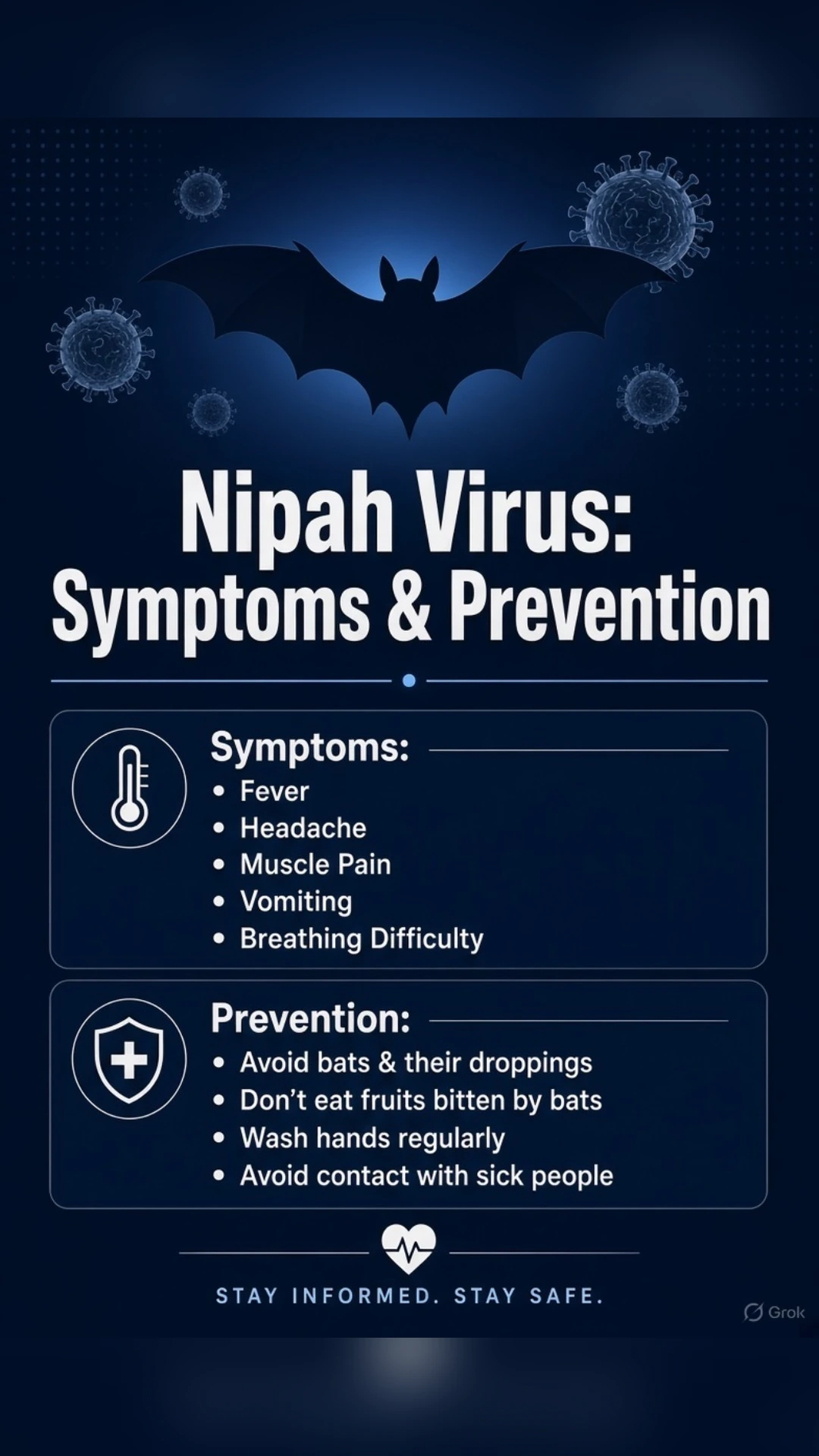
Symptoms of Nipah virus infection typically appear 4 to 14 days after exposure, though in some cases, this incubation period can extend up to 45 days. The initial symptoms often resemble those of the flu, making early diagnosis challenging.
Initial Symptoms:
- High fever
- Severe headache
- Muscle pain
- Vomiting and nausea
- Sore throat
- Dizziness
Severe Symptoms (leading to Encephalitis):
As the infection progresses, it can lead to brain inflammation (encephalitis), presenting with more severe symptoms such as:
- Extreme drowsiness or lethargy
- Mental confusion
- Disorientation
- Seizures
- Severe breathing difficulties (especially in cases with respiratory syndrome)
- Coma
In some instances, respiratory symptoms like cough and shortness of breath can be prominent. The mortality rate associated with Nipah virus infection is notably high, ranging from 40% to 75%.
Diagnosis and Treatment of Nipah Virus
Diagnosis:
Diagnosing Nipah virus can be difficult based on symptoms alone, as they overlap with other illnesses. Laboratory tests are essential for confirmation. These include:
- RT-PCR Test: Detects the virus in samples like throat swabs, urine, or cerebrospinal fluid (CSF) during the early stages.
- ELISA Test: Detects antibodies (IgM and IgG) in later stages.
- Virus Isolation: Directly isolating the virus from samples.
Treatment:
Unfortunately, there is no specific vaccine or antiviral medication currently available for Nipah virus. Treatment is primarily supportive, focusing on managing symptoms and providing comfort to the patient. This includes:
- Hospitalization in an intensive care unit (ICU).
- Respiratory support (ventilation).
- Maintaining fluid balance.
- Managing seizures and other complications.
Effective Prevention Measures for Nipah Virus
Given the lack of specific treatment, prevention is the most effective strategy against Nipah virus infection.
- Avoid bats and their habitats: Stay away from areas where bats reside or where their droppings are likely present.
- Do not consume contaminated fruits: Avoid eating fallen or partially eaten fruits. Wash and peel fruits thoroughly before consumption.
- Avoid fresh palm sap (toddy): If you live in an area with common bat populations, refrain from drinking fresh palm sap, as it can be contaminated by bats.
- Avoid contact with infected animals: If you are involved in animal husbandry, such as pig farming, avoid contact with sick animals and use protective gear (gloves, masks).
- Maintain personal hygiene: Wash your hands frequently with soap and water, especially after contact with animals or before eating.
- Maintain distance from infected individuals: Avoid close contact with anyone confirmed to have Nipah virus infection. Healthcare professionals must use personal protective equipment (PPE).
- Spread awareness: Share accurate information about Nipah virus within your family and community to ensure everyone remains vigilant.
- Report symptoms promptly: If you or someone you know exhibits symptoms of Nipah virus, contact a doctor immediately and inform health authorities.
History of Nipah Virus in India
India has experienced several outbreaks of Nipah virus, with the state of Kerala being particularly affected. The first major outbreak occurred in Siliguri, West Bengal, in 2001. Subsequently, Kerala has seen multiple worrying occurrences in 2018, 2019, 2021, and 2023. While state and central governments have responded swiftly each time, these events underscore the critical importance of ongoing surveillance and prevention efforts. Nipah virus presents a significant public health challenge, but with accurate information and diligent precautions, it can be managed. Follow the prevention methods outlined above to protect yourself and your loved ones.
Frequently Asked Questions about Nipah Virus
What is the main source of Nipah virus?
The main natural reservoir for the Nipah virus is fruit bats (Pteropus genus). The virus can then spread to humans through direct contact with bats, their bodily fluids, or by consuming contaminated food and drinks, such as fruits or palm sap that bats have fed on or contaminated.
Can Nipah virus spread from person to person?
Yes, Nipah virus can spread from person to person through close contact with an infected individual’s bodily fluids, including saliva, blood, and vomit. This is why precautions are essential for caregivers and healthcare workers.
What are the first signs of Nipah virus infection?
The initial signs of Nipah virus infection often mimic flu-like symptoms, including high fever, severe headache, muscle pain, vomiting, sore throat, and dizziness. Early recognition is crucial for timely medical intervention.
Is there a cure for Nipah virus?
Currently, there is no specific cure or antiviral treatment for Nipah virus. Medical management focuses on supportive care to alleviate symptoms and manage complications, such as respiratory support and intensive care.
How can I protect myself from Nipah virus in India?
To protect yourself, avoid contact with bats and their habitats, do not consume fruits that may be contaminated by bats (especially fallen ones), avoid fresh palm sap, practice good personal hygiene (frequent handwashing), and maintain distance from infected individuals. Promptly report any suspicious symptoms to health authorities.

























Share Your Opinion