 Vista

Short answer: Real ancient images of Egyptian gods are found on temple walls, tomb paintings, bronze figurines and stone statues. Each god is recognised by symbols: Anubis by a jackal head, Horus by a falcon, Isis by a throne headdress and Osiris by a crown and mummy wrappings. Genuine photos name the museum or site, so use those details to avoid fakes and AI art.
MUSEUM AND TEMPLE PHOTOGRAPHY
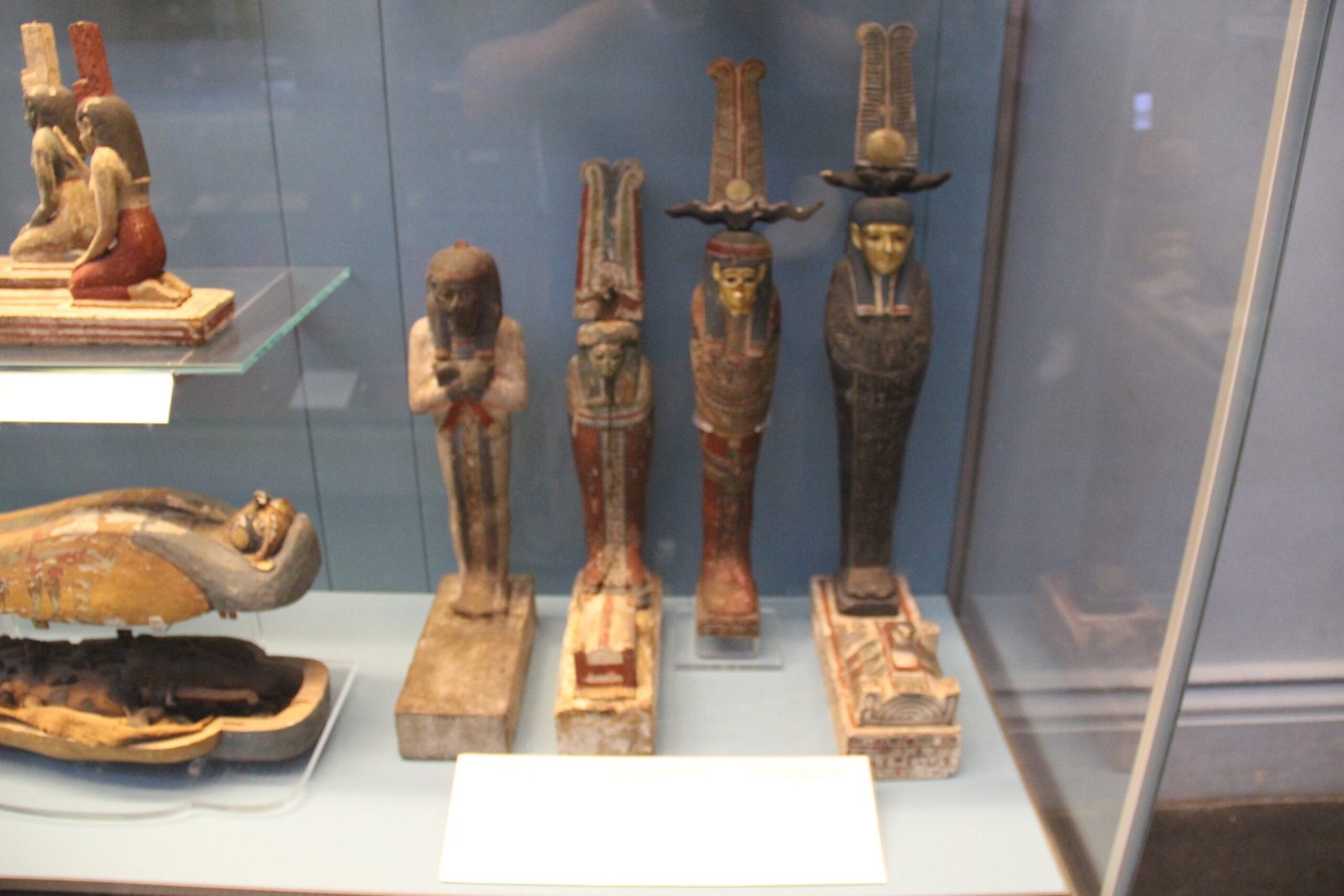
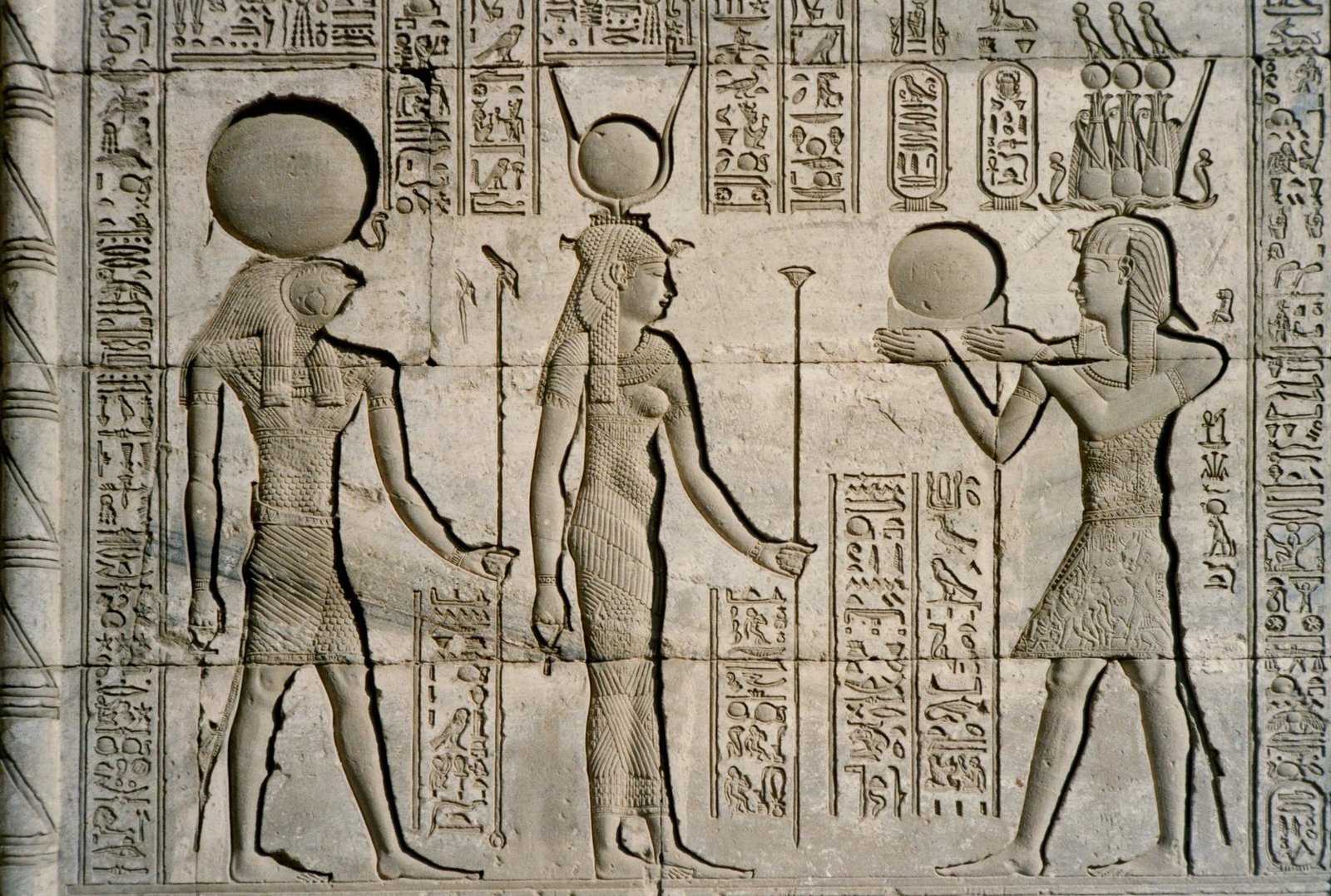
- Ancient statues and reliefs show deities in varied forms.
- Human and animal features convey religious symbolism.
- Individual identifications should follow verified collection descriptions.
Quick Facts
| God | Common sign in art | Guide |
|---|---|---|
| Ra | Falcon head with a sun disc | Ra guide |
| Osiris | Mummiform body, white crown, crook and flail | Osiris guide |
| Isis | Throne symbol or sun disc with horns | Isis guide |
| Anubis | Jackal head or reclining jackal | Anubis guide |
| Thoth | Ibis head or baboon | Thoth guide |
| Bastet | Cat or cat-headed woman | Bastet guide |
Where real divine images survive
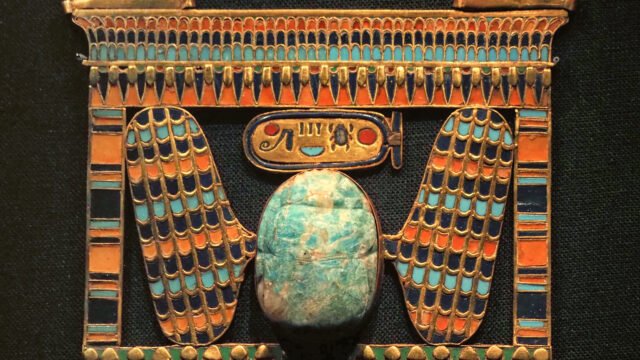
- Temple reliefs: carved scenes of kings making offerings to gods, as at Karnak, Dendera, Edfu and Philae.
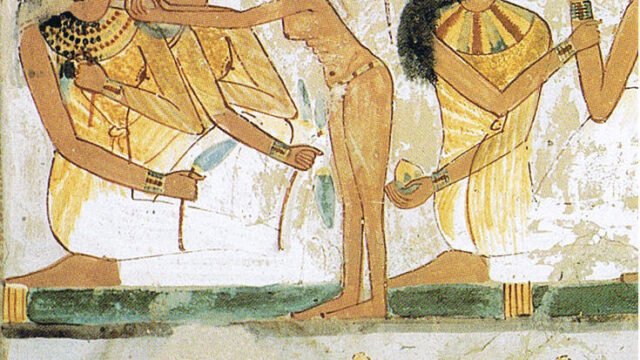
- Tomb paintings: judgment and afterlife scenes.
- Bronze statuettes: mass-produced votive figures, especially from late periods.
- Amulets: small protective charms of faience, stone and metal.
Not every image was meant as a “portrait” of a god. Many were symbols designed to be read like writing. The same god can look different in different centuries and cities, so a single “official” look does not exist. For the wider picture, see our Egyptian mythology guide.
Reading divine symbols
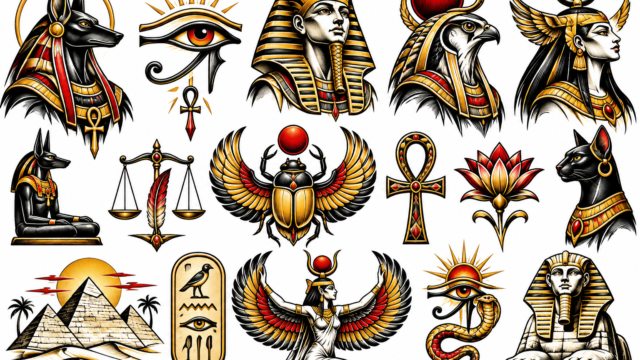
Animal heads show a trait or a link with a sacred animal rather than a literal monster. The jackal in Anubis connects to cemeteries, and the falcon of Horus connects to the sky. Crowns, sceptres and colour also carry meaning. Osiris is often shown with green skin, the colour of rebirth, or black skin, which alludes to the fertile silt of the Nile floodplain rather than to death. Many other gods are painted with golden skin, which reflected the belief that the gods’ flesh was gold.
Story box (imagined): A pilgrim buys a small bronze cat at a temple gate. She does not think of it as art. It is a message to Bastet, left as an offering and a prayer.
History, Mythology and Speculation
| Category | Examples |
|---|---|
| History | Cult images, temples, votive bronzes |
| Mythology | Stories of Osiris, Isis, Horus and Ra |
| Speculation | “Gods were aliens” or hybrid creatures that existed |
Myth vs Fact
| Popular claim | Careful answer |
|---|---|
| Egyptians worshipped animals as gods | They saw animals as carrying divine qualities |
| Every god had one fixed look | Forms changed with time and place |
| Old statues are rare and priceless only | Many votive figures were common |
| Any “ancient god” picture online is real | Many are modern art or AI |
Frequently Asked Questions
How do I recognise Anubis in art?
Look for a jackal head or a recumbent jackal.
Which god has a falcon head?
Horus and Ra are both shown with falcon heads, with different crowns and symbols.
Why did gods have animal heads?
To express qualities linked with the animals.
Where can I see real statues?
In Egyptian museums and in major world museums.
Are bronze god figures rare?
Many survive, especially from later periods, but quality varies.
What is a votive figure?
A small offering left in a temple or tomb.
Can I reuse temple photos?
Only with a licence that allows it.
Which god is most powerful?
It depends on the period and city. See our most powerful god guide.
Reliable Sources
- Metropolitan Museum of Art: Heilbrunn Timeline, Egypt 1000 B.C. to 1 A.D.
- British Museum: Collection online
- World History Encyclopedia: Osiris
- World History Encyclopedia: Color in Ancient Egypt
- Metropolitan Museum of Art: Open Access (CC0 images)
Last updated: 26 November 2026.












Share Your Opinion
Comments are closed on this post.