 Vista
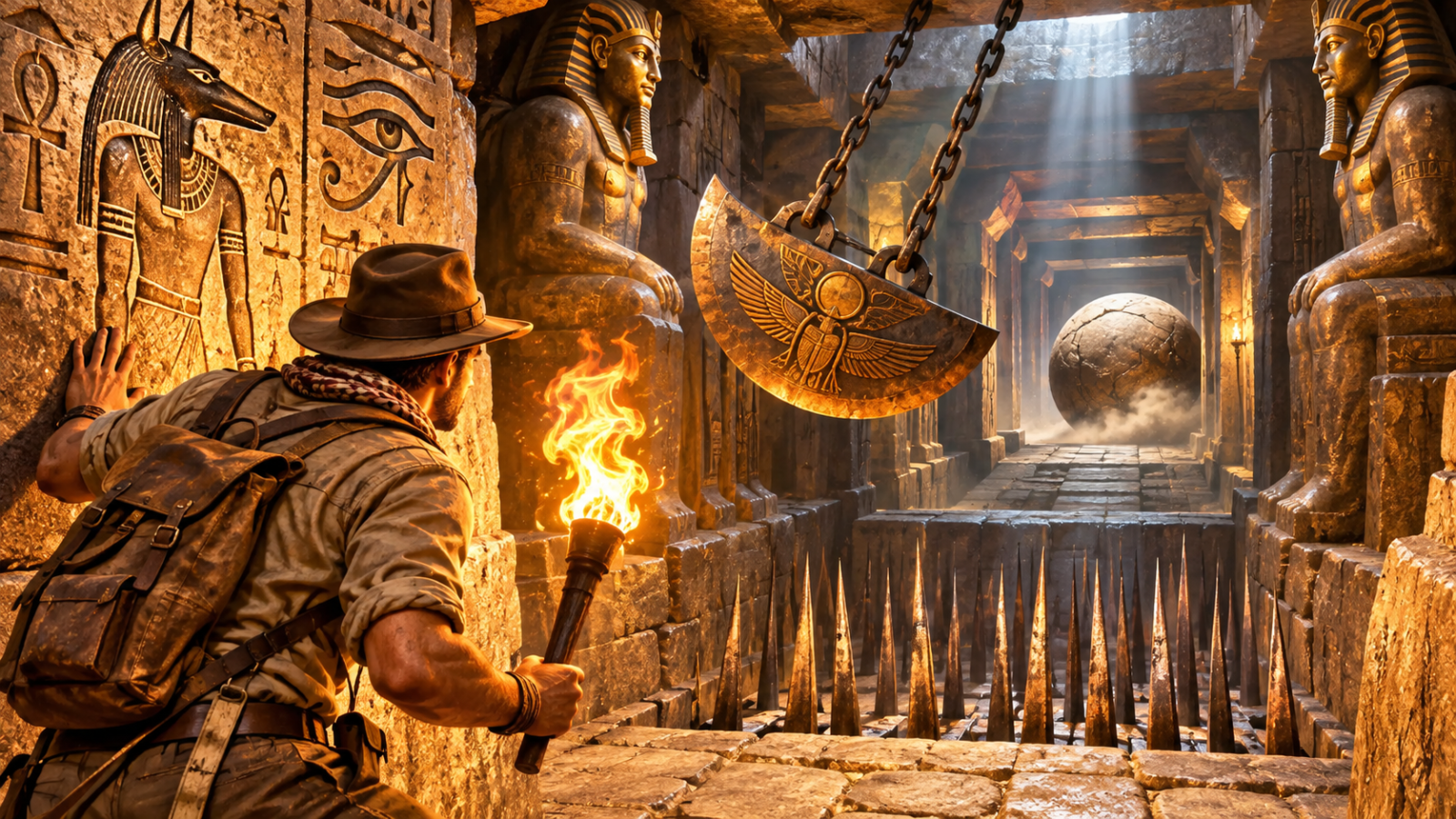
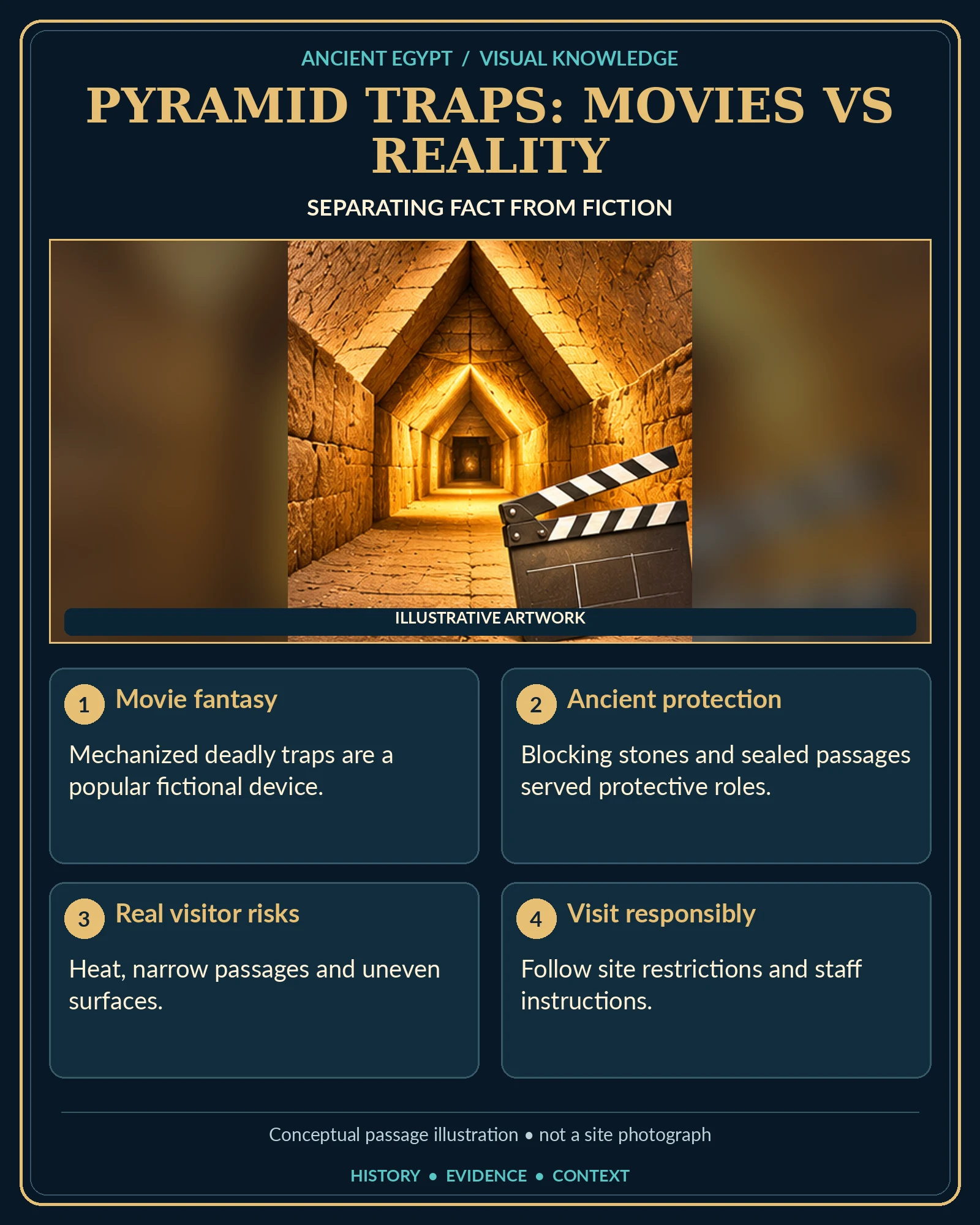
Short answer: No evidence shows spike pits, rolling boulders or poison darts in Egyptian pyramids, as films show. Real defences were different: heavy granite plugs, hidden entrances, false passages and sealed doors. The real dangers today are collapse, bad air, heat and mould in old structures, which is why entry is controlled.
Quick Facts
| Point | Detail |
|---|---|
| Movie booby traps | Fiction |
| Real security | Plug blocks, false passages, hidden doors, guards |
| Did it stop robbers? | No, most tombs were robbed anciently |
| Modern risks | Collapse, poor air, heat, mould |
What defences did builders use?
Builders hid entrances, used dummy corridors and sealed passages with massive stones. These were meant to slow thieves, not kill them. Inside layouts are described in our guide on the chambers of the Great Pyramid.
Where do trap stories come from?
Adventure films and games borrowed ideas from fiction and from the “curse” legends. See our fact-check on Tutankhamun’s curse.
Real dangers
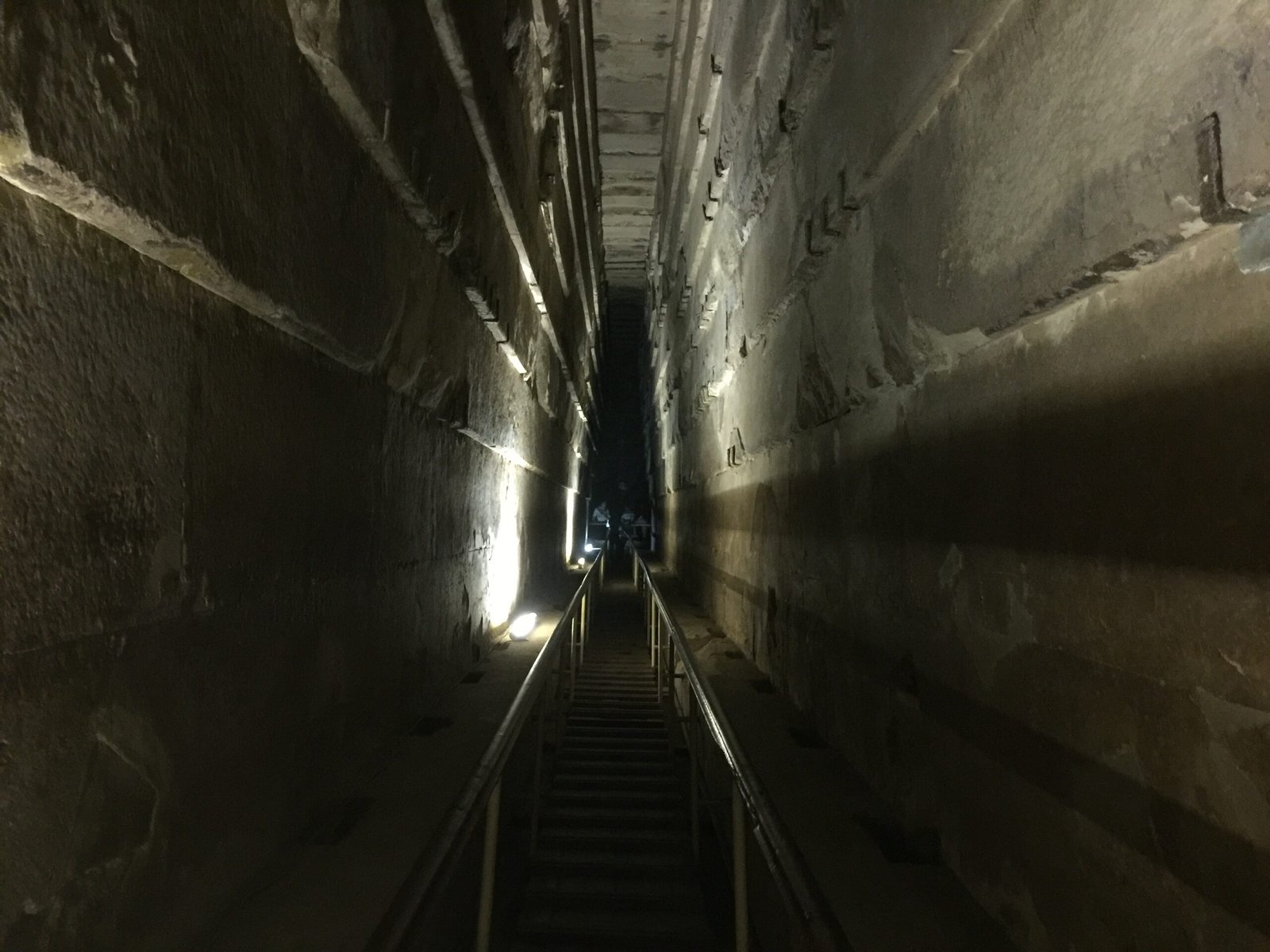
- Narrow, steep passages and falling debris.
- Low airflow, heat and humidity.
- Mould or dust in long-sealed spaces, which is why teams use protection.
Story box (imagined): A game character leaps over spikes in a pyramid corridor. In real life, the guide simply asks you to mind your head on the low ceiling. The real hazard is a bump, not a booby trap.
History, Mythology and Speculation
| Category | Examples |
|---|---|
| History | Plug blocks, false doors, tomb robbery |
| Mythology | Guardian spirits and protective spells |
| Speculation | Spike pits, poison, rolling boulders |
Myth vs Fact
| Popular claim | Careful answer |
|---|---|
| Pyramids have deadly traps | No evidence |
| Curses kill intruders | No proof |
| Tombs were safe from thieves | Most were robbed |
Frequently Asked Questions
Are there traps in pyramids?
No evidence of deadly traps.
What stopped robbers?
Hidden entrances, plugs and false passages, but it often failed.
Did curses protect tombs?
Some inscriptions warn intruders, but no curse harm is proven.
Are pyramids dangerous today?
Mainly because of narrow spaces and poor air.
Why is entry limited?
To protect people and the monument.
Can I open sealed tombs?
No. Only licensed teams may do that.
Where do movie traps come from?
Adventure fiction.
What is a false passage?
A corridor that leads nowhere, to confuse intruders.
Reliable Sources
- World History Encyclopedia: Egyptian Mythology
- Egypt Exploration Society: Gods of Egypt
- The Met: Divine Egypt
Last updated: 25 November 2026. Related reading: Inside the Great Pyramid, Tutankhamun’s curse.

















Share Your Opinion
Comments are closed on this post.