 Vista
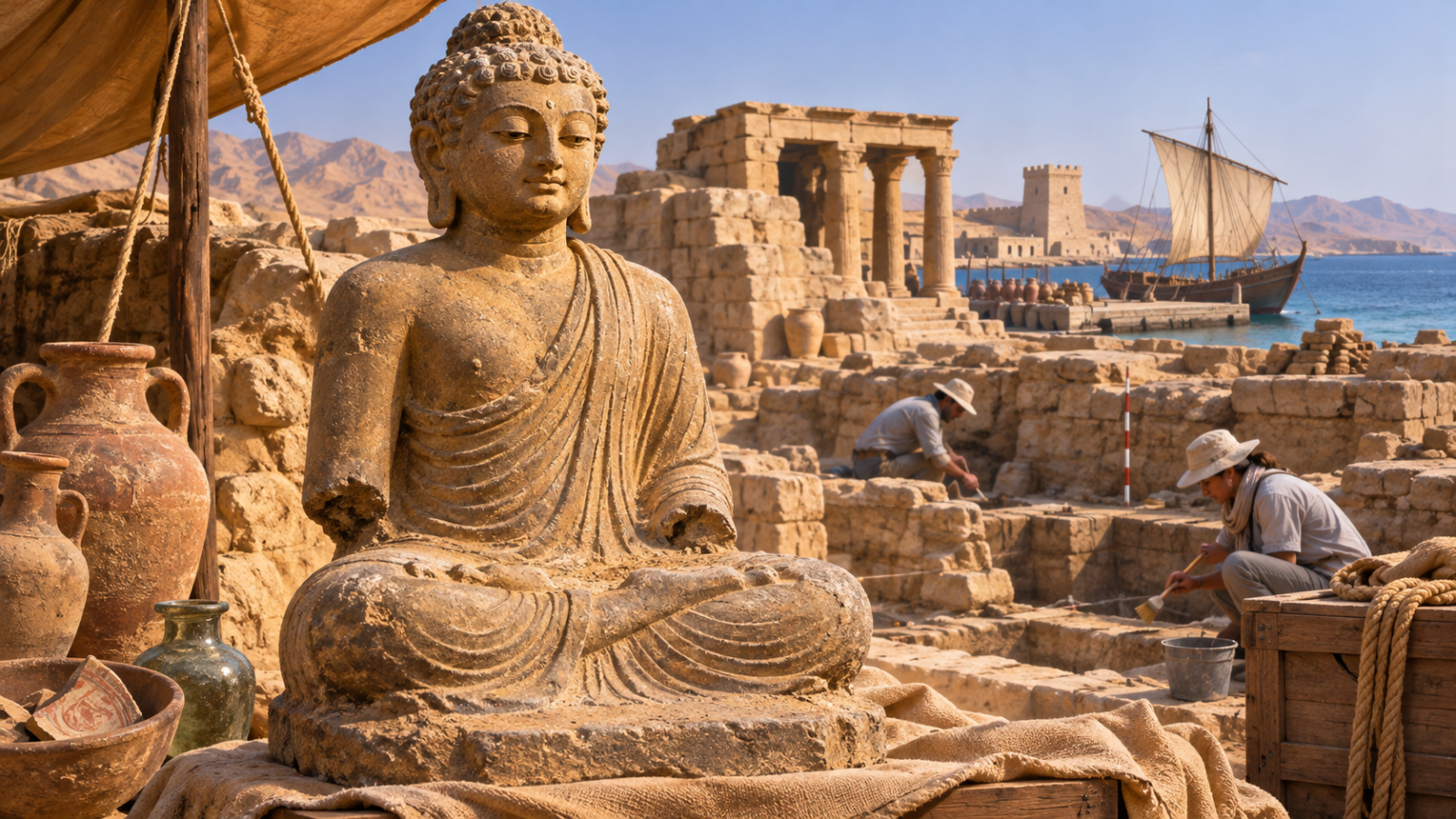
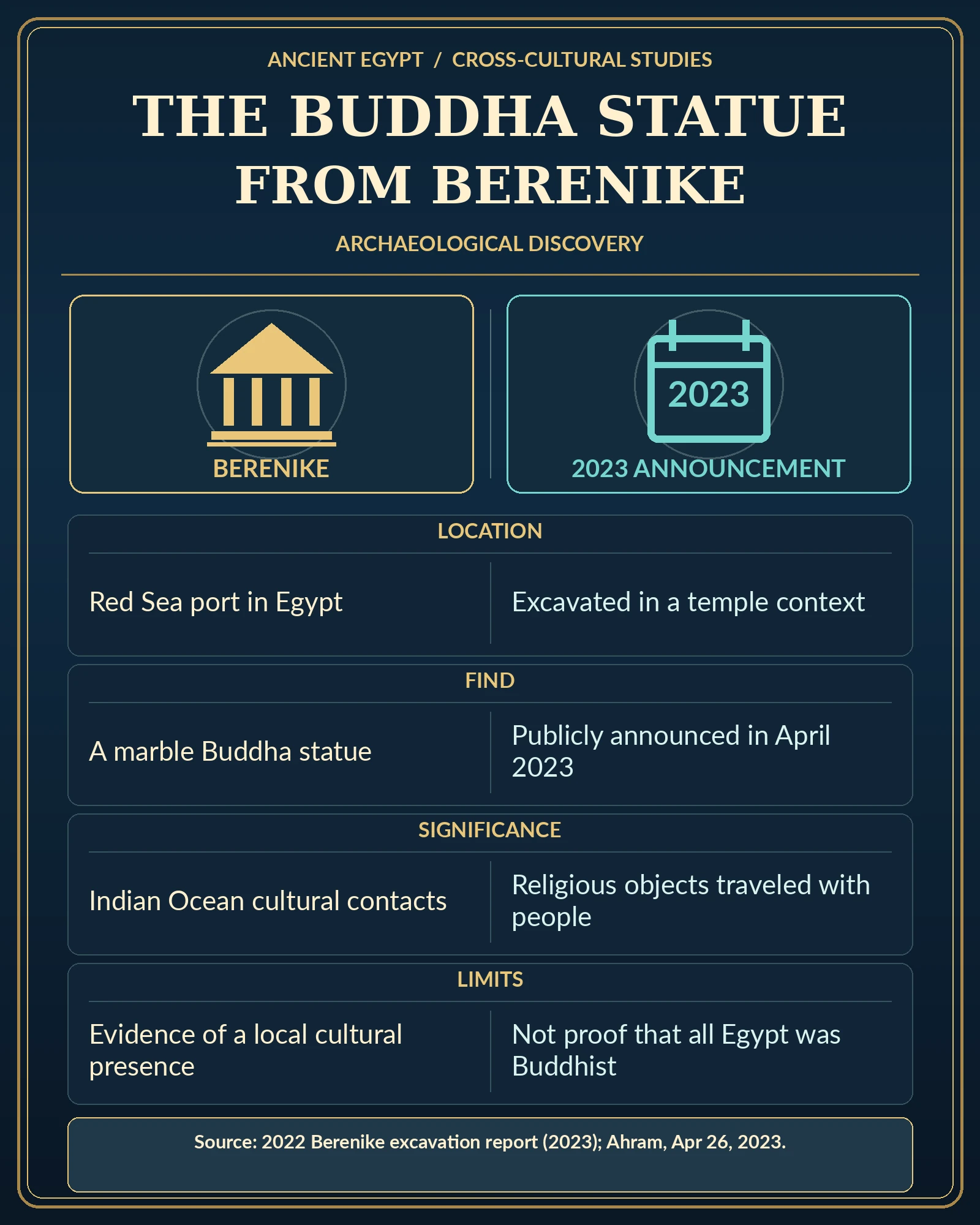
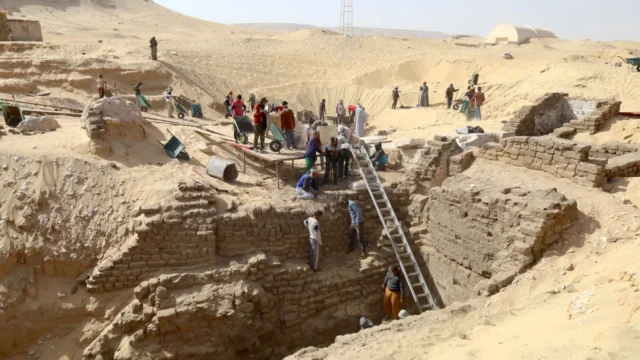
Short answer: Archaeologists working at Berenike, a Roman-era Red Sea port in Egypt, reported the discovery of a small Buddha statue made from a stone believed to be of Indian origin. It is seen as evidence of contact between the Roman-ruled Red Sea world and India, not proof that Buddhism spread widely in Egypt.
Quick Facts
| Point | Detail |
|---|---|
| Site | Berenike, Egypt’s Red Sea coast |
| Object | A Buddha statue reported by the excavation team |
| Period | Roman era, around the 2nd century CE as reported |
| Meaning | Evidence of Indian Ocean trade and travellers |
| Not proven | A Buddhist community in Egypt |
What was found?
The statue was reported from excavations at Berenike. Details such as height, stone type and exact findspot come from the excavation team’s reports, and readers should check the latest publications for precise figures.
Why Berenike matters
Berenike was a harbour on the Red Sea used in Ptolemaic and Roman times. Goods and people moving between the Mediterranean world and India passed through such ports. Finds there help map those routes.
What the statue suggests
- Indian objects and possibly Indian travellers reached Egypt in the Roman era.
- A religious image could travel as a personal item or trade good.
- One statue does not prove that Buddhism was practised widely in Egypt.
Story box (imagined): A traveller from the Indian coast carries a small statue on a long sea journey. At the Red Sea port, the statue is left behind or buried. Many centuries later, it is found by archaeologists and becomes a clue to how far people and ideas travelled.
Why the Berenike Buddha matters beyond a single statue
Berenike was a Red Sea port connected to Mediterranean markets and Indian Ocean routes. The statue is important because it has an archaeological context rather than simply resembling Indian art. The excavation report also records a Sanskrit–Greek inscription. A later specialist study discusses several Indian religious objects from the port, indicating a wider pattern of contacts.
Trade involved people as well as commodities: sailors, merchants, interpreters and religious donors travelled between different ports. Finding an image in the setting of a temple can indicate that visitors or residents maintained religious practices while living abroad. It cannot, on its own, tell us the size of that community or establish who commissioned the statue. Nor does a Roman-era discovery establish Buddhist influence on the Old Kingdom pyramids, which predate Buddhism by a very long interval. Separating the object’s date from the year of its discovery is essential when reading headlines.
German Archaeological Institute — Indians in Roman Berenike
History, Mythology and Speculation
| Category | Examples |
|---|---|
| History | Roman-era Red Sea trade, the reported Berenike statue |
| Mythology | Buddhist and Egyptian religious stories are separate traditions |
| Speculation | Claims that Buddha visited Egypt or that Egypt was Buddhist |
Myth vs Fact
| Popular claim | Careful answer |
|---|---|
| A Buddha statue proves Egypt was Buddhist | No, it shows contact |
| The Buddha visited Egypt | No evidence |
| It is the only proof of Indian links | No, other trade evidence exists |
Frequently Asked Questions
Was a Buddha statue found in Egypt?
Yes, one was reported from Berenike by the excavation team.
How old is it?
It is reported as Roman era, about the 2nd century CE.
Was it made in India?
Reports describe the stone as Indian in origin; check the excavation reports for details.
Did Buddhism exist in Egypt?
There is no accepted evidence of a large Buddhist community in Egypt.
Why was it at a port?
Ports received travellers and goods from India.
Does it connect to Egyptian mythology?
No direct connection. It belongs to trade history.
Where is it now?
Check official museum and excavation sources; this draft does not state a location.
What else was found at Berenike?
Trade goods and inscriptions linked to Indian Ocean contact have been reported.
Reliable Sources
- World History Encyclopedia: Egyptian Mythology
- Egypt Exploration Society: Gods of Egypt
- The Met: Divine Egypt
Last updated: 25 November 2026. Related reading: Ancient India and Egypt trade, Tamil-Brahmi inscriptions in Egypt.
Related guides: Ancient India and Egypt: Trade, History and Archaeological Evidence · Ancient Egyptian Civilization: History, Timeline, Pharaohs and Inventions











Share Your Opinion
Comments are closed on this post.