 Vista
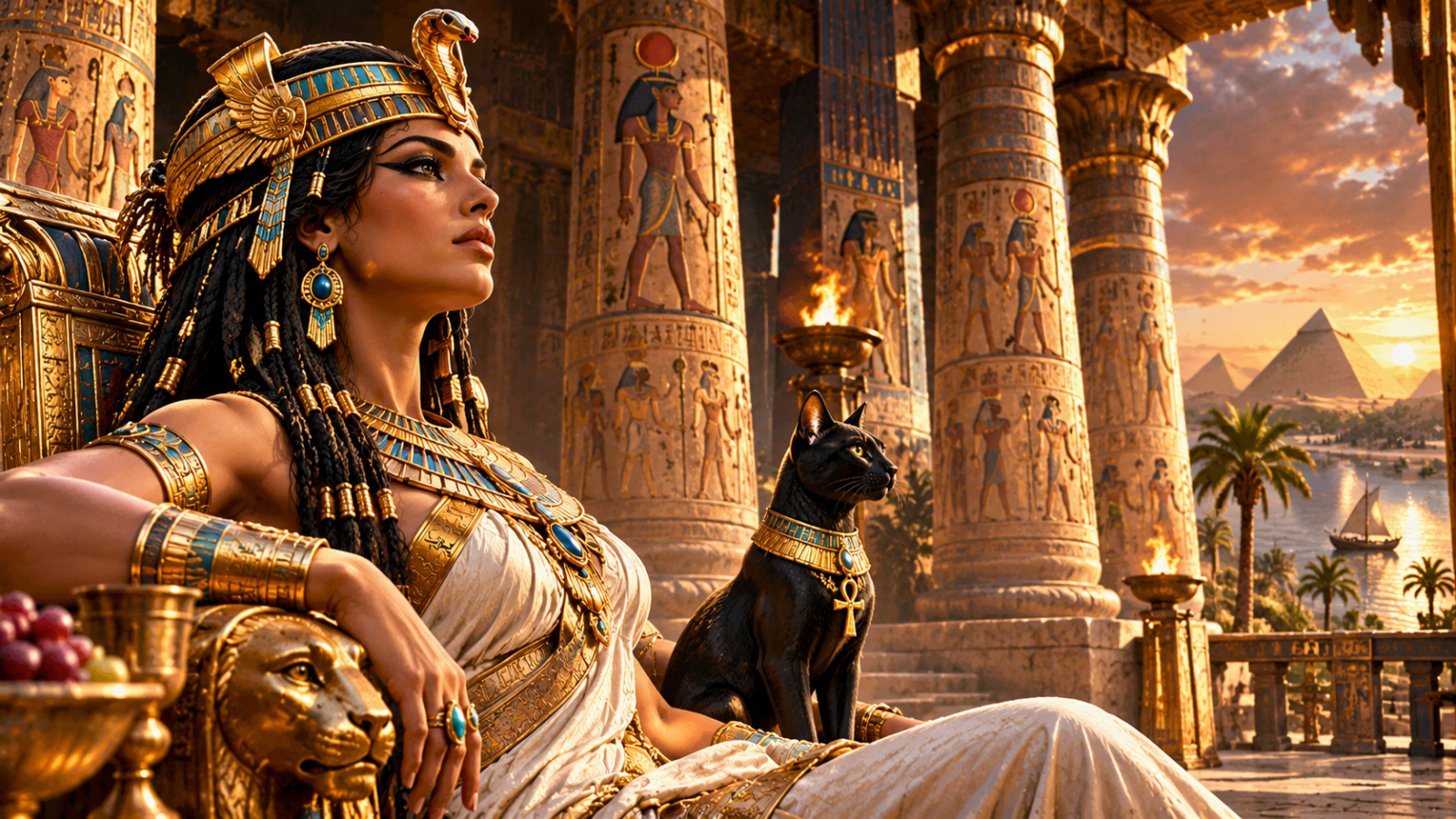
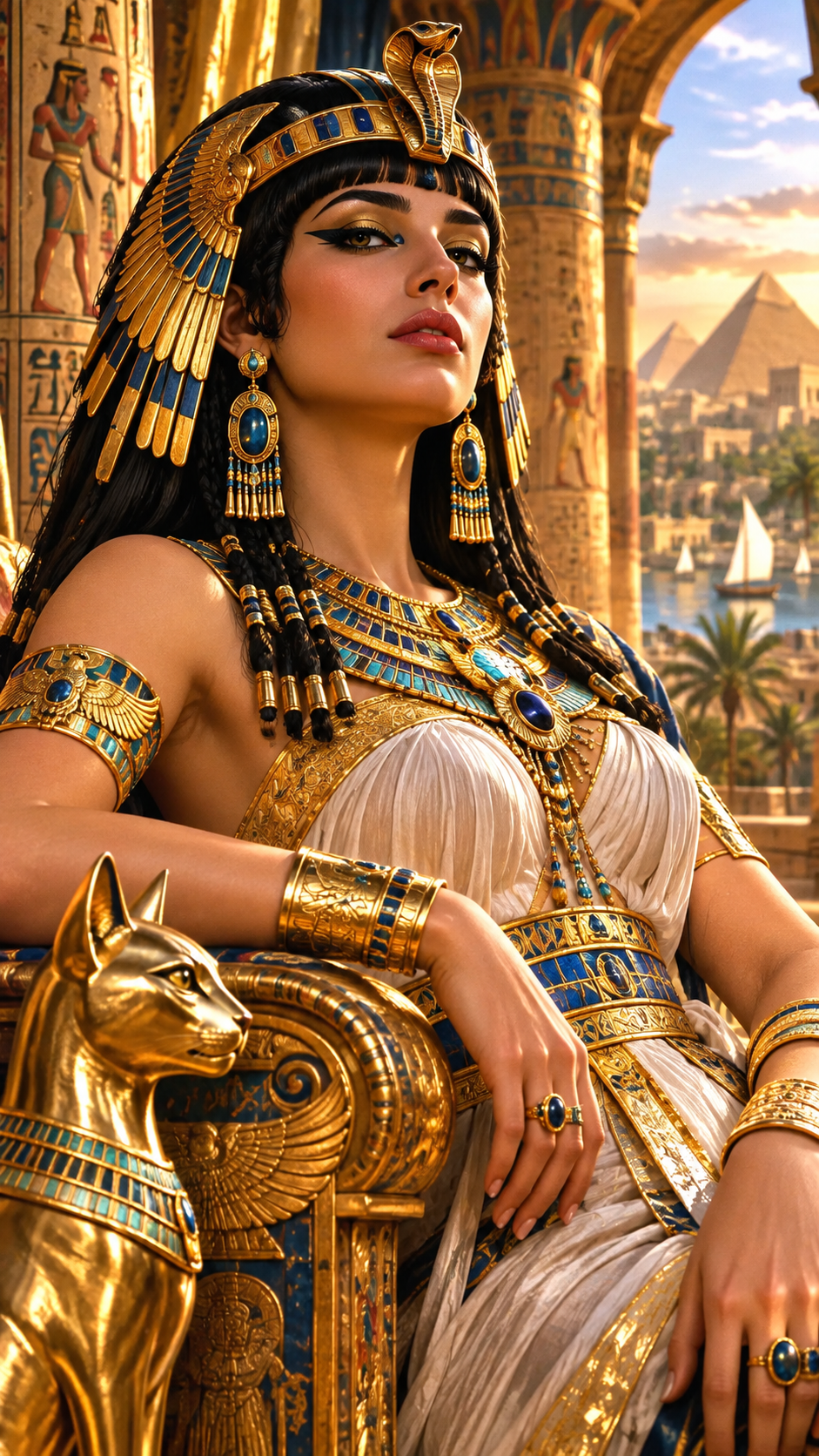
Cleopatra VII (69–30 BCE) was the last active ruler of Ptolemaic Egypt. She belonged to a Macedonian Greek dynasty founded after Alexander the Great, spoke Egyptian as well as Greek, and ruled during a time when Rome was taking control of the Mediterranean. She allied with Julius Caesar and later Mark Antony, and died in 30 BCE after their defeat by Octavian. Ancient writers say she died by snakebite, but this is debated. Her tomb has never been found, and claims of a discovery remain unproven.
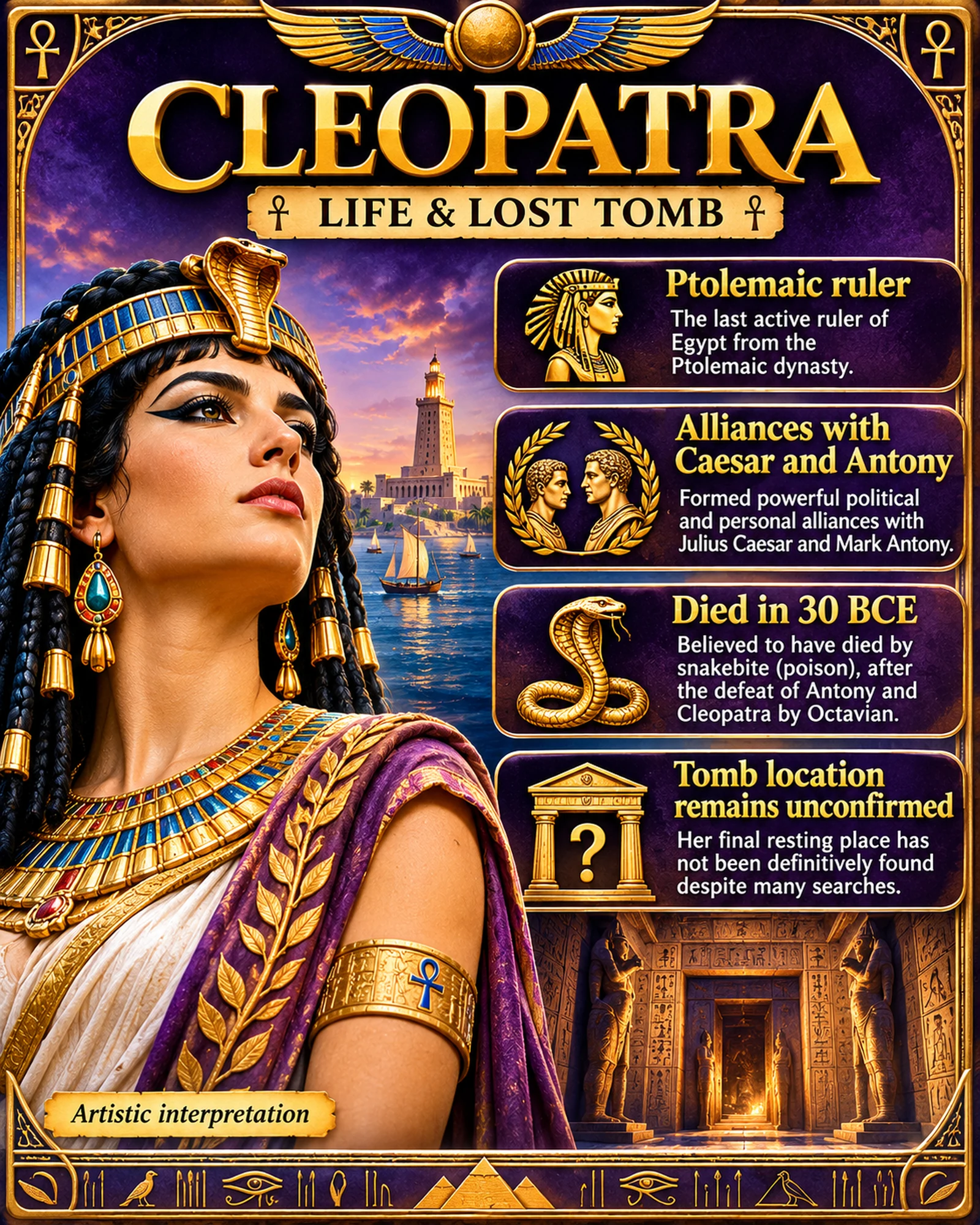
Cleopatra Quick Facts
| Item | Detail |
|---|---|
| Lived | 69–30 BCE |
| Dynasty | Ptolemaic (Macedonian Greek) |
| Capital | Alexandria |
| Partners | Julius Caesar, Mark Antony |
| Key battle | Actium, 31 BCE |
| Death | 30 BCE; cause debated |
Her Life in Brief
Cleopatra took the throne as a young woman, first alongside her brothers. After a conflict in which Caesar backed her, she became queen and had a son, known as Caesarion. After Caesar’s murder in 44 BCE she allied with Mark Antony. Octavian, Caesar’s heir, defeated their forces and Egypt became a Roman province. Our sources are mostly Roman writers, who were often hostile, so their stories about her should be read with care.
Ancestry and Appearance
Her father’s family was Macedonian Greek. Her mother’s identity is not certain, so claims about her exact ethnic background are speculation. Coins show a strong profile, but they follow royal conventions and are not reliable portraits. Ancient writers praise her intelligence, voice and charm more than her beauty.
How Did She Die?
The traditional account says she died from a snakebite, often described as an asp, after Antony’s death. Some modern scholars suggest poison or other causes, but there is no direct evidence. The difficulty is that the surviving accounts were written later by Roman authors.
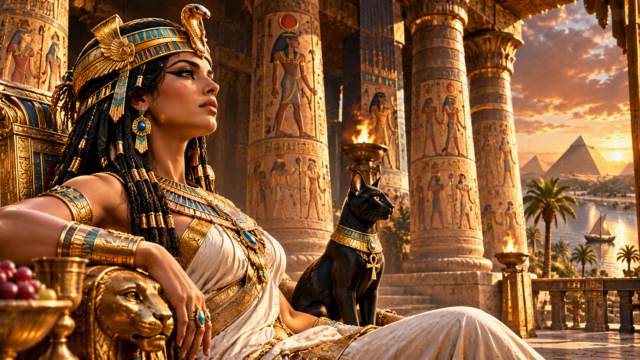
Story box (reconstruction): In the last days of Alexandria, an adviser tells the queen that Octavian’s soldiers are near. She looks out over the harbour for a long time. This scene is imagined to convey the mood; the sources do not record her exact words.
The Lost Tomb
Ancient writers say Octavian allowed Cleopatra to be buried with Antony in a tomb she had prepared. Its location is unknown. Alexandria’s coastline has changed, and parts of the ancient city are underwater. One search has focused on the temple of Taposiris Magna near Alexandria, where an archaeologist has argued the tomb might be, but no tomb of Cleopatra has been proven. Treat headlines about “found” or “almost found” with caution.
History, Mythology and Speculation
| Category | What belongs here |
|---|---|
| History | Rule, alliances, Actium, Roman accounts, coins |
| Mythology | Romantic legends, the pearl and carpet stories |
| Speculation | Exact appearance, ethnicity, tomb location, “Cleopatra is still alive” |
Myth vs Fact
| Popular claim | Reality |
|---|---|
| Cleopatra was ethnically Egyptian. | Her dynasty was Macedonian Greek, though she engaged with Egyptian culture. |
| She is still alive or immortal. | She died in 30 BCE; this is a modern internet myth. |
| Her tomb was found. | No confirmed tomb. |
| She died of an asp bite, for sure. | Traditional account; cause is debated. |
Frequently Asked Questions About Cleopatra
Who was Cleopatra?
The last active ruler of Ptolemaic Egypt.
How did she die?
Traditionally by snakebite; not certain.
Where is her tomb?
Unknown.
Was she Egyptian?
Her family was Macedonian Greek; she ruled Egypt and learned Egyptian.
Was she beautiful?
Ancient sources stress her charm and intelligence more than looks.
Who were Caesar and Antony to her?
Political and personal allies in her struggle to keep Egypt independent.
Is “Cleopatra alive” true?
No, it is an internet joke or myth.
Did she build the pyramids?
No, they were built about 2,500 years before her time.
Reliable Sources
- World History Encyclopedia: Egyptian Mythology
- Egypt Exploration Society: Gods of Egypt
- The Metropolitan Museum of Art: Divine Egypt
Last updated: 25 November 2026. Related reading on Vista Hub: ancient Egypt’s mysteries, Egyptian pharaohs, Isis.














Share Your Opinion
Comments are closed on this post.