 Vista

Short answer: Real photographs of Egyptian mummies come from museums, excavation archives and press coverage of events such as the 2021 royal mummy parade in Cairo. Many viral “mummy photos” online are edited, mislabelled or AI-made. Mummies are human remains, so a good image page should show real sources, credit the photographer and treat the dead with respect.
MUSEUM PHOTOGRAPHY
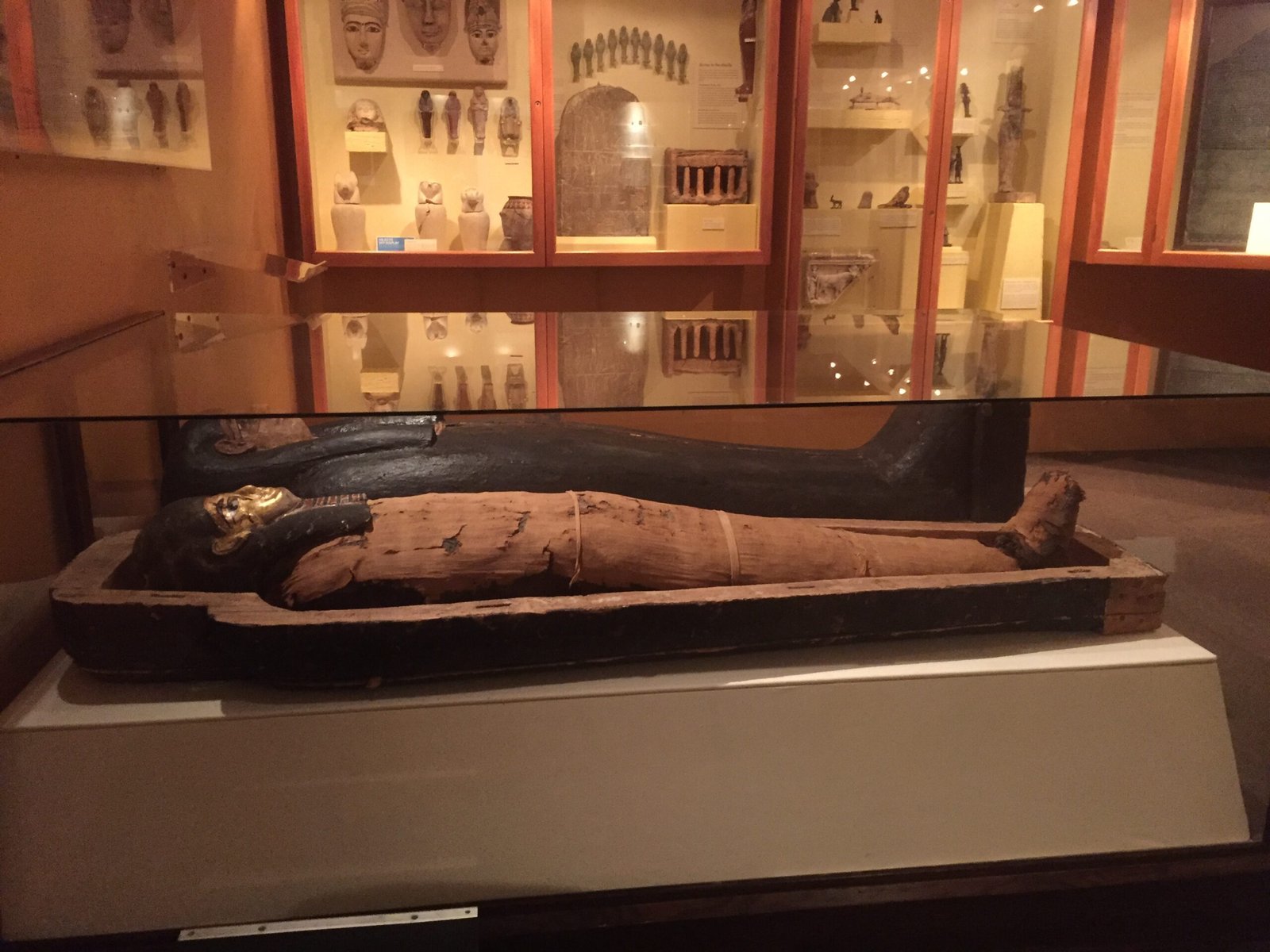
- Preserved human remains deserve dignity.
- Mummification reveals burial traditions and may inform health research.
- Identify a mummy only when museum provenance is confirmed.
Quick Facts
| Point | Detail |
|---|---|
| Two famous royal caches | Found at Deir el-Bahari (1881) and in the tomb of Amenhotep II (1898) |
| 2021 parade | 22 royal mummies (18 kings, 4 queens) moved on 3 April 2021 from the Egyptian Museum to the National Museum of Egyptian Civilization in Fustat |
| Transport | Special capsules filled with nitrogen, similar to display-case conditions |
| Tutankhamun’s mummy | Stays in his tomb in the Valley of the Kings, according to museum-book summaries |
| Main risk online | Fake, edited or AI images labelled as “real” |
What counts as a “real” mummy photo?
A real mummy photo has a traceable source: a museum collection page, a scientific publication, an excavation archive or a news agency. It should say where the mummy is kept, who took the picture and under what licence it can be used. A photo with no caption, no credit and no museum number is a warning sign, however dramatic it looks.
Real mummies are also not all alike. Some are natural mummies preserved by hot dry sand, and others are embalmed bodies from the long pharaonic period. Their condition, wrappings and coffins change from century to century. Our guide to how mummies were made explains the process behind what the photos show.
The royal mummies and why they moved so often
Many of the best-known royal mummies were discovered in two hiding places. One was the royal cache at Deir el-Bahari, found in 1881, and the other was in the tomb of Amenhotep II, found in 1898. Priests of the later New Kingdom had moved these bodies to safer tombs after robbers damaged the original burials. Since their modern discovery, they have been moved several times between museums and storage.
On 3 April 2021, Egypt held the “Pharaohs’ Golden Parade”. Twenty-two royal mummies, 18 kings and four queens, travelled across Cairo in individual capsules from the Egyptian Museum in Tahrir Square to the National Museum of Egyptian Civilization in Fustat, roughly seven kilometres away. Reports say the capsules were filled with nitrogen to match display-case conditions. The event produced a large number of press photographs, which are some of the most widely seen real mummy images today.
Commentators noted that the parade was also a tourism and national-image event, and that museums around the world are discussing how human remains should be displayed. Some curators prefer to cover mummies or remove them from public view. This is a useful reminder when you decide which images to share.
Where to find real mummy photographs
- Museum collection sites: look for object pages that list museum numbers, dimensions and image credits.
- Excavation archives: for example the Griffith Institute’s Tutankhamun archive, which holds Harry Burton’s excavation photographs.
- News agencies: the 2021 parade was photographed by Getty, AFP, AP and Reuters photographers, so check their licences.
- Scientific papers: CT scans and X-rays of mummies are published with captions that identify the individual.
Story box (imagined): A student searches for “real mummy photo” and finds a shocking image with no caption. She checks the museum website and cannot find it anywhere. The image turns out to be a movie prop. Then she finds a calm museum photograph with a museum number and photographer credit. The second one teaches her more.
Respecting human remains
- Use mummy images to explain history and science, not to shock or joke.
- Avoid close-up faces when a wider museum or scan image tells the story.
- Give the name or title of the person when it is known.
- Never share unlicensed photos taken secretly inside a museum.
For the beliefs behind mummification, see Can an Egyptian mummy come back to life? and Can scientists clone mummies?.
History, Mythology and Speculation
| Category | Examples |
|---|---|
| History | Royal caches of 1881 and 1898, the 2021 parade, museum conservation |
| Mythology | Preserved body as a home for the ka and ba in the afterlife |
| Speculation | “Living mummy” photos, cursed mummy images, fake alien mummies |
Myth vs Fact
| Popular claim | Careful answer |
|---|---|
| Any mummy image online is real | Many are fake, edited or from films |
| All royal mummies were found in their own tombs | Many came from hiding places after ancient tomb robbery |
| The 2021 parade showed them in the open | They travelled in sealed capsules |
| Mummy photos are free to use | Museums and agencies hold licences |
Frequently Asked Questions
Where can I see real Egyptian mummies?
In museums such as the National Museum of Egyptian Civilization in Cairo, and in many collections abroad. Check current display policies before you travel.
How many royal mummies were in the 2021 parade?
Twenty-two: 18 kings and four queens.
Where was Tutankhamun’s mummy kept?
It stays in the Valley of the Kings, while most of his treasure is in the Grand Egyptian Museum.
How do I spot a fake mummy photo?
Look for missing credit, a missing museum number, odd proportions or a source that is only a social media post.
Are AI mummy images real?
No. They may look convincing but they show no real person.
Can I use museum photos on my website?
Only if the licence allows it. Check the museum’s terms and credit the source.
Why were royal mummies moved so often?
Ancient priests moved them to protect them from robbers, and modern museums have moved them for conservation and display.
Is it respectful to look at mummies?
Many people think so when it is done in a museum setting with context. Opinions differ, and some museums choose not to display remains.
Reliable Sources
- National Geographic: Egypt’s royal mummies are on the move
- The Art Newspaper: Twenty-two mummies transported in nitrogen-filled caskets
- Apollo Magazine: A motorcade of mummies
- Griffith Institute: Tutankhamun Archive images
Last updated: 26 November 2026.











Share Your Opinion
Comments are closed on this post.