 Vista

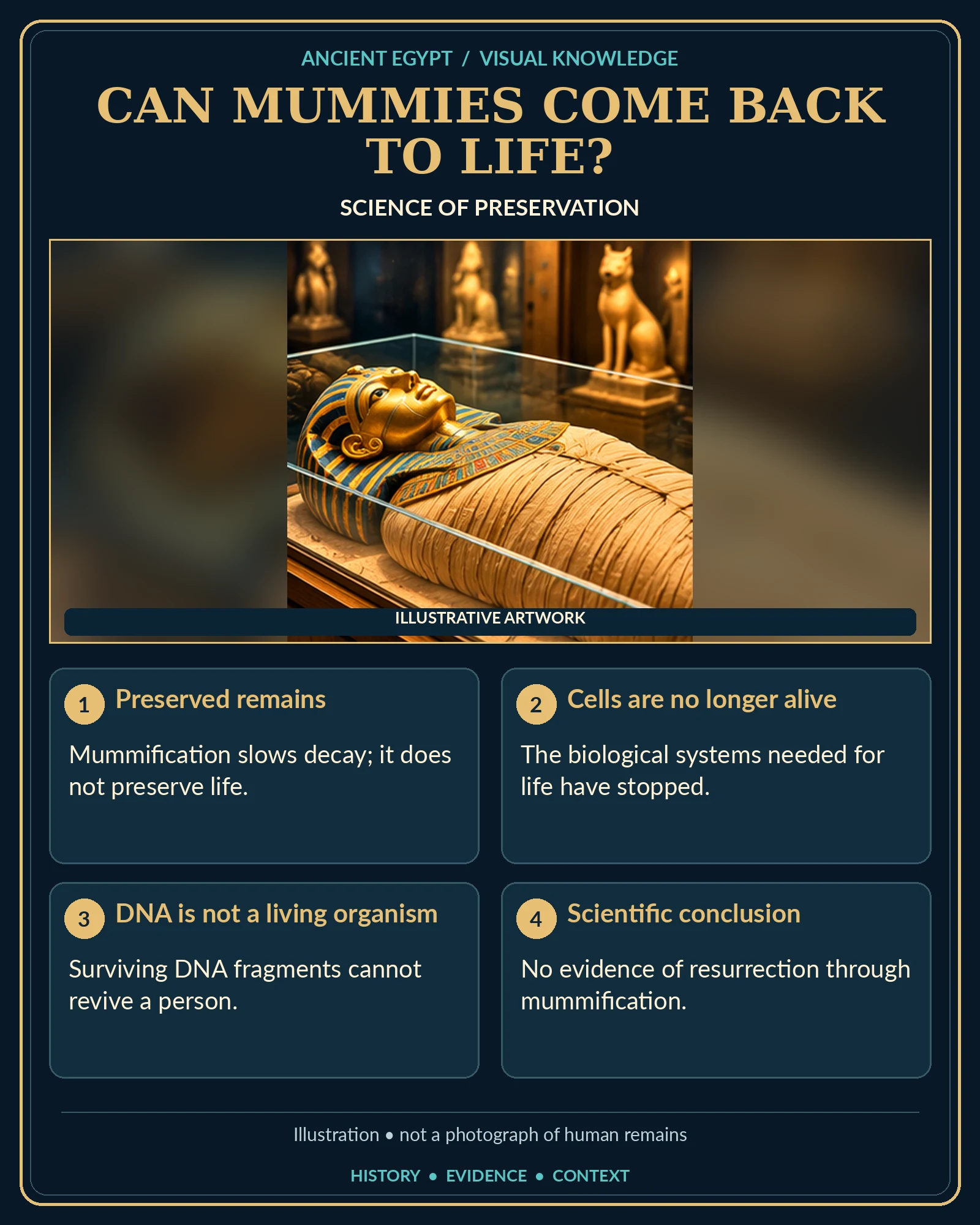
Short answer: No. An Egyptian mummy cannot wake up, walk or return to life. A mummy is a preserved dead body, and nothing in biology or archaeology suggests it can be revived. The idea comes from two sources: real Egyptian beliefs about rebirth of the soul in the afterlife, and a Hollywood monster invented in the 1930s.
Quick Facts
| Point | Detail |
|---|---|
| Can a mummy revive? | No. It is a preserved body; the cells are dead |
| What Egyptians believed | The preserved body let the ka and ba (parts of the soul) recognise and return to it in the afterlife |
| Key ritual | The Opening of the Mouth ceremony, so the dead could breathe, eat and speak in the next world |
| Where the movie mummy comes from | Universal’s 1932 film The Mummy with Boris Karloff, inspired by the 1922 opening of Tutankhamun’s tomb |
| Reanimating spells | Book of the Dead spells were meant to help the dead in the afterlife, not to raise zombies |
What a mummy actually is
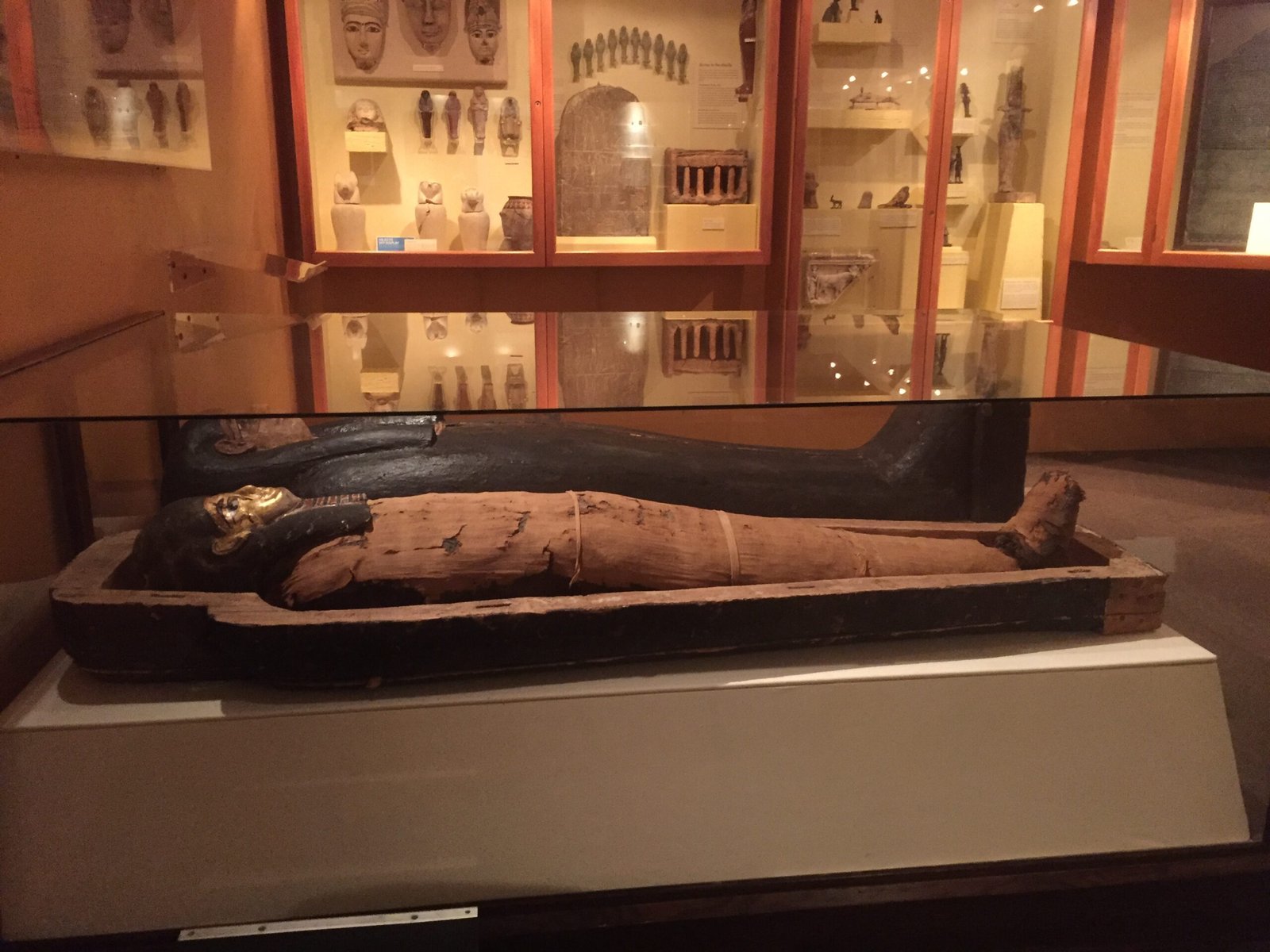
A mummy is a body that has been preserved, either naturally by very dry conditions or on purpose by embalmers. In the desert, a body can lose its moisture quickly. Without moisture the bacteria that cause decay cannot survive, and the body dries out instead of rotting. Egyptians later developed careful embalming methods to do this reliably. You can read the full process in our guide to Egyptian mummification.
Preservation is not the same as being alive. The tissues in a mummy have been dried, treated and sometimes damaged by the embalming process. Cells do not restart, the brain does not function and no known science can reverse that. The only things that “come back” are the stories.
What Egyptians believed about the dead
Egyptians did believe in life after death, and the body mattered. According to museum explanations, two things were needed for a person to become a blessed spirit (an akh): passing the final judgment and having a well-preserved body that the soul could recognise and return to. The ka was a kind of double that stayed with the deceased in the tomb. The ba, shown as a human-headed bird, could leave the tomb during the day but needed to return to the body at night.
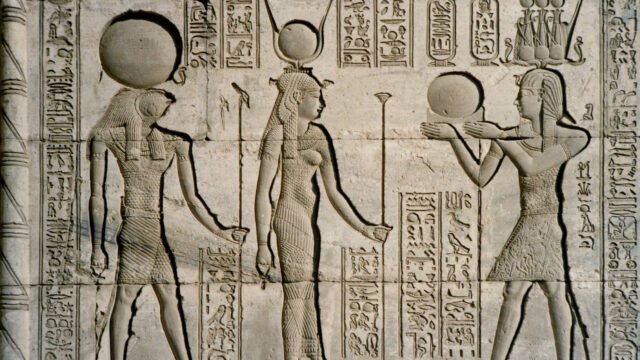
So the “return” in Egyptian belief was not a body walking out of a tomb. It was a spiritual return in the other world. Priests performed the Opening of the Mouth ceremony, touching the face of the mummy or a statue so the dead person could breathe, eat and speak in the afterlife. Funerary texts describe this as a reenactment of what the god Horus did for his father Osiris, who was restored in the myth and then ruled the underworld.
These beliefs are about religion and meaning. They are not evidence of a medical or magical process that works today, and Egyptians themselves did not expect their mummies to stand up and walk through the streets.
The Book of the Dead is not a zombie manual
In movies, reading a spell from an old book wakes the mummy. Real Egyptians did believe in the power of written words, but for a different purpose: helping the deceased live again in the afterlife. Spells have been found on tomb walls, coffins, mummy wrappings, amulets and even inside Tutankhamun’s funerary mask. They helped the dead pass the judgment and travel safely, which is covered in our guides to the Book of the Dead and the weighing of the heart.
Where did the movie mummy come from?
When Howard Carter opened Tutankhamun’s tomb in 1922, it became world news and was soon followed by stories of a “curse of the pharaohs”. Universal Pictures producer Carl Laemmle Jr. wanted a new monster after Dracula and Frankenstein, and the mummy film of 1932, with Boris Karloff as the priest Imhotep, was inspired directly by that fascination. Unlike Dracula and Frankenstein, it was not adapted from a famous novel.
Interestingly, the 1932 film is not the “shambling bandaged monster” most people picture. Karloff’s character is a revived priest who looks like an ordinary man for much of the story, searching for a lost love. The bandaged walking mummy mostly came from later sequels, which focus on a different mummy character called Kharis. Make-up artist Jack Pierce is reported to have studied photographs of the mummy of Seti I for the design.
Since then, popular fiction about mummies has relied on the curse as a plot device. The result is that millions of people picture a mummy as a monster, though in Egypt a mummy was a respected dead person who needed care and offerings.
Story box (imagined): An embalmer’s family brings bread and water to a tomb chapel every year. They do not fear the mummy. They speak to the dead person and ask for protection. For them, the greatest horror would be a body that was destroyed and forgotten, not one that stayed in its coffin.
What science says about “reviving” ancient bodies
- Death followed by drying and chemical treatment destroys the processes that keep tissue alive.
- No living cells have been recovered from an Egyptian mummy that could grow into a person.
- Ancient DNA from mummies is fragmentary and degraded. It can tell us about ancestry or disease, but not restart a body. See also Can scientists clone Egyptian mummies?.
- Stories about a mummy moving usually come from fiction, hoaxes or from a misunderstood event such as a body shifting in a case.
The curse stories also fall apart under study. For more on that, read our article on the Tutankhamun curse.
History, Mythology and Speculation
| Category | Examples |
|---|---|
| History | Mummification, the Opening of the Mouth ritual, Tutankhamun’s tomb in 1922, the 1932 film |
| Mythology | Osiris restored by Isis, the ka and ba returning to the body, judgment of the dead |
| Speculation | Reanimated mummies, curse-driven revival, “wake up” spells |
Myth vs Fact
| Popular claim | Careful answer |
|---|---|
| Mummies can wake up | No. They are preserved dead bodies |
| A spell can revive a mummy | Egyptian spells aimed at the afterlife, not at zombies |
| Egyptians expected mummies to walk | They expected the soul to return to the body in the next world |
| The mummy monster is ancient | It is a 20th-century film creation |
| Ancient DNA could bring a mummy back | DNA is fragmentary; cloning is not possible |
Frequently Asked Questions
Can an Egyptian mummy come back to life?
No. It is a preserved body with no living processes.
What did Egyptians mean by resurrection?
A spiritual rebirth in the afterlife, supported by a preserved body and funerary rituals.
What is the Opening of the Mouth ceremony?
A ritual in which priests touched the mummy or a statue so the dead could breathe, eat and speak in the next life.
What are the ka and ba?
Parts of the soul. The ka was a spiritual double, and the ba, drawn as a human-headed bird, could move between the tomb and the world.
Do Book of the Dead spells raise mummies?
No. They were meant to guide the dead through judgment and the underworld.
Who invented the movie mummy?
Universal Pictures, in its 1932 film starring Boris Karloff, inspired by the 1922 discovery of Tutankhamun’s tomb.
Is the mummy’s curse real?
There is no scientific evidence for a curse. It grew in newspapers and fiction.
Can DNA bring a mummy back?
No. Ancient DNA is damaged and incomplete.
Reliable Sources
- Spurlock Museum (University of Illinois): Mummification rituals and the afterlife
- Britannica: Death in ancient Egypt
- History.com: The Book of the Dead
- Natural History Museum of Utah: How Hollywood turned mummies into monsters
- National Geographic: How King Tut conquered pop culture
Last updated: 26 November 2026. Related reading: What does a mummy smell like? Can scientists clone mummies?











Share Your Opinion
Comments are closed on this post.