 Vista
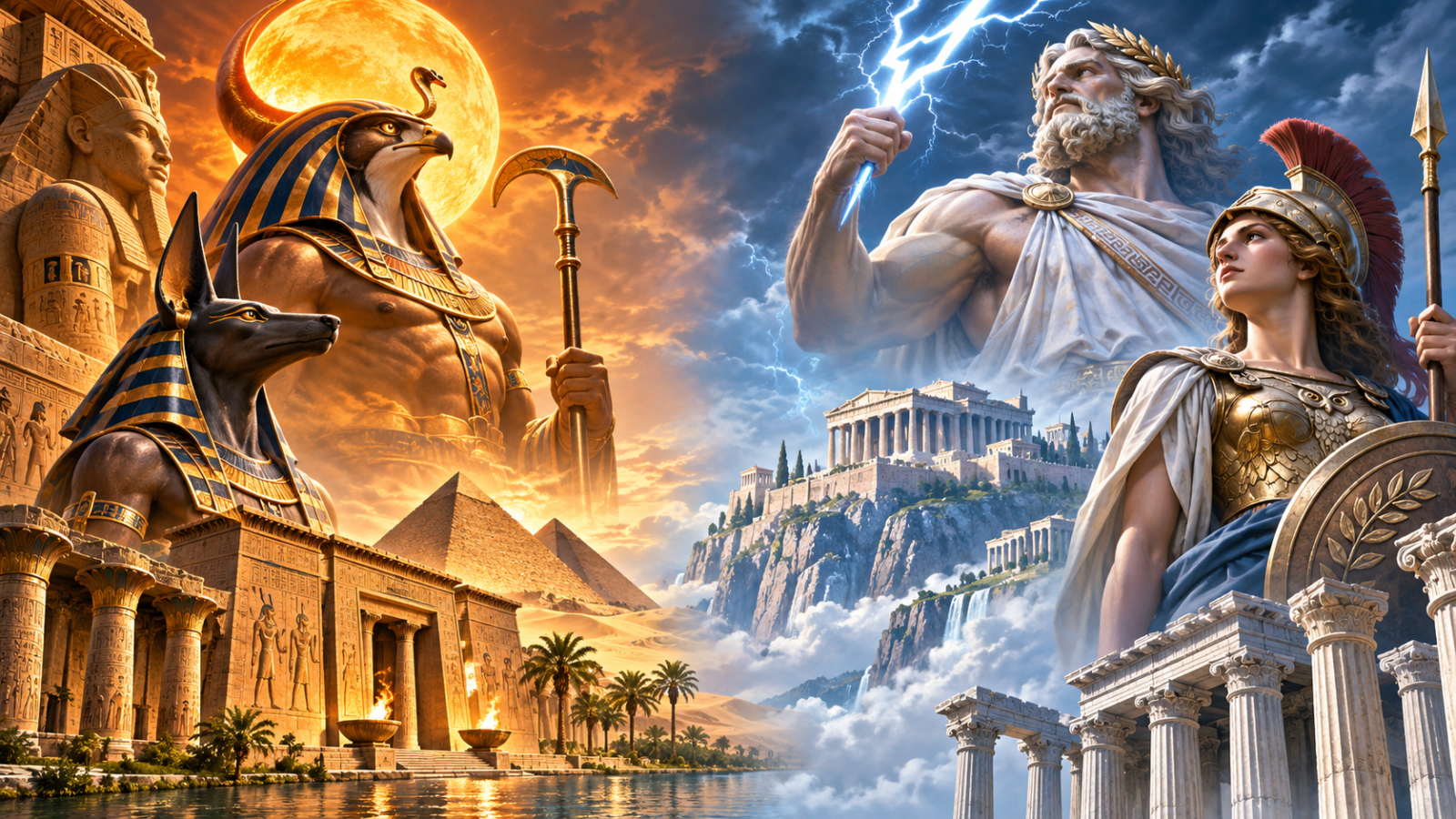
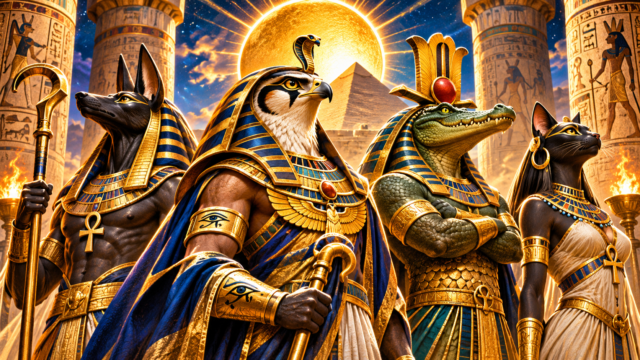
Short answer: Egyptian and Greek mythology differ in their gods, stories and religious role. Egyptian gods are often animal-headed and tied to kingship, the Nile and the afterlife, while Greek gods are shown in human form with very human personalities. The two cultures did meet: Greeks matched their gods with Egyptian ones and Ptolemaic Egypt blended traditions, which created figures such as Serapis.
Quick Facts
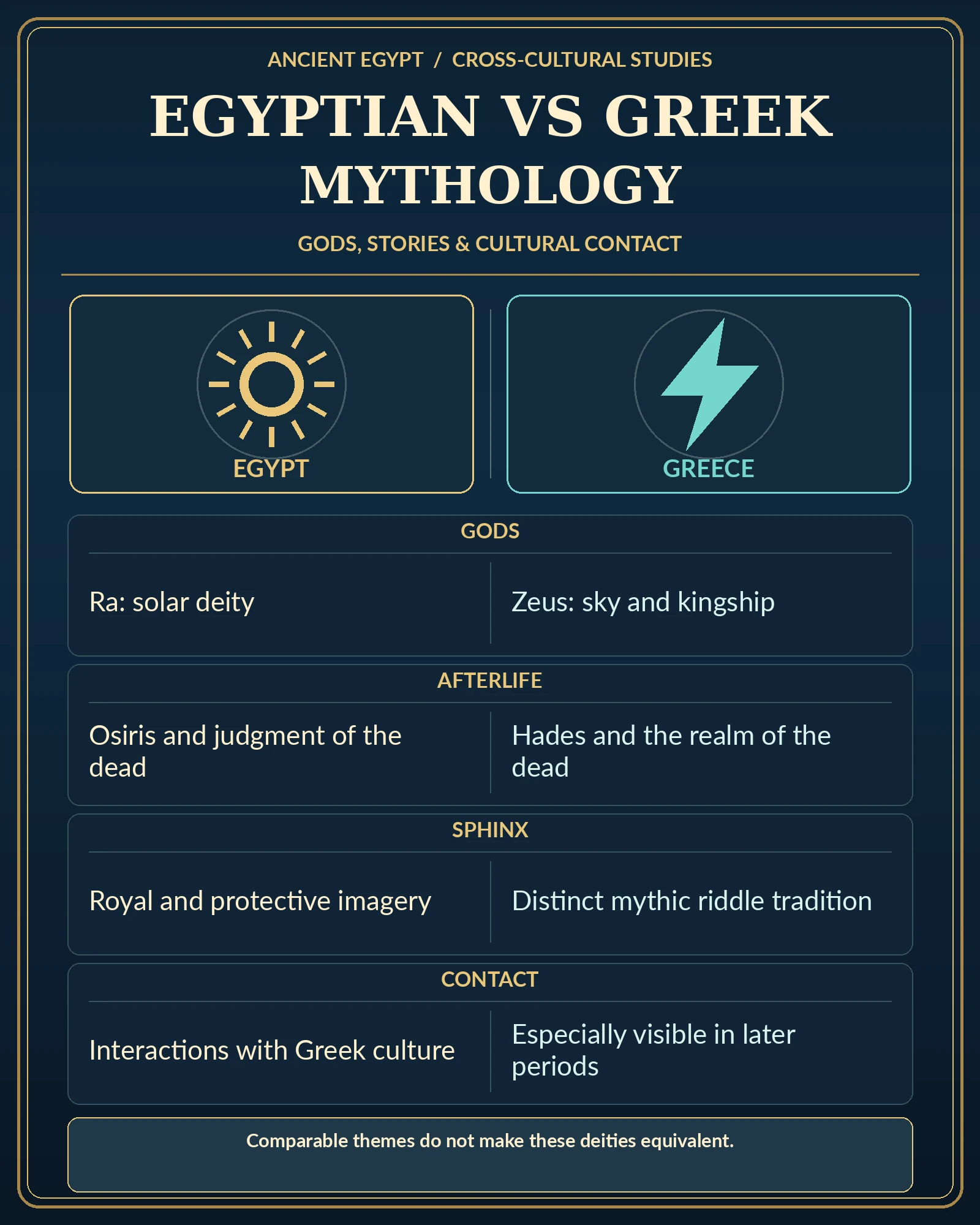
| Point | Egyptian | Greek |
|---|---|---|
| Gods’ look | Human, animal or mixed forms | Mostly human forms |
| King of the gods | Ra or Amun-Ra | Zeus |
| Ruler of the dead | Osiris | Hades |
| Sphinx | Male, royal guardian | Female, winged riddling monster |
| Contact | Greek rule in Egypt after Alexander (Ptolemaic period) | Greek writers visited and described Egypt |
Ra and Zeus
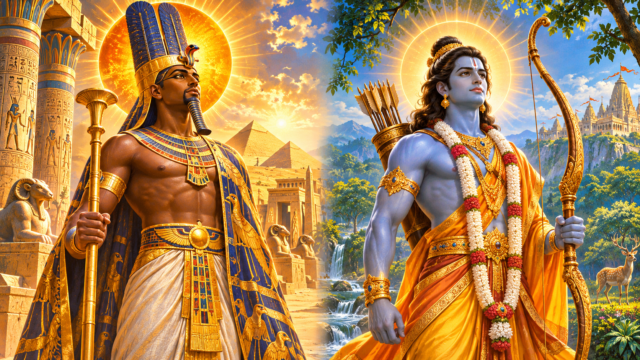
Ra is a sun god and creator who rules each day’s journey across the sky. Zeus is the Greek god of sky and thunder and the king of the Olympians. Both stand at the top of their divine orders, but Ra’s link to the sun and creation differs from Zeus’s rule over sky, law and storms. For more on Zeus, read our Zeus guide.
Osiris and Hades
Osiris rules the dead, but he is also a god of resurrection and fertility whose story involves murder by Set and revival through Isis. Hades rules the underworld in Greek myth and is rarely worshipped. Both are lords of the dead, yet Osiris offers hope of renewal while Hades is more a stern ruler.
Two very different sphinxes
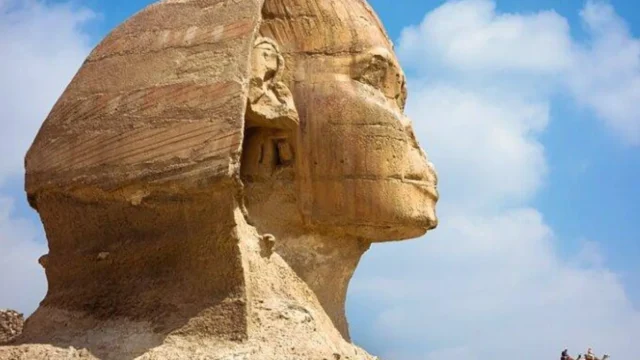
The Egyptian sphinx, like the Great Sphinx of Giza, has a lion body and a human head and is a royal guardian figure. The Greek Sphinx is a winged female monster who asks a riddle at Thebes and is defeated by Oedipus in the best-known version. They share a name and a lion body but not a story. See our Greek monsters guide for the Greek Sphinx.
When the two worlds met
Greek writers like Herodotus described Egyptian gods using Greek names. After Alexander, the Ptolemies ruled Egypt, and Serapis was promoted as a god blending Egyptian and Greek ideas. The cult of Isis later spread widely across the Greek and Roman worlds. For a broader view, see Greek mythology explained and Greek mythology images.
Story box (imagined): A Greek traveller visits an Egyptian temple and sees a falcon-headed god. He tells his friends at home it is like Apollo. The Egyptian priest would not agree. The traveller is matching the gods by role, not saying they are the same.
History, Mythology and Speculation
| Category | Examples |
|---|---|
| History | Ptolemaic rule, Serapis, Herodotus’ account |
| Mythology | Osiris myth, Oedipus and the Sphinx |
| Speculation | Claims that Greek gods are Egyptian gods renamed |
Myth vs Fact
| Popular claim | Careful answer |
|---|---|
| Ra is Zeus | No, similar rank but different gods |
| The two sphinxes are the same | No, different figures |
| Greeks and Egyptians never shared ideas | False; the Ptolemaic and Roman eras show strong blending |
Frequently Asked Questions
Is Osiris the same as Hades?
No. Both rule the dead, but their stories and roles differ.
Who was Serapis?
A god promoted in Ptolemaic Egypt who blended Egyptian and Greek features.
Did Greeks worship Egyptian gods?
Yes, Isis in particular spread across the Greek and Roman world.
Why are Egyptian gods animal-headed?
The animals expressed the character and powers of each god.
Which is older?
Egyptian religion began earlier, but Greek myth was recorded later.
Is the Great Sphinx Greek?
No. The Great Sphinx of Giza is Egyptian. The Greek name was applied later.
Did Greek myths borrow from Egypt?
Some influence is debated, but gods are not simple copies.
Where can I read about Greek vs Hindu myths?
See our Greek vs Hindu mythology guide.
Reliable Sources
- World History Encyclopedia: Egyptian Mythology
- Egypt Exploration Society: Gods of Egypt
- The Met: Divine Egypt
Last updated: 25 November 2026. Related reading: Great Sphinx of Giza, Egyptian vs Norse mythology.












Share Your Opinion
Comments are closed on this post.