 Vista

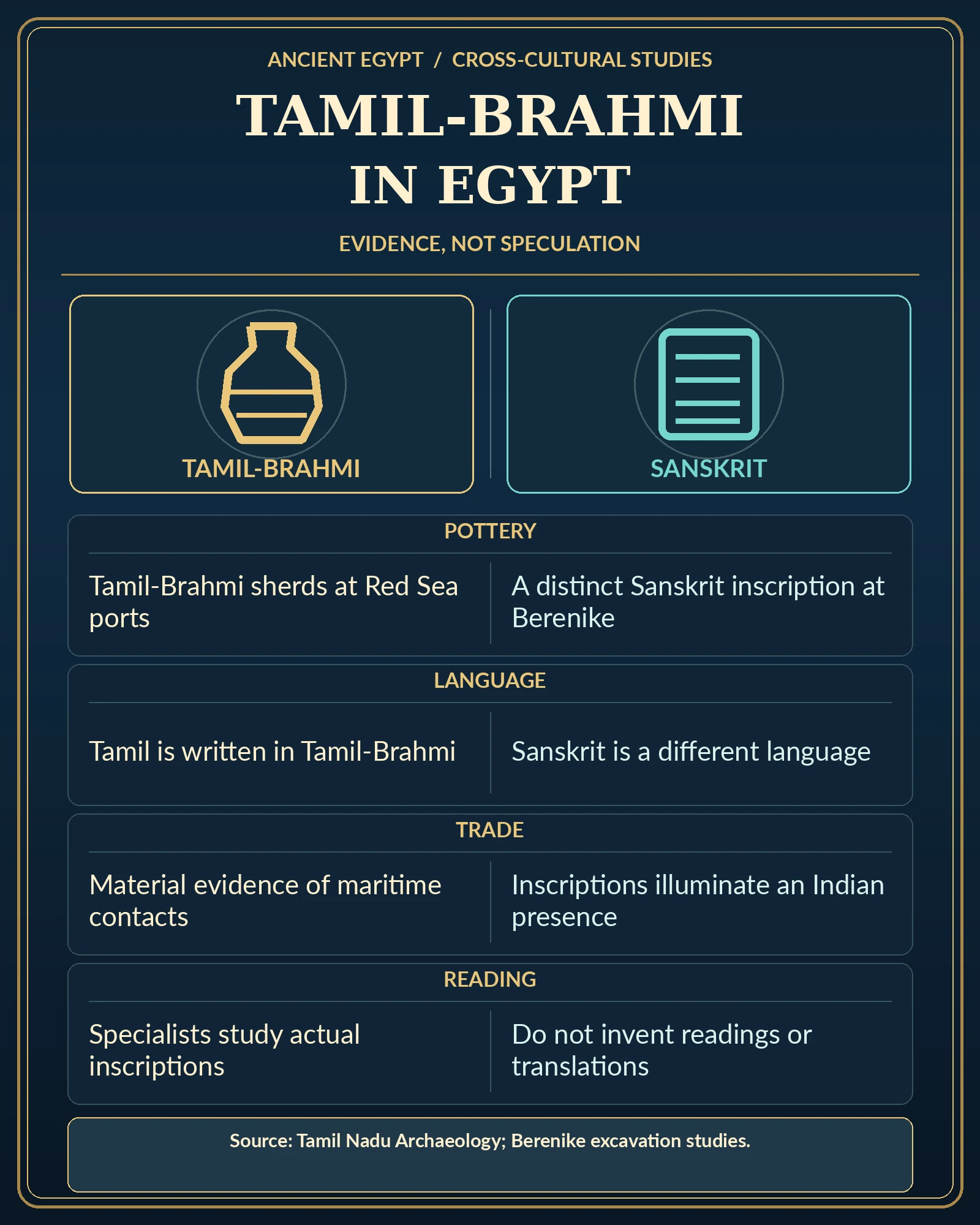
Short answer: Tamil-Brahmi writing has been reported on pottery fragments from Egyptian Red Sea sites such as Berenike and Quseir al-Qadim. These date to the Roman period and are usually read as short names, which supports Indian travellers or traders being present. There is no accepted evidence of Sanskrit inscriptions inside the pyramids, and the Pyramid Texts are written in Old Egyptian.
Quick Facts
| Point | Detail |
|---|---|
| Script | Tamil-Brahmi, an early script used to write Tamil |
| Reported sites | Berenike and Quseir al-Qadim on Egypt’s Red Sea coast |
| Object type | Pottery fragments (ostraca or potsherds) with short text |
| Period | Roman era trade |
| Pyramid Sanskrit claim | No accepted evidence |
What are Tamil-Brahmi inscriptions?
Tamil-Brahmi is an early writing system adapted for the Tamil language and found on pottery and cave inscriptions in South India and Sri Lanka. Reading it requires specialists, and published readings are usually short personal names.
The Red Sea finds
Researchers have reported Tamil-Brahmi inscribed potsherds from Berenike and Quseir al-Qadim. Epigraphers have proposed readings as personal names. Because exact readings can differ between scholars, it is safest to say these finds point to people from the Tamil-speaking region at Red Sea ports rather than to any exact name.
What this does and does not prove
- It supports the presence of Indian-linked travellers or traders in Roman-era Egypt.
- It does not show Indian rule over Egypt.
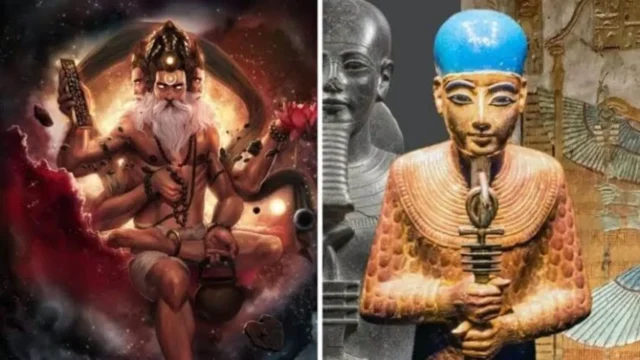
- It does not show that Indian ideas built the pyramids or shaped pharaonic religion.
The “Sanskrit in the pyramids” claim
Online posts sometimes say Sanskrit was found inside the pyramids. The Pyramid Texts, carved in Old Kingdom pyramids, are in the Egyptian language written in hieroglyphs. Claims of Sanskrit there are not supported by mainstream Egyptology, and no verified inscription has been presented.
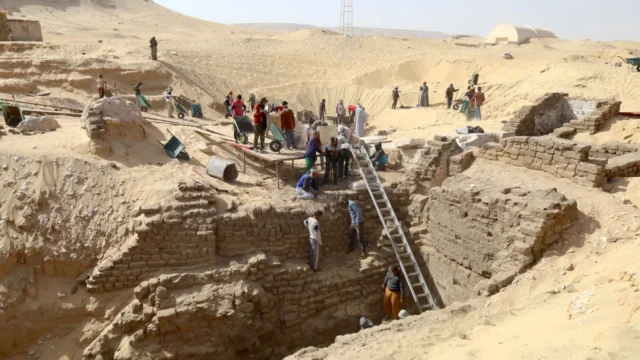
Story box (imagined): A crew member from the Indian coast scratches his name on a clay jar before it is loaded. Centuries later, an archaeologist digging in the sand picks up the broken piece. That small name is evidence of a person, not of an empire.
Reading an inscription: script, language and archaeological context
A script and a language are not the same thing. Brahmi is a writing system; Sanskrit and Tamil are languages. Tamil-Brahmi is an early adaptation of Brahmi used for writing Tamil. A short mark scratched onto a pottery fragment and a longer dedication cut into stone therefore need separate interpretation. A researcher must establish where each object was found, what its letters actually read, and how securely its archaeological layer is dated.
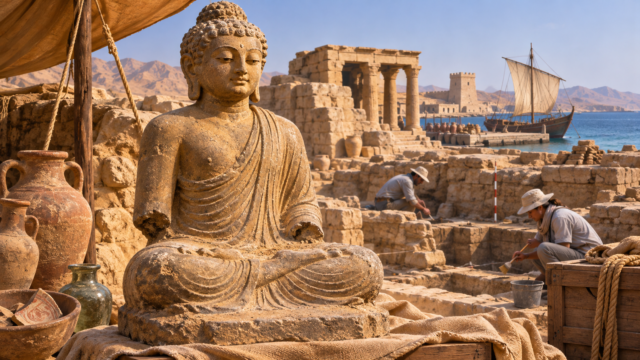
The published account of the 2022 season at Berenike records a stone dedication in Sanskrit and Greek alongside the discovery of a marble Buddha statue. This is a particular find from Roman-period Egypt, not a blanket claim that all Indian-looking inscriptions at the port are Sanskrit. The physical object, transcription and translation matter more than an image circulating without a source. The finds help explain the movement of people and religious ideas across the Red Sea and Indian Ocean, but do not establish an Indian origin for pharaonic Egyptian religion.
University of Groningen — 2022 Berenike excavation report
History, Mythology and Speculation
| Category | Examples |
|---|---|
| History | Tamil-Brahmi sherds at Red Sea ports, Roman-era trade |
| Mythology | Religious stories in Egyptian and Indian texts |
| Speculation | Sanskrit inside the pyramids; Indian origin of Egyptian writing |
Myth vs Fact
| Popular claim | Careful answer |
|---|---|
| Tamil writing was found in Egypt | Reported on Roman-era potsherds at Red Sea sites |
| Sanskrit is written in the pyramids | No accepted evidence |
| The finds prove ancient Egypt was Indian | No. They show contact through trade |
Frequently Asked Questions
Was Tamil found in Egypt?
Tamil-Brahmi inscriptions have been reported on potsherds from Egyptian Red Sea sites.
How old are they?
They are generally dated to the Roman period.
What do they say?
Reported readings are short names; exact readings may be debated.
Is there Sanskrit in the pyramids?
No verified evidence exists.
Which language are the Pyramid Texts in?
Old Egyptian written in hieroglyphs.
Why were Tamil speakers in Egypt?
Most likely for trade across the Indian Ocean.
Does this change Egyptian history?
It adds detail about Roman-era trade, not about pharaonic origins.
Where can I read more?
Look for excavation reports on Berenike and epigraphic studies of Tamil-Brahmi.
Reliable Sources
- World History Encyclopedia: Egyptian Mythology
- Egypt Exploration Society: Gods of Egypt
- The Met: Divine Egypt
Last updated: 25 November 2026. Related reading: Ancient India and Egypt trade, Buddha statue found in Egypt.
Related guides: Ancient Egypt Mysteries: What We Know and What Remains Unsolved · Heka: Ancient Egyptian God of Magic, Spells and Medicine — What Egyptian Magic Really Meant











Share Your Opinion
Comments are closed on this post.