 Vista
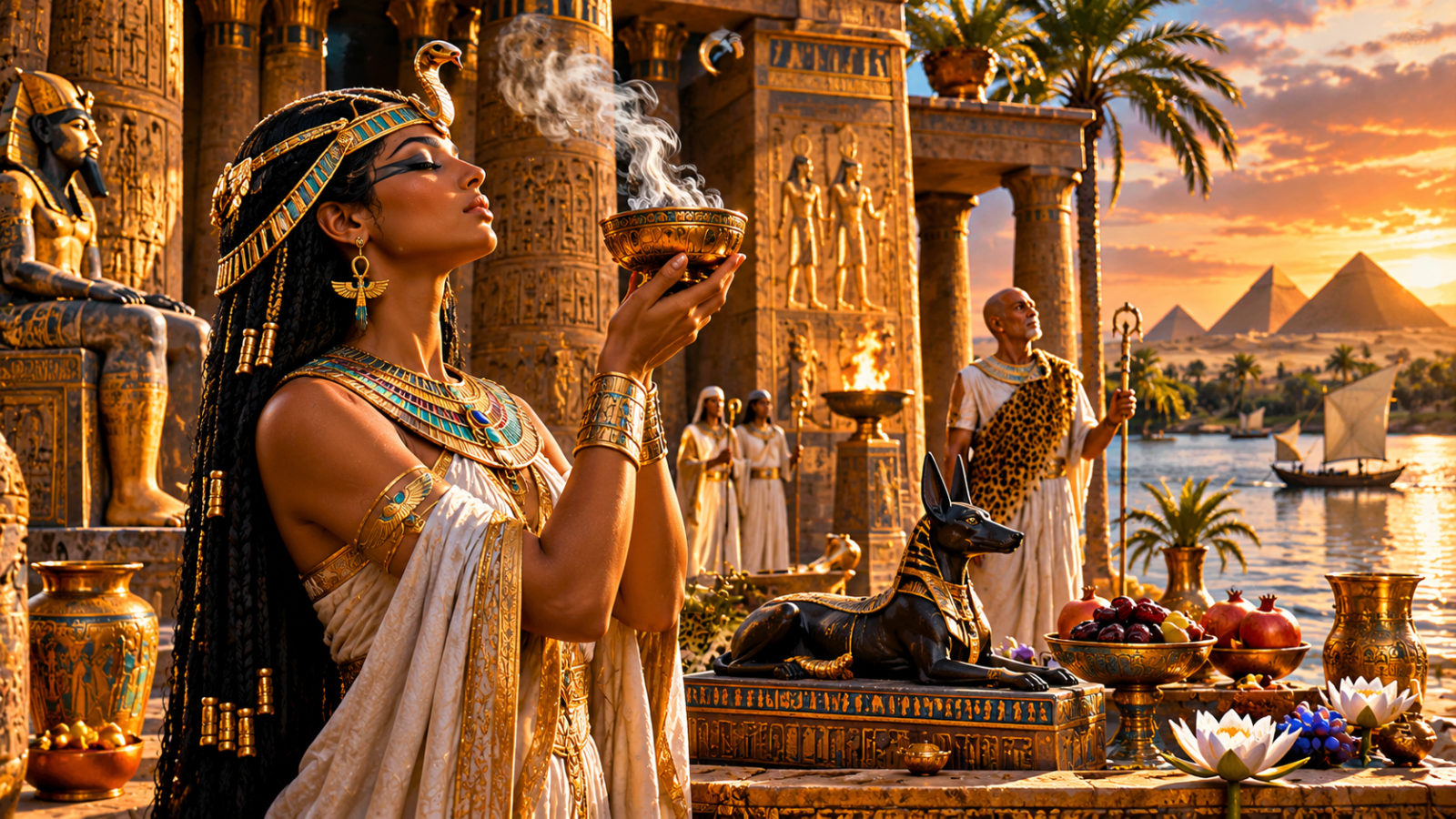
Ancient Egyptian temples were the “houses” of the gods, not meeting halls for a congregation. Priests acted on behalf of the king to care for the god’s statue every day: waking, washing, dressing and feeding it with offerings. Most ordinary people could reach only the outer areas, and met the gods mainly during festivals when the statue was carried out in procession. The temple was also an economic centre, with storehouses, workshops and land.


Temple Quick Facts
| Item | Detail |
|---|---|
| Purpose | House of the god and centre of ritual |
| Main staff | Priests, lector priests, temple scribes, craftspeople |
| Famous sites | Karnak, Luxor, Edfu, Dendera, Philae, Abu Simbel |
| Public access | Limited; festivals were the major public events |
The Daily Ritual
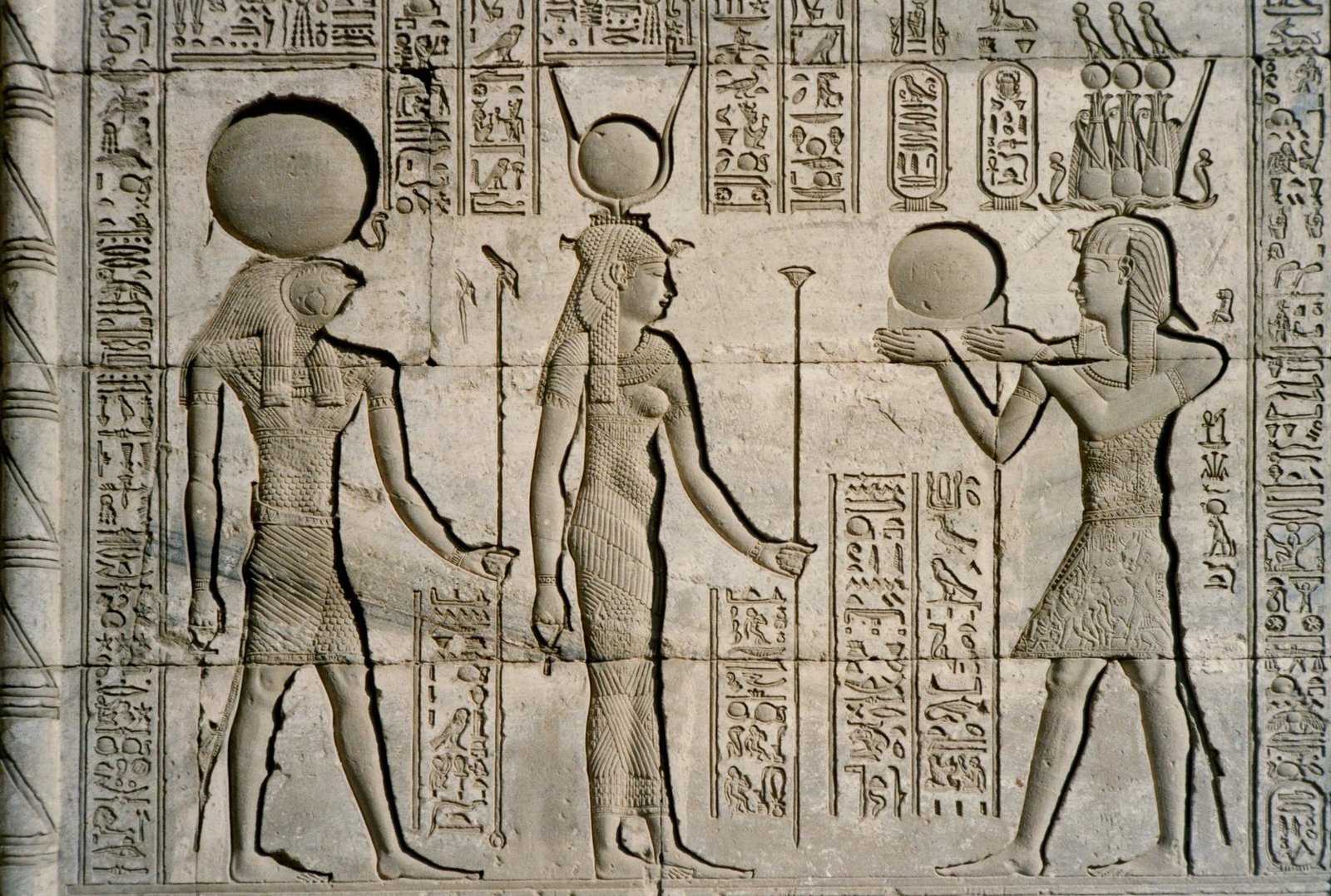
Texts and temple wall scenes show a routine of morning rites: breaking the seal on the shrine, presenting the statue with offerings, purifying it and clothing it, then closing the shrine again. After the god had “taken” the offering, the food was often passed on to priests and temple staff. Details varied by temple and period.
Temple Layout
| Part | Function |
|---|---|
| Pylon (gateway) | Massive entrance, often showing the king smiting enemies |
| Open court | Space for offerings and gatherings |
| Hypostyle hall | Hall of columns, symbolic marsh of creation |
| Sanctuary | Innermost room with the god’s shrine |
Moving inward, the floor often rises and the ceiling lowers, and the light fades. Many scholars read the design as a model of the world’s first mound of creation, though this is an interpretation.
Story box (reconstruction): At dawn, a priest washes his hands and enters the dark sanctuary with a lamp. He breaks the clay seal on the shrine and begins to recite. Outside in the courtyard, a baker waits to deliver bread for the offering table. This scene is a reconstruction based on the type of ritual known from temple evidence.
Festivals and Oracles
Festivals such as the Opet festival in Thebes carried the statues of gods between temples, and crowds could take part. People could also bring questions to oracles at some temples; the statue’s movements were interpreted as answers. These practices were a mix of religion, politics and community life.
A temple was also a symbolic landscape
The Metropolitan Museum’s discussion of the Temple of Dendur explains how a temple represented the natural world in religious terms. The sanctuary housed a cult statue, while architecture and decorative elements expressed ideas of creation. Daily rites were represented as the king’s duty even though priests performed them in practice.
Festival processions changed the relationship between a sanctuary and the wider community. A deity’s image could be carried outside, making the occasion different from the restricted daily ritual. When looking at a temple relief, distinguish ideal scenes of the ruler performing ceremonies from evidence about how the temple operated day to day. Not every surviving temple used exactly the same layout or ritual schedule.
Read the original research or museum reference
History, Mythology and Speculation
| Category | What belongs here |
|---|---|
| History | Temple ruins, wall reliefs, papyri, priest titles |
| Mythology | The temple as the primeval mound; the god living in the statue |
| Speculation | Temples as power plants or machines; secret human sacrifice rituals |
Myth vs Fact
| Popular claim | Reality |
|---|---|
| Everyone worshipped inside the temple. | Access was restricted; home shrines and festivals mattered for ordinary people. |
| Temples were used for mass human sacrifice. | No evidence for this as a standard practice. |
| Priests were full-time for life. | Many served in rotating groups and had other jobs. |
| Temples were only religious. | They were also economic centres. |
Frequently Asked Questions About Egyptian Temples
What was a temple for?
To house the god and maintain order through ritual.
Could ordinary people enter?
Usually only outer areas.
What did priests do?
Performed rituals, managed offerings and kept records.
What are offerings?
Food, drink, cloth, incense and other gifts for the god.
What is a pylon?
The monumental gateway of a temple.
Which temples can I visit today?
Karnak, Luxor, Edfu, Dendera, Philae and Abu Simbel are well known; check official sources for visiting rules and opening times.
Is it like a Hindu temple?
Both involve daily care of a divine image, but the religions, rituals and architecture are different and should not be treated as equivalent.
Are the temples still used for worship?
No; they are archaeological and tourist sites.
Reliable Sources
- World History Encyclopedia: Egyptian Mythology
- Egypt Exploration Society: Gods of Egypt
- The Metropolitan Museum of Art: Divine Egypt
Last updated: 25 November 2026. Related reading on Vista Hub: Amun-Ra, Egyptian pharaohs, Isis, ancient Egyptian symbols.












Share Your Opinion
Comments are closed on this post.