 Vista

In ancient Egyptian belief, a person was not made of just “body and soul”. The self had several parts, and the three most discussed are the ka (life force), the ba (personality or mobile spirit, shown as a human-headed bird) and the akh (the transfigured, effective spirit of a justified dead person). Alongside these were the heart, the name and the shadow. Modern writers often translate ka and ba both as “soul”, but that hides the difference. Egyptologists also note that the terms were used flexibly, so exact definitions remain debated.
This guide explains each part, how they work together, how the Egyptians cared for them after death, and which popular claims need correction.
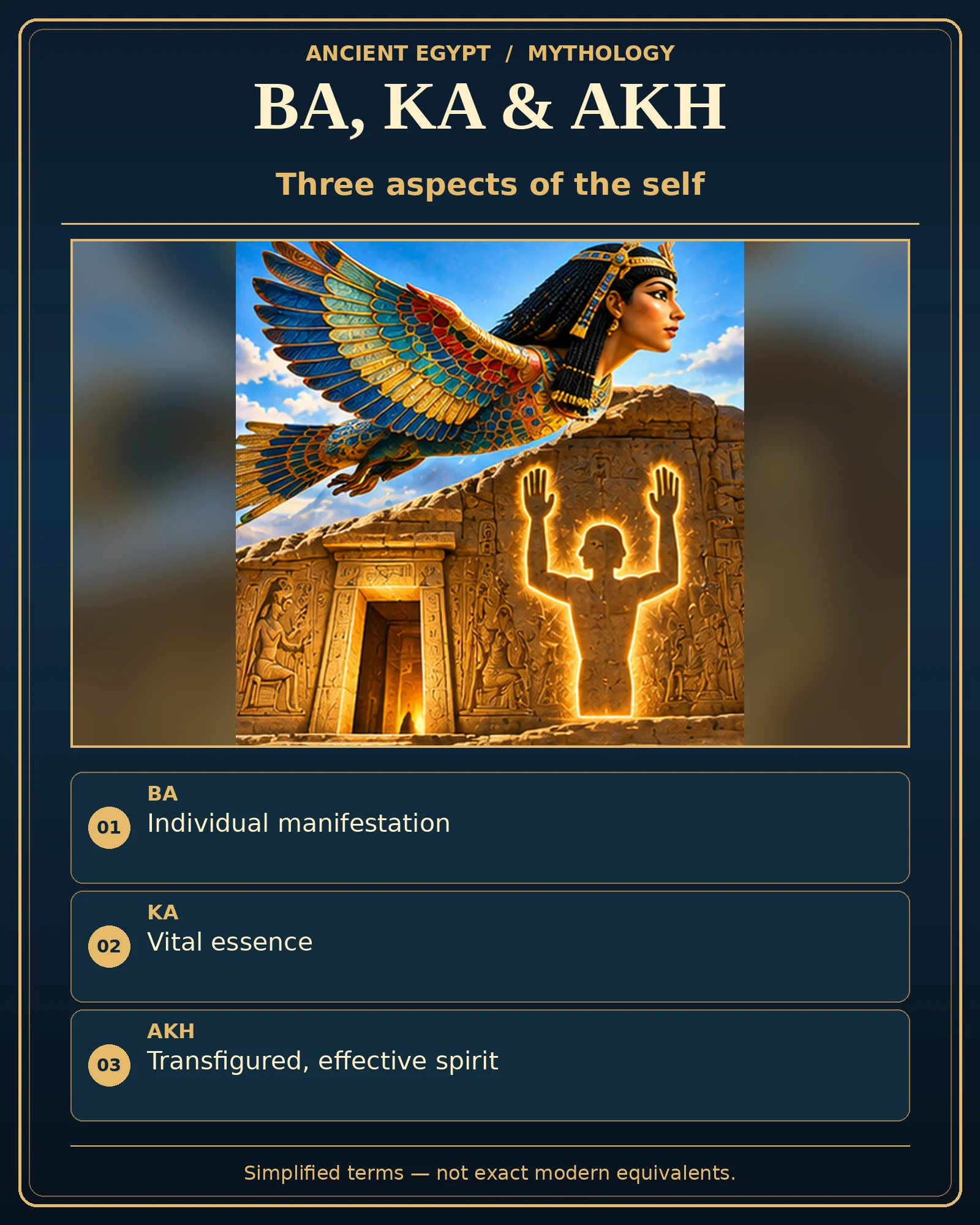
Ba, Ka and Akh Quick Facts
| Part | Meaning (simplified) | How it is shown |
|---|---|---|
| Ka | Life force or vital double; needs food and drink | Two raised arms hieroglyph; statues as homes for the ka |
| Ba | Personality and mobility; can leave the tomb and return | Human-headed bird |
| Akh | The effective, transfigured spirit that a successful dead person becomes | Crested ibis hieroglyph |
| Ib (heart) | Mind, memory and morality | Heart-shaped jar sign |
| Ren (name) | The name; being remembered keeps one alive | Written in cartouches for kings |
| Shut (shadow) | The shadow as part of the person | Dark silhouette sign |
The Ka: Life Force That Needs Feeding
The ka is best understood as the life-giving energy passed on from the creator gods. It exists during life and continues after death, but it then needs offerings. This is why tombs have offering tables, painted food and spells that supply bread and beer magically. Statues of the dead (ka statues) gave the ka a place to rest. Some texts say that a person goes “to his ka” at death. Priests called ka-servants were sometimes paid to bring offerings.
The Ba: Personality That Can Travel
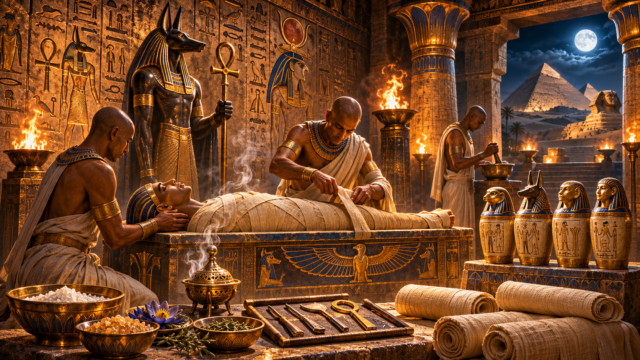
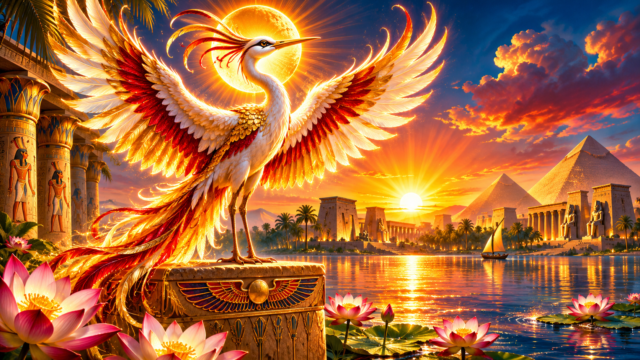
The ba is the individual character and the power to move freely. It is shown from the New Kingdom as a human-headed bird, which captures the idea that it can fly out of the tomb by day and return to the body at night. Gods also have bas, and the Bennu bird was called the ba of Ra. Because the ba needs the body to rejoin, preserving the body mattered. Our guide to Egyptian mummification explains this link.
Story box (retold from funerary beliefs): In the cool of evening, a small bird with a human face slips out of a tomb shaft. It circles over the fields where the dead man once worked, watches children by the canal, and drinks from the water. As the sun sets, it flies back down into the dark chamber and settles beside the mummy. The ka, in the form of his statue, receives the bread laid on the offering table. This is an imagined scene, built from how texts and tomb art describe the ba and ka.
The Akh: The Successful Dead
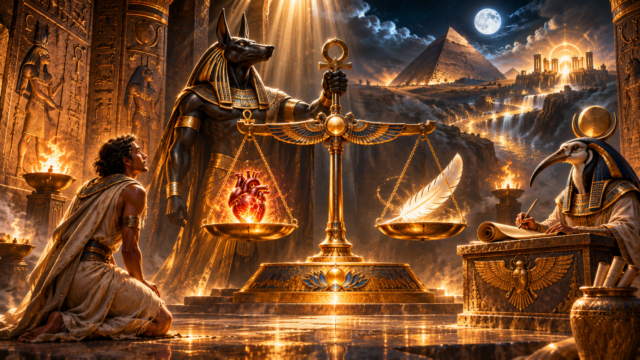
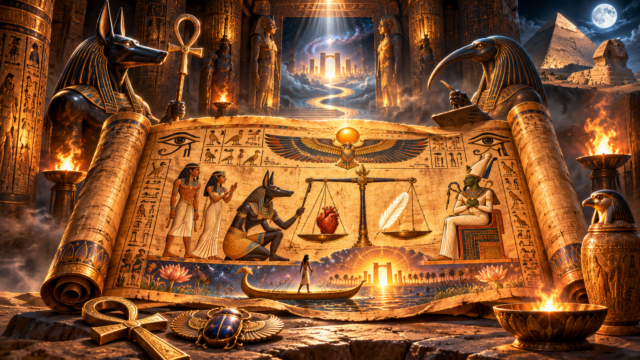
The akh is a state a dead person reaches after a successful burial, justification at the judgment and the joining of ka and ba. The word is linked with the idea of shining or being effective. An akh can act in the world: Egyptians wrote “letters to the dead” asking a deceased relative to help a family in a dispute or illness, or to stop troubling the living. This shows that spirits were seen as capable of both help and harm. Our guides to the weighing of the heart and the Egyptian afterlife explain the judgment.
Heart, Name and Shadow
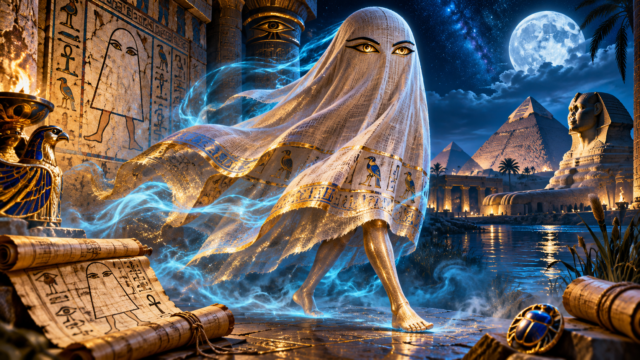
The heart was the centre of thought and was weighed against Ma’at. The name had to be spoken or written to keep the person alive, which is why erasing a name was a serious punishment. The shadow was treated as a living part of the person and could be protected by spells. Together, these parts make up a view of the self as a set of connected elements that all need care.
History, Mythology and Speculation
| Category | What belongs here |
|---|---|
| History | Tomb art, offering practices, letters to the dead, Pyramid Texts and Coffin Texts |
| Mythology | The ba flying from the tomb; the akh as a blessed spirit; gods with ka and ba |
| Speculation | Exact boundaries between parts; comparisons with Indian ideas of atman; modern “astral body” or New Age readings |
Myth vs Fact
| Popular claim | Reality |
|---|---|
| Ka and ba both just mean “soul”. | They are different parts with different roles. |
| The ba is a ghost. | It is a part of the self, not a haunting spirit in the modern sense. |
| Egyptians believed in reincarnation. | Mainstream Egyptology does not describe their belief as reincarnation. |
| The ka is the same as the Indian atman. | The comparison is loose. The concepts come from different traditions. |
| Everyone became an akh. | Only those who were justified and properly cared for did. |
Frequently Asked Questions About Ba, Ka and Akh
What is the ka?
The life force that needs food and drink offerings, in life and after death.
What is the ba?
The personality and mobility of a person, shown as a human-headed bird.
What is the akh?
The transfigured, effective spirit of a justified dead person.
Why did Egyptians preserve the body?
The ba and ka needed a body or statue to return to.
What were letters to the dead?
Written requests to deceased relatives, asking for help or for them to stop causing trouble.
Is the ka the same as the soul?
Not exactly. “Soul” is a rough translation for several different parts.
Why was the name important?
Being remembered and named kept the person alive in belief, so erasing a name was a harsh act.
Is there scientific proof of a soul?
No. These are religious beliefs studied through texts and archaeology, not scientific facts.
Reliable Sources
- World History Encyclopedia: Egyptian Mythology
- Egypt Exploration Society: Gods of Egypt
- The Metropolitan Museum of Art: Divine Egypt
Last updated: 25 November 2026. Related reading on Vista Hub: our guides to the Egyptian afterlife, mummification, the weighing of the heart and the Bennu bird.
Related guides: Egyptian Afterlife Explained: Ka, Ba, Akh, the Field of Reeds and the Journey of the Dead · Ancient Egyptian Temples, Rituals and Worship Explained: Priests, Offerings and Sacred Architecture












Share Your Opinion
Comments are closed on this post.