 Vista
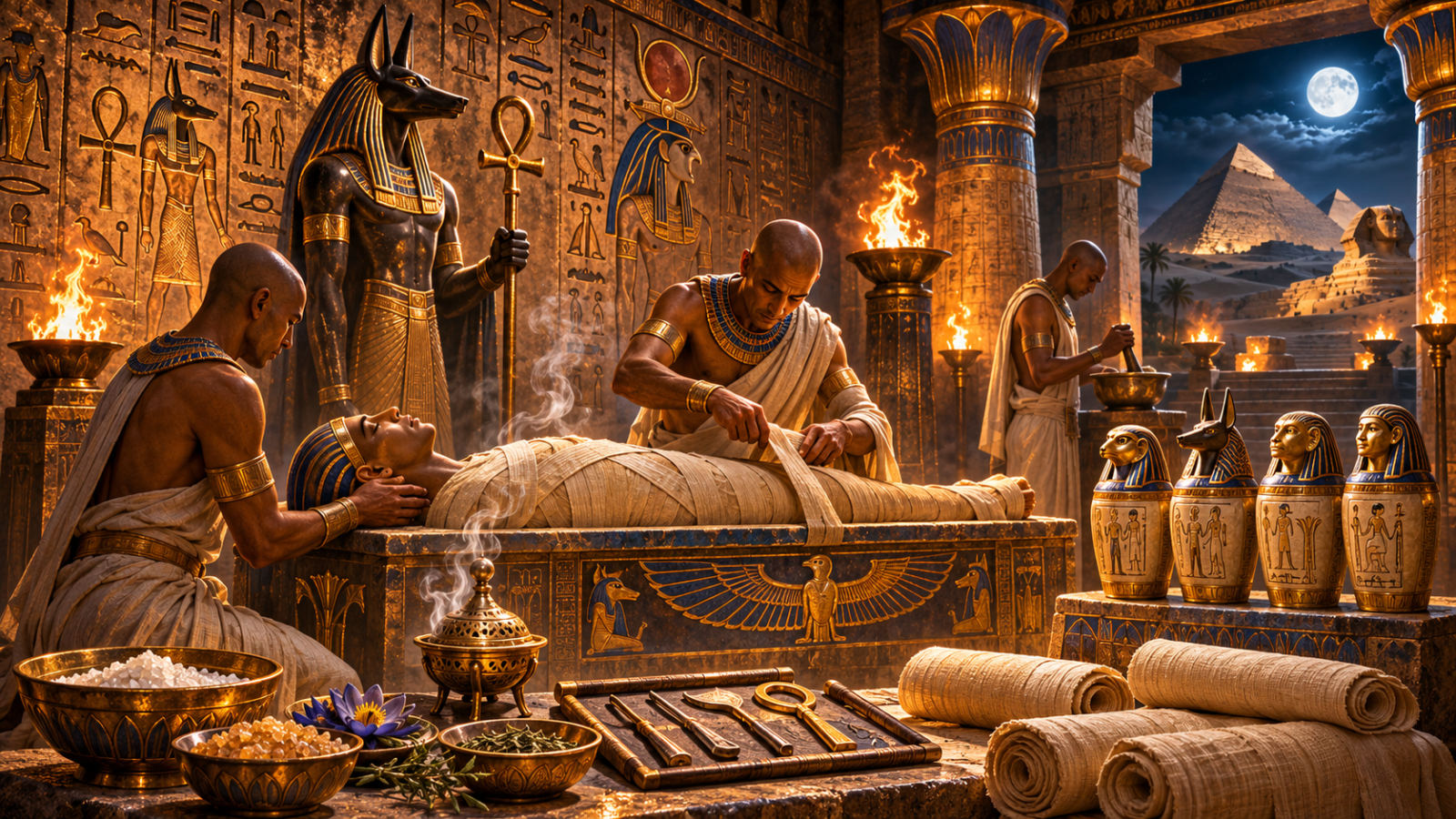
Egyptian mummification was a religious and technical process that preserved a dead body so that the person’s spirit could recognise it and live on. The best-known version, used in the New Kingdom and later, took roughly 70 days. Embalmers removed the internal organs, dried the body using natron salt, packed and treated it with resins and oils, and wrapped it in linen with amulets and spells. The heart was usually left in place, while the brain was commonly removed through the nose. Mummification was not a single fixed recipe, and its methods and quality changed over three thousand years.
This guide explains the steps, the science of why it worked, the costs and social levels, the role of the gods, and what is known and unknown. It also answers a common search question about doing it yourself, with a clear legal and safety note.
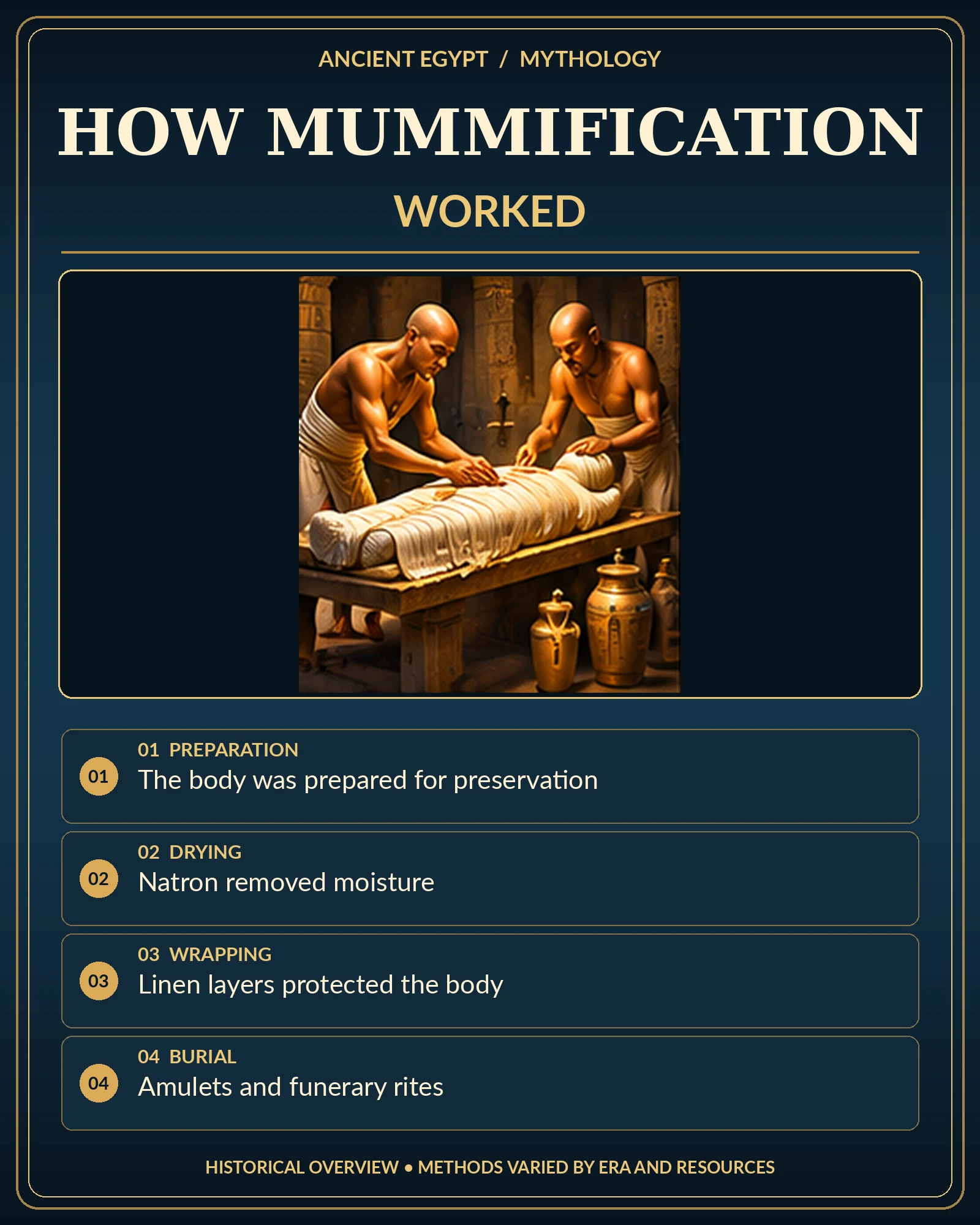
Mummification Quick Facts
| Item | Detail |
|---|---|
| Duration | About 70 days in the classic account |
| Drying agent | Natron, a natural salt mixture from places such as Wadi Natrun |
| Organs | Lungs, liver, stomach and intestines were removed and stored; the heart was usually left |
| Brain | Often removed through the nose and discarded |
| Wrapping | Linen strips, with amulets and spells |
| Divine link | Anubis as patron of embalmers; the Osiris myth as model |
Why Did Egyptians Mummify the Dead?
Egyptians believed that the body was a home for the ka and a form for the ba to return to. Preserving it helped keep the person alive in the afterlife. The model was the myth of Osiris, whose body was put together and restored by Isis, Nephthys and Anubis. Our guides to Osiris, Anubis and the Egyptian afterlife explain this idea. Natural mummies also existed because the hot, dry desert preserved bodies buried in sand. Some scholars think this may have inspired the artificial method, though this is a hypothesis.
The Process, Step by Step
- Washing and purification of the body, often in a special tent or workshop.
- Removal of the brain (in many periods) and of the main internal organs through a cut in the left side.
- Drying of the body and organs using natron for a long period, commonly described as about 40 days.
- Cleaning, then packing the body with linen, sawdust or resin so it kept its shape.
- Anointing with oils and resins, then wrapping in linen with amulets and spells between the layers.
- A final ritual, including the Opening of the Mouth ceremony, and placing the mummy in a coffin.
The 70-day figure comes from a combination of Egyptian and Greek sources, including Herodotus, and different periods used different timings. Treat it as a typical figure, not a universal rule.
Story box (reconstruction): In a workshop near the river, a priest wearing a jackal mask chants while embalmers work. The body lies on a stone table. Organs are placed in jars to be sealed. Heaps of natron cover the body for weeks. At the end, linen is wound around the arms, then the legs, and a heart scarab is placed over the chest. The mask recalls Anubis. This reconstruction is based on archaeological finds and ancient accounts, and some details are interpretation.
The Science: Why Did It Work?
Bodies decay mostly because of water and microbes. Natron absorbs moisture and has drying and mildly antibacterial effects, so it slows decay. Removing the organs, which rot quickly, further helped. Resins and oils added protection against microbes and insects. Modern studies of embalming materials have found a range of ingredients, including plant oils, fats, beeswax and tree resins, some of which came from far away, which shows that trade supplied the embalmers. Researchers continue to refine these findings with chemical analysis, so details may change.
Costs and Social Levels
Herodotus described three levels of embalming, from an expensive one to a cheap one. This is useful but is a Greek outsider’s account of a later period. Archaeology confirms that quality varied greatly, and that poorer people were often buried in simple graves where the dry sand preserved them naturally or with minimal treatment.
Canopic Jars and the Heart
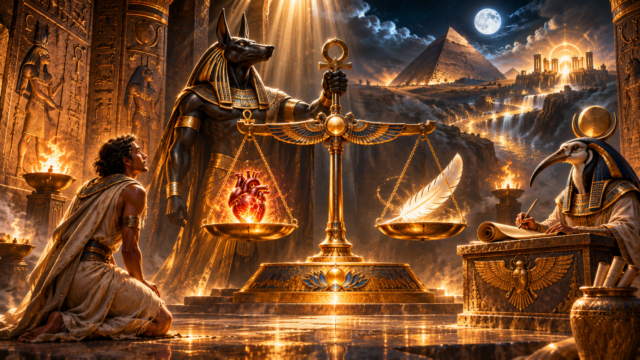
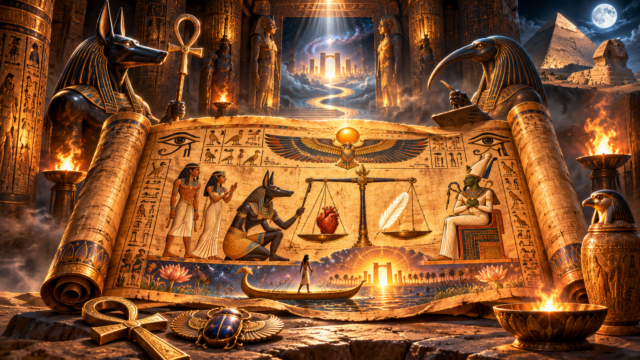
The removed organs were dried and kept in canopic jars or wrapped and returned to the body, depending on the period. The heart, as the centre of thought and the object of judgment, was usually left or returned. See our guide to the Four Sons of Horus and canopic jars and our guide to the weighing of the heart.
Can You Mummify a Body at Home? (Legal and Safety Note)
People often search for how to mummify a person or pet at home. This is not a safe or sensible project. In most countries, handling and disposing of human remains is strictly regulated by law, and unauthorised treatment or burial of a body can be a crime. Decomposing remains also carry real health risks. This article does not give instructions for treating a human body. If you are curious about the science, safer options are museum exhibitions, documentaries and published experimental archaeology, such as the work of researchers who have studied preservation using donated or ethically sourced material under supervision. If a loved one has died, contact local authorities and a licensed funeral service.
History, Mythology and Speculation
| Category | What belongs here |
|---|---|
| History | Mummies, embalming workshops, chemical analysis, written accounts |
| Mythology | Osiris’s restoration; Anubis as embalmer; the ritual meaning of each step |
| Speculation | Exact recipes for every period; the claim that Egyptians knew lost “secret” methods; claims about mummy powders or curses |
Myth vs Fact
| Popular claim | Reality |
|---|---|
| The brain was thrown away because it was useless. | It was often removed and discarded, but this does not prove Egyptians thought it useless. Practice varied. |
| Only pharaohs were mummified. | Many non-royal people and many animals were mummified too. |
| Mummies are wrapped in toilet-paper-like bandages. | They used fine linen, often with resin and amulets. |
| All mummies are cursed. | No scientific evidence supports this. |
| The technique is a lost secret. | Modern analysis has recovered much of the process, though some details are uncertain. |
Frequently Asked Questions About Egyptian Mummification
How long did mummification take?
About 70 days in the classic account, though it differed by period.
What is natron?
A natural salt mixture used to dry the body.
Why was the heart left in the body?
It was considered the centre of thought and character and was needed for the judgment.
What happened to the brain?
It was often removed through the nose and discarded, depending on the period.
Did Egyptians mummify animals?
Yes. Many animals, including cats, ibises and bulls, were mummified.
Can mummification be done at home?
It is not recommended and is regulated by law when human remains are involved. See the safety note above.
Who was the god of mummification?
Anubis is the patron of embalmers, and the process follows the myth of Osiris.
Where can I see real mummies?
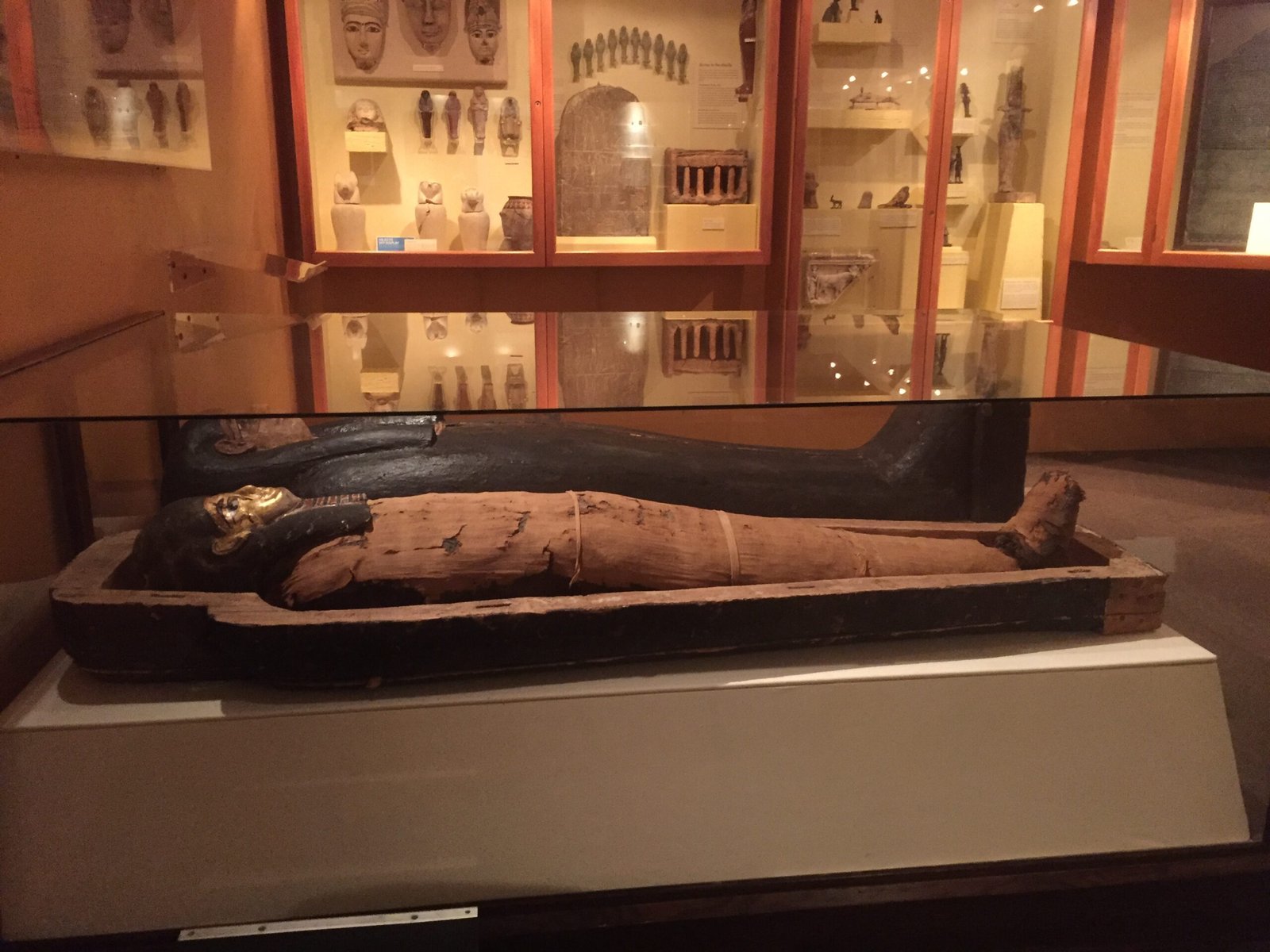
In major museums, such as the Egyptian Museum in Cairo and the British Museum. Check current displays before you visit.
Reliable Sources
- World History Encyclopedia: Egyptian Mythology
- Egypt Exploration Society: Gods of Egypt
- The Metropolitan Museum of Art: Divine Egypt
Last updated: 25 November 2026. Related reading on Vista Hub: our guides to Anubis, Osiris, canopic jars, the Egyptian afterlife and ancient Egyptian civilization.












Share Your Opinion
Comments are closed on this post.