 Vista
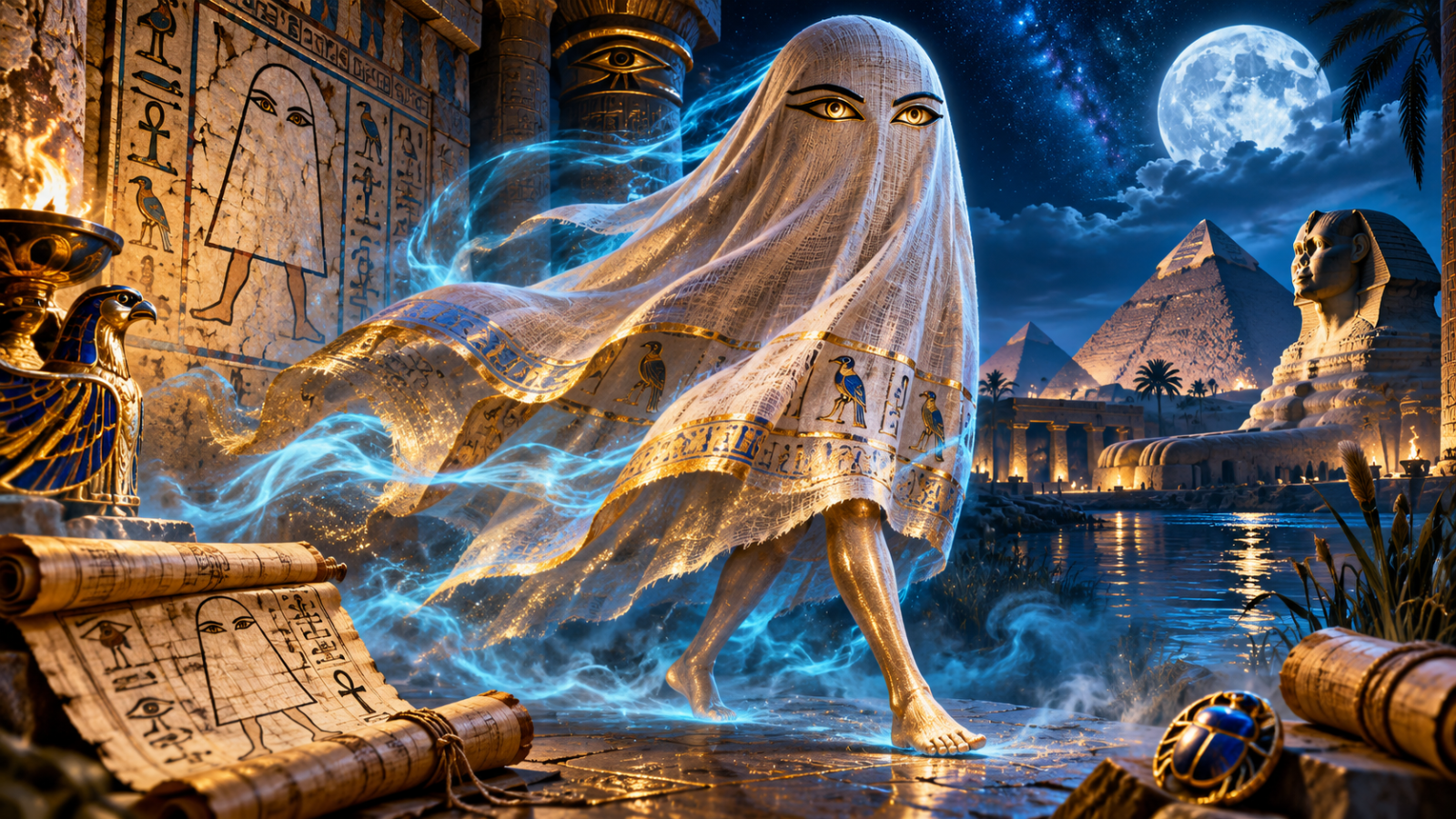
Medjed is a mysterious figure from ancient Egyptian funerary religion, known from only a small number of sources. In popular images it looks like a white, ghost-like shape with two eyes and two feet sticking out, and it is often called the “smiter”, from the usual reading of its name. The few texts that mention Medjed suggest a being that can strike with its gaze while staying unseen. Because so little is known, Medjed has become a favourite subject for internet speculation, and this is exactly why a careful article is useful: here we separate what the evidence supports from what modern writers have added.
In short: Medjed is real as an Egyptian figure, but not as the powerful “forgotten god” that many posts describe. We know the name and a few appearances. We do not know a full myth, a cult or a detailed role. This guide sets out the evidence and explains how the figure later became a meme.

Medjed Quick Facts
| Item | Detail |
|---|---|
| Name | Medjed, often translated “the smiter”; the translation is a scholarly reading |
| Type | A minor, obscure funerary being; not a major god |
| Appearance | Shrouded figure with eyes and feet showing |
| Best-known source | Book of the Dead material from the New Kingdom, with a well-known image in a papyrus often identified as the Papyrus of Ani |
| Role | Appears in a spell as a being whom the dead person must pass |
| Modern fame | Internet meme and pop-culture character, especially in Japan |
What Do the Sources Actually Say?
The name Medjed appears in a few Egyptian funerary sources. The most cited example is a Book of the Dead spell in which the deceased claims power over certain beings in the afterlife. In that text Medjed is described as a being who can strike or shoot with its gaze while being invisible, and the dead person says they will pass by safely. The scene is part of the dangerous journey through the Duat, the Egyptian underworld, where the dead had to deal with guardians, gates and hostile creatures.
The best-known picture of Medjed comes from a New Kingdom papyrus often identified as the Papyrus of Ani, now in the British Museum. It shows a small covered figure with eyes and feet visible. Anyone citing a specific spell number or page should check it against a museum catalogue or a published translation, because popular websites often copy each other’s details, and some of those details are wrong.
What Does the Name Mean?
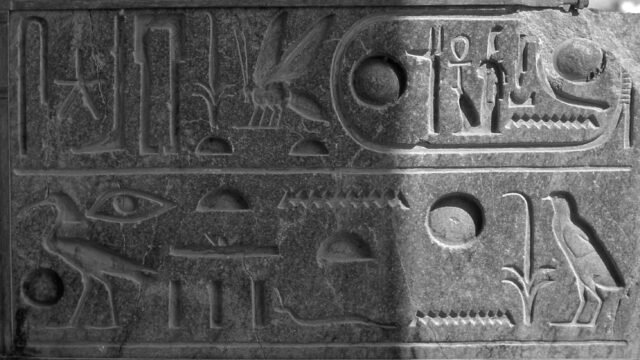
The name is usually connected with an Egyptian verb meaning “to strike” or “to smite”, so “the smiter” has become the common translation. Egyptian names can be difficult to translate, and a single hieroglyphic spelling may allow more than one reading. It is therefore wise to say that “the smiter” is the usual scholarly suggestion, not a certain fact.
Why Is Medjed Drawn Like a Ghost?
In the papyrus image the figure is mostly covered, with only the eyes and the lower legs showing. Some writers think the covering stands for invisibility, which fits the idea of a being that strikes without being seen. Others see it as a shrouded protector. These are interpretations of a small image, not statements found in the text, so they should be presented as possibilities.
Story box (imagined scene based on the idea of the afterlife journey): The dead person walks through a dark hall of the underworld. Doors close behind them, and strange guardians watch. Somewhere in the shadows, a shrouded shape stands with only its eyes visible. The traveller does not fight. Instead, they speak the right words they learned in life, and the figure lets them pass. This scene is a reconstruction of how the spells were meant to work. It is not an ancient story about Medjed.
The Meme: How Medjed Became Famous Online
Medjed became widely known outside Egyptology mainly through the internet. According to commonly cited accounts, it gained popularity in Japan in the early 2010s, when its simple, slightly funny shape was turned into fan art and appeared in games and other media. From there it spread to English-language sites, where it was often described as a “forgotten god” or an unknowable horror. This explains why the figure has a far bigger reputation today than it ever had in ancient Egypt. The exact start of the trend is not well documented, so treat the details of the meme’s origin as reported, not proven.
It is also worth noting that the meme version often adds ideas that do not come from the sources, such as a creepy backstory, special powers or a link to modern conspiracies. Those are modern inventions.
History, Mythology and Speculation
| Category | What belongs here |
|---|---|
| History (documented) | The name and image in a small number of funerary sources; the Book of the Dead context |
| Mythology (religious belief) | A dangerous being in the underworld that the dead must pass |
| Speculation | Detailed powers, origin story or worship; claims about a hidden cult; any link with modern conspiracy ideas |
Myth vs Fact
| Popular claim | Reality |
|---|---|
| Medjed was a powerful god worshipped across Egypt. | There is no evidence of a major cult. It is an obscure figure. |
| Looking at Medjed can kill you. | The idea of striking with a gaze comes from a reading of the spell; it is not a warning for modern viewers. |
| Medjed is the Egyptian ghost. | “Ghost” is a modern comparison. Egyptians had other concepts, such as the akh and the ka, for spirits of the dead. |
| The meme is ancient. | The meme is modern; the figure is ancient. |
| Everything about Medjed is known. | Very little is known, and scholars still discuss the figure. |
Why Medjed Matters
Medjed is a good lesson in how to read ancient evidence. A tiny image and a few lines of text can be turned by the internet into a whole mythology. The honest historian’s answer is: here is what the sources give us, and here is where we must stop. For readers who enjoy the mystery, that limit is part of the story, because it shows how much of ancient religion survives only in fragments.
Frequently Asked Questions About Medjed
What is Medjed?
Medjed is an obscure Egyptian funerary being known from a few sources, including a Book of the Dead spell and a famous papyrus image.
Is Medjed a god?
It is usually described as a minor divine or supernatural being, not a major god with a cult.
What does Medjed mean?
The name is usually read as “the smiter”, but this is a scholarly suggestion.
Why does Medjed look like a ghost?
The image shows a covered figure with eyes and feet visible. Modern viewers compare it to a ghost, but this is a modern comparison.
Where does the Medjed image come from?
It is usually traced to a New Kingdom Book of the Dead papyrus, often identified as the Papyrus of Ani in the British Museum.
Is Medjed dangerous to look at?
No. The idea of striking with a gaze belongs to the ancient spell, not to modern images.
Why is Medjed so popular online?
Its simple, odd look and the lack of detailed sources made it easy to turn into memes, art and fiction.
Did Egyptians worship Medjed?
There is no clear evidence of a worship cult. It appears in funerary texts as a figure to be passed.
Reliable Sources
- World History Encyclopedia: Egyptian Mythology
- Egypt Exploration Society: Gods of Egypt
- The Metropolitan Museum of Art: Divine Egypt
Last updated: 25 November 2026. Related reading on Vista Hub: our guides to the Egyptian Book of the Dead, the Duat and Egyptian monsters and creatures.
Related guides: What Does a 3,000-Year-Old Egyptian Mummy Smell Like? · Egyptian Book of the Dead Explained: What It Is, Spell 125 and Is It Dangerous to Read?














Share Your Opinion
Comments are closed on this post.