 Vista
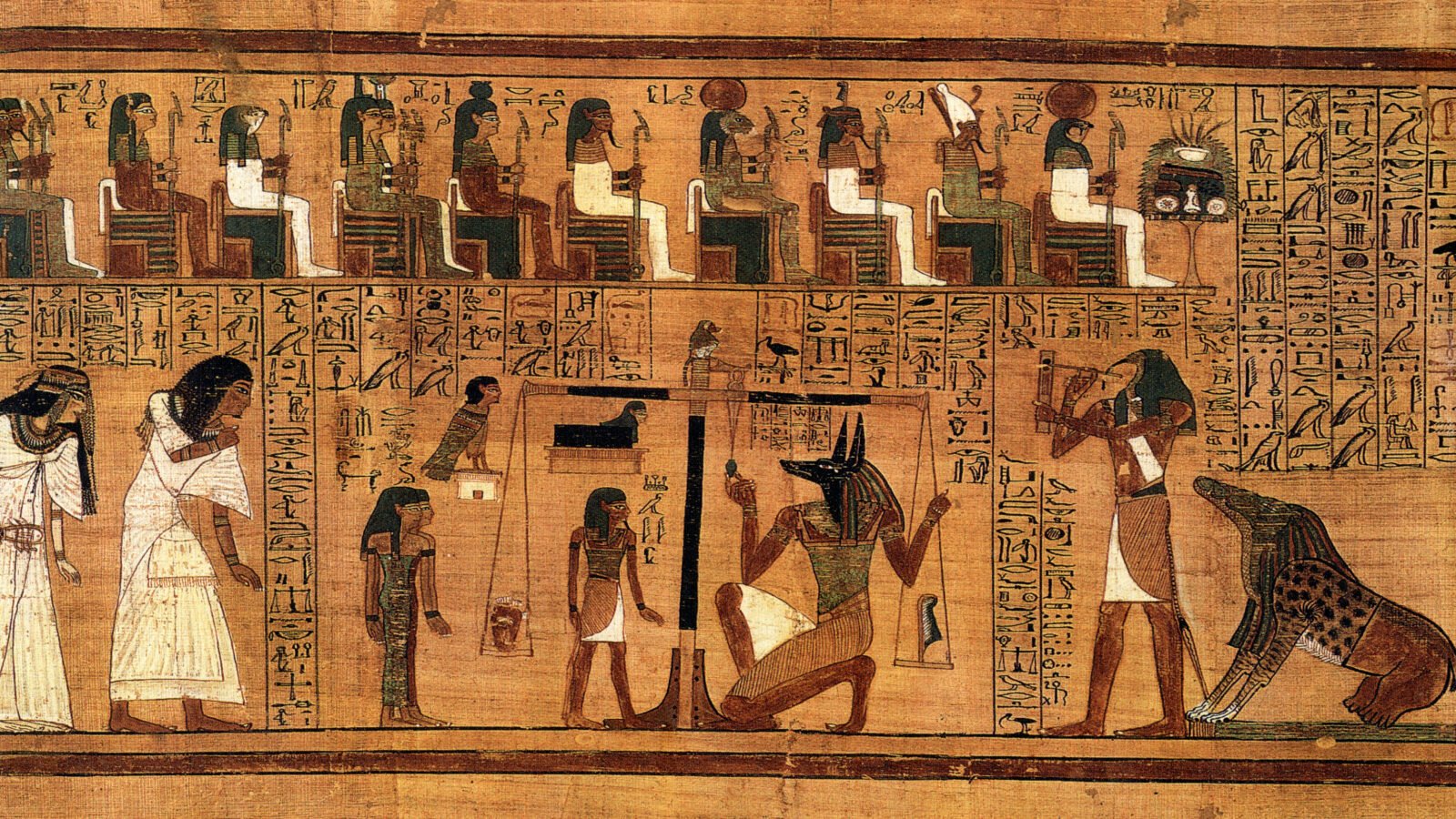
Short answer: The best-known original Book of the Dead papyrus is the Papyrus of Ani, kept in the British Museum (EA 10470). It is a roughly 78-foot scroll from Thebes, made around 1250 BCE in the 19th Dynasty, and it is displayed in separate frames with colour vignettes and hieratic text. The museum’s online collection shows images of the frames with museum numbers, which is the best source for real photographs.
AUTHENTIC PAPYRUS ARTWORK
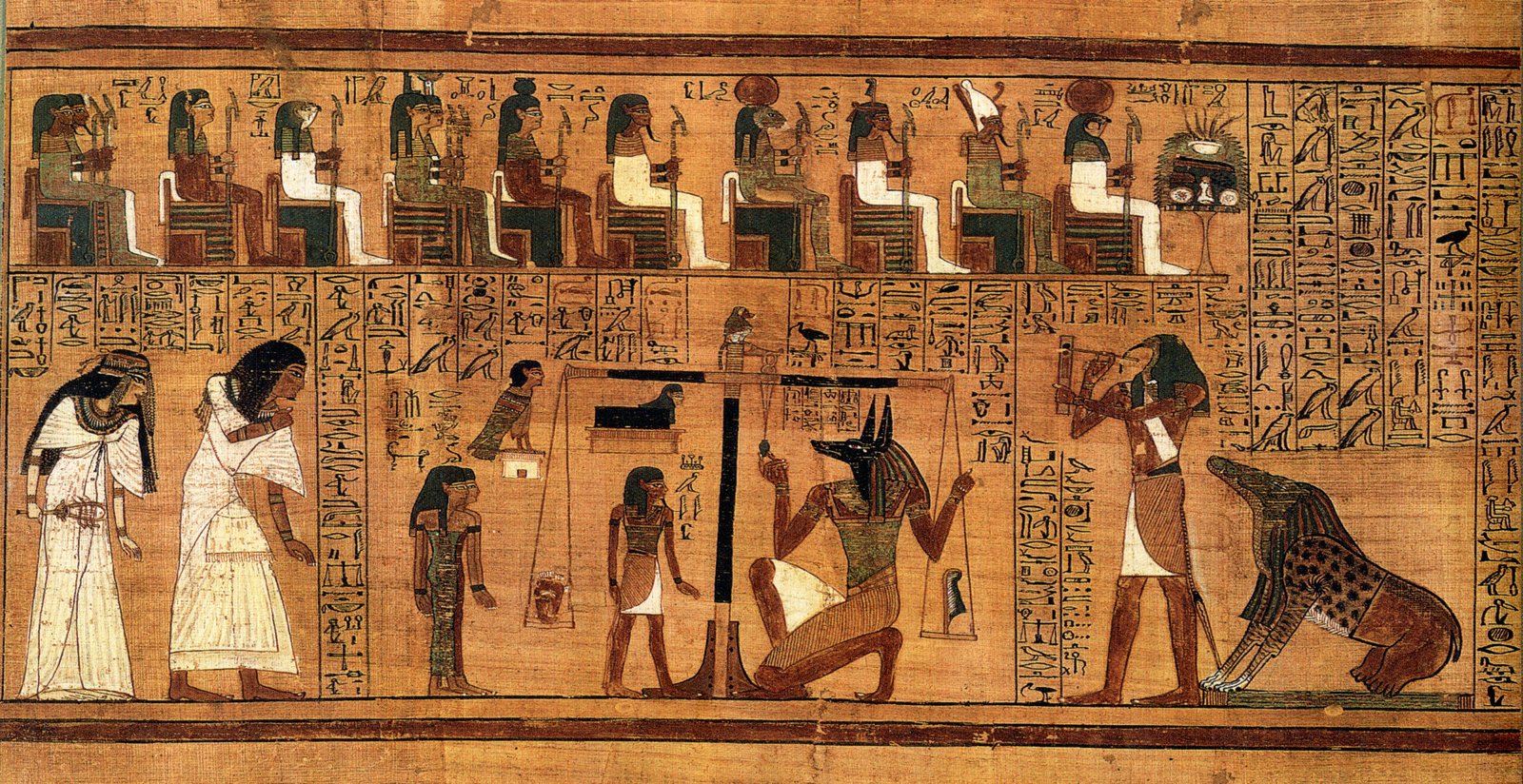
- Papyrus of Ani — an illustrated funerary manuscript.
- The weighing of the heart depicts ancient Egyptian beliefs about judgment.
- This detail is not a complete translation of the manuscript.
Quick Facts
| Point | Detail |
|---|---|
| Name | Papyrus of Ani (Book of the Dead of Ani) |
| Museum number | British Museum EA 10470 (registration 1888,0515.1) |
| Length | About 78 feet (about 24 metres) and about 1 foot 3 inches high |
| Made of | Six joined lengths of papyrus, with red and yellow borders |
| Period | 19th Dynasty, around 1250 BCE |
| Found | At Thebes; bought for the British Museum in 1888 through E. A. Wallis Budge |
| Famous scene | Spell 125, the judgment scene (frames 30 and 31 in the museum catalogue) |
What the papyrus contains
The papyrus contains a number of chapters, or spells, of the Book of the Dead, nearly all with painted illustrations called vignettes. The scroll was made for the Theban scribe Ani and his wife Tutu, who are named in the inscriptions. The museum catalogue describes frames with full-colour vignettes, red or yellow double borders and columns of text.
The beginning of the scroll includes a hymn to the rising sun (Spell 15, frame 1). Later frames show gods such as Ra-Horakhty, Thoth, Hathor, Isis, Sekhmet and Wadjet. The judgment scene in frames 30 and 31 shows Spell 125, in which the dead person declares innocence before divine judges. You can read what that scene means in our guides to the Book of the Dead and the weighing of the heart.
“Original” does not mean “one picture”
Because the scroll is huge, the museum conserves it in separate framed sections numbered EA 10470,1 to EA 10470,37 or so. Each frame has its own page online with a description, size and condition note. For example, one frame shows Spell 125 and a vignette, and another shows the negative confession. When a website shows “the Book of the Dead” as one neat picture, it is usually one frame or an edited composite.
Other Book of the Dead papyri exist, including the Papyrus of Hunefer, also in the British Museum, and many fragments in other museums. The Papyrus of Ani is just the most reproduced one.
How it reached London
The papyrus was found at Thebes and acquired in 1888 by Ernest Alfred Wallis Budge for the British Museum. Accounts describe it as coming from the illegal antiquities trade at the time, and one account says it was smuggled out of Egypt. The ethics of how such objects left Egypt is part of the modern museum debate, and it is worth mentioning when you credit an image.
Story box (imagined): A scribe unrolls his own scroll in his workshop. He chooses the spells he wants for himself and his wife, and the painters add the pictures. It is a personal object, made to order, not a single standard book.
Reading the translation carefully
Budge’s early translations were widely read, but modern Egyptologists use updated translations and prefer the title “Book of Coming Forth by Day”. Our existing guide explains the title and the spells. When you use a translation, name the translator and the year, and note that wording differs between translators.
History, Mythology and Speculation
| Category | Examples |
|---|---|
| History | The scroll of Ani, its acquisition in 1888, the museum frames |
| Mythology | Judgment before Osiris, Anubis, Thoth and Ammit |
| Speculation | “Dangerous” spells, secret occult codes |
Myth vs Fact
| Popular claim | Careful answer |
|---|---|
| The Book of the Dead is one fixed book | It is a collection of spells chosen for each person |
| The papyrus of Ani is a single picture | It is a long scroll shown in frames |
| The spells are curses | They were funerary texts to help the dead |
| Museum images are free | Licences vary |
Frequently Asked Questions
Where is the Papyrus of Ani?
In the British Museum, London, with museum number EA 10470.
How long is it?
About 78 feet (roughly 24 metres) according to Budge’s catalogue description.
When was it made?
Around 1250 BCE, in the 19th Dynasty.
Who was Ani?
A Theban scribe, named with his wife Tutu in the inscriptions.
Which frame shows the judgment scene?
Frames 30 and 31 show Spell 125 in the museum catalogue.
Is the papyrus on display?
Some frames are not on display. The museum has shown it in exhibitions, for example in 2010 to 2011. Check the museum before visiting.
Can I use museum images?
Check the museum’s licence for each image and credit it properly.
Is it dangerous to read?
No. See our guide for details.
Reliable Sources
- British Museum: EA 10470,30, Book of the Dead of Ani, Spell 125
- British Museum: EA 10470,1, Book of the Dead of Ani, frame 1
- Budge (1895): description of the Papyrus of Ani (Heidelberg digital library)
- Google Arts and Culture: Papyrus from the Book of the Dead of Ani
Last updated: 26 November 2026.














Share Your Opinion
Comments are closed on this post.