 Vista
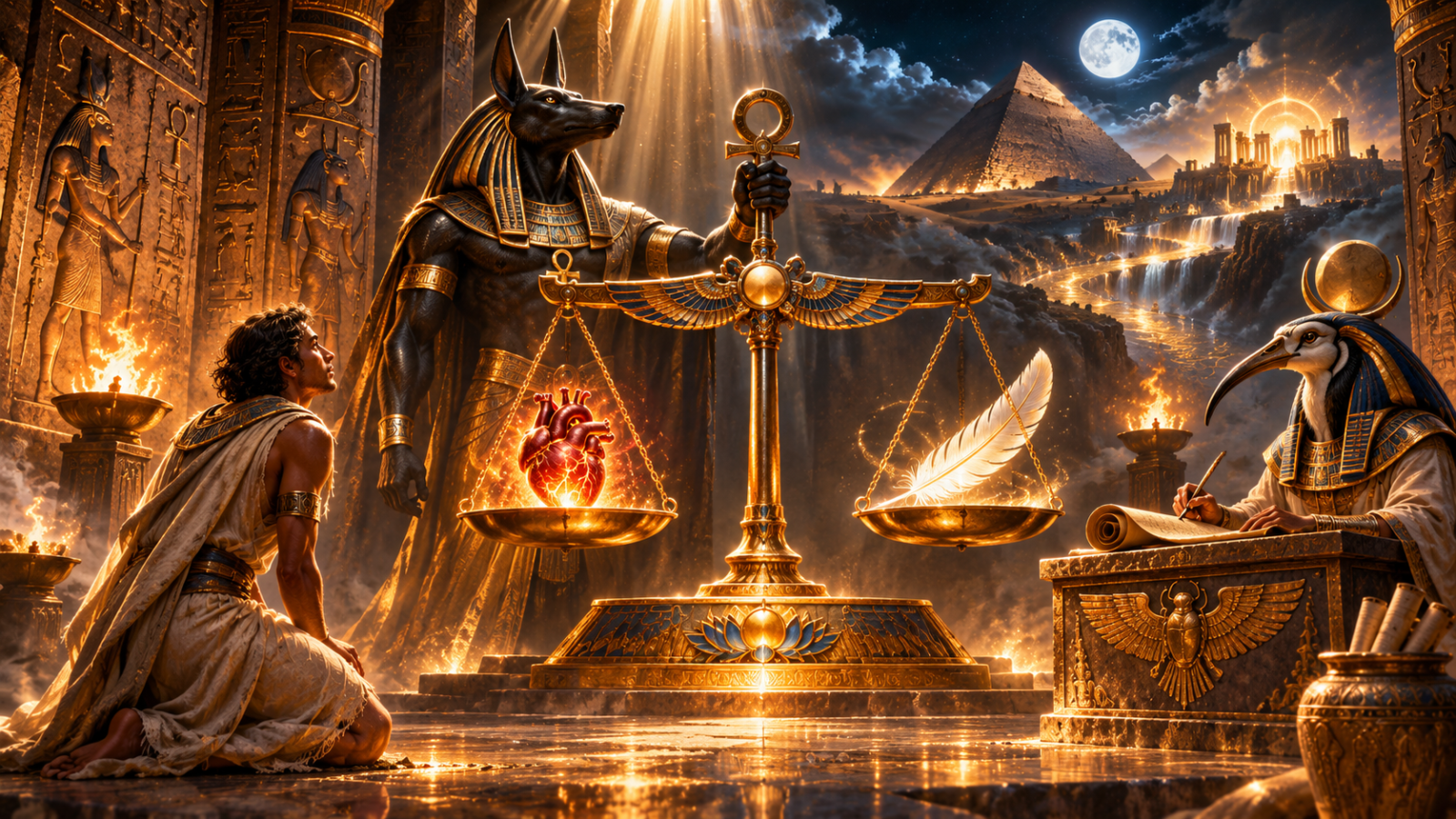
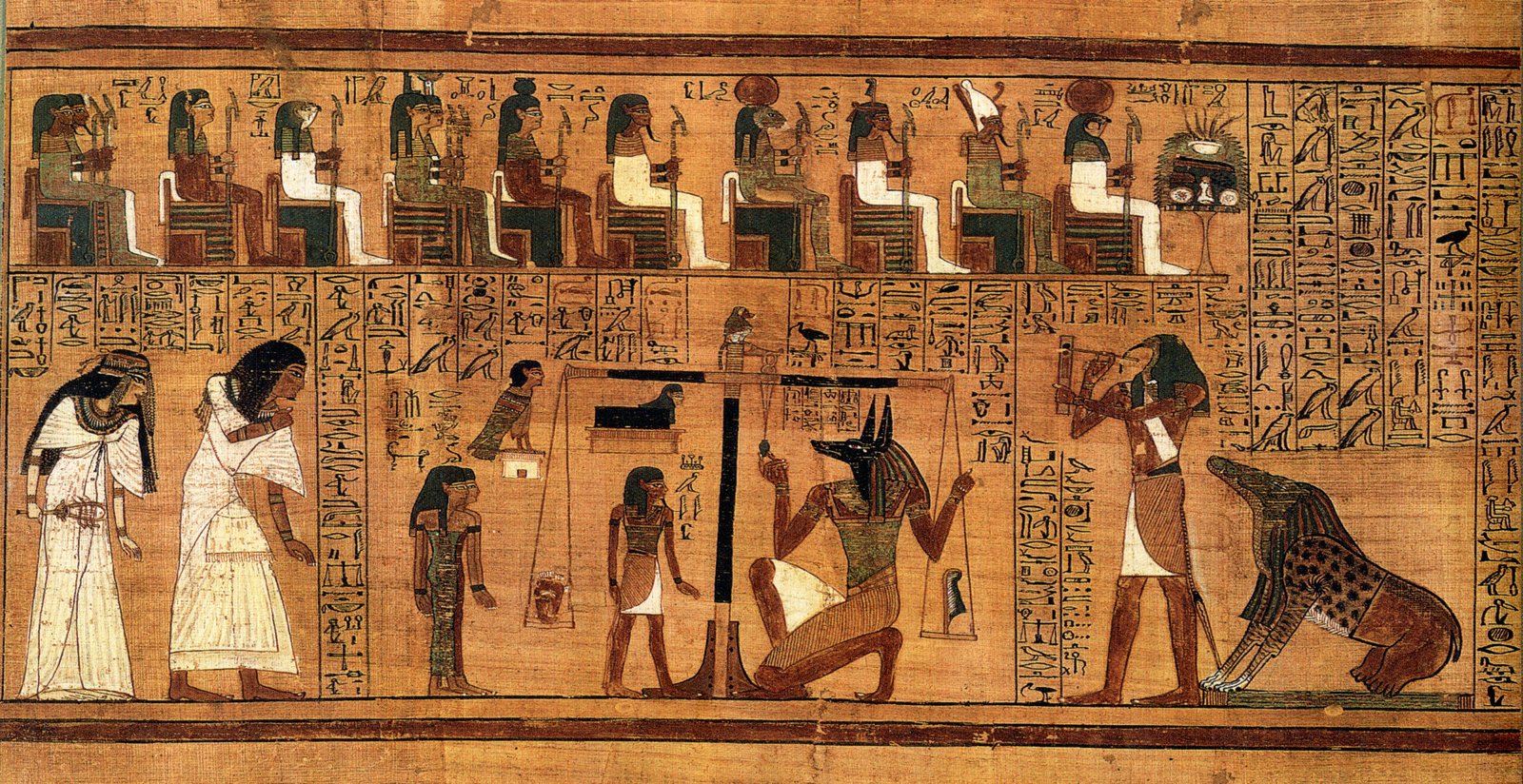
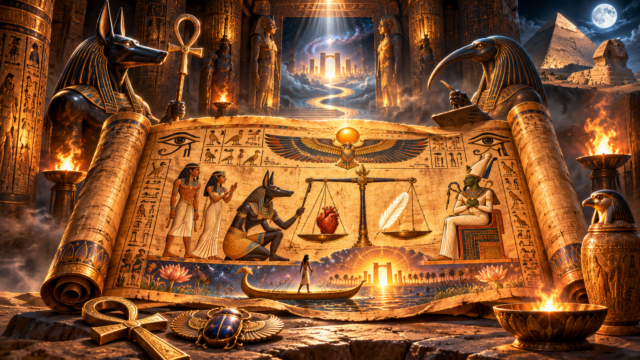
The weighing of the heart was the central judgment scene of the ancient Egyptian afterlife. In the Hall of the Two Truths, the dead person’s heart was placed on a balance scale against the feather of Ma’at, the symbol of truth and order. Anubis managed the scales, Thoth recorded the result, and Osiris presided. If the heart balanced, the person was declared justified and could enter the blessed afterlife. If it was heavy with wrongdoing, the devourer Ammit ate it, ending the person’s existence. The scene is best known from the Book of the Dead, especially Spell 125 and the Papyrus of Ani.
This guide explains who does what in the scene, why the heart and not the brain was weighed, what the 42 judges and the declaration of innocence were, and which details are myth or modern invention.
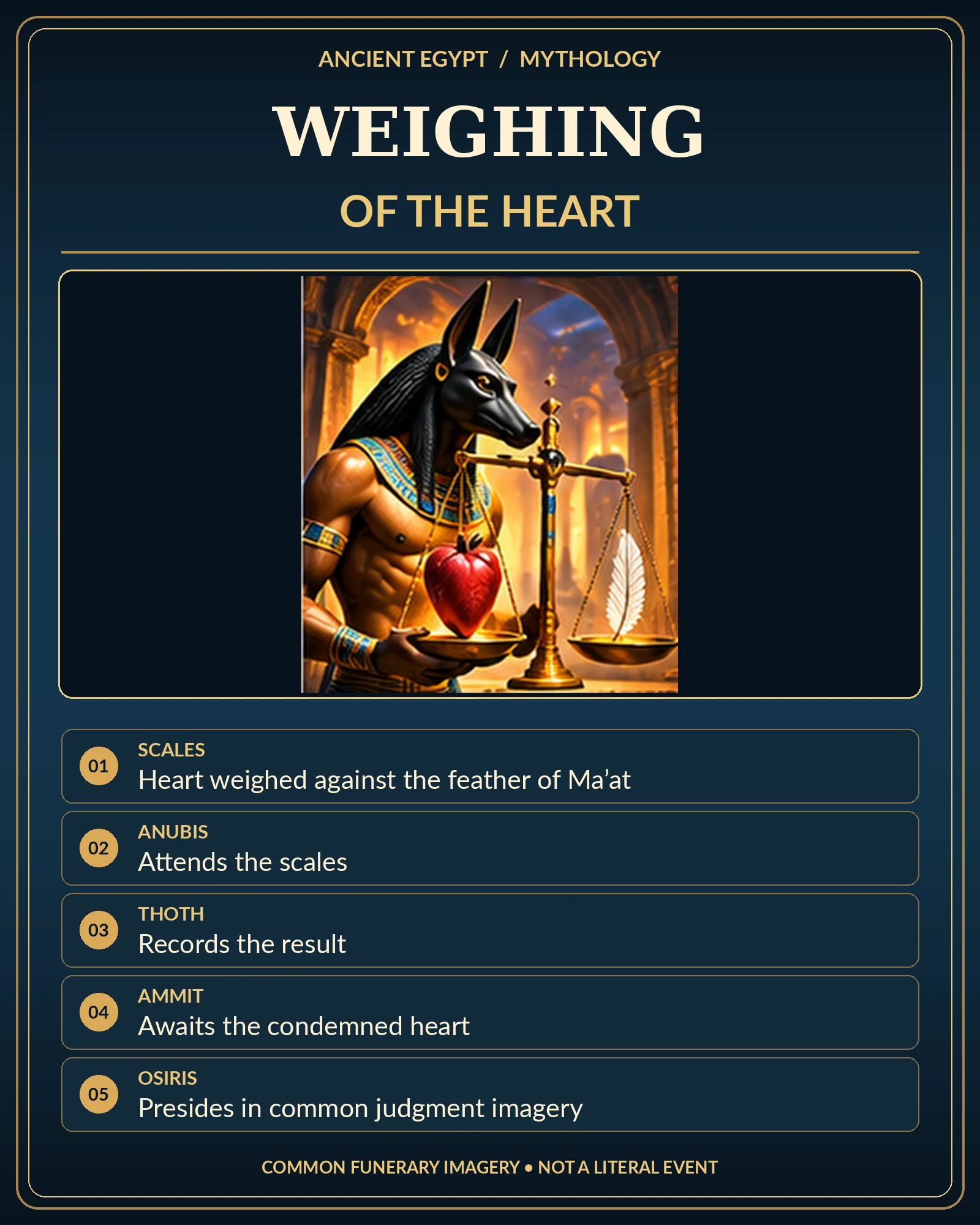
Weighing of the Heart Quick Facts
| Item | Detail |
|---|---|
| Setting | The Hall of the Two Truths (Hall of Ma’at) in the Duat |
| Scales | Heart on one pan, feather of Ma’at on the other |
| Anubis | Leads the dead and checks the balance |
| Thoth | Records the verdict |
| Osiris | Presides as king of the dead |
| Ammit | Devours the heart of those who fail |
| Key text | Book of the Dead, Spells 30B and 125 |
Step by Step: How the Judgment Worked
- The dead person is led into the Hall of the Two Truths by Anubis.
- The person addresses the 42 divine judges and declares innocence of specific wrongs (Spell 125).
- The heart is placed on one side of the scale, and the feather of Ma’at on the other.
- Anubis checks the balance, and Thoth writes down the result.
- If the scales balance, the person is led by Horus to Osiris. If not, Ammit devours the heart.
Not every papyrus shows every step in the same way. Some stress the declaration, others the scales. The simple order above is a common reading of the standard scene.
Who Is Who in the Scene
| Figure | Role |
|---|---|
| Anubis | Jackal-headed guide and keeper of the scales |
| Thoth | Ibis- or baboon-linked scribe who records the verdict |
| Ma’at | Truth and order, represented by the feather (and sometimes by a seated goddess) |
| Osiris | Enthroned judge and king of the dead |
| Ammit | The devourer of failed hearts |
| Horus | Presents the justified person to Osiris |
| The 42 judges | Divine assessors who hear the declaration |
Story box (retold from the Papyrus of Ani): The scribe Ani and his wife enter the hall. His heart sits in a jar on the scale. Across from it rests a single feather. Anubis steadies the plumb line. Thoth holds a palette, ready to write. Ani speaks to the forty-two judges and says he has not done wrong. The pointer stays level. Thoth writes the verdict, Ammit waits in vain, and Horus leads Ani toward the throne of Osiris. This is a scene from an ancient painting, retold as a story.
Why the Heart, Not the Brain?
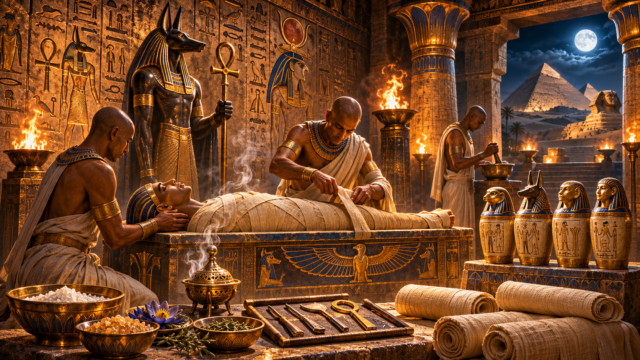
Egyptians saw the heart (ib or haty) as the centre of thought, feeling and memory. For this reason, it was usually left in the body during mummification, while the brain was often removed and discarded. A heart scarab, a stone amulet, was placed over the heart and carried a spell (Spell 30B) asking the heart not to speak against its owner. Our guide to mummification explains this practice.
The Declaration of Innocence
In Spell 125, the dead person lists many wrongs they have not done, such as stealing, lying or harming others. The list shows the moral ideas of Egyptian society, though it is not a legal code. Egyptians also viewed ma’at as a way of life: to act with truth, fairness and care for the community. For more on this, see our guide to Ma’at.
History, Mythology and Speculation
| Category | What belongs here |
|---|---|
| History | Judgment scenes on papyri and some tomb or coffin art; the Book of the Dead tradition |
| Mythology | The balance, the verdict, Ammit and Osiris’s role |
| Speculation | Whether ordinary Egyptians feared failing; modern claims about a “moral test for everyone”; any claim that the scene is a literal event |
Myth vs Fact
| Popular claim | Reality |
|---|---|
| The heart had to weigh nothing. | It had to balance with the feather, which means to be free of serious wrongdoing. |
| Anubis judged the dead. | He guided and weighed. Osiris presided as judge. |
| Ammit was the judge. | She only devoured hearts that failed. |
| Everyone faced identical scenes. | Details varied between papyri and periods. |
| Failing meant eternal fire. | The usual outcome was the second death, an end of existence. |
Frequently Asked Questions About the Weighing of the Heart
What is the weighing of the heart?
The Egyptian judgment in which a dead person’s heart is balanced against the feather of Ma’at.
Who weighs the heart?
Anubis operates the scales, Thoth records the result, and Osiris presides.
What does the feather of Ma’at mean?
It symbolises truth, justice and cosmic order.
What happens if the heart is heavy?
Ammit eats it, and the person suffers the second death.
Who are the 42 judges?
Divine assessors who hear the declaration of innocence in Spell 125.
What is a heart scarab?
An amulet placed on the mummy with a spell asking the heart not to testify against its owner.
Why was the heart left in the body?
Egyptians saw it as the seat of mind and moral character, which was needed for the judgment.
Is the weighing of the heart a real event?
It is a religious belief and funerary scene, not a documented physical event.
Reliable Sources
- World History Encyclopedia: Egyptian Mythology
- Egypt Exploration Society: Gods of Egypt
- The Metropolitan Museum of Art: Divine Egypt
Last updated: 25 November 2026. Related reading on Vista Hub: our guides to Anubis, Thoth, Ma’at, Osiris, Ammit and the Book of the Dead.
Related guides: Egyptian Mythology · Egyptian Gods and Goddesses













Share Your Opinion
Comments are closed on this post.