 Vista
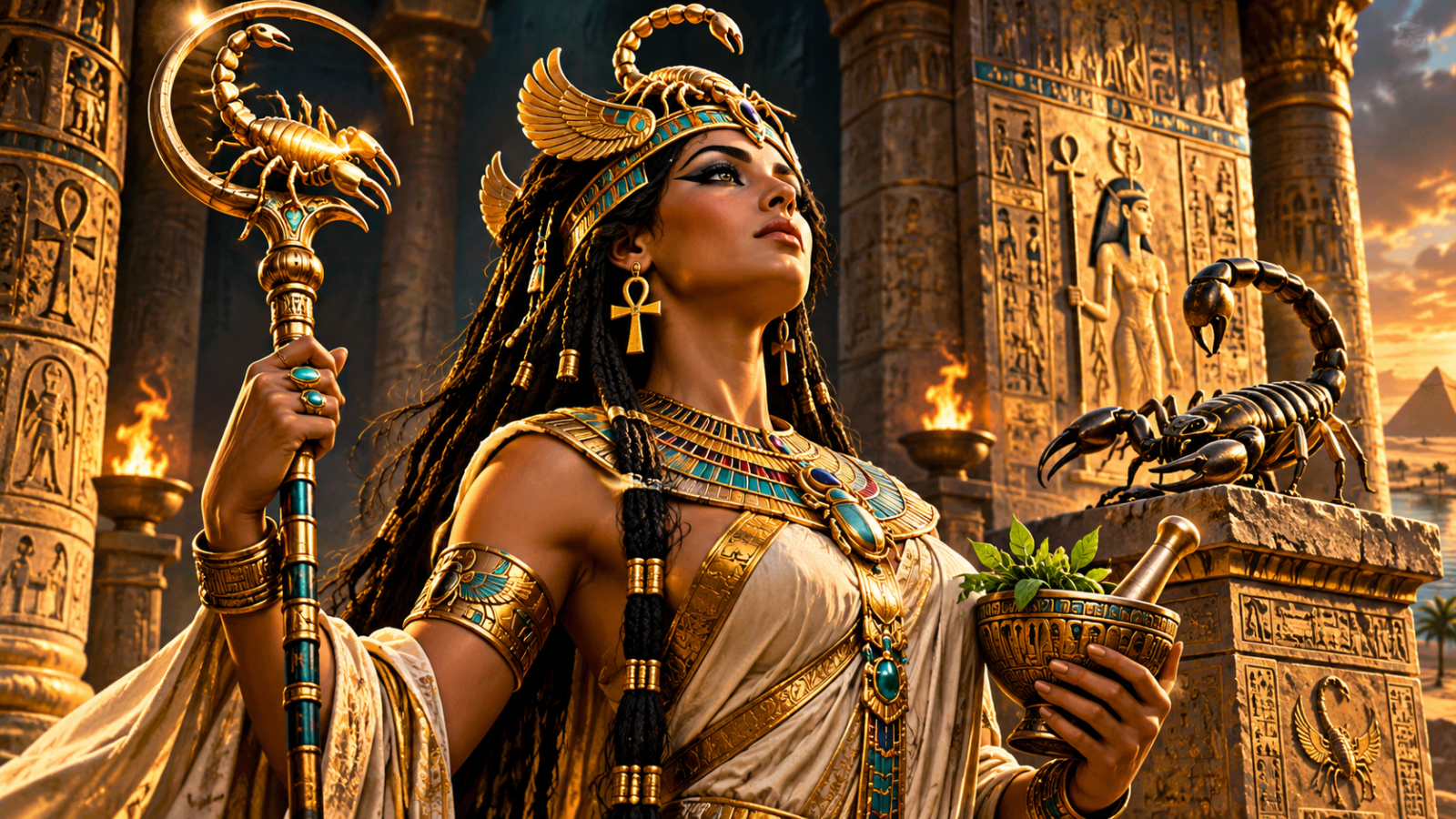
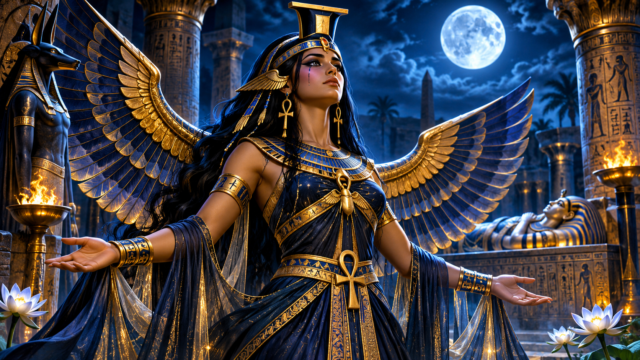
Serket (also written Selket, Selqet or Serqet) was the ancient Egyptian scorpion goddess. She could both cause and cure the pain of venomous stings and bites, so she was the patron of healers and a guardian against poison. She is shown as a woman with a scorpion on her head, or sometimes as a scorpion with a woman’s head. Serket also had a funerary role: she was one of four goddesses who protected the coffin and the canopic jars that held a mummy’s organs, and her golden statue stands guard on the canopic shrine of Tutankhamun. She is also remembered for protecting the goddess Isis in the Delta marshes while Isis hid the infant Horus.
This guide explains her name, appearance, role in healing, role in the afterlife, the story of the seven scorpions, and the claims about her that need careful checking.

Serket Quick Facts
| Item | Detail |
|---|---|
| Domain | Scorpions, venom, healing of stings, protection of the dead |
| Form | Woman with scorpion on head, or scorpion with a woman’s head |
| Name | Often explained as linked with the throat and breathing; translations vary |
| Canopic role | Guardian of the jar of Qebehsenuef, which held the intestines |
| Famous image | Golden statue on Tutankhamun’s canopic shrine |
| Myth link | Protector of Isis and the infant Horus |
Who Was Serket?
Egypt has several kinds of dangerous scorpion, and stings were a real hazard, especially for farmers, builders and children. Egyptians responded with the logic that fits many of their gods: the same power that causes harm can also remove it. Serket was the divine master of scorpions, so she could prevent a sting or heal it. Priests of Serket were connected to healing and magical medicine, and some scholars see them as an early link between religion and the treatment of venom.
Her cult was practical and widespread, rather than centred on one giant temple. She appears in medical-magical texts, in funerary art and in royal scenes, always as a protector.
What Does the Name Serket Mean?
Her name is often explained as meaning something like “she who lets the throat breathe” or “she who tightens the throat”. Both readings link to the effects of poison on breathing and to the idea that a healer opens the airway. Because Egyptian word-play and spelling are complicated, scholars do not all agree, so it is safest to say that her name is connected with the throat and breathing and that the exact translation is debated.
Appearance and Symbols
| Feature | Meaning |
|---|---|
| Scorpion on the head | Her identity and her power over venom |
| Human woman’s body | Her role as a caring, protective goddess |
| Outstretched arms or wings | Protection of the dead or of a shrine, seen in funerary statues |
| Scorpion body with a woman’s head | An older or alternative form that stresses her animal power |
Serket in Healing and Magic
Egyptian medical practice combined observation with ritual. Papyri contain spells to treat scorpion stings and snake bites, usually asking the gods, especially Isis, Serket and Horus, to neutralise the poison. Healers could also use practical steps such as binding the limb or applying plant remedies. Historians study these texts carefully because they show real concern for treatment, even where the explanation is magical.
In a modern context the lesson is plain: a serious scorpion sting needs real medical care. Ancient spells were part of belief and culture, not a replacement for antivenom or first aid.
Serket and the Seven Scorpions
A text found on the Metternich Stela, a late magical stela, tells how Isis fled with the infant Horus to hide from Set. Seven scorpions, linked with Serket, accompanied and guarded her. In the story, a wealthy woman refuses Isis shelter, and the scorpions combine their venom in the sting of one of them, which then stings the woman’s child. Isis, moved by pity, heals the child by calling on the poison to come out. The story explains how a sting can be cured and shows Isis as a healer.
Story box (retold from the late magical tradition): Isis, tired and hunted, walks through the marshes with her infant son. Seven scorpions walk beside her as bodyguards. At a rich woman’s house the door stays shut. The scorpions pass their poison to one of their own, who creeps in and stings the woman’s child. When the child cries out, Isis hears the pity of a poor woman who helped her and heals the boy with a spell. The point of the story is that Isis has power over poison, a useful idea for healers who used it as a model for treating stings. This is myth, not a historical event.
Serket in the Afterlife: Canopic Guardian
During mummification the internal organs were removed and placed in four canopic jars, each under the care of a god and a goddess. Serket protected the jar of Qebehsenuef, the falcon-headed son of Horus, which held the intestines. The four goddesses who guarded the set were Isis, Nephthys, Neith and Serket. On the golden canopic shrine from the tomb of Tutankhamun, statues of these four goddesses stand with arms extended around the corners, as if shielding the king’s remains. Serket’s statue there is one of the best-known images of her.
Nephthys has a similar protective role in funerary ritual, which is explained in our guide to her.
History, Mythology and Speculation
| Category | What belongs here |
|---|---|
| History | Her presence on funerary equipment, including Tutankhamun’s shrine; medical-magical texts about stings |
| Mythology | The seven scorpions protecting Isis; Serket’s power to heal and harm |
| Speculation | The exact meaning of her name; the date of her earliest cult; any direct link between specific healing rituals and real medical results |
Myth vs Fact
| Popular claim | Reality |
|---|---|
| Serket was an evil goddess because of scorpions. | She was a protector and healer, who controlled venom for good purposes. |
| Her scorpion rituals could cure any sting. | These were religious beliefs; real treatment depends on medical care. |
| Serket is the same as Selkis in all sources. | The names are spelling variants in English; check the source for context. |
| Serket only protected the dead. | She also had a role in healing and protecting the living. |
Frequently Asked Questions About Serket
What was Serket the goddess of?
She was the goddess of scorpions, venom, healing and protection, including protection of the dead.
How do you spell Serket?
Serket, Selket, Selqet and Serqet are all used. They are different English spellings of the same Egyptian name.
Which canopic jar did Serket protect?
She guarded the jar of Qebehsenuef, which held the intestines.
Why is Serket on Tutankhamun’s shrine?
She was one of four protective goddesses placed around the canopic shrine to guard the king’s organs.
What is the story of the seven scorpions?
It is a late myth in which seven scorpions guard Isis and the infant Horus, and Isis later heals a child stung by one of them.
Was Serket good or dangerous?
She had power over both harm and cure, but she was seen as a protector.
What does Serket’s name mean?
It is usually linked with the throat and breathing, but the exact translation is debated.
Is it safe to rely on ancient scorpion spells?
No. Spells are part of ancient culture. A serious sting should be treated by a doctor or emergency service.
Reliable Sources
- World History Encyclopedia: Egyptian Mythology
- Egypt Exploration Society: Gods of Egypt
- The Metropolitan Museum of Art: Divine Egypt
Last updated: 25 November 2026. Related reading on Vista Hub: our guides to Isis, Nephthys, Horus and the Egyptian mummification process.
Related guides: Nephthys: Egyptian Goddess of Mourning and Protection — Isis's Sister, Anubis's Mother and the Canopic Guardian · Isis: Egyptian Goddess of Magic, Motherhood and Healing (Myths, Symbols and Worship)











Share Your Opinion
Comments are closed on this post.