 Vista
Short answer: Real Egyptian wall paintings survive mostly inside tombs and temples, where dry air and darkness protected the pigments. The hieroglyphs beside them are a writing system that was deciphered in the 1820s after the Rosetta Stone. Good photographs name the tomb or temple, the photographer and the licence, and they avoid heavy colour editing.
PAINTINGS AND CARVED RELIEFS

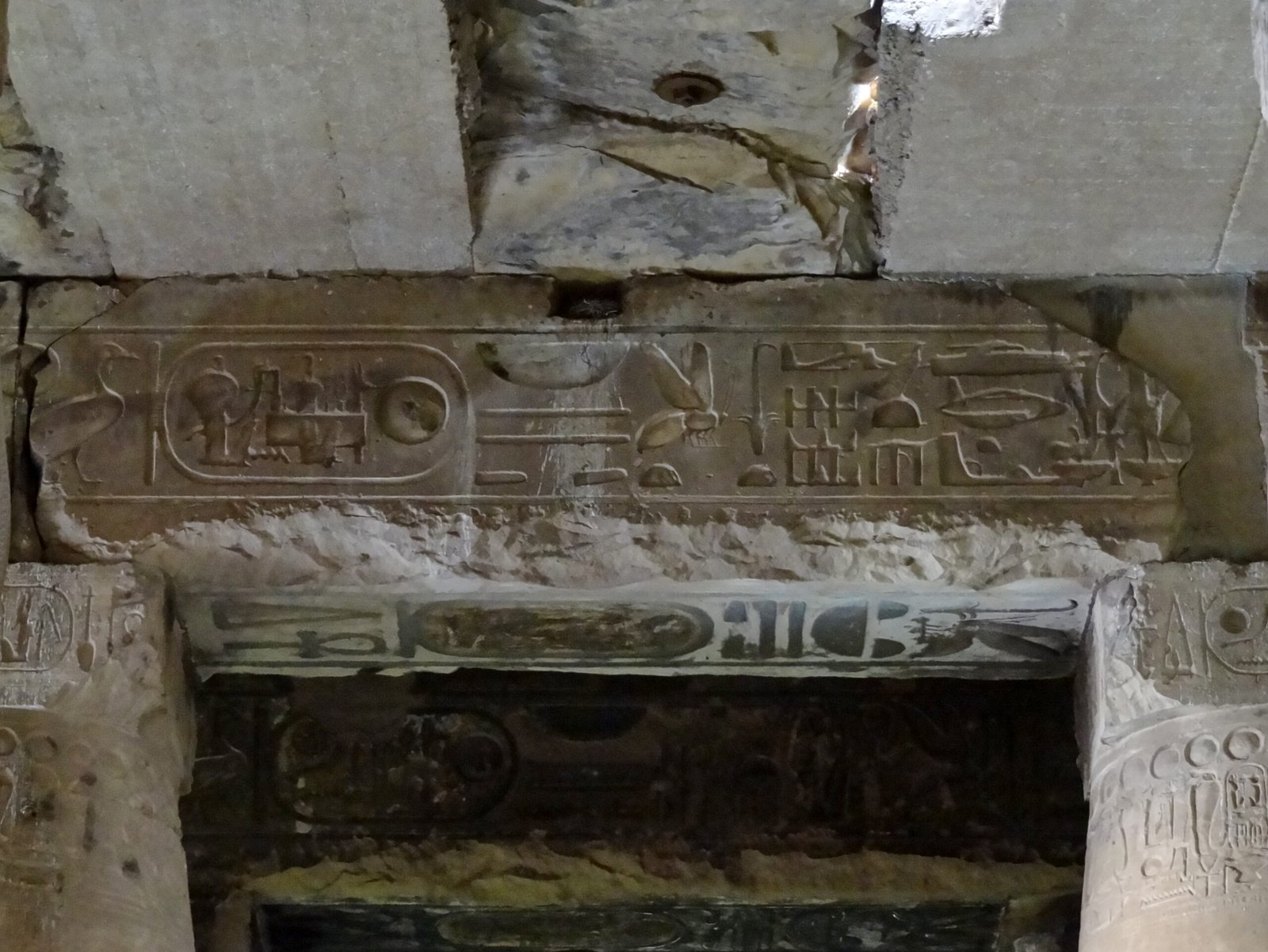
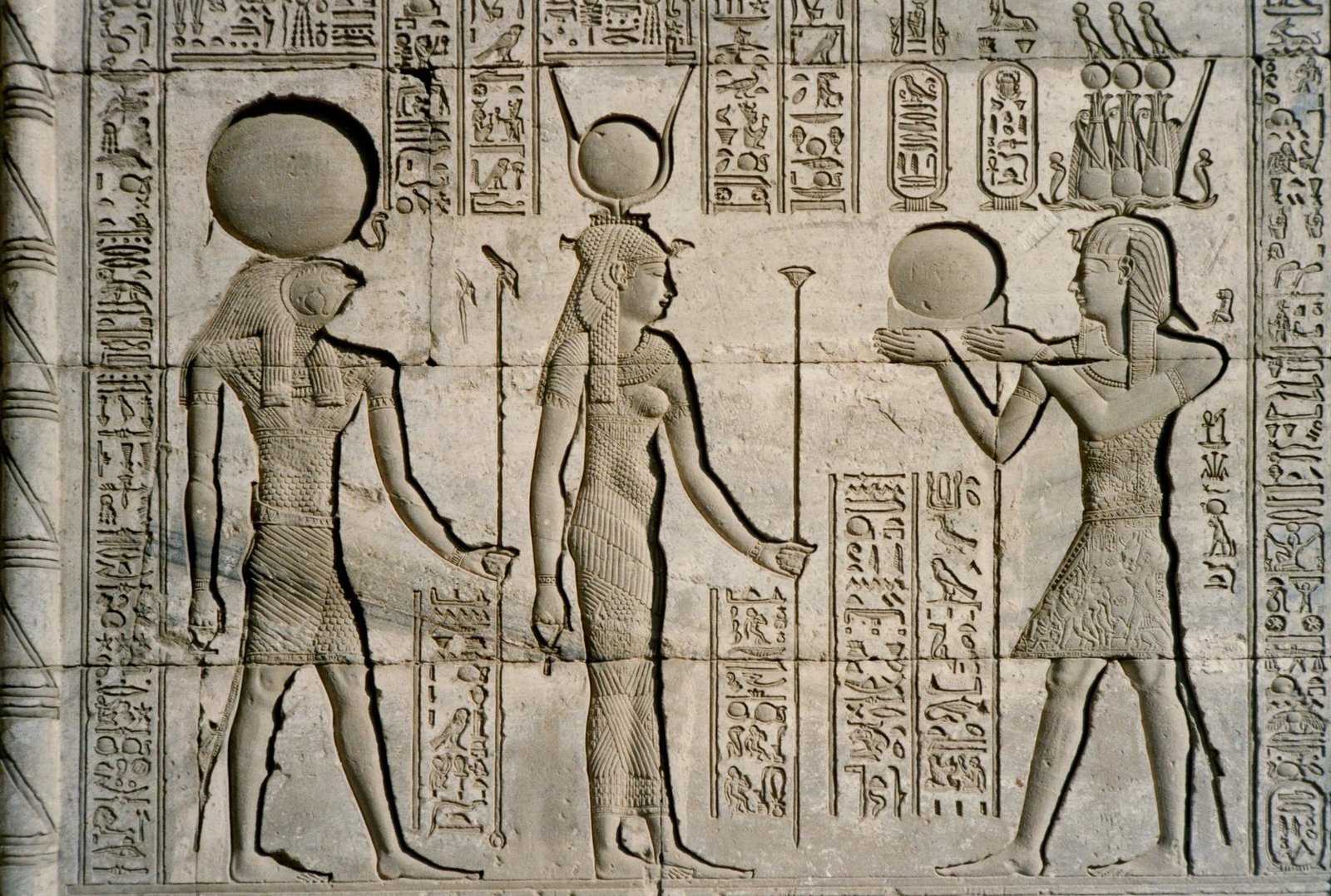
- Tomb paintings and carved temple reliefs are different art forms.
- Hieroglyphs record religious, royal and other texts.
- Identify the context and date using the source captions.
Quick Facts
| Point | Detail |
|---|---|
| Where paintings survive | Tombs (Valley of the Kings, Valley of the Queens, Theban nobles’ tombs) and temples |
| Famous example | The tomb of Nefertari (QV66) in the Valley of the Queens, found by Ernesto Schiaparelli in 1904 |
| Pigments | Mostly minerals: ochres for red and yellow, malachite and other copper-based greens, Egyptian blue (a synthetic copper-calcium silicate) and carbon-based black |
| Hieroglyph decipherment | Jean-Francois Champollion, 1822, using the Rosetta Stone |
| Main risk today | Humidity, salts and heavy visitor numbers damage fragile paintings |
What the wall paintings show
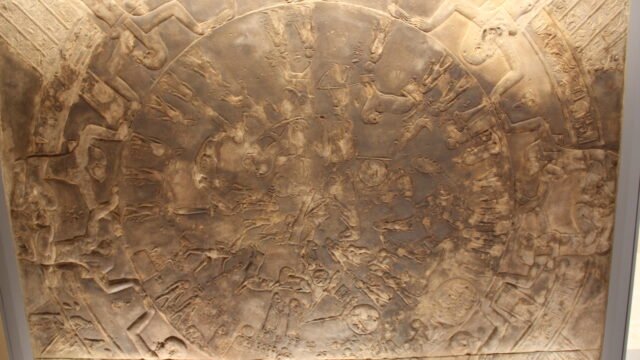
Tomb walls show offerings, farming, boats, the journey of the dead and scenes with gods such as Osiris, Anubis and Thoth. These images were not decoration only. They were meant to provide food and protection in the afterlife, so many scenes repeat standard patterns. Figures follow conventions: heads in profile, eyes frontal, important people drawn larger.
Some scenes link to texts such as the Book of the Dead. If you want the story behind a judgment scene, read the weighing of the heart, and for the gods in the scenes see our gods guide.
How the paintings were made
Artists first marked a grid on the wall to keep proportions regular, then drew the outlines and filled the shapes with flat washes of colour, one colour at a time. The paint was mostly mineral: ochres gave red and yellow, carbon from soot or charcoal gave black, and Egyptian blue, one of the earliest synthetic pigments, was made by heating quartz sand, a copper compound and lime. Egypt’s dry climate is a big reason so much of this colour survives.
Survival is never guaranteed. The paintings in Nefertari’s tomb were in poor condition by the 1980s, with a large share already lost to salt and moisture damage, and the Getty Conservation Institute worked with Egyptian authorities from 1986 to 1992 to stabilise them. That is why access to many famous tombs is now limited or ticketed.
How hieroglyphs work
Hieroglyphs combine signs that stand for sounds, signs that stand for whole words and signs that mark the meaning of a word. Reading direction depends on which way the figures face. The Rosetta Stone carries the same decree in hieroglyphic, Demotic and Greek, and that let scholars compare the texts. Champollion announced his breakthrough in 1822.
Story box (imagined): A painter works by lamplight in a narrow tomb. An outline is drawn first, then corrected, then filled with colour. The final wall looks effortless, but it came from a workshop of specialists.
How to spot a real photograph
- The caption names a site, such as a tomb number or temple.
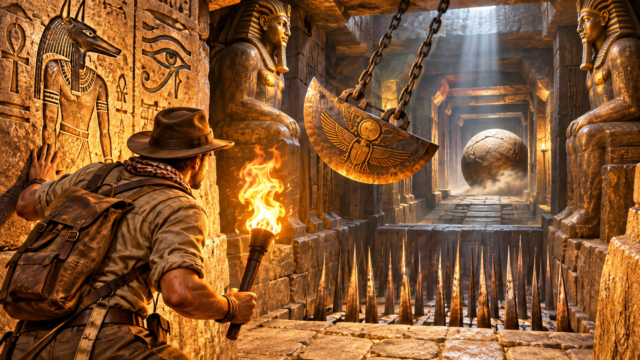
- The glyphs are readable and consistent. AI images often show nonsense signs.
- The colours look weathered, not neon.
- A photographer or institution is credited.
History, Mythology and Speculation
| Category | Examples |
|---|---|
| History | Tomb painting techniques, Rosetta Stone, decipherment in 1822 |
| Mythology | Scenes of Osiris, Anubis, Thoth and the afterlife journey |
| Speculation | Hidden codes, “alien” glyphs, ancient machines in reliefs |
For one popular example of speculation, see our fact-check on the helicopter hieroglyphs.
Myth vs Fact
| Popular claim | Careful answer |
|---|---|
| Hieroglyphs are pictures only | They also record sounds and meaning |
| Nobody can read them | Scholars have read them since the 1820s |
| Colours are as bright as new | Many are well preserved but still aged and restored in places |
| All viral tomb photos are real | Some are edited or AI-made |
Frequently Asked Questions
Which tomb has the most famous paintings?
The tomb of Nefertari is often named as one of the finest, though many tombs are celebrated.
Who deciphered hieroglyphs?
Jean-Francois Champollion, announced in 1822, building on earlier work by others.
What did the Rosetta Stone contain?
The same decree written in hieroglyphic, Demotic and Greek.
Why do the paintings survive?
Dry climate, sealed rooms and mineral pigments helped.
Can I photograph tomb walls?
Rules vary by site. Many tombs restrict flash or all photography, so check the current rules.
Are the colours original?
Mostly, but some walls have been cleaned or restored.
Do hieroglyphs hide secret codes?
No evidence supports hidden modern codes.
Where can I find licensed images?
Museum open-access collections and Wikimedia Commons files with clear licences.
Reliable Sources
- British Museum: Rosetta Stone (EA24)
- Wikipedia: Tomb of Nefertari
- Getty Iris: conserving the wall paintings of Nefertari’s tomb
- Australian Museum: The Painter in ancient Egypt
- Royal Society of Chemistry: Egyptian blue
- Metropolitan Museum of Art: Open Access (CC0 images)
Last updated: 26 November 2026.













Share Your Opinion
Comments are closed on this post.